





IAG
Company Details
Linkedin ID:
international-airlines-group-iag-
Website:
Employees number:
602
Number of followers:
71,398
NAICS:
481
Industry Type:
Homepage:
iairgroup.com
IP Addresses:
0
Company ID:
INT_1645470
Scan Status:
In-progress

International Airlines Group (IAG) Company CyberSecurity Posture
iairgroup.com





International Airlines Group (IAG) is one of the world’s largest airline groups with 600+ aircraft carrying more than 122 million customers to 260 destinations across 91 countries each year. Formed in January 2011, IAG is the parent company of Aer Lingus, British Airways, Iberia, Vueling and LEVEL. It is a Spanish registered company with shares traded on the London Stock Exchange and Spanish Stock Exchanges. The corporate head office for IAG is in London, UK. IAG combines leading airlines in the UK, Ireland and Spain, enabling them to enhance their presence in the aviation market while retaining their individual brands and current operations. The airlines' customers benefit from a larger combined network for both passengers and cargo, and a greater ability to invest in new products and services through improved financial robustness.
Company Details
international-airlines-group-iag-
602
71,398
481
iairgroup.com
0
INT_1645470
In-progress
 IAG Risk Score (AI oriented)
Between 700 and 749
 IAG Global Score (TPRM)
XXXX
Description: The California Office of the Attorney General reported a data breach involving British Airways Plc on November 21, 2018. The breach dates include October 21, 2018, September 5, 2018, April 21, 2018, and July 28, 2018. The breach involved the compromise of personal and financial information of customers, which could have significant consequences for the company and its customers.
Description: British Airways disclosed that the data breach experienced by the payroll service provider Zellis has an effect on them. The BBC and British Airways employees' personal information was exposed as a result of the cyberattack on the payroll service Zellis. According to reports, British Airways was one among the companies damaged by a cyber security attack against MOVEit's target, the UK-based payroll provider Zellis.
Description: The Washington State Office of the Attorney General reported a data breach involving British Airways PLC on November 21, 2018. The breach, which occurred from August 21, 2018 to September 5, 2018, was due to a cyberattack involving malware, potentially exposing the payment card and personal information of approximately 1,588 Washington residents.
Description: In 2018, British Airways suffered a **Magecart (e-skimming) attack** where attackers injected malicious JavaScript into its payment checkout page, exploiting a third-party script vulnerability. The breach went undetected for **two weeks**, during which **380,000 customers' payment card details** (including names, addresses, credit card numbers, CVV codes, and expiry dates) were harvested directly from the browser environment. The attack bypassed traditional security measures like WAFs and intrusion detection systems by operating entirely client-side, leveraging encrypted HTTPS traffic to exfiltrate data to attacker-controlled servers. The incident resulted in **regulatory fines (£20M by ICO)**, reputational damage, and a **class-action lawsuit** from affected customers. The breach highlighted critical gaps in monitoring dynamic client-side code and third-party script dependencies, which remained unaddressed despite robust server-side defenses. The financial and operational fallout extended beyond immediate fraud losses, impacting customer trust during peak travel seasons.
Description: Credit card details of hundreds of thousands of British Airways customers were stolen over a two-week period in the most serious attack on its website and app. It immediately contacted customers when the extent of the breach became clear. Around 380,000 card payments were compromised. Hackers obtained names, street and email addresses, credit card numbers, expiry dates and security codes. The attack came 15 months after the carrier suffered a massive computer system failure at London's Heathrow airport, which stranded 75,000 customers over a holiday weekend. The attackers had not broken the airline's encryption but did not explain exactly how they had obtained the customer information. The attackers had probably targeted a gateway between the airline and a payment processor because no travel details had been stolen. BA advised customers to contact their bank or credit card provider and follow their recommended advice.
Description: British Airways found a security bug which has the potential to expose passengers’ data, including their flight booking details and personal information. It was an attack that could expose victims’ booking reference numbers, phone numbers, email addresses and more. It was found that bad actors could either view the victim’s personal data, or manipulate their booking information. The exposed information includes email address, telephone numbers, BA membership numbers, first and last name, booking reference, itinerary, flight information like flight number, flight times, and seat number.
Description: Spain's flag carrier Iberia Airlines disclosed a significant data security incident in November 2025 that should put all customers on high alert. The breach, which occurred through a compromised third-party supplier, has exposed personal information and created new risks for travelers who have flown with the airline. What happened in the Iberia cyberattack Iberia detected unauthorized access to systems belonging to one of its suppliers, which led to the compromise of customer data. The airline began notifying affected passengers over a weekend in late November 2025, explaining that despite its security measures, attackers gained access to certain personal information. The compromised data may include customer names, email addresses and Iberia Club loyalty card identification numbers. The good news is that account login credentials, passwords and financial details like banking or credit card information were not accessed. The timing of the disclosure is notable. About a week before Iberia's customer notifications went out, a threat actor claimed on dark web forums to be selling 77 GB of alleged Iberia data for $150,000. While it remains unclear whether this separate data dump is connected to the customer breach, the incident highlights the multiple vulnerabilities facing modern airlines. Immediate phishing risks for Iberia customers If you're an Iberia customer, you need to be immediately aware of possible phishing attempts. The compromised information could be used to m


International Airlines Group (IAG) has 56.25% more incidents than the average of same-industry companies with at least one recorded incident.
International Airlines Group (IAG) has 29.87% more incidents than the average of all companies with at least one recorded incident.
International Airlines Group (IAG) reported 1 incidents this year: 0 cyber attacks, 0 ransomware, 0 vulnerabilities, 1 data breaches, compared to industry peers with at least 1 incident.
IAG cyber incidents detection timeline including parent company and subsidiaries

International Airlines Group (IAG) is one of the world’s largest airline groups with 600+ aircraft carrying more than 122 million customers to 260 destinations across 91 countries each year. Formed in January 2011, IAG is the parent company of Aer Lingus, British Airways, Iberia, Vueling and LEVEL. It is a Spanish registered company with shares traded on the London Stock Exchange and Spanish Stock Exchanges. The corporate head office for IAG is in London, UK. IAG combines leading airlines in the UK, Ireland and Spain, enabling them to enhance their presence in the aviation market while retaining their individual brands and current operations. The airlines' customers benefit from a larger combined network for both passengers and cargo, and a greater ability to invest in new products and services through improved financial robustness.


Welcome to our LinkedIn page! To learn how we can assist you, please check: http://klmf.ly/ContactCentre. KLM was founded in 1919 and is the oldest airline in the world. With a vast network of European and intercontinental destinations, KLM can offer direct flights to major cities and economic cen

People. Passion. Pride. These have driven our team since 1833. Since that time, we have developed to become a critical partner in the global aviation industry, delivering time-critical logistics services at over 300 locations in 65 countries, across six continents. But at the heart of our
!BIenvenido al sitio oficial! Avianca es la primera aerolínea comercial fundada en las Américas y la segunda en el mundo. Enfocados en alcanzar la excelencia y eficiencia operacional, se dio marcha a una profunda reorganización de los procesos, la cual ha estado acompañada de la modernización
We would like to acknowledge the Traditional Custodians of the local lands and waterways on which we live, work and fly. We pay our respects to Elders past and present. Spirit is everything to us, and joining the Qantas team means bringing your spirit to ours. We have over 26,000 exceptional emplo
How time flies. #18YearsOfIndiGo IndiGo is India’s largest passenger airline. We primarily operate in India’s domestic air travel market as a low-cost carrier with focus on our three pillars – offering low fares, being on-time and delivering a courteous and hassle-free experience. IndiGo has become

gategourmet has been serving the airline industry for more than 70 years and has become the world’s largest independent provider of airline catering and logistics. We prepare tens of thousands of tasty, nutritious passenger meals and snacks daily and reliably service more than 2 million flights a ye

Somos a maior Companhia Aérea do País e estamos entre as que mais crescem no mundo. A nossa história começou em 2001 e, desde então, somos responsáveis por inovar o mercado da aviação no Brasil. Tudo isso graças à dedicação do nosso Time para garantir o nosso Valor número 1, a Segurança, entregand

It all starts here. 23 years ago, a dream took flight - shaping and forever changing the travel industry in Asia. The idea was simple: Make flying affordable for everyone. We made that dream happen. We started an airline in 2001. Today, we’ve evolved to become something much bigger. We’re now a wo

As one of the three major air carriers in China, headquartered in Shanghai, China Eastern Airlines operates 111 domestic and overseas branches across the globe. Flying a fleet of 730 aircraft which is one of the youngest fleets in major airlines worldwide. Moreover, it boasts the largest-scale in-fl
.png)
International Consolidated Airlines Group (IAG) Today: Share Price, €1bn Buyback, Iberia Cyberattack and TAP Bid – 26 November 2025...
In the fast-paced world of aviation, where data flows as freely as jet streams, a single vulnerability can ground an entire operation.
Customers of Iberia Airlines will need to be on high alert for phishing attacks after the carrier revealed personal information had been...
Iberia warns customers of a supplier-related data breach as a threat actor claims to hold 77GB of stolen airline data.
Major ground stop: On Oct. 12, 2025 the FAA ordered a ground stop at Los Angeles International Airport (LAX) after an “equipment outage”...
Day 2 of the World Aviation Festival 2025 in Lisbon brought together some of the most influential voices in global aviation.
Stock Rallying on Strong Momentum: Palo Alto Networks (NASDAQ: PANW) traded around $216 per share on October 8, 2025, up roughly 3–4% over...
For many, the main point of investing in the stock market is to achieve spectacular returns. While the best companies...
The EU's cybersecurity agency has confirmed 'third party' involvement in the hack on the outsourced systems for check-ins and boarding.

Explore insights on cybersecurity incidents, risk posture, and Rankiteo's assessments.
The official website of International Airlines Group (IAG) is http://www.iairgroup.com/.
According to Rankiteo, International Airlines Group (IAG)’s AI-generated cybersecurity score is 749, reflecting their Moderate security posture.
According to Rankiteo, International Airlines Group (IAG) currently holds 0 security badges, indicating that no recognized compliance certifications are currently verified for the organization.
According to Rankiteo, International Airlines Group (IAG) is not certified under SOC 2 Type 1.
According to Rankiteo, International Airlines Group (IAG) does not hold a SOC 2 Type 2 certification.
According to Rankiteo, International Airlines Group (IAG) is not listed as GDPR compliant.
According to Rankiteo, International Airlines Group (IAG) does not currently maintain PCI DSS compliance.
According to Rankiteo, International Airlines Group (IAG) is not compliant with HIPAA regulations.
According to Rankiteo,International Airlines Group (IAG) is not certified under ISO 27001, indicating the absence of a formally recognized information security management framework.
International Airlines Group (IAG) operates primarily in the Airlines and Aviation industry.
International Airlines Group (IAG) employs approximately 602 people worldwide.
International Airlines Group (IAG) presently has no subsidiaries across any sectors.
International Airlines Group (IAG)’s official LinkedIn profile has approximately 71,398 followers.
International Airlines Group (IAG) is classified under the NAICS code 481, which corresponds to Air Transportation.
Yes, International Airlines Group (IAG) has an official profile on Crunchbase, which can be accessed here: https://www.crunchbase.com/organization/international-airlines-group.
Yes, International Airlines Group (IAG) maintains an official LinkedIn profile, which is actively utilized for branding and talent engagement, which can be accessed here: https://www.linkedin.com/company/international-airlines-group-iag-.
As of December 11, 2025, Rankiteo reports that International Airlines Group (IAG) has experienced 7 cybersecurity incidents.
International Airlines Group (IAG) has an estimated 3,515 peer or competitor companies worldwide.
Incident Types: The types of cybersecurity incidents that have occurred include Data Leak, Cyber Attack and Breach.
Detection and Response: The company detects and responds to cybersecurity incidents through an communication strategy with immediately contacted customers when the extent of the breach became clear and advised them to contact their bank or credit card provider., and containment measures with recommended: deploy content security policy (csp) in report-only mode, containment measures with recommended: implement subresource integrity (sri) for third-party scripts, containment measures with recommended: isolate and remove malicious scripts, containment measures with recommended: disable compromised third-party integrations, and remediation measures with recommended: conduct comprehensive script audits, remediation measures with recommended: deploy client-side monitoring tools (e.g., rasp, web exposure management), remediation measures with recommended: enforce nonces for inline scripts instead of 'unsafe-inline', remediation measures with recommended: update pci dss 4.0.1 controls for client-side risks, and recovery measures with recommended: develop client-side incident playbooks, recovery measures with recommended: implement automated script inventory tools, recovery measures with recommended: enhance customer communication templates for breaches, and adaptive behavioral waf with recommended: supplement traditional wafs with client-side protection, and enhanced monitoring with recommended: real-time javascript execution monitoring, and incident response plan activated with yes (customer notifications initiated), and communication strategy with customer notifications sent in late november 2025..
Title: British Airways Data Breach
Description: Credit card details of hundreds of thousands of British Airways customers were stolen over a two-week period in the most serious attack on its website and app.
Type: Data Breach
Attack Vector: WebsiteMobile App
Vulnerability Exploited: Gateway between the airline and a payment processor
Motivation: Financial Gain
Title: British Airways Data Exposure Incident
Description: British Airways found a security bug which has the potential to expose passengers’ data, including their flight booking details and personal information. The exposed information includes email address, telephone numbers, BA membership numbers, first and last name, booking reference, itinerary, flight information like flight number, flight times, and seat number.
Type: Data Exposure
Attack Vector: View victim's personal dataManipulate booking information
Title: British Airways Data Breach via Zellis Payroll Service
Description: British Airways disclosed that the data breach experienced by the payroll service provider Zellis has an effect on them. The BBC and British Airways employees' personal information was exposed as a result of the cyberattack on the payroll service Zellis.
Type: Data Breach
Attack Vector: Cyberattack on payroll service provider
Title: British Airways Data Breach
Description: The California Office of the Attorney General reported a data breach involving British Airways Plc on November 21, 2018. The breach dates include October 21, 2018, September 5, 2018, April 21, 2018, and July 28, 2018.
Date Detected: 2018-11-21
Date Publicly Disclosed: 2018-11-21
Type: Data Breach
Title: British Airways Data Breach
Description: The Washington State Office of the Attorney General reported a data breach involving British Airways PLC on November 21, 2018. The breach, which occurred from August 21, 2018 to September 5, 2018, was due to a cyberattack involving malware, potentially exposing the payment card and personal information of approximately 1,588 Washington residents.
Date Detected: 2018-09-05
Date Publicly Disclosed: 2018-11-21
Type: Data Breach
Attack Vector: Malware
Title: 2024 Holiday Season Client-Side Attacks: Polyfill.io Breach and Cisco Magecart Incident
Description: The 2024 holiday season witnessed a surge in client-side attacks exploiting third-party JavaScript vulnerabilities, including the Polyfill.io supply chain breach (affecting 500,000+ websites) and the Cisco Magecart attack targeting holiday shoppers. These incidents highlighted critical visibility gaps in Web Application Firewalls (WAFs) and intrusion detection systems, which fail to monitor malicious JavaScript executing in users' browsers. Attackers leveraged encrypted traffic, dynamic script behavior, and shadow scripts to steal payment data undetected, with attacks increasing by 690% during peak shopping periods. Notable examples included the British Airways (2018) and Ticketmaster (2019) breaches, alongside 2024 incidents like the Kuwaiti e-commerce site Shrwaa.com and the Grelos skimmer variant deploying fake payment forms before Black Friday.
Date Publicly Disclosed: 2024-09-01
Type: Data Breach
Attack Vector: Compromised Third-Party JavaScript (Polyfill.io, chat widgets, analytics platforms)Shadow Scripts (unauthorized/dynamically loaded scripts)DOM Manipulation (fake payment forms)Session/Cookie HijackingEncrypted HTTPS Traffic ExfiltrationSupply Chain Compromise (vendor scripts)
Vulnerability Exploited: Lack of Content Security Policy (CSP) enforcementAbsence of Subresource Integrity (SRI) checksUnmonitored third-party script dependenciesInsufficient client-side runtime monitoringOver-reliance on server-side WAFs/IDS for client-side threatsPCI DSS 4.0.1 compliance gaps in client-side data protection
Motivation: Financial Gain (theft of payment card data during high-transaction holiday season)
Title: Iberia Airlines Data Security Incident (November 2025)
Description: Spain's flag carrier Iberia Airlines disclosed a significant data security incident in November 2025, exposing personal information of customers due to a compromised third-party supplier. The breach led to unauthorized access to customer data, including names, email addresses, and Iberia Club loyalty card identification numbers. A threat actor also claimed to be selling 77 GB of alleged Iberia data on dark web forums for $150,000, though the connection to the breach remains unclear.
Date Publicly Disclosed: November 2025
Type: Data Breach
Attack Vector: Third-party supplier compromise
Common Attack Types: The most common types of attacks the company has faced is Breach.
Identification of Attack Vectors: The company identifies the attack vectors used in incidents through Gateway between the airline and a payment processor, Compromised third-party scripts (e.g., Polyfill.io, chat widgets)Shadow scripts dynamically loaded without approvalVendor supply chain vulnerabilities (e.g., customer support tools) and Compromised third-party supplier.

Data Compromised: Credit card numbers, Expiry dates, Security codes, Names, Street and email addresses
Systems Affected: WebsiteMobile App
Payment Information Risk: High

Data Compromised: Email address, Telephone numbers, Ba membership numbers, First and last name, Booking reference, Itinerary, Flight number, Flight times, Seat number
Data Compromised: Personal information of employees
Data Compromised: Payment card information, Personal information
Data Compromised: Payment card details (e.g., 380,000 records in british airways breach), Authentication tokens, Session cookies, Personally identifiable information (pii) from checkout forms
Systems Affected: E-commerce platforms (e.g., Cisco merchandise store, Shrwaa.com)Third-party scripts (Polyfill.io, chat widgets, analytics tools)User browsers (client-side execution environment)
Operational Impact: Disrupted holiday shopping operationsDevelopment freezes limiting patch deploymentIncreased SOC workload during peak season
Conversion Rate Impact: Potential drop due to fake payment forms and compromised checkout flows
Customer Complaints: Expected increase due to payment fraud and data theft
Brand Reputation Impact: High (eroded trust in e-commerce security during critical shopping period)
Legal Liabilities: Potential PCI DSS non-compliance finesRegulatory penalties for delayed breach disclosure
Identity Theft Risk: High (stolen payment data used for fraud)
Payment Information Risk: Critical (direct theft of card details from checkout pages)
Data Compromised: Customer names, Email addresses, Iberia club loyalty card identification numbers
Systems Affected: Third-party supplier systems
Brand Reputation Impact: Potential reputational damage due to exposure of customer data and dark web claims
Identity Theft Risk: Increased risk due to exposed personal information
Payment Information Risk: None (financial details not accessed)
Commonly Compromised Data Types: The types of data most commonly compromised in incidents are Credit Card Numbers, Expiry Dates, Security Codes, Names, Street And Email Addresses, , Email Address, Telephone Numbers, Ba Membership Numbers, First And Last Name, Booking Reference, Itinerary, Flight Number, Flight Times, Seat Number, , Personal Information, , Payment Card Information, Personal Information, , Payment Card Data (Card Numbers, Cvv, Expiry Dates), Authentication Tokens, Session Cookies, Pii From Checkout Forms (Names, Addresses, Emails), , Personal Information, Loyalty Program Data and .
Entity Name: British Airways
Entity Type: Company
Industry: Aviation
Location: United Kingdom
Customers Affected: 380000
Entity Name: British Airways
Entity Type: Company
Industry: Aviation
Entity Name: British Airways
Entity Type: Company
Industry: Aviation
Location: United Kingdom
Entity Name: BBC
Entity Type: Company
Industry: Media
Location: United Kingdom
Entity Name: British Airways Plc
Entity Type: Company
Industry: Aviation
Location: United Kingdom
Entity Name: British Airways PLC
Entity Type: Company
Industry: Aviation
Customers Affected: 1588
Entity Name: Polyfill.io
Entity Type: Third-Party Service Provider
Industry: Web Development Tools
Location: Global
Size: 500,000+ websites impacted
Entity Name: Cisco
Entity Type: Corporation
Industry: Technology/Networking
Location: Global
Size: Large Enterprise
Entity Name: British Airways
Entity Type: Airline
Industry: Travel
Location: United Kingdom
Size: Large Enterprise
Customers Affected: 380,000
Entity Name: Ticketmaster
Entity Type: Ticketing Platform
Industry: Entertainment
Location: Global
Size: Large Enterprise
Entity Name: Shrwaa.com
Entity Type: E-commerce
Industry: Retail
Location: Kuwait
Size: Small/Medium Business
Entity Name: Unspecified E-commerce Sites (Grelos skimmer targets)
Entity Type: E-commerce
Industry: Retail
Location: Global
Entity Name: Iberia Airlines
Entity Type: Airline
Industry: Aviation
Location: Spain
Communication Strategy: Immediately contacted customers when the extent of the breach became clear and advised them to contact their bank or credit card provider.
Containment Measures: Recommended: Deploy Content Security Policy (CSP) in report-only modeRecommended: Implement Subresource Integrity (SRI) for third-party scriptsRecommended: Isolate and remove malicious scriptsRecommended: Disable compromised third-party integrations
Remediation Measures: Recommended: Conduct comprehensive script auditsRecommended: Deploy client-side monitoring tools (e.g., RASP, Web Exposure Management)Recommended: Enforce nonces for inline scripts instead of 'unsafe-inline'Recommended: Update PCI DSS 4.0.1 controls for client-side risks
Recovery Measures: Recommended: Develop client-side incident playbooksRecommended: Implement automated script inventory toolsRecommended: Enhance customer communication templates for breaches
Adaptive Behavioral WAF: Recommended: Supplement traditional WAFs with client-side protection
Enhanced Monitoring: Recommended: Real-time JavaScript execution monitoring
Incident Response Plan Activated: Yes (customer notifications initiated)
Communication Strategy: Customer notifications sent in late November 2025
Incident Response Plan: The company's incident response plan is described as Yes (customer notifications initiated).
Type of Data Compromised: Credit card numbers, Expiry dates, Security codes, Names, Street and email addresses
Number of Records Exposed: 380000
Sensitivity of Data: High
Data Encryption: Unbroken
Personally Identifiable Information: NamesStreet and email addresses
Type of Data Compromised: Email address, Telephone numbers, Ba membership numbers, First and last name, Booking reference, Itinerary, Flight number, Flight times, Seat number
Personally Identifiable Information: email addresstelephone numbersBA membership numbersfirst and last name
Type of Data Compromised: Personal information
Type of Data Compromised: Payment card information, Personal information
Number of Records Exposed: 1588
Type of Data Compromised: Payment card data (card numbers, cvv, expiry dates), Authentication tokens, Session cookies, Pii from checkout forms (names, addresses, emails)
Number of Records Exposed: 380,000 (British Airways breach), 500,000+ websites (Polyfill.io supply chain), Unspecified (Cisco Magecart, Shrwaa.com, Grelos skimmer)
Sensitivity of Data: High (financial and personal data)
Data Exfiltration: Yes (to attacker-controlled servers via encrypted HTTPS)
Data Encryption: No (data stolen in plaintext from checkout forms)
Personally Identifiable Information: Yes (names, addresses, emails, payment details)
Type of Data Compromised: Personal information, Loyalty program data
Sensitivity of Data: Moderate (no financial or login credentials exposed)
Data Exfiltration: Likely (based on dark web claims)
Personally Identifiable Information: NamesEmail addresses
Prevention of Data Exfiltration: The company takes the following measures to prevent data exfiltration: Recommended: Conduct comprehensive script audits, Recommended: Deploy client-side monitoring tools (e.g., RASP, Web Exposure Management), Recommended: Enforce nonces for inline scripts instead of 'unsafe-inline', Recommended: Update PCI DSS 4.0.1 controls for client-side risks, .
Handling of PII Incidents: The company handles incidents involving personally identifiable information (PII) through by recommended: deploy content security policy (csp) in report-only mode, recommended: implement subresource integrity (sri) for third-party scripts, recommended: isolate and remove malicious scripts, recommended: disable compromised third-party integrations and .
Data Recovery from Ransomware: The company recovers data encrypted by ransomware through Recommended: Develop client-side incident playbooks, Recommended: Implement automated script inventory tools, Recommended: Enhance customer communication templates for breaches, .
Regulations Violated: PCI DSS 4.0.1 (client-side data protection requirements), Potential GDPR violations (for EU customer data),
Regulatory Notifications: Recommended: Mandatory disclosure under GDPR/PCI DSS for affected entities
Lessons Learned: Client-side attacks bypass traditional WAFs/IDS, requiring specialized monitoring., Third-party scripts introduce significant supply chain risk, especially during high-traffic periods., Encrypted traffic (HTTPS) obscures data exfiltration from client-side attacks., Development freezes during holidays delay patching, exacerbating vulnerabilities., Shadow scripts and dynamic code behavior evade static analysis tools., Compliance frameworks (e.g., PCI DSS 4.0.1) now emphasize client-side risks but lack prescriptive guidance.
Recommendations: Category: Compliance, Actions: Align with PCI DSS 4.0.1 client-side requirements., Document client-side risk assessments for auditors., Implement logging for client-side events to meet regulatory evidence needs., Category: Compliance, Actions: Align with PCI DSS 4.0.1 client-side requirements., Document client-side risk assessments for auditors., Implement logging for client-side events to meet regulatory evidence needs., Category: Compliance, Actions: Align with PCI DSS 4.0.1 client-side requirements., Document client-side risk assessments for auditors., Implement logging for client-side events to meet regulatory evidence needs., Category: Compliance, Actions: Align with PCI DSS 4.0.1 client-side requirements., Document client-side risk assessments for auditors., Implement logging for client-side events to meet regulatory evidence needs., Category: Compliance, Actions: Align with PCI DSS 4.0.1 client-side requirements., Document client-side risk assessments for auditors., Implement logging for client-side events to meet regulatory evidence needs..
Recommendations: Customers advised to be vigilant against phishing attempts due to exposed personal information
Key Lessons Learned: The key lessons learned from past incidents are Client-side attacks bypass traditional WAFs/IDS, requiring specialized monitoring.,Third-party scripts introduce significant supply chain risk, especially during high-traffic periods.,Encrypted traffic (HTTPS) obscures data exfiltration from client-side attacks.,Development freezes during holidays delay patching, exacerbating vulnerabilities.,Shadow scripts and dynamic code behavior evade static analysis tools.,Compliance frameworks (e.g., PCI DSS 4.0.1) now emphasize client-side risks but lack prescriptive guidance.
Implemented Recommendations: The company has implemented the following recommendations to improve cybersecurity: Category: Organizational, , Category: Incident Response, , Category: Detection & Monitoring, , Category: Compliance, , Category: Preventive Measures and .
Source: California Office of the Attorney General
Date Accessed: 2018-11-21
Source: Washington State Office of the Attorney General
Date Accessed: 2018-11-21
Source: Cloudflare Holiday Season Traffic Report 2024
Source: British Airways Breach Post-Mortem (2018)
Source: Ticketmaster Customer Support Chat Breach Analysis (2019)
Source: Polyfill.io Supply Chain Attack Report (2024)
Source: Cisco Magecart Incident Disclosure (September 2024)
Source: PCI DSS 4.0.1 Client-Side Security Guidelines
Source: Iberia Airlines customer notification (late November 2025)
Additional Resources: Stakeholders can find additional resources on cybersecurity best practices at and Source: California Office of the Attorney GeneralDate Accessed: 2018-11-21, and Source: Washington State Office of the Attorney GeneralDate Accessed: 2018-11-21, and Source: Cloudflare Holiday Season Traffic Report 2024, and Source: British Airways Breach Post-Mortem (2018), and Source: Ticketmaster Customer Support Chat Breach Analysis (2019), and Source: Polyfill.io Supply Chain Attack Report (2024), and Source: Cisco Magecart Incident Disclosure (September 2024), and Source: PCI DSS 4.0.1 Client-Side Security Guidelines, and Source: Iberia Airlines customer notification (late November 2025).
Investigation Status: Ongoing (industry-wide analysis of 2024 holiday season attacks)
Investigation Status: Ongoing (connection between breach and dark web data sale unclear)
Communication of Investigation Status: The company communicates the status of incident investigations to stakeholders through Immediately contacted customers when the extent of the breach became clear and advised them to contact their bank or credit card provider. and Customer notifications sent in late November 2025.
Customer Advisories: Advised customers to contact their bank or credit card provider and follow their recommended advice.
Stakeholder Advisories: E-Commerce Platforms: Audit Third-Party Scripts Before Holiday Season., Payment Processors: Monitor For Fraud Spikes Linked To Client-Side Skimming., Regulators: Clarify Client-Side Protection Expectations In Pci Dss/Gdpr., Security Vendors: Develop Integrated Server-Side + Client-Side Monitoring Solutions..
Customer Advisories: Monitor payment card statements for unauthorized transactions.Use virtual cards or payment tokens for online holiday shopping.Report suspicious checkout behavior (e.g., unexpected redirects, additional form fields).Check browser extensions for malicious script injection risks.
Customer Advisories: Customers notified of potential phishing risks and advised to monitor for suspicious activity
Advisories Provided: The company provides the following advisories to stakeholders and customers following an incident: were Advised customers to contact their bank or credit card provider and follow their recommended advice., E-Commerce Platforms: Audit Third-Party Scripts Before Holiday Season., Payment Processors: Monitor For Fraud Spikes Linked To Client-Side Skimming., Regulators: Clarify Client-Side Protection Expectations In Pci Dss/Gdpr., Security Vendors: Develop Integrated Server-Side + Client-Side Monitoring Solutions., Monitor Payment Card Statements For Unauthorized Transactions., Use Virtual Cards Or Payment Tokens For Online Holiday Shopping., Report Suspicious Checkout Behavior (E.G., Unexpected Redirects, Additional Form Fields)., Check Browser Extensions For Malicious Script Injection Risks., and Customers notified of potential phishing risks and advised to monitor for suspicious activity.
Entry Point: Gateway between the airline and a payment processor
Entry Point: Compromised Third-Party Scripts (E.G., Polyfill.Io, Chat Widgets), Shadow Scripts Dynamically Loaded Without Approval, Vendor Supply Chain Vulnerabilities (E.G., Customer Support Tools),
Reconnaissance Period: Varies (e.g., Polyfill.io attack began in February 2024, detected during holidays)
Backdoors Established: Yes (persistent malicious JavaScript on infected sites)
High Value Targets: E-Commerce Checkout Pages, Payment Processing Forms, Authentication Token Storage (Cookies/Localstorage),
Data Sold on Dark Web: E-Commerce Checkout Pages, Payment Processing Forms, Authentication Token Storage (Cookies/Localstorage),
Entry Point: Compromised third-party supplier
Root Causes: Over-Reliance On Server-Side Security Controls (Wafs/Ids) For Client-Side Threats., Lack Of Visibility Into Third-Party Script Behavior And Dependencies., Absence Of Runtime Monitoring For Javascript Execution In Browsers., Insufficient Enforcement Of Csp/Sri Despite Availability Of Standards., Development Freezes Preventing Timely Patching During Peak Seasons., Compliance Frameworks Lagging Behind Client-Side Attack Evolution.,
Corrective Actions: Mandate Csp/Sri Implementation For All Web Properties., Integrate Client-Side Monitoring Into Soc Operations., Establish Third-Party Script Governance Programs With Risk Tiering., Automate Script Inventory And Change Detection., Update Incident Response Plans To Include Client-Side Breach Scenarios., Advocate For Clearer Regulatory Guidance On Client-Side Protections.,
Root Causes: Third-party supplier vulnerability
Post-Incident Analysis Process: The company's process for conducting post-incident analysis is described as Recommended: Real-time JavaScript execution monitoring.
Corrective Actions Taken: The company has taken the following corrective actions based on post-incident analysis: Mandate Csp/Sri Implementation For All Web Properties., Integrate Client-Side Monitoring Into Soc Operations., Establish Third-Party Script Governance Programs With Risk Tiering., Automate Script Inventory And Change Detection., Update Incident Response Plans To Include Client-Side Breach Scenarios., Advocate For Clearer Regulatory Guidance On Client-Side Protections., .
Most Recent Incident Detected: The most recent incident detected was on 2018-11-21.
Most Recent Incident Publicly Disclosed: The most recent incident publicly disclosed was on November 2025.
Most Significant Data Compromised: The most significant data compromised in an incident were Credit card numbers, Expiry dates, Security codes, Names, Street and email addresses, , email address, telephone numbers, BA membership numbers, first and last name, booking reference, itinerary, flight number, flight times, seat number, , Personal Information of Employees, , Payment card information, Personal information, , Payment card details (e.g., 380,000 records in British Airways breach), Authentication tokens, Session cookies, Personally Identifiable Information (PII) from checkout forms, , Customer names, Email addresses, Iberia Club loyalty card identification numbers and .
Most Significant System Affected: The most significant system affected in an incident were WebsiteMobile App and E-commerce platforms (e.g., Cisco merchandise store, Shrwaa.com)Third-party scripts (Polyfill.io, chat widgets, analytics tools)User browsers (client-side execution environment) and Third-party supplier systems.
Containment Measures in Most Recent Incident: The containment measures taken in the most recent incident was Recommended: Deploy Content Security Policy (CSP) in report-only modeRecommended: Implement Subresource Integrity (SRI) for third-party scriptsRecommended: Isolate and remove malicious scriptsRecommended: Disable compromised third-party integrations.
Most Sensitive Data Compromised: The most sensitive data compromised in a breach were seat number, flight number, first and last name, Personally Identifiable Information (PII) from checkout forms, Iberia Club loyalty card identification numbers, flight times, itinerary, Customer names, Street and email addresses, Security codes, Payment card information, Personal Information of Employees, Names, BA membership numbers, booking reference, Personal information, Payment card details (e.g., 380,000 records in British Airways breach), email address, Authentication tokens, Expiry dates, Credit card numbers, Session cookies, telephone numbers and Email addresses.
Number of Records Exposed in Most Significant Breach: The number of records exposed in the most significant breach was 880.5K.
Most Significant Lesson Learned: The most significant lesson learned from past incidents was Compliance frameworks (e.g., PCI DSS 4.0.1) now emphasize client-side risks but lack prescriptive guidance.
Most Significant Recommendation Implemented: The most significant recommendation implemented to improve cybersecurity was Category: Organizational, , Customers advised to be vigilant against phishing attempts due to exposed personal information, Category: Incident Response, , Category: Detection & Monitoring, , Category: Compliance, , Category: Preventive Measures and .
Most Recent Source: The most recent source of information about an incident are Cisco Magecart Incident Disclosure (September 2024), Washington State Office of the Attorney General, Iberia Airlines customer notification (late November 2025), PCI DSS 4.0.1 Client-Side Security Guidelines, British Airways Breach Post-Mortem (2018), Cloudflare Holiday Season Traffic Report 2024, Ticketmaster Customer Support Chat Breach Analysis (2019), Polyfill.io Supply Chain Attack Report (2024) and California Office of the Attorney General.
Current Status of Most Recent Investigation: The current status of the most recent investigation is Ongoing (industry-wide analysis of 2024 holiday season attacks).
Most Recent Stakeholder Advisory: The most recent stakeholder advisory issued was E-commerce platforms: Audit third-party scripts before holiday season., Payment processors: Monitor for fraud spikes linked to client-side skimming., Regulators: Clarify client-side protection expectations in PCI DSS/GDPR., Security vendors: Develop integrated server-side + client-side monitoring solutions., .
Most Recent Customer Advisory: The most recent customer advisory issued were an Advised customers to contact their bank or credit card provider and follow their recommended advice., Monitor payment card statements for unauthorized transactions.Use virtual cards or payment tokens for online holiday shopping.Report suspicious checkout behavior (e.g., unexpected redirects, additional form fields).Check browser extensions for malicious script injection risks. and Customers notified of potential phishing risks and advised to monitor for suspicious activity.
Most Recent Entry Point: The most recent entry point used by an initial access broker were an Gateway between the airline and a payment processor and Compromised third-party supplier.
Most Recent Reconnaissance Period: The most recent reconnaissance period for an incident was Varies (e.g., Polyfill.io attack began in February 2024, detected during holidays).
Most Significant Root Cause: The most significant root cause identified in post-incident analysis was Over-reliance on server-side security controls (WAFs/IDS) for client-side threats.Lack of visibility into third-party script behavior and dependencies.Absence of runtime monitoring for JavaScript execution in browsers.Insufficient enforcement of CSP/SRI despite availability of standards.Development freezes preventing timely patching during peak seasons.Compliance frameworks lagging behind client-side attack evolution., Third-party supplier vulnerability.
Most Significant Corrective Action: The most significant corrective action taken based on post-incident analysis was Mandate CSP/SRI implementation for all web properties.Integrate client-side monitoring into SOC operations.Establish third-party script governance programs with risk tiering.Automate script inventory and change detection.Update incident response plans to include client-side breach scenarios.Advocate for clearer regulatory guidance on client-side protections..
.png)
FreePBX Endpoint Manager is a module for managing telephony endpoints in FreePBX systems. Versions prior to 16.0.96 and 17.0.1 through 17.0.9 have a weak default password. By default, this is a 6 digit numeric value which can be brute forced. (This is the app_password parameter). Depending on local configuration, this password could be the extension, voicemail, user manager, DPMA or EPM phone admin password. This issue is fixed in versions 16.0.96 and 17.0.10.
Neuron is a PHP framework for creating and orchestrating AI Agents. In versions 2.8.11 and below, the MySQLWriteTool executes arbitrary SQL provided by the caller using PDO::prepare() + execute() without semantic restrictions. This is consistent with the name (“write tool”), but in an LLM/agent context it becomes a high-risk capability: prompt injection or indirect prompt manipulation can cause execution of destructive queries such as DROP TABLE, TRUNCATE, DELETE, ALTER, or privilege-related statements (subject to DB permissions). Deployments that expose an agent with MySQLWriteTool enabled to untrusted input and/or run the tool with a DB user that has broad privileges are impacted. This issue is fixed in version 2.8.12.
Neuron is a PHP framework for creating and orchestrating AI Agents. Versions 2.8.11 and below use MySQLSelectTool, which is vulnerable to Read-Only Bypass. MySQLSelectTool is intended to be a read-only SQL tool (e.g., for LLM agent querying, however, validation based on the first keyword (e.g., SELECT) and a forbidden-keyword list does not block file-writing constructs such as INTO OUTFILE / INTO DUMPFILE. As a result, an attacker who can influence the tool input (e.g., via prompt injection through a public agent endpoint) may write arbitrary files to the DB server if the MySQL/MariaDB account has the FILE privilege and server configuration permits writes to a useful location (e.g., a web-accessible directory). This issue is fixed in version 2.8.12.
Okta Java Management SDK facilitates interactions with the Okta management API. In versions 11.0.0 through 20.0.0, race conditions may arise from concurrent requests using the ApiClient class. This could cause a status code or response header from one request’s response to influence another request’s response. This issue is fixed in version 20.0.1.
The Auth0 Next.js SDK is a library for implementing user authentication in Next.js applications. When using versions 4.11.0 through 4.11.2 and 4.12.0, simultaneous requests on the same client may result in improper lookups in the TokenRequestCache for the request results. This issue is fixed in versions 4.11.2 and 4.12.1.

Get company history

Every week, Rankiteo analyzes billions of signals to give organizations a sharper, faster view of emerging risks. With deeper, more actionable intelligence at their fingertips, security teams can outpace threat actors, respond instantly to Zero-Day attacks, and dramatically shrink their risk exposure window.
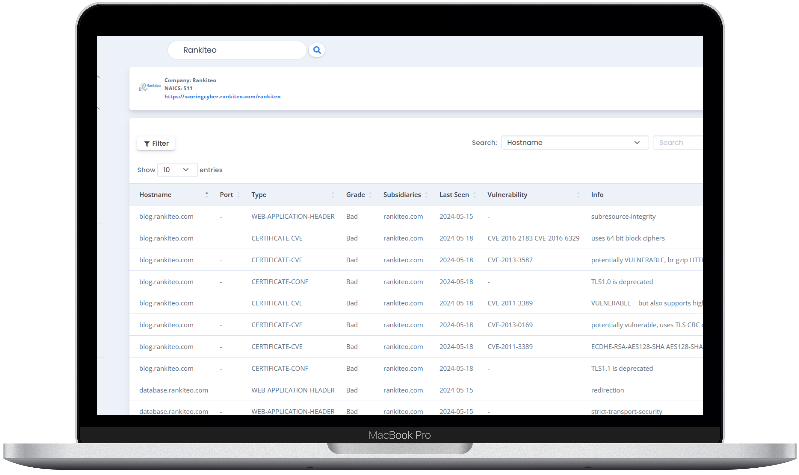
Identify exposed access points, detect misconfigured SSL certificates, and uncover vulnerabilities across the network infrastructure.
Gain visibility into the software components used within an organization to detect vulnerabilities, manage risk, and ensure supply chain security.
Monitor and manage all IT assets and their configurations to ensure accurate, real-time visibility across the company's technology environment.
Leverage real-time insights on active threats, malware campaigns, and emerging vulnerabilities to proactively defend against evolving cyberattacks.








 Rapid
Rapid