





Amazon
Company Details
Linkedin ID:
amazon
Website:
Employees number:
746,947
Number of followers:
34,863,023
NAICS:
5112
Industry Type:
Homepage:
aboutamazon.com
IP Addresses:
18673
Company ID:
AMA_5988422
Scan Status:
Completed

Amazon Company CyberSecurity Posture
aboutamazon.com





Amazon is guided by four principles: customer obsession rather than competitor focus, passion for invention, commitment to operational excellence, and long-term thinking. We are driven by the excitement of building technologies, inventing products, and providing services that change lives. We embrace new ways of doing things, make decisions quickly, and are not afraid to fail. We have the scope and capabilities of a large company, and the spirit and heart of a small one. Together, Amazonians research and develop new technologies from Amazon Web Services to Alexa on behalf of our customers: shoppers, sellers, content creators, and developers around the world. Our mission is to be Earth's most customer-centric company. Our actions, goals, projects, programs, and inventions begin and end with the customer top of mind. You'll also hear us say that at Amazon, it's always "Day 1." What do we mean? That our approach remains the same as it was on Amazon's very first day - to make smart, fast decisions, stay nimble, invent, and focus on delighting our customers.
Company Details
amazon
746,947
34,863,023
5112
aboutamazon.com
18673
AMA_5988422
Completed
 Amazon Risk Score (AI oriented)
Between 800 and 849
 Amazon Global Score (TPRM)
XXXX
Description: Amazon’s customer service representative was tricked into disclosing Eric Springer, a user’s personal information by an attacker who used social engineering techniques. The attack initiated through the mail ended up in the attacker getting the credit card details along with the address and other details. The incident got all highlighted on the internet and people on the web demanded social engineering training to be given to employees to prevent any such incidents in the future.
Description: Amazon had fired a number of employees after they shared customer email address and phone numbers with a third-party violating of their policies. No other information related to account was shared.
Description: Within hours of the public disclosure of CVE-2025-55182 (React2Shell) on December 3, 2025, Amazon threat intelligence teams observed active exploitation attempts by multiple China state-nexus threat groups, including Earth Lamia and Jackpot Panda. This critical vulnerability in React Server Components has a maximum Common Vulnerability Scoring System (CVSS) score of 10.0 and affects React versions 19.x and Next.js versions 15.x and 16.x when using App Router. While this vulnerability doesn’t affect AWS services, we are sharing this threat intelligence to help customers running React or Next.js applications in their own environments take immediate action. China continues to be the most prolific source of state-sponsored cyber threat activity, with threat actors routinely operationalizing public exploits within hours or days of disclosure. Through monitoring in our AWS MadPot honeypot infrastructure, Amazon threat intelligence teams have identified both known groups and previously untracked threat clusters attempting to exploit CVE-2025-55182. AWS has deployed multiple layers of automated protection through Sonaris active defense, AWS WAF managed rules (AWSManagedRulesKnownBadInputsRuleSet version 1.24 or higher), and perimeter security controls. However, these protections aren’t substitutes for patching. Customers using managed AWS services aren’t affected, and no action is required. Customers running React or Next.js in their own environments (Amazon Elastic Compute Cloud (A
Description: webXray, a tool designed to expose privacy violations on the internet, reveals how tech giants like Google and various websites track user data and browsing habits. Developed by former Google engineer Tim Libert, webXray analyzes web activity to identify which sites collect data, including sensitive information. Such tracking, often without clear user consent, can breach laws like HIPAA and GDPR, posing serious threats to individuals' privacy. The tool aims to empower regulators and attorneys to assess and rectify these violations, promoting a balanced digital ecosystem.
Description: Darktrace researchers uncovered a cyber campaign dubbed **ShadowV2**, exploiting misconfigured **exposed Docker APIs** on **AWS EC2 instances**. Attackers leveraged the **Python Docker SDK** to interact with unsecured Docker daemons, deploying malicious containers directly on victims' systems instead of using prebuilt images—likely to minimize forensic evidence. The compromised Docker environments were then repurposed as launchpads for **DDoS (Distributed Denial of Service) attacks**, turning cloud-native misconfigurations into a scalable attack vector. While AWS Docker instances are **not exposed to the internet by default**, improper configurations enabled external access, allowing threat actors to infiltrate systems. The attack highlights the industrialization of cybercrime, where **DDoS-as-a-service** models—complete with APIs, dashboards, and user interfaces—are commoditized. Although the article does not specify direct financial or data losses, the exploitation of cloud infrastructure for large-scale DDoS operations poses **reputational risks**, **operational disruptions**, and potential **financial liabilities** for AWS customers whose instances were hijacked. The incident underscores the growing sophistication of cybercriminals in weaponizing misconfigured cloud services, with **AWS EC2** serving as a primary target in this campaign. While no customer data breaches were reported, the abuse of Docker APIs for malicious purposes could erode trust in AWS’s security posture, particularly among enterprises relying on containerized workloads.
Description: AWS experienced a **16-hour global outage on October 20**, caused by **DNS resolution issues** in its US-East-1 region, disrupting hundreds of critical online services worldwide. Affected platforms included **Zoom, Canva, banks, airlines, Roblox, Fortnite, Snapchat, and Reddit**, with thousands of users in Singapore reporting disruptions via Downdetector. The outage stemmed from a **chain of failures**: initial DNS problems led to impairments in AWS’s internal subsystem monitoring network load balancers, followed by a **backlog of internet traffic requests**, prolonging restoration. The incident mirrored the severity of a **coordinated cyber attack**, exposing vulnerabilities in cloud resilience and overreliance on legacy technologies like DNS. While AWS confirmed **increased error rates and latencies**, the root cause (hardware error, misconfiguration, or human error) remains undisclosed. The outage underscored risks to **global digital infrastructure**, prompting regulatory responses like Singapore’s upcoming **Digital Infrastructure Act** to enforce stricter security and resilience standards for cloud providers. The economic and operational ripple effects highlighted the **concentrated risk** of single-point failures in cloud services, disrupting businesses, financial transactions, and daily digital activities for millions.
Description: AWS, the world’s largest cloud computing platform (30% market share), suffered a major outage due to a malfunction at its Northern Virginia data center. The incident disrupted thousands of organizations globally, including banks (e.g., financial software like Xero), social media platforms (e.g., Snapchat), and other digital services. While AWS claimed to have resolved the underlying issue, residual disruptions persisted for some users. The outage exposed critical vulnerabilities in cloud reliance, triggering cascading failures across dependent systems. Businesses faced operational paralysis, financial losses from downtime, and reputational damage due to service unavailability. The incident underscored risks like single points of failure in centralized cloud infrastructure, vendor lock-in challenges, and geopolitical regulatory complexities. Previous outages by competitors (Microsoft Azure, Google Cloud) in 2024 further highlighted systemic fragility in the oligopolistic cloud market, where a minor technical error can cripple global digital ecosystems.
Description: An Amazon S3 bucket containing scans of about 119,000 US and foreign citizens' IDs and personal information was found by researchers. The firm that owns the data, Bongo International, is owned by FedEx and supports North American retailers' and brands' online sales to customers abroad. In the AWS bucket were over 112,000 files, unencrypted data, and customer ID scans from a wide range of nations, including the US, Mexico, Canada, many EU nations, Saudi Arabia, Kuwait, Japan, Malaysia, China, and Australia. FedEx did not remove the S3 bucket until its presence was made public, despite Kromtech's best efforts to get in touch with them.
Description: Cybersecurity researchers have warned about a new wave of ransomware attacks targeting **AWS S3 buckets**, a widely used cloud storage service. Unlike traditional ransomware that encrypts or deletes data, attackers are now abusing **cloud-native encryption and key management services** to render data permanently unrecoverable. By manipulating built-in AWS capabilities like **key rotation and encryption controls**, threat actors can lock organizations out of their own storage without triggering typical breach detection mechanisms.The shift reflects an evolution in ransomware tactics, as defenders strengthen perimeter defenses. Organizations relying on S3 buckets for critical data—including customer records, financial documents, or proprietary assets—face severe operational disruptions if encryption keys are compromised. Recovery may require paying ransoms or accepting irreversible data loss, particularly if backups are also encrypted or inaccessible. The attack method exploits **trusted cloud functionalities**, making it harder to distinguish malicious activity from legitimate administrative actions.Given AWS’s dominance in cloud infrastructure, successful exploits could cascade across dependent services, affecting businesses, governments, and end-users. The technique underscores the growing sophistication of ransomware groups in targeting **cloud environments**, where traditional security models may fall short.
Description: A vulnerability in Amazon Web Services' Application Load Balancer was discovered by security firm Miggo, which could potentially allow an attacker to bypass access controls and compromise web applications. This vulnerability was not due to a software flaw but stemmed from customers' configuration of the service, particularly the setup of authentication. Researchers identified over 15,000 web applications with potentially vulnerable configurations, though AWS disputes the figure and has contacted customers to recommend more secure setups. Exploiting this vulnerability would involve token forgery by the attacker to obtain unauthorized access to applications, escalating privileges within the system.
Description: A critical vulnerability (CVE-2025-12779) in the **Amazon WorkSpaces client for Linux (versions 2023.0–2024.8)** exposes improper handling of authentication tokens, allowing local attackers to extract valid tokens left accessible by the client. This flaw enables unauthorized access to a victim’s private WorkSpaces session, granting control over their virtual environment. The risk is heightened in **shared or multi-user Linux systems**, where malicious actors could exploit the vulnerability to hijack sessions, access sensitive data, or perform actions on behalf of the compromised user. AWS has released a patch in **version 2025.0** and urged immediate updates, but unpatched systems remain exposed to session takeover attacks. While no evidence of active exploitation has been reported, the vulnerability underscores the risks of inadequate token management in cloud-based desktop solutions, potentially leading to **data breaches, privilege escalation, or lateral movement within corporate networks** if abused in enterprise environments.
Description: AWS’s **Trusted Advisor** tool, designed to alert customers if their **S3 storage buckets** are publicly exposed, was found to be vulnerable to manipulation by **Fog Security researchers**. By tweaking **bucket policies** or **ACLs** (Access Control Lists) and adding **deny policies** (e.g., blocking `s3:GetBucketPolicyStatus`, `s3:GetBucketPublicAccessBlock`, or `s3:GetBucketAcl`), attackers or misconfigured users could make buckets **publicly accessible** while preventing Trusted Advisor from detecting the exposure. This flaw allowed **potential data exfiltration** without triggering security warnings, posing risks of **unauthorized access to sensitive data**.The issue was privately reported to AWS, which implemented fixes in **June 2025** to correct Trusted Advisor’s detection logic. However, concerns remain about **inadequate user notifications**, as some accounts (including the researcher’s test account) did not receive alerts, leaving them unaware of the need to recheck bucket permissions. AWS recommended enabling **Block Public Access settings**, retiring **legacy ACLs**, and using **IAM policies** for stricter control. Fog Security also released an **open-source scanning tool** to help users identify misconfigured S3 buckets.The vulnerability highlights risks of **insider threats (malicious or accidental)**, **credential compromise**, and **misconfigurations** leading to **unintended public exposure of data**, potentially affecting **customer trust, compliance, and data security**.
Description: A security flaw in Ring’s Neighbors app exposed the precise locations and home addresses of users who had posted to the app. It included the videos taken by Ring doorbells and security cameras and the bug made it possible to retrieve the location data of users who posted to the app. The bug retrieved the hidden data, including the user’s latitude and longitude and their home address, from Ring’s servers. The hackers also created tools to break into Ring accounts and over 1,500 user account passwords were found on the dark web.
Description: Ring, a subsidiary of Amazon, faced a significant issue on May 28th when customers reported unauthorized devices logged into their accounts from various locations worldwide. While Ring attributed this to a backend update bug, customers remained skeptical, citing unknown devices and strange IP addresses. The company's explanation was met with disbelief, as users saw logins from countries they had never visited and devices they did not recognize. Additionally, some users reported live view activity during times when no one accessed the app and missed security alerts or multi-factor authentication prompts. Ring's lack of clarity and the persistence of the issue have raised concerns among customers about potential security breaches.
Description: 3,672 Ring camera owners' login information, including login emails, passwords, time zones, and the names people give to certain Ring cameras, was stolen. This enables a potential assailant to observe cameras in someone's home, which is a grave potential breach of privacy. A hacker might access a Ring customer's home address, phone number, and payment information, including the type of card they have, its last four numbers, and security code, using the login email and password. The nature of the leaked data, which contains a username, password, camera name, and time zone in a standardized format, shows that it was acquired from a company database.
Description: Amazon-owned home security camera company Ring fired employees for improperly accessing Ring users' video data. This data can be particularly sensitive though, as customers often put the cameras inside their home. Ring employees in Ukraine were given unrestricted access to videos from Ring cameras around the world.
Description: Amazon.com Inc’s live streaming e-sports platform Twitch was hit by a data breach. An anonymous hacker leaked Twitch data, including information related to the company’s source code, clients and unreleased games, according to Video Games Chronicle. The data was exposed due to an error in a Twitch server configuration change and was subsequently accessed by a malicious third party.
Description: Whole Foods Market chain Whole Foods Market Suffered Payment Card Breach. The security breach report states that thieves were able to obtain credit card details of patrons who made transactions at specific locations, such as full-service restaurants and taprooms inside some stores, without authorization. Whole Foods Market was notified of an incident in which payment card information used at select establishments like full-service restaurants and taprooms located within some locations was improperly accessed. The locations and total number of consumers affected by the attack remain unknown, as the company has not released any information about it.
Description: The California Office of the Attorney General disclosed a **data breach** at **Whole Foods Market Services, Inc.** in October 2017. The incident involved **unauthorized access to payment card information**, exposing transactions conducted between **March 10, 2017, and September 28, 2017**. The breach was detected on **September 23, 2017**, though the exact number of affected individuals was not specified. The compromised data included **customer payment details**, potentially enabling fraudulent activity. While the full scope of the breach remains unclear, the exposure of financial information poses risks to customer trust and financial security. The incident highlights vulnerabilities in payment processing systems, emphasizing the need for robust cybersecurity measures to prevent similar breaches in the future.


Amazon has 72.41% more incidents than the average of same-industry companies with at least one recorded incident.
Amazon has 29.87% more incidents than the average of all companies with at least one recorded incident.
Amazon reported 1 incidents this year: 0 cyber attacks, 0 ransomware, 1 vulnerabilities, 0 data breaches, compared to industry peers with at least 1 incident.
Amazon cyber incidents detection timeline including parent company and subsidiaries

Amazon is guided by four principles: customer obsession rather than competitor focus, passion for invention, commitment to operational excellence, and long-term thinking. We are driven by the excitement of building technologies, inventing products, and providing services that change lives. We embrace new ways of doing things, make decisions quickly, and are not afraid to fail. We have the scope and capabilities of a large company, and the spirit and heart of a small one. Together, Amazonians research and develop new technologies from Amazon Web Services to Alexa on behalf of our customers: shoppers, sellers, content creators, and developers around the world. Our mission is to be Earth's most customer-centric company. Our actions, goals, projects, programs, and inventions begin and end with the customer top of mind. You'll also hear us say that at Amazon, it's always "Day 1." What do we mean? That our approach remains the same as it was on Amazon's very first day - to make smart, fast decisions, stay nimble, invent, and focus on delighting our customers.


GlobalLogic, a Hitachi Group company, is a trusted partner in design, data, and digital engineering for the world’s largest and most innovative companies. Since our inception in 2000, we have been at the forefront of the digital revolution, helping to create some of the most widely used digital prod

ServiceNow (NYSE: NOW) makes the world work better for everyone. Our cloud-based platform and solutions help digitize and unify organizations so that they can find smarter, faster, better ways to make work flow. So employees and customers can be more connected, more innovative, and more agile. And w
Starting our journey in 2011, today, bigbasket - a Tata Enterprise is India’s largest online supermarket with over 13 million customers and a presence in 60+ cities & towns. With our presence spanning the entire spectrum of consumer needs, we operate through a range of business lines - bigbasket, bb

With our unique ability to offer end-to-end solutions that connect the three pillars of IoT - Sensors, Software, and Services, we enable businesses to move from the traditional to the digital, or improve businesses by introducing a digital element in their products and processes. Now more than ever
Red Hat is the world’s leading provider of enterprise open source solutions, using a community-powered approach to deliver high-performing Linux, hybrid cloud, edge, and Kubernetes technologies. We hire creative, passionate people who are ready to contribute their ideas, help solve complex problems

More than one billion people around the world use Instagram, and we’re proud to be bringing them closer to the people and things they love. Instagram inspires people to see the world differently, discover new interests, and express themselves. Since launching in 2010, our community has grown at a r

Adhering to the ‘Retail + Technology’ strategy, Meituan commits to its mission that 'We help people eat better, live better'. Since its establishment in March 2010, Meituan has advanced the digital upgrading of services and goods retail on both supply and demand sides. Together with our partners we
As a global leader in business cloud software specialized by industry. Infor develops complete solutions for its focus industries, including industrial manufacturing, distribution, healthcare, food & beverage, automotive, aerospace & defense, hospitality, and high tech. Infor’s mission-critical ente

DiDi Global Inc. is a leading mobility technology platform. It offers a wide range of app-based services across Asia Pacific, Latin America, and other global markets, including ride hailing, taxi hailing, designated driving, hitch and other forms of shared mobility as well as certain energy and vehi
.png)
Enhanced capability in Cribl Stream transforms disparate security findings into a standardized format, accelerating threat correlation and...
AI is evolving at a rapid pace, and the uptake of Generative AI (GenAI) is revolutionising the way humans interact and leverage this technology. GenAI is.
CrowdStrike, Global X Cybersecurity ETF, Prologis and Amazon are among the final picks on the latest edition of CNBC's "Final Trades."
Updated Nov. 29 with Amazon's response to the raft of holiday season security warnings and additional advice for customers on how to stay...
Recent investigations by Amazon's threat intelligence teams have uncovered a trend they describe as cyber-enabled kinetic targeting,...
Amazon.com Inc. has shared details about an internally developed artificial intelligence system it uses to find vulnerabilities in its...
Amazon's new AI system uses competing agent teams to find vulnerabilities faster.
Born out of an internal hackathon, Amazon's Autonomous Threat Analysis system uses a variety of specialized AI agents to detect weaknesses...
Amazon warns that nation-state hackers are now using cyber intrusions to enable real-world missile targeting and physical strikes.

Explore insights on cybersecurity incidents, risk posture, and Rankiteo's assessments.
The official website of Amazon is https://www.aboutamazon.com/.
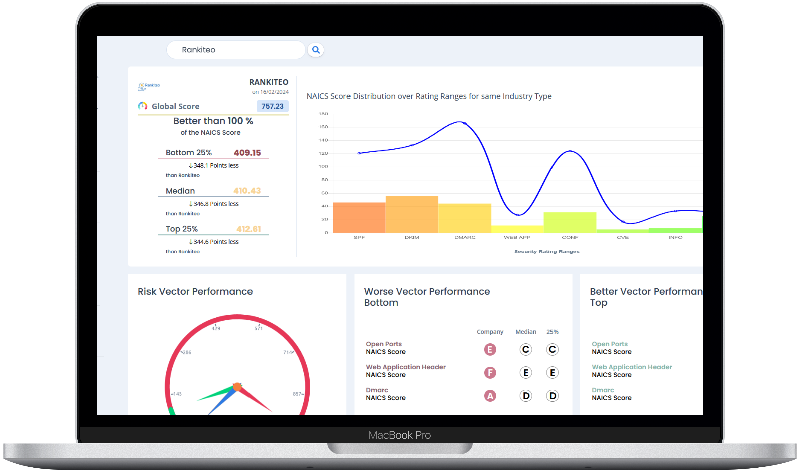
According to Rankiteo, Amazon’s AI-generated cybersecurity score is 842, reflecting their Good security posture.
According to Rankiteo, Amazon currently holds 0 security badges, indicating that no recognized compliance certifications are currently verified for the organization.
According to Rankiteo, Amazon is not certified under SOC 2 Type 1.
According to Rankiteo, Amazon does not hold a SOC 2 Type 2 certification.
According to Rankiteo, Amazon is not listed as GDPR compliant.
According to Rankiteo, Amazon does not currently maintain PCI DSS compliance.
According to Rankiteo, Amazon is not compliant with HIPAA regulations.
According to Rankiteo,Amazon is not certified under ISO 27001, indicating the absence of a formally recognized information security management framework.
Amazon operates primarily in the Software Development industry.
Amazon employs approximately 746,947 people worldwide.
Amazon presently has no subsidiaries across any sectors.
Amazon’s official LinkedIn profile has approximately 34,863,023 followers.
Amazon is classified under the NAICS code 5112, which corresponds to Software Publishers.
Yes, Amazon has an official profile on Crunchbase, which can be accessed here: https://www.crunchbase.com/organization/amazon.
Yes, Amazon maintains an official LinkedIn profile, which is actively utilized for branding and talent engagement, which can be accessed here: https://www.linkedin.com/company/amazon.
As of December 11, 2025, Rankiteo reports that Amazon has experienced 19 cybersecurity incidents.
Amazon has an estimated 27,532 peer or competitor companies worldwide.
Incident Types: The types of cybersecurity incidents that have occurred include Data Leak, Vulnerability, Breach, Ransomware and Cyber Attack.
Detection and Response: The company detects and responds to cybersecurity incidents through an communication strategy with public demand for social engineering training, and remediation measures with fired employees, and containment measures with removed the s3 bucket, and remediation measures with ring is deploying a fix, and communication strategy with ring posted on facebook and updated its status page, and and third party assistance with fog security (researchers who discovered the issue), and containment measures with aws implemented fixes to trusted advisor in june 2025 to correctly detect misconfigured buckets, containment measures with emails sent to customers notifying them of the issue and fixes, and remediation measures with customers advised to enable block public access settings at account and bucket levels, remediation measures with switch from acls to iam policies recommended, remediation measures with manual review of s3 bucket configurations urged, and recovery measures with aws trusted advisor now displays correct bucket status, recovery measures with open-source tool released by fog security to scan s3 resources for access issues, and communication strategy with aws sent emails to customers (though coverage may be incomplete), communication strategy with public disclosure via cybersecurity news outlets (e.g., help net security), and communication strategy with public disclosure via california office of the attorney general, and third party assistance with darktrace (detection and analysis), and remediation measures with securing exposed docker apis, remediation measures with disabling unnecessary external access to docker daemons, remediation measures with reviewing aws ec2 configurations, and enhanced monitoring with darktrace honeypots for detection, and incident response plan activated with yes (aws acknowledged increased error rates and latencies; detailed post-event summary pending), and containment measures with resolved dns resolution issues, containment measures with addressed impairments in internal subsystem for network load balancer health monitoring, and remediation measures with cleared backlog of internet traffic requests, remediation measures with restored services to normal operations, and recovery measures with full service restoration after ~16 hours, and communication strategy with public acknowledgment via aws status website; spokeswoman provided updates to media (no detailed timeline for post-event summary), and incident response plan activated with yes (aws reported fixing the underlying issue), and containment measures with technical fix applied to data center malfunction, and and containment measures with urgent security bulletin (aws-2025-025), containment measures with end-of-support notification for affected versions, and remediation measures with upgrade to amazon workspaces client for linux version 2025.0 or newer, and communication strategy with security bulletin, communication strategy with direct outreach via [email protected], communication strategy with public advisory, and remediation measures with hardening s3 bucket configurations, remediation measures with enhancing encryption key management, remediation measures with monitoring for abnormal key rotation activities, and enhanced monitoring with cloud-native security tools for encryption/key management anomalies, and containment measures with aws waf managed rules (awsmanagedrulesknownbadinputsruleset version 1.24 or higher), perimeter security controls, and remediation measures with patching required for affected react/next.js versions, and communication strategy with public threat intelligence sharing, and adaptive behavioral waf with sonaris active defense, and enhanced monitoring with aws madpot honeypot infrastructure..
Title: Amazon Customer Service Social Engineering Incident
Description: An attacker used social engineering techniques to trick an Amazon customer service representative into disclosing personal information of a user named Eric Springer. The attacker obtained credit card details, address, and other personal information.
Type: Data Breach
Attack Vector: Social Engineering
Vulnerability Exploited: Human Error
Threat Actor: Unknown
Motivation: Theft of Personal Information
Title: Ring Neighbors App Security Flaw
Description: A security flaw in Ring’s Neighbors app exposed the precise locations and home addresses of users who had posted to the app. It included the videos taken by Ring doorbells and security cameras and the bug made it possible to retrieve the location data of users who posted to the app. The bug retrieved the hidden data, including the user’s latitude and longitude and their home address, from Ring’s servers. The hackers also created tools to break into Ring accounts and over 1,500 user account passwords were found on the dark web.
Type: Data Breach
Attack Vector: Exploitation of Software Vulnerability
Vulnerability Exploited: Security flaw in Neighbors app
Threat Actor: Hackers
Motivation: Data Theft
Title: Ring Employees Fired for Improper Access to User Video Data
Description: Amazon-owned home security camera company Ring fired employees for improperly accessing Ring users' video data. This data can be particularly sensitive as customers often put the cameras inside their home. Ring employees in Ukraine were given unrestricted access to videos from Ring cameras around the world.
Type: Data Breach
Attack Vector: Insider Threat
Vulnerability Exploited: Improper Access Controls
Threat Actor: Ring Employees
Motivation: Unauthorized Access
Title: Amazon Employee Data Breach
Description: Amazon had fired a number of employees after they shared customer email addresses and phone numbers with a third-party in violation of their policies. No other information related to account was shared.
Type: Data Breach
Attack Vector: Insider Threat
Vulnerability Exploited: Policy Violation
Threat Actor: Employees
Motivation: Unknown
Title: Twitch Data Breach
Description: An anonymous hacker leaked Twitch data, including information related to the company’s source code, clients, and unreleased games.
Type: Data Breach
Attack Vector: Configuration Error
Vulnerability Exploited: Error in server configuration change
Threat Actor: Anonymous Hacker
Title: Ring Camera Data Breach
Description: 3,672 Ring camera owners' login information, including login emails, passwords, time zones, and the names people give to certain Ring cameras, was stolen. This enables a potential assailant to observe cameras in someone's home, which is a grave potential breach of privacy. A hacker might access a Ring customer's home address, phone number, and payment information, including the type of card they have, its last four numbers, and security code, using the login email and password.
Type: Data Breach
Attack Vector: Unauthorized Access
Threat Actor: Unknown
Motivation: Data Theft
Title: Whole Foods Market Payment Card Breach
Description: Whole Foods Market chain suffered a payment card breach where thieves obtained credit card details of patrons who made transactions at specific locations, such as full-service restaurants and taprooms inside some stores, without authorization.
Type: Data Breach
Attack Vector: Payment Card Systems
Threat Actor: Thieves
Motivation: Financial Gain
Title: Data Exposure of Bongo International's S3 Bucket
Description: An Amazon S3 bucket containing scans of about 119,000 US and foreign citizens' IDs and personal information was found by researchers. The firm that owns the data, Bongo International, is owned by FedEx and supports North American retailers' and brands' online sales to customers abroad. In the AWS bucket were over 112,000 files, unencrypted data, and customer ID scans from a wide range of nations, including the US, Mexico, Canada, many EU nations, Saudi Arabia, Kuwait, Japan, Malaysia, China, and Australia. FedEx did not remove the S3 bucket until its presence was made public, despite Kromtech's best efforts to get in touch with them.
Type: Data Exposure
Attack Vector: Misconfigured S3 Bucket
Vulnerability Exploited: Misconfiguration
Title: Privacy Violations Exposed by webXray
Description: webXray, a tool designed to expose privacy violations on the internet, reveals how tech giants like Google and various websites track user data and browsing habits. Developed by former Google engineer Tim Libert, webXray analyzes web activity to identify which sites collect data, including sensitive information. Such tracking, often without clear user consent, can breach laws like HIPAA and GDPR, posing serious threats to individuals' privacy. The tool aims to empower regulators and attorneys to assess and rectify these violations, promoting a balanced digital ecosystem.
Type: Privacy Violation
Attack Vector: Data Tracking
Vulnerability Exploited: Lack of clear user consent
Motivation: Data Collection
Title: AWS Application Load Balancer Vulnerability
Description: A vulnerability in Amazon Web Services' Application Load Balancer was discovered by security firm Miggo, which could potentially allow an attacker to bypass access controls and compromise web applications. This vulnerability was not due to a software flaw but stemmed from customers' configuration of the service, particularly the setup of authentication. Researchers identified over 15,000 web applications with potentially vulnerable configurations, though AWS disputes the figure and has contacted customers to recommend more secure setups. Exploiting this vulnerability would involve token forgery by the attacker to obtain unauthorized access to applications, escalating privileges within the system.
Type: Misconfiguration
Attack Vector: Token Forgery
Vulnerability Exploited: Misconfiguration of AWS Application Load Balancer Authentication
Motivation: Unauthorized Access, Privilege Escalation
Title: Ring Backend Update Bug Causes Unauthorized Device Logins
Description: Ring customers reported seeing unusual devices logged into their accounts from various locations worldwide, leading them to believe their accounts had been hacked. Ring attributed this to a backend update bug.
Date Detected: 2023-05-28
Type: Bug/Exploit
Attack Vector: Backend Update Bug
Vulnerability Exploited: Backend Update Bug
Title: AWS Trusted Advisor Misconfiguration Vulnerability Allows Public S3 Bucket Exposure Without Detection
Description: Fog Security researchers discovered a vulnerability in AWS’s Trusted Advisor tool, which failed to detect publicly exposed S3 storage buckets due to specific bucket policy misconfigurations. Attackers or malicious insiders could exploit this to make S3 buckets publicly accessible without triggering Trusted Advisor warnings. The issue was privately reported to AWS and fixed in June 2025, but concerns remain about inadequate customer notifications and potential lingering misconfigurations.
Date Resolved: 2025-06
Type: Misconfiguration
Attack Vector: Insider Threat (Malicious or Accidental)Compromised AWS CredentialsPolicy Manipulation
Vulnerability Exploited: AWS Trusted Advisor Bypass via S3 Bucket Policy Misconfiguration (Deny Rules for `s3:GetBucketPolicyStatus`, `s3:GetBucketPublicAccessBlock`, `s3:GetBucketAcl`)
Threat Actor: Malicious Insiders (e.g., disgruntled employees)External Attackers with Compromised CredentialsAccidental Misconfiguration by Legitimate Users
Motivation: Data ExfiltrationUnauthorized Data AccessCovert PersistenceAccidental Exposure
Title: Whole Foods Market Data Breach (2017)
Description: The California Office of the Attorney General reported a data breach involving Whole Foods Market Services, Inc. on October 20, 2017. The breach involved unauthorized access to payment card information and was discovered on September 23, 2017. It affected transactions conducted between March 10, 2017, and September 28, 2017. The number of individuals affected remains unknown.
Date Detected: 2017-09-23
Date Publicly Disclosed: 2017-10-20
Type: Data Breach
Title: ShadowV2 DDoS Campaign Exploiting Exposed Docker APIs on AWS EC2
Description: Darktrace researchers discovered that the ShadowV2 threat group is exploiting misconfigured, exposed Docker APIs on AWS EC2 instances to launch DDoS attacks. The attackers use the Python Docker SDK to interact with exposed Docker daemons, building malicious containers directly on victim machines rather than importing prebuilt images. This approach may reduce forensic traces. The campaign highlights the industrialization of cybercrime, with DDoS attacks being treated as a business service by threat actors.
Type: DDoS Attack
Attack Vector: Exposed Docker APIMisconfigured AWS EC2 InstancesPython Docker SDK
Vulnerability Exploited: Misconfigured Docker Daemon (Exposed to Internet)Improper Access Controls on AWS EC2
Threat Actor: ShadowV2
Motivation: Financial GainDisruptionCybercrime-as-a-Service
Title: AWS Global Outage Due to DNS Resolution Issues (October 20, 2024)
Description: Amazon Web Services (AWS) experienced a 16-hour global outage on October 20, 2024, attributed to DNS resolution issues in the US-East-1 region. The outage disrupted hundreds of online services globally, including Zoom, Canva, Roblox, Fortnite, Snapchat, Reddit, and banking/airline services. The incident was resolved after addressing DNS issues, internal subsystem impairments (network load balancer health monitoring), and a backlog of internet traffic requests. AWS has not yet disclosed the root cause (e.g., hardware error, misconfiguration, human error, or cyber attack), but experts likened its impact to a coordinated cyber attack due to its scale and reliance on legacy technologies like DNS.
Date Detected: 2024-10-20T09:00:00Z
Date Publicly Disclosed: 2024-10-20
Date Resolved: 2024-10-21T01:00:00Z
Type: Service Disruption
Title: Major AWS Outage Impacts Thousands of Organizations Globally
Description: AWS (Amazon Web Services), the world’s largest cloud computing platform, experienced a major outage caused by a malfunction at one of its data centers in Northern Virginia, USA. The incident disrupted services for thousands of organizations, including banks, financial software platforms like Xero, and social media platforms like Snapchat. While AWS reported fixing the underlying issue, some users continued to experience service disruptions. The outage underscores the vulnerabilities of heavy reliance on cloud computing and the risks of single points of failure in centralized systems.
Type: Service Disruption
Vulnerability Exploited: Malfunction at AWS data center (likely a configuration error)
Title: Critical Authentication Token Exposure in Amazon WorkSpaces Client for Linux (CVE-2025-12779)
Description: A recently disclosed vulnerability in the Amazon WorkSpaces client for Linux (CVE-2025-12779) exposes a critical security flaw that could allow attackers to gain unauthorized access to user environments due to improper handling of authentication tokens. The issue affects versions 2023.0 through 2024.8, where local users on the same machine could extract valid authentication tokens left accessible by the client, potentially gaining control over another user’s private virtual WorkSpace session. AWS has addressed the issue in version 2025.0 and urges immediate updates.
Date Publicly Disclosed: 2025-11-05
Type: Vulnerability
Attack Vector: LocalImproper Authentication Token Handling
Vulnerability Exploited: CVE-2025-12779
Title: Ransomware Operators Targeting AWS S3 Buckets with Cloud-Native Encryption Abuse
Description: Cybersecurity researchers have warned about ransomware operators shifting focus from traditional on-premises targets to cloud storage services, particularly AWS S3 buckets. A Trend Micro report highlights a new wave of attacks where attackers abuse cloud-native encryption and key management services (e.g., encryption management, key rotation) to render data unrecoverable, rather than merely stealing or deleting it. This evolution reflects attackers adapting to stronger perimeter protections adopted by organizations.
Type: ransomware
Attack Vector: abuse of cloud-native encryption serviceskey management service manipulationmisconfigured S3 buckets
Vulnerability Exploited: misconfigured AWS S3 bucket permissionsweak encryption key management practicesinsufficient cloud-native security controls
Motivation: financial gain (ransom)disruption of operations
Title: Exploitation of CVE-2025-55182 (React2Shell) in React Server Components
Description: Amazon threat intelligence teams observed active exploitation attempts by multiple China state-nexus threat groups, including Earth Lamia and Jackpot Panda, within hours of the public disclosure of CVE-2025-55182 (React2Shell). This critical vulnerability affects React versions 19.x and Next.js versions 15.x and 16.x when using App Router.
Date Detected: 2025-12-03
Date Publicly Disclosed: 2025-12-03
Type: Exploitation of Zero-Day Vulnerability
Attack Vector: Remote Code Execution (RCE)
Vulnerability Exploited: CVE-2025-55182 (React2Shell)
Threat Actor: Earth LamiaJackpot PandaPreviously untracked threat clusters
Motivation: State-sponsored cyber operations
Common Attack Types: The most common types of attacks the company has faced is Cyber Attack.
Identification of Attack Vectors: The company identifies the attack vectors used in incidents through Email, Security flaw in Neighbors app, Exposed Docker API on AWS EC2 and misconfigured S3 bucketscompromised cloud credentials.

Data Compromised: Credit card details, Address, Other personal information
Brand Reputation Impact: High
Identity Theft Risk: High
Payment Information Risk: High
Data Compromised: Home addresses, Latitude and longitude, User account passwords
Systems Affected: Ring Neighbors app
Data Compromised: Video Data
Systems Affected: Ring Security Cameras
Data Compromised: Email addresses, Phone numbers
Data Compromised: Source code, Clients information, Unreleased games
Data Compromised: Login emails, Passwords, Time zones, Camera names, Home address, Phone number, Payment information
Systems Affected: Ring Cameras
Identity Theft Risk: High
Payment Information Risk: High
Data Compromised: Payment card information
Systems Affected: Payment Card Systems
Payment Information Risk: High

Data Compromised: Id scans, Personal information
Systems Affected: Amazon S3 Bucket
Identity Theft Risk: High
Data Compromised: User data and browsing habits
Brand Reputation Impact: Negative
Legal Liabilities: Potential breach of HIPAA and GDPR
Systems Affected: Ring Accounts
Customer Complaints: ['Users reported unknown devices and strange IP addresses', 'Users reported live view activity without household access', 'Users reported not receiving security alerts or MFA prompts']
Data Compromised: Potential exposure of sensitive data in publicly accessible S3 buckets (scope depends on bucket contents)
Systems Affected: AWS S3 BucketsTrusted Advisor Security Checks
Operational Impact: False sense of security due to undetected public bucket exposure; potential for unauthorized data access or exfiltration
Brand Reputation Impact: Risk of reputational damage for AWS and affected customers if data breaches occur due to undetected exposures
Legal Liabilities: Potential compliance violations (e.g., GDPR, CCPA) if sensitive data is exposed
Identity Theft Risk: High (if PII is stored in affected buckets)
Payment Information Risk: High (if payment data is stored in affected buckets)
Data Compromised: Payment card information
Identity Theft Risk: Potential (due to payment card exposure)
Payment Information Risk: High

Systems Affected: AWS EC2 Instances with Exposed Docker APIsVictim Containers
Operational Impact: Potential Service Disruption from DDoSResource Hijacking for Attack Infrastructure
Brand Reputation Impact: Potential Reputation Damage for Affected OrganizationsHighlighting Cloud Security Gaps
Systems Affected: DNS infrastructureNetwork load balancersMultiple AWS services in US-East-1
Downtime: 16 hours (from ~2024-10-20T09:00:00Z to ~2024-10-21T01:00:00Z)
Operational Impact: Severe disruption to global online services (e.g., banking, airlines, gaming, social media, productivity tools)
Customer Complaints: Thousands of reports on Downdetector (Singapore and globally)
Brand Reputation Impact: Highlighted overreliance on AWS and legacy DNS technologies; compared to CrowdStrike (July 2024) and Equinix (October 2023) outages
Systems Affected: Cloud servicesBanking platformsFinancial software (e.g., Xero)Social media (e.g., Snapchat)
Downtime: Prolonged (exact duration unspecified; some disruptions persisted after initial fix)
Operational Impact: Severe (domino effect paralyzing vast segments of the internet)
Customer Complaints: Likely high (widespread service disruptions reported)
Brand Reputation Impact: Moderate (highlights vulnerabilities in cloud reliance)

Data Compromised: Authentication tokens, Potential workspace session access
Systems Affected: Amazon WorkSpaces client for Linux (versions 2023.0–2024.8)
Operational Impact: Unauthorized Access to Virtual WorkSpacesRisk in Shared/Multi-User Environments
Brand Reputation Impact: Potential Erosion of Trust in AWS WorkSpaces Security
Identity Theft Risk: ['Session Hijacking Risk']

Systems Affected: AWS S3 buckets
Operational Impact: potential data unrecoverability due to encryption abusedisruption of cloud storage services
Brand Reputation Impact: potential erosion of trust in cloud security practices
Systems Affected: React versions 19.x and Next.js versions 15.x and 16.x using App Router
Commonly Compromised Data Types: The types of data most commonly compromised in incidents are Credit Card Details, Address, Other Personal Information, , Home Addresses, Latitude And Longitude, User Account Passwords, , Video Data, Email Addresses, Phone Numbers, , Source Code, Clients Information, Unreleased Games, , Login Information, Camera Names, Time Zones, Home Address, Phone Number, Payment Information, , Payment Card Information, , Id Scans, Personal Information, , User data and browsing habits, Potential exposure of any data stored in misconfigured S3 buckets (e.g., PII, financial data, proprietary information), Payment card information, Authentication Tokens and .
Entity Name: Amazon
Entity Type: Company
Industry: E-commerce
Location: Global
Size: Large
Entity Name: Ring
Entity Type: Company
Industry: Home Security
Location: Global
Entity Name: Amazon
Entity Type: Corporation
Industry: E-commerce
Location: Global
Size: Large
Entity Name: Ring
Entity Type: Company
Industry: Smart Home Technology
Customers Affected: 3672
Entity Name: Whole Foods Market
Entity Type: Retail
Industry: Grocery
Entity Name: Bongo International
Entity Type: Private
Industry: Logistics
Location: Global
Customers Affected: 119,000
Entity Name: Google
Entity Type: Technology Company
Industry: Internet Services
Location: Global
Size: Large
Entity Name: Amazon Web Services
Entity Type: Cloud Service Provider
Industry: Technology
Customers Affected: 15000
Entity Name: Amazon Web Services (AWS)
Entity Type: Cloud Service Provider
Industry: Technology/Cloud Computing
Location: Global
Size: Large Enterprise
Customers Affected: All AWS customers using S3 buckets and Trusted Advisor (potential impact depends on bucket configurations)
Entity Name: Whole Foods Market Services, Inc.
Entity Type: Retail
Industry: Grocery/Supermarket
Location: California, USA (headquartered in Austin, Texas)
Customers Affected: Unknown
Entity Type: Cloud Service Providers, Organizations Using AWS EC2 with Misconfigured Docker
Entity Name: Amazon Web Services (AWS)
Entity Type: Cloud Service Provider
Industry: Technology/Cloud Computing
Location: Global (primary impact in US-East-1 region)
Size: World's largest cloud provider
Customers Affected: Hundreds of services globally (e.g., Zoom, Canva, Roblox, Fortnite, Snapchat, Reddit, banks, airlines)
Entity Name: Zoom
Entity Type: Software Company
Industry: Communication/Video Conferencing
Location: Global (reported disruptions in Singapore)
Entity Name: Canva
Entity Type: Software Company
Industry: Graphic Design
Location: Global (reported disruptions in Singapore)
Entity Name: Roblox
Entity Type: Gaming Platform
Industry: Entertainment/Gaming
Location: Global
Entity Name: Fortnite (Epic Games)
Entity Type: Gaming Company
Industry: Entertainment/Gaming
Location: Global
Entity Name: Snapchat (Snap Inc.)
Entity Type: Social Media Platform
Industry: Technology/Social Media
Location: Global
Entity Name: Reddit
Entity Type: Social Media Platform
Industry: Technology/Social Media
Location: Global
Entity Name: Unspecified Banks and Airlines
Entity Type: Financial Institutions, Aviation
Industry: Banking, Travel
Location: Global (including overseas from Singapore)
Entity Name: Amazon Web Services (AWS)
Entity Type: Cloud Service Provider
Industry: Technology/Cloud Computing
Location: Northern Virginia, USA (data center)
Size: Large (30% global cloud market share)
Customers Affected: Thousands of organizations
Entity Name: Xero
Entity Type: Financial Software Platform
Industry: FinTech
Location: Global
Entity Name: Snapchat
Entity Type: Social Media Platform
Industry: Technology/Social Media
Location: Global
Entity Name: Unspecified Banks
Entity Type: Financial Institutions
Industry: Banking
Location: Global
Entity Name: Amazon Web Services (AWS)
Entity Type: Cloud Service Provider
Industry: Technology
Location: Global
Size: Large Enterprise
Customers Affected: Users of Amazon WorkSpaces client for Linux (versions 2023.0–2024.8)
Entity Type: cloud service providers, organizations using AWS S3 buckets
Entity Type: Customer environments
Communication Strategy: Public demand for social engineering training
Remediation Measures: Fired Employees
Containment Measures: Removed the S3 bucket
Remediation Measures: Ring is deploying a fix
Communication Strategy: Ring posted on Facebook and updated its status page
Incident Response Plan Activated: True
Third Party Assistance: Fog Security (Researchers Who Discovered The Issue).
Containment Measures: AWS implemented fixes to Trusted Advisor in June 2025 to correctly detect misconfigured bucketsEmails sent to customers notifying them of the issue and fixes
Remediation Measures: Customers advised to enable Block Public Access Settings at account and bucket levelsSwitch from ACLs to IAM policies recommendedManual review of S3 bucket configurations urged
Recovery Measures: AWS Trusted Advisor now displays correct bucket statusOpen-source tool released by Fog Security to scan S3 resources for access issues
Communication Strategy: AWS sent emails to customers (though coverage may be incomplete)Public disclosure via cybersecurity news outlets (e.g., Help Net Security)
Communication Strategy: Public disclosure via California Office of the Attorney General
Third Party Assistance: Darktrace (Detection And Analysis).
Remediation Measures: Securing Exposed Docker APIsDisabling Unnecessary External Access to Docker DaemonsReviewing AWS EC2 Configurations
Enhanced Monitoring: Darktrace Honeypots for Detection
Incident Response Plan Activated: Yes (AWS acknowledged increased error rates and latencies; detailed post-event summary pending)
Containment Measures: Resolved DNS resolution issuesAddressed impairments in internal subsystem for network load balancer health monitoring
Remediation Measures: Cleared backlog of internet traffic requestsRestored services to normal operations
Recovery Measures: Full service restoration after ~16 hours
Communication Strategy: Public acknowledgment via AWS status website; spokeswoman provided updates to media (no detailed timeline for post-event summary)
Incident Response Plan Activated: Yes (AWS reported fixing the underlying issue)
Containment Measures: Technical fix applied to data center malfunction
Incident Response Plan Activated: True
Containment Measures: Urgent Security Bulletin (AWS-2025-025)End-of-Support Notification for Affected Versions
Remediation Measures: Upgrade to Amazon WorkSpaces client for Linux version 2025.0 or newer
Communication Strategy: Security BulletinDirect Outreach via [email protected] Advisory
Remediation Measures: hardening S3 bucket configurationsenhancing encryption key managementmonitoring for abnormal key rotation activities
Enhanced Monitoring: cloud-native security tools for encryption/key management anomalies
Containment Measures: AWS WAF managed rules (AWSManagedRulesKnownBadInputsRuleSet version 1.24 or higher), perimeter security controls
Remediation Measures: Patching required for affected React/Next.js versions
Communication Strategy: Public threat intelligence sharing
Adaptive Behavioral WAF: Sonaris active defense
Enhanced Monitoring: AWS MadPot honeypot infrastructure
Incident Response Plan: The company's incident response plan is described as Yes (AWS acknowledged increased error rates and latencies; detailed post-event summary pending), Yes (AWS reported fixing the underlying issue), .
Third-Party Assistance: The company involves third-party assistance in incident response through Fog Security (researchers who discovered the issue), , Darktrace (Detection and Analysis), .
Type of Data Compromised: Credit card details, Address, Other personal information
Sensitivity of Data: High
Data Exfiltration: Yes
Personally Identifiable Information: Yes
Type of Data Compromised: Home addresses, Latitude and longitude, User account passwords
Number of Records Exposed: 1500
Sensitivity of Data: High
Type of Data Compromised: Video Data
Sensitivity of Data: High
File Types Exposed: Video Files
Type of Data Compromised: Email addresses, Phone numbers
Sensitivity of Data: Medium
Type of Data Compromised: Source code, Clients information, Unreleased games
Type of Data Compromised: Login information, Camera names, Time zones, Home address, Phone number, Payment information
Number of Records Exposed: 3672
Sensitivity of Data: High
Type of Data Compromised: Payment card information
Sensitivity of Data: High
Type of Data Compromised: Id scans, Personal information
Number of Records Exposed: 119,000
Sensitivity of Data: High
Data Encryption: No
File Types Exposed: ID scansUnencrypted data
Personally Identifiable Information: Yes
Type of Data Compromised: User data and browsing habits
Sensitivity of Data: High
Type of Data Compromised: Potential exposure of any data stored in misconfigured S3 buckets (e.g., PII, financial data, proprietary information)
Sensitivity of Data: Varies (high risk if buckets contain sensitive/regulated data)
Data Exfiltration: Possible (if attackers exploit the misconfiguration)
Personally Identifiable Information: Possible (if stored in affected buckets)
Type of Data Compromised: Payment card information
Number of Records Exposed: Unknown
Sensitivity of Data: High
Data Exfiltration: Likely (unauthorized access confirmed)
Type of Data Compromised: Authentication tokens
Sensitivity of Data: High (Session Access Tokens)
Data Exfiltration: Potential Token Theft by Local Users
Data Encryption: ['abuse of cloud-native encryption to render data unrecoverable']
Prevention of Data Exfiltration: The company takes the following measures to prevent data exfiltration: Fired Employees, , Ring is deploying a fix, , Customers advised to enable Block Public Access Settings at account and bucket levels, Switch from ACLs to IAM policies recommended, Manual review of S3 bucket configurations urged, , Securing Exposed Docker APIs, Disabling Unnecessary External Access to Docker Daemons, Reviewing AWS EC2 Configurations, , Cleared backlog of internet traffic requests, Restored services to normal operations, , Upgrade to Amazon WorkSpaces client for Linux version 2025.0 or newer, , hardening S3 bucket configurations, enhancing encryption key management, monitoring for abnormal key rotation activities, , Patching required for affected React/Next.js versions.
Handling of PII Incidents: The company handles incidents involving personally identifiable information (PII) through by removed the s3 bucket, , aws implemented fixes to trusted advisor in june 2025 to correctly detect misconfigured buckets, emails sent to customers notifying them of the issue and fixes, , resolved dns resolution issues, addressed impairments in internal subsystem for network load balancer health monitoring, , technical fix applied to data center malfunction, , urgent security bulletin (aws-2025-025), end-of-support notification for affected versions, , aws waf managed rules (awsmanagedrulesknownbadinputsruleset version 1.24 or higher) and perimeter security controls.
Data Encryption: ['cloud-native encryption abuse (e.g., key rotation)']
Data Recovery from Ransomware: The company recovers data encrypted by ransomware through AWS Trusted Advisor now displays correct bucket status, Open-source tool released by Fog Security to scan S3 resources for access issues, , Full service restoration after ~16 hours.
Regulations Violated: HIPAA, GDPR,
Regulations Violated: Potential violations of GDPR, CCPA, HIPAA, or other data protection laws if sensitive data is exposed,
Regulations Violated: Potential violation of California data breach notification laws (e.g., CCPA precursor),
Regulatory Notifications: California Office of the Attorney General
Regulatory Notifications: Singapore's upcoming Digital Infrastructure Act (to be tabled in Parliament) aims to enhance accountability for cloud providers and data centers post-incident
Lessons Learned: Importance of social engineering training for employees
Lessons Learned: The need for clear user consent and transparency in data collection practices.
Lessons Learned: Over-reliance on automated security tools (e.g., Trusted Advisor) can create blind spots if their detection mechanisms are bypassable., Complex IAM/bucket policies increase the risk of misconfigurations that may not be caught by standard checks., Proactive manual reviews and third-party tools are critical for validating cloud security postures., Customer notifications for security issues must be comprehensive and clear about risks.
Lessons Learned: Exposed Docker APIs on cloud instances are a significant attack vector for DDoS campaigns., Threat actors are industrializing cybercrime with user-friendly tools (e.g., APIs, dashboards) for DDoS attacks., Misconfigurations in cloud-native environments (e.g., AWS EC2) can serve as launchpads for broader attacks., Building malicious containers on victim machines may reduce forensic evidence compared to importing prebuilt images.
Lessons Learned: Overreliance on legacy technologies (e.g., DNS) poses systemic risks in cloud-era demands., Highly concentrated risk in single providers (e.g., AWS) can disrupt global operations akin to cyber attacks., Need for fortified cloud resilience and redundancy to mitigate ripple effects on digital economies., Government intervention (e.g., Singapore's Digital Infrastructure Act) may be necessary to enforce higher security/resilience standards.
Lessons Learned: Heavy reliance on a few cloud providers (AWS, Azure, Google Cloud) creates single points of failure., Vendor lock-in traps customers due to complex data architectures and high egress costs., Geopolitical/regulatory risks arise from US-based providers subject to US laws, complicating international compliance (e.g., Australia’s Privacy Act)., Cloud providers hold significant control over service access and censorship.
Lessons Learned: Importance of robust token management in cloud desktop environments., Critical need for timely software updates in shared/multi-user systems., Proactive communication with users during vulnerability disclosures.
Lessons Learned: Attackers are evolving tactics to abuse legitimate cloud services (e.g., encryption/key management) as perimeter defenses improve., Organizations must monitor cloud-native security controls beyond traditional perimeter protections.
Lessons Learned: China state-sponsored threat actors rapidly operationalize public exploits (within hours/days of disclosure). Automated protections are not substitutes for patching.
Recommendations: Implement social engineering training programs
Recommendations: Implement stricter data privacy policies and ensure compliance with relevant regulations.
Recommendations: Review authorized devices, Change account password, Enable two-factor authenticationReview authorized devices, Change account password, Enable two-factor authenticationReview authorized devices, Change account password, Enable two-factor authentication
Recommendations: Enable AWS Block Public Access Settings at both account and bucket levels., Replace legacy ACLs with IAM policies for finer-grained access control., Regularly audit S3 bucket configurations using AWS tools and third-party scanners (e.g., Fog Security’s open-source tool)., Monitor for unusual access patterns or policy changes in S3 buckets., AWS should improve the clarity and reach of security advisories to ensure all affected customers are notified.Enable AWS Block Public Access Settings at both account and bucket levels., Replace legacy ACLs with IAM policies for finer-grained access control., Regularly audit S3 bucket configurations using AWS tools and third-party scanners (e.g., Fog Security’s open-source tool)., Monitor for unusual access patterns or policy changes in S3 buckets., AWS should improve the clarity and reach of security advisories to ensure all affected customers are notified.Enable AWS Block Public Access Settings at both account and bucket levels., Replace legacy ACLs with IAM policies for finer-grained access control., Regularly audit S3 bucket configurations using AWS tools and third-party scanners (e.g., Fog Security’s open-source tool)., Monitor for unusual access patterns or policy changes in S3 buckets., AWS should improve the clarity and reach of security advisories to ensure all affected customers are notified.Enable AWS Block Public Access Settings at both account and bucket levels., Replace legacy ACLs with IAM policies for finer-grained access control., Regularly audit S3 bucket configurations using AWS tools and third-party scanners (e.g., Fog Security’s open-source tool)., Monitor for unusual access patterns or policy changes in S3 buckets., AWS should improve the clarity and reach of security advisories to ensure all affected customers are notified.Enable AWS Block Public Access Settings at both account and bucket levels., Replace legacy ACLs with IAM policies for finer-grained access control., Regularly audit S3 bucket configurations using AWS tools and third-party scanners (e.g., Fog Security’s open-source tool)., Monitor for unusual access patterns or policy changes in S3 buckets., AWS should improve the clarity and reach of security advisories to ensure all affected customers are notified.
Recommendations: Disable external access to Docker daemons unless absolutely necessary., Regularly audit cloud configurations (e.g., AWS EC2) for exposed services., Implement network segmentation to limit lateral movement from compromised containers., Use behavioral detection tools (e.g., Darktrace) to identify anomalous container activity., Monitor for unauthorized use of Docker SDK or container deployment tools.Disable external access to Docker daemons unless absolutely necessary., Regularly audit cloud configurations (e.g., AWS EC2) for exposed services., Implement network segmentation to limit lateral movement from compromised containers., Use behavioral detection tools (e.g., Darktrace) to identify anomalous container activity., Monitor for unauthorized use of Docker SDK or container deployment tools.Disable external access to Docker daemons unless absolutely necessary., Regularly audit cloud configurations (e.g., AWS EC2) for exposed services., Implement network segmentation to limit lateral movement from compromised containers., Use behavioral detection tools (e.g., Darktrace) to identify anomalous container activity., Monitor for unauthorized use of Docker SDK or container deployment tools.Disable external access to Docker daemons unless absolutely necessary., Regularly audit cloud configurations (e.g., AWS EC2) for exposed services., Implement network segmentation to limit lateral movement from compromised containers., Use behavioral detection tools (e.g., Darktrace) to identify anomalous container activity., Monitor for unauthorized use of Docker SDK or container deployment tools.Disable external access to Docker daemons unless absolutely necessary., Regularly audit cloud configurations (e.g., AWS EC2) for exposed services., Implement network segmentation to limit lateral movement from compromised containers., Use behavioral detection tools (e.g., Darktrace) to identify anomalous container activity., Monitor for unauthorized use of Docker SDK or container deployment tools.
Recommendations: Modernize DNS and critical infrastructure to meet cloud-era demands., Implement redundancy and failover mechanisms for core services like DNS and load balancers., Enhance transparency in post-incident disclosures (e.g., timely root cause analysis)., Diversify cloud dependencies to reduce single points of failure., Strengthen collaboration between cloud providers and regulators to improve resilience standards.Modernize DNS and critical infrastructure to meet cloud-era demands., Implement redundancy and failover mechanisms for core services like DNS and load balancers., Enhance transparency in post-incident disclosures (e.g., timely root cause analysis)., Diversify cloud dependencies to reduce single points of failure., Strengthen collaboration between cloud providers and regulators to improve resilience standards.Modernize DNS and critical infrastructure to meet cloud-era demands., Implement redundancy and failover mechanisms for core services like DNS and load balancers., Enhance transparency in post-incident disclosures (e.g., timely root cause analysis)., Diversify cloud dependencies to reduce single points of failure., Strengthen collaboration between cloud providers and regulators to improve resilience standards.Modernize DNS and critical infrastructure to meet cloud-era demands., Implement redundancy and failover mechanisms for core services like DNS and load balancers., Enhance transparency in post-incident disclosures (e.g., timely root cause analysis)., Diversify cloud dependencies to reduce single points of failure., Strengthen collaboration between cloud providers and regulators to improve resilience standards.Modernize DNS and critical infrastructure to meet cloud-era demands., Implement redundancy and failover mechanisms for core services like DNS and load balancers., Enhance transparency in post-incident disclosures (e.g., timely root cause analysis)., Diversify cloud dependencies to reduce single points of failure., Strengthen collaboration between cloud providers and regulators to improve resilience standards.
Recommendations: Mitigate risks by diversifying cloud providers or adopting multi-cloud strategies., Negotiate contracts to reduce vendor lock-in and data egress costs., Assess geopolitical/regulatory risks when selecting cloud providers., Implement redundancy and backup systems to minimize downtime impact.Mitigate risks by diversifying cloud providers or adopting multi-cloud strategies., Negotiate contracts to reduce vendor lock-in and data egress costs., Assess geopolitical/regulatory risks when selecting cloud providers., Implement redundancy and backup systems to minimize downtime impact.Mitigate risks by diversifying cloud providers or adopting multi-cloud strategies., Negotiate contracts to reduce vendor lock-in and data egress costs., Assess geopolitical/regulatory risks when selecting cloud providers., Implement redundancy and backup systems to minimize downtime impact.Mitigate risks by diversifying cloud providers or adopting multi-cloud strategies., Negotiate contracts to reduce vendor lock-in and data egress costs., Assess geopolitical/regulatory risks when selecting cloud providers., Implement redundancy and backup systems to minimize downtime impact.
Recommendations: Immediately upgrade to Amazon WorkSpaces client for Linux version 2025.0 or later., Monitor shared/multi-user Linux environments for unauthorized WorkSpace access., Implement least-privilege principles for local user permissions., Regularly audit authentication token handling in virtual desktop solutions.Immediately upgrade to Amazon WorkSpaces client for Linux version 2025.0 or later., Monitor shared/multi-user Linux environments for unauthorized WorkSpace access., Implement least-privilege principles for local user permissions., Regularly audit authentication token handling in virtual desktop solutions.Immediately upgrade to Amazon WorkSpaces client for Linux version 2025.0 or later., Monitor shared/multi-user Linux environments for unauthorized WorkSpace access., Implement least-privilege principles for local user permissions., Regularly audit authentication token handling in virtual desktop solutions.Immediately upgrade to Amazon WorkSpaces client for Linux version 2025.0 or later., Monitor shared/multi-user Linux environments for unauthorized WorkSpace access., Implement least-privilege principles for local user permissions., Regularly audit authentication token handling in virtual desktop solutions.
Recommendations: Implement strict access controls and encryption key management policies for S3 buckets., Monitor for unusual key rotation or encryption activities in cloud environments., Adopt zero-trust principles for cloud storage services., Regularly audit S3 bucket configurations for misconfigurations.Implement strict access controls and encryption key management policies for S3 buckets., Monitor for unusual key rotation or encryption activities in cloud environments., Adopt zero-trust principles for cloud storage services., Regularly audit S3 bucket configurations for misconfigurations.Implement strict access controls and encryption key management policies for S3 buckets., Monitor for unusual key rotation or encryption activities in cloud environments., Adopt zero-trust principles for cloud storage services., Regularly audit S3 bucket configurations for misconfigurations.Implement strict access controls and encryption key management policies for S3 buckets., Monitor for unusual key rotation or encryption activities in cloud environments., Adopt zero-trust principles for cloud storage services., Regularly audit S3 bucket configurations for misconfigurations.
Recommendations: Customers running React or Next.js in their own environments should immediately patch affected versions. AWS managed services are not affected.
Key Lessons Learned: The key lessons learned from past incidents are Importance of social engineering training for employeesThe need for clear user consent and transparency in data collection practices.Over-reliance on automated security tools (e.g., Trusted Advisor) can create blind spots if their detection mechanisms are bypassable.,Complex IAM/bucket policies increase the risk of misconfigurations that may not be caught by standard checks.,Proactive manual reviews and third-party tools are critical for validating cloud security postures.,Customer notifications for security issues must be comprehensive and clear about risks.Exposed Docker APIs on cloud instances are a significant attack vector for DDoS campaigns.,Threat actors are industrializing cybercrime with user-friendly tools (e.g., APIs, dashboards) for DDoS attacks.,Misconfigurations in cloud-native environments (e.g., AWS EC2) can serve as launchpads for broader attacks.,Building malicious containers on victim machines may reduce forensic evidence compared to importing prebuilt images.Overreliance on legacy technologies (e.g., DNS) poses systemic risks in cloud-era demands.,Highly concentrated risk in single providers (e.g., AWS) can disrupt global operations akin to cyber attacks.,Need for fortified cloud resilience and redundancy to mitigate ripple effects on digital economies.,Government intervention (e.g., Singapore's Digital Infrastructure Act) may be necessary to enforce higher security/resilience standards.Heavy reliance on a few cloud providers (AWS, Azure, Google Cloud) creates single points of failure.,Vendor lock-in traps customers due to complex data architectures and high egress costs.,Geopolitical/regulatory risks arise from US-based providers subject to US laws, complicating international compliance (e.g., Australia’s Privacy Act).,Cloud providers hold significant control over service access and censorship.Importance of robust token management in cloud desktop environments.,Critical need for timely software updates in shared/multi-user systems.,Proactive communication with users during vulnerability disclosures.Attackers are evolving tactics to abuse legitimate cloud services (e.g., encryption/key management) as perimeter defenses improve.,Organizations must monitor cloud-native security controls beyond traditional perimeter protections.China state-sponsored threat actors rapidly operationalize public exploits (within hours/days of disclosure). Automated protections are not substitutes for patching.
Implemented Recommendations: The company has implemented the following recommendations to improve cybersecurity: Implement stricter data privacy policies and ensure compliance with relevant regulations., Implement social engineering training programs and Customers running React or Next.js in their own environments should immediately patch affected versions. AWS managed services are not affected..
Source: Video Games Chronicle
Source: webXray
Source: Security firm Miggo
Source: BleepingComputer
Source: Help Net Security
Source: Fog Security Research
Source: California Office of the Attorney General
Source: Darktrace Blog Post
Source: Shane Barney, CISO at Keeper Security
Source: The Straits Times (ST)
Source: AWS Status Page
Source: Keeper Security (Darren Guccione, CEO)
Source: Forrester (Brent Ellis, Principal Analyst)
Source: The Conversation
Source: AWS Security Bulletin AWS-2025-025
Date Accessed: 2025-11-05
Source: Amazon WorkSpaces Client Download Page
Source: Trend Micro Report
Source: Sysdig (Crystal Morin, Senior Cybersecurity Strategist)
Source: Amazon Threat Intelligence
Additional Resources: Stakeholders can find additional resources on cybersecurity best practices at and Source: Video Games Chronicle, and Source: webXray, and Source: Security firm Miggo, and Source: BleepingComputer, and Source: Help Net Security, and Source: Fog Security Research, and Source: California Office of the Attorney General, and Source: Darktrace Blog Post, and Source: Shane Barney, CISO at Keeper Security, and Source: The Straits Times (ST), and Source: DowndetectorUrl: https://downdetector.com, and Source: AWS Status PageUrl: https://status.aws.amazon.com, and Source: Keeper Security (Darren Guccione, CEO), and Source: Forrester (Brent Ellis, Principal Analyst), and Source: The Conversation, and Source: AWS Security Bulletin AWS-2025-025Date Accessed: 2025-11-05, and Source: Amazon WorkSpaces Client Download Page, and Source: Trend Micro Report, and Source: Sysdig (Crystal Morin, Senior Cybersecurity Strategist), and Source: Amazon Threat Intelligence.
Investigation Status: Ongoing
Investigation Status: Resolved (fix implemented by AWS in June 2025)
Investigation Status: Ongoing (Darktrace Honeypots Active)
Investigation Status: Ongoing (AWS to release detailed post-event summary; no timeline provided)
Investigation Status: Resolved (underlying issue fixed, but some disruptions persisted)
Investigation Status: Resolved (Patch Available)
Investigation Status: Ongoing
Communication of Investigation Status: The company communicates the status of incident investigations to stakeholders through Public demand for social engineering training, Ring Posted On Facebook And Updated Its Status Page, Aws Sent Emails To Customers (Though Coverage May Be Incomplete), Public Disclosure Via Cybersecurity News Outlets (E.G., Help Net Security), Public disclosure via California Office of the Attorney General, Public acknowledgment via AWS status website; spokeswoman provided updates to media (no detailed timeline for post-event summary), Security Bulletin, Direct Outreach Via [email protected], Public Advisory and Public threat intelligence sharing.
Customer Advisories: Ring users should review authorized devices from the app's Control Center > Authorized Client Devices section. If any devices or logins are not recognized, they should be removed immediately.
Stakeholder Advisories: AWS sent emails to customers (potentially incomplete); public disclosure via cybersecurity media.
Customer Advisories: Enable Block Public Access Settings.Review and retire ACLs in favor of IAM policies.Scan S3 buckets for unintended public exposure using tools like Fog Security’s open-source scanner.
Customer Advisories: AWS acknowledged service disruptions via status page; no specific customer advisories mentioned.
Stakeholder Advisories: Aws-2025-025 Security Bulletin.
Customer Advisories: Upgrade to version 2025.0 immediately; contact [email protected] for concerns
Stakeholder Advisories: AWS has deployed automated protections, but patching is required for customer-managed environments.
Customer Advisories: Customers using managed AWS services are not affected. Customers running React/Next.js in their own environments must patch immediately.
Advisories Provided: The company provides the following advisories to stakeholders and customers following an incident: were Ring Users Should Review Authorized Devices From The App'S Control Center > Authorized Client Devices Section. If Any Devices Or Logins Are Not Recognized, They Should Be Removed Immediately., , AWS sent emails to customers (potentially incomplete); public disclosure via cybersecurity media., Enable Block Public Access Settings., Review And Retire Acls In Favor Of Iam Policies., Scan S3 Buckets For Unintended Public Exposure Using Tools Like Fog Security’S Open-Source Scanner., , AWS acknowledged service disruptions via status page; no specific customer advisories mentioned., Aws-2025-025 Security Bulletin, Upgrade To Version 2025.0 Immediately; Contact [email protected] For Concerns, , AWS has deployed automated protections, but patching is required for customer-managed environments. and Customers using managed AWS services are not affected. Customers running React/Next.js in their own environments must patch immediately..
Entry Point: Email
Entry Point: Security flaw in Neighbors app
Entry Point: Exposed Docker Api On Aws Ec2,
High Value Targets: Aws Ec2 Instances With Docker,
Data Sold on Dark Web: Aws Ec2 Instances With Docker,
Entry Point: Misconfigured S3 Buckets, Compromised Cloud Credentials,
High Value Targets: S3 Buckets With Critical/Sensitive Data,
Data Sold on Dark Web: S3 Buckets With Critical/Sensitive Data,
Root Causes: Lack of social engineering awareness
Corrective Actions: Implement social engineering training
Root Causes: Error in server configuration change
Root Causes: Misconfigured S3 Bucket,
Corrective Actions: Removed The S3 Bucket,
Root Causes: Lack of clear user consent and transparency in data collection.
Root Causes: Misconfiguration of AWS Application Load Balancer Authentication
Root Causes: Backend Update Bug
Root Causes: Trusted Advisor’S Inability To Detect Public Bucket Status When Specific `Deny` Policies Block Its Checks (`S3:Getbucketpolicystatus`, `S3:Getbucketpublicaccessblock`, `S3:Getbucketacl`)., Overlap Between Legacy Acls And Modern Bucket Policies Creating Confusion And Misconfiguration Risks., Lack Of Redundant Validation Mechanisms To Cross-Check Bucket Exposure Status.,
Corrective Actions: Aws Updated Trusted Advisor To Bypass Or Account For `Deny` Policies That Previously Blocked Its Checks., Customer Guidance Issued To Enforce Block Public Access And Migrate From Acls To Iam Policies., Open-Source Tool Provided By Fog Security To Help Customers Audit S3 Configurations.,
Root Causes: Misconfigured Docker Daemons Exposed To The Internet., Lack Of Access Controls For Docker Apis On Cloud Instances., Default Docker Settings Not Hardened For Production Environments.,
Corrective Actions: Secure Docker Apis By Default, Restricting External Access., Enforce Least-Privilege Principles For Cloud Instance Configurations., Deploy Behavioral Detection For Containerized Environments.,
Root Causes: Pending AWS's detailed summary (potential causes: hardware error, misconfiguration, human error, or unforeseen DNS subsystem failures)
Corrective Actions: Pending AWS's detailed summary (known actions: DNS resolution fixes, load balancer subsystem repairs, traffic backlog clearance)
Root Causes: Malfunction At Aws Data Center In Northern Virginia (Likely A Configuration Error),
Corrective Actions: Technical Fix Applied; No Further Details Provided,
Root Causes: Improper Handling Of Authentication Tokens In Dcv-Based Workspaces, Insecure Token Storage Accessible To Local Users,
Corrective Actions: Token Management Overhaul In Version 2025.0, Enhanced Access Controls For Multi-User Environments,
Root Causes: Over-Reliance On Perimeter Defenses Without Monitoring Cloud-Native Services., Misconfigured Or Weakly Managed Encryption Keys In S3 Buckets., Lack Of Visibility Into Cloud-Specific Attack Vectors (E.G., Key Rotation Abuse).,
Corrective Actions: Enhance Logging And Monitoring For Cloud Encryption/Key Management Services., Enforce Least-Privilege Access For S3 Buckets And Associated Keys., Conduct Red-Team Exercises Simulating Cloud-Native Ransomware Scenarios.,
Root Causes: Unpatched vulnerability in React Server Components (CVE-2025-55182)
Corrective Actions: Patch affected React/Next.js versions, implement AWS WAF managed rules, and monitor for exploitation attempts.
Post-Incident Analysis Process: The company's process for conducting post-incident analysis is described as Fog Security (Researchers Who Discovered The Issue), , Darktrace (Detection And Analysis), , Darktrace Honeypots For Detection, , Cloud-Native Security Tools For Encryption/Key Management Anomalies, , AWS MadPot honeypot infrastructure.
Corrective Actions Taken: The company has taken the following corrective actions based on post-incident analysis: Implement social engineering training, Removed The S3 Bucket, , Aws Updated Trusted Advisor To Bypass Or Account For `Deny` Policies That Previously Blocked Its Checks., Customer Guidance Issued To Enforce Block Public Access And Migrate From Acls To Iam Policies., Open-Source Tool Provided By Fog Security To Help Customers Audit S3 Configurations., , Secure Docker Apis By Default, Restricting External Access., Enforce Least-Privilege Principles For Cloud Instance Configurations., Deploy Behavioral Detection For Containerized Environments., , Pending AWS's detailed summary (known actions: DNS resolution fixes, load balancer subsystem repairs, traffic backlog clearance), Technical Fix Applied; No Further Details Provided, , Token Management Overhaul In Version 2025.0, Enhanced Access Controls For Multi-User Environments, , Enhance Logging And Monitoring For Cloud Encryption/Key Management Services., Enforce Least-Privilege Access For S3 Buckets And Associated Keys., Conduct Red-Team Exercises Simulating Cloud-Native Ransomware Scenarios., , Patch affected React/Next.js versions, implement AWS WAF managed rules, and monitor for exploitation attempts..
Last Attacking Group: The attacking group in the last incident were an Unknown, Hackers, Ring Employees, Employees, Anonymous Hacker, Unknown, Thieves, Malicious Insiders (e.g., disgruntled employees)External Attackers with Compromised CredentialsAccidental Misconfiguration by Legitimate Users, ShadowV2 and Earth LamiaJackpot PandaPreviously untracked threat clusters.
Most Recent Incident Detected: The most recent incident detected was on 2023-05-28.
Most Recent Incident Publicly Disclosed: The most recent incident publicly disclosed was on 2025-12-03.
Most Recent Incident Resolved: The most recent incident resolved was on 2025-06.
Most Significant Data Compromised: The most significant data compromised in an incident were Credit Card Details, Address, Other Personal Information, , Home addresses, Latitude and longitude, User account passwords, , Video Data, Email Addresses, Phone Numbers, , Source code, Clients information, Unreleased games, , Login Emails, Passwords, Time Zones, Camera Names, Home Address, Phone Number, Payment Information, , Payment Card Information, , ID scans, Personal Information, , User data and browsing habits, Potential exposure of sensitive data in publicly accessible S3 buckets (scope depends on bucket contents), Payment card information, , Authentication Tokens, Potential WorkSpace Session Access and .
Most Significant System Affected: The most significant system affected in an incident were Ring Cameras and Payment Card Systems and Amazon S3 Bucket and and AWS S3 BucketsTrusted Advisor Security Checks and AWS EC2 Instances with Exposed Docker APIsVictim Containers and DNS infrastructureNetwork load balancersMultiple AWS services in US-East-1 and Cloud servicesBanking platformsFinancial software (e.g., Xero)Social media (e.g., Snapchat) and Amazon WorkSpaces client for Linux (versions 2023.0–2024.8) and AWS S3 buckets and .
Third-Party Assistance in Most Recent Incident: The third-party assistance involved in the most recent incident was fog security (researchers who discovered the issue), , darktrace (detection and analysis), .
Containment Measures in Most Recent Incident: The containment measures taken in the most recent incident were Removed the S3 bucket, AWS implemented fixes to Trusted Advisor in June 2025 to correctly detect misconfigured bucketsEmails sent to customers notifying them of the issue and fixes, Resolved DNS resolution issuesAddressed impairments in internal subsystem for network load balancer health monitoring, Technical fix applied to data center malfunction, Urgent Security Bulletin (AWS-2025-025)End-of-Support Notification for Affected Versions, AWS WAF managed rules (AWSManagedRulesKnownBadInputsRuleSet version 1.24 or higher) and perimeter security controls.
Most Sensitive Data Compromised: The most sensitive data compromised in a breach were Phone Number, Video Data, Phone Numbers, Latitude and longitude, Other Personal Information, Payment Information, Credit Card Details, Address, Home Address, Email Addresses, Time Zones, Potential WorkSpace Session Access, Payment Card Information, Authentication Tokens, Personal Information, User account passwords, User data and browsing habits, Clients information, Camera Names, Payment card information, Unreleased games, Source code, Potential exposure of sensitive data in publicly accessible S3 buckets (scope depends on bucket contents), Passwords, Login Emails, ID scans and Home addresses.
Number of Records Exposed in Most Significant Breach: The number of records exposed in the most significant breach was 119.5K.
Most Significant Lesson Learned: The most significant lesson learned from past incidents was Organizations must monitor cloud-native security controls beyond traditional perimeter protections., China state-sponsored threat actors rapidly operationalize public exploits (within hours/days of disclosure). Automated protections are not substitutes for patching.
Most Significant Recommendation Implemented: The most significant recommendation implemented to improve cybersecurity was Implement least-privilege principles for local user permissions., Implement redundancy and failover mechanisms for core services like DNS and load balancers., Disable external access to Docker daemons unless absolutely necessary., Implement redundancy and backup systems to minimize downtime impact., Implement social engineering training programs, AWS should improve the clarity and reach of security advisories to ensure all affected customers are notified., Monitor for unauthorized use of Docker SDK or container deployment tools., Enable AWS Block Public Access Settings at both account and bucket levels., Use behavioral detection tools (e.g., Darktrace) to identify anomalous container activity., Implement stricter data privacy policies and ensure compliance with relevant regulations., Regularly audit S3 bucket configurations for misconfigurations., Negotiate contracts to reduce vendor lock-in and data egress costs., Immediately upgrade to Amazon WorkSpaces client for Linux version 2025.0 or later., Customers running React or Next.js in their own environments should immediately patch affected versions. AWS managed services are not affected., Regularly audit S3 bucket configurations using AWS tools and third-party scanners (e.g., Fog Security’s open-source tool)., Monitor for unusual key rotation or encryption activities in cloud environments., Strengthen collaboration between cloud providers and regulators to improve resilience standards., Enable two-factor authentication, Regularly audit authentication token handling in virtual desktop solutions., Replace legacy ACLs with IAM policies for finer-grained access control., Assess geopolitical/regulatory risks when selecting cloud providers., Implement strict access controls and encryption key management policies for S3 buckets., Modernize DNS and critical infrastructure to meet cloud-era demands., Enhance transparency in post-incident disclosures (e.g., timely root cause analysis)., Mitigate risks by diversifying cloud providers or adopting multi-cloud strategies., Review authorized devices, Change account password, Monitor for unusual access patterns or policy changes in S3 buckets., Implement network segmentation to limit lateral movement from compromised containers., Adopt zero-trust principles for cloud storage services., Regularly audit cloud configurations (e.g., AWS EC2) for exposed services., Diversify cloud dependencies to reduce single points of failure. and Monitor shared/multi-user Linux environments for unauthorized WorkSpace access..
Most Recent Source: The most recent source of information about an incident are California Office of the Attorney General, Fog Security Research, BleepingComputer, Darktrace Blog Post, Shane Barney, CISO at Keeper Security, Trend Micro Report, Video Games Chronicle, The Conversation, The Straits Times (ST), Amazon WorkSpaces Client Download Page, Keeper Security (Darren Guccione, CEO), Forrester (Brent Ellis, Principal Analyst), Sysdig (Crystal Morin, Senior Cybersecurity Strategist), Amazon Threat Intelligence, Help Net Security, AWS Status Page, Downdetector, AWS Security Bulletin AWS-2025-025, webXray and Security firm Miggo.
Most Recent URL for Additional Resources: The most recent URL for additional resources on cybersecurity best practices is https://downdetector.com, https://status.aws.amazon.com .
Current Status of Most Recent Investigation: The current status of the most recent investigation is Ongoing.
Most Recent Stakeholder Advisory: The most recent stakeholder advisory issued was AWS sent emails to customers (potentially incomplete); public disclosure via cybersecurity media., AWS-2025-025 Security Bulletin, AWS has deployed automated protections, but patching is required for customer-managed environments., .
Most Recent Customer Advisory: The most recent customer advisory issued were an Ring users should review authorized devices from the app's Control Center > Authorized Client Devices section. If any devices or logins are not recognized, they should be removed immediately., Enable Block Public Access Settings.Review and retire ACLs in favor of IAM policies.Scan S3 buckets for unintended public exposure using tools like Fog Security’s open-source scanner., AWS acknowledged service disruptions via status page; no specific customer advisories mentioned., Upgrade to version 2025.0 immediately; contact [email protected] for concerns and Customers using managed AWS services are not affected. Customers running React/Next.js in their own environments must patch immediately.
Most Recent Entry Point: The most recent entry point used by an initial access broker were an Email and Security flaw in Neighbors app.
Most Significant Root Cause: The most significant root cause identified in post-incident analysis was Lack of social engineering awareness, Error in server configuration change, Misconfigured S3 Bucket, Lack of clear user consent and transparency in data collection., Misconfiguration of AWS Application Load Balancer Authentication, Backend Update Bug, Trusted Advisor’s inability to detect public bucket status when specific `Deny` policies block its checks (`s3:GetBucketPolicyStatus`, `s3:GetBucketPublicAccessBlock`, `s3:GetBucketAcl`).Overlap between legacy ACLs and modern bucket policies creating confusion and misconfiguration risks.Lack of redundant validation mechanisms to cross-check bucket exposure status., Misconfigured Docker daemons exposed to the internet.Lack of access controls for Docker APIs on cloud instances.Default Docker settings not hardened for production environments., Pending AWS's detailed summary (potential causes: hardware error, misconfiguration, human error, or unforeseen DNS subsystem failures), Malfunction at AWS data center in Northern Virginia (likely a configuration error), Improper handling of authentication tokens in DCV-based WorkSpacesInsecure token storage accessible to local users, Over-reliance on perimeter defenses without monitoring cloud-native services.Misconfigured or weakly managed encryption keys in S3 buckets.Lack of visibility into cloud-specific attack vectors (e.g., key rotation abuse)., Unpatched vulnerability in React Server Components (CVE-2025-55182).
Most Significant Corrective Action: The most significant corrective action taken based on post-incident analysis was Implement social engineering training, Removed the S3 bucket, AWS updated Trusted Advisor to bypass or account for `Deny` policies that previously blocked its checks.Customer guidance issued to enforce Block Public Access and migrate from ACLs to IAM policies.Open-source tool provided by Fog Security to help customers audit S3 configurations., Secure Docker APIs by default, restricting external access.Enforce least-privilege principles for cloud instance configurations.Deploy behavioral detection for containerized environments., Pending AWS's detailed summary (known actions: DNS resolution fixes, load balancer subsystem repairs, traffic backlog clearance), Technical fix applied; no further details provided, Token management overhaul in version 2025.0Enhanced access controls for multi-user environments, Enhance logging and monitoring for cloud encryption/key management services.Enforce least-privilege access for S3 buckets and associated keys.Conduct red-team exercises simulating cloud-native ransomware scenarios., Patch affected React/Next.js versions, implement AWS WAF managed rules, and monitor for exploitation attempts..
.png)
FreePBX Endpoint Manager is a module for managing telephony endpoints in FreePBX systems. Versions prior to 16.0.96 and 17.0.1 through 17.0.9 have a weak default password. By default, this is a 6 digit numeric value which can be brute forced. (This is the app_password parameter). Depending on local configuration, this password could be the extension, voicemail, user manager, DPMA or EPM phone admin password. This issue is fixed in versions 16.0.96 and 17.0.10.
Neuron is a PHP framework for creating and orchestrating AI Agents. In versions 2.8.11 and below, the MySQLWriteTool executes arbitrary SQL provided by the caller using PDO::prepare() + execute() without semantic restrictions. This is consistent with the name (“write tool”), but in an LLM/agent context it becomes a high-risk capability: prompt injection or indirect prompt manipulation can cause execution of destructive queries such as DROP TABLE, TRUNCATE, DELETE, ALTER, or privilege-related statements (subject to DB permissions). Deployments that expose an agent with MySQLWriteTool enabled to untrusted input and/or run the tool with a DB user that has broad privileges are impacted. This issue is fixed in version 2.8.12.
Neuron is a PHP framework for creating and orchestrating AI Agents. Versions 2.8.11 and below use MySQLSelectTool, which is vulnerable to Read-Only Bypass. MySQLSelectTool is intended to be a read-only SQL tool (e.g., for LLM agent querying, however, validation based on the first keyword (e.g., SELECT) and a forbidden-keyword list does not block file-writing constructs such as INTO OUTFILE / INTO DUMPFILE. As a result, an attacker who can influence the tool input (e.g., via prompt injection through a public agent endpoint) may write arbitrary files to the DB server if the MySQL/MariaDB account has the FILE privilege and server configuration permits writes to a useful location (e.g., a web-accessible directory). This issue is fixed in version 2.8.12.
Okta Java Management SDK facilitates interactions with the Okta management API. In versions 11.0.0 through 20.0.0, race conditions may arise from concurrent requests using the ApiClient class. This could cause a status code or response header from one request’s response to influence another request’s response. This issue is fixed in version 20.0.1.
The Auth0 Next.js SDK is a library for implementing user authentication in Next.js applications. When using versions 4.11.0 through 4.11.2 and 4.12.0, simultaneous requests on the same client may result in improper lookups in the TokenRequestCache for the request results. This issue is fixed in versions 4.11.2 and 4.12.1.

Get company history

Every week, Rankiteo analyzes billions of signals to give organizations a sharper, faster view of emerging risks. With deeper, more actionable intelligence at their fingertips, security teams can outpace threat actors, respond instantly to Zero-Day attacks, and dramatically shrink their risk exposure window.
Identify exposed access points, detect misconfigured SSL certificates, and uncover vulnerabilities across the network infrastructure.
Gain visibility into the software components used within an organization to detect vulnerabilities, manage risk, and ensure supply chain security.
Monitor and manage all IT assets and their configurations to ensure accurate, real-time visibility across the company's technology environment.
Leverage real-time insights on active threats, malware campaigns, and emerging vulnerabilities to proactively defend against evolving cyberattacks.








 Rapid
Rapid