




HD
Company Details
Linkedin ID:
the-home-depot
Website:
Employees number:
125,004
Number of followers:
1,033,148
NAICS:
43
Industry Type:
Homepage:
homedepot.com
IP Addresses:
62
Company ID:
THE_3252455
Scan Status:
Completed

The Home Depot Company CyberSecurity Posture
homedepot.com




The Home Depot, the world’s largest home improvement specialty retailer, values and rewards dedicated, knowledgeable, and experienced professionals. We operate more than 2,300 retail stores in all 50 states, the District of Columbia, Puerto Rico, the U.S. Virgin Islands, Guam, Canada, and Mexico. All of our associates have one thing in mind — helping our customers build and improve their homes. Join The Home Depot team today and see for yourself why we are consistently ranked as a top Fortune 500 company.
Company Details
the-home-depot
125,004
1,033,148
43
homedepot.com
62
THE_3252455
Completed
 HD Risk Score (AI oriented)
Between 800 and 849
 HD Global Score (TPRM)
XXXX
Description: The California Office of the Attorney General reported a data breach incident involving The Home Depot, Inc. on February 10, 2014. The breach relates to unauthorized access by three HR associates to the personal information of current and former associates, potentially including names, contact information, social security numbers, and financial account numbers. However, the exact number of affected individuals and the breach date were not specified.
Description: In 2014, Home Depot experienced a major security breach that compromised over 50 million credit cards. Cybercriminals exploited a third-party vendor’s credentials to access the network and install malware on point-of-sale systems. As customers swiped their credit cards at physical stores, their data was clandestinely captured by the attackers, posing serious privacy and financial risks.
Description: The California Office of the Attorney General reported a data breach involving The Home Depot, Inc. on September 9, 2014. The breach potentially impacted customers using payment cards at Home Depot stores in the U.S. and Canada from April 2014 onward, involving payment card information including names, credit card numbers, and expiration dates. There is no evidence that debit PIN numbers were compromised.
Description: In one of the most significant cybersecurity breaches impacting the retail sector, Home Depot faced a formidable cyber attack between April and September 2014. Using a third-party vendor's login credentials, attackers infiltrated Home Depot’s network, then deployed sophisticated malware designed to infect the retailer’s POS system, aiming to harvest customer payment information. This breach had a massive scope, affecting 52 million customers. It caused considerable financial and reputational damage to the company. Home Depot subsequently agreed to pay $17.5 million to settle claims across the country, linked to this incident. However, this sum was only a part of the overall financial impact on Home Depot, which incurred pretax expenses of $198 million related to the breach, its aftermath, and subsequent litigation by customers, payment card issuers, and financial institutions before reaching the settlement. This event underscores the critical importance of stringent cybersecurity measures and the potential consequences of vulnerabilities within third-party vendor systems.
Description: Home Depot was listed among the 39 victims of the **Scattered Lapsus$ Hunters** cybercrime group, which breached corporate Salesforce instances via social engineering. The stolen data includes **personal and contact information of customers, employees, and partners**, with specific risks tied to a dedicated file containing **government employees' details**—names, email/postal addresses, and phone numbers. This exposure heightens risks of **targeted phishing, fraud, and even political violence** against individuals. The breach also involves sensitive data like **account IDs, dates of birth, passport/Social Security numbers, and purchase histories**, which could fuel identity theft or financial fraud. The group threatens to **publicly leak the data** unless a ransom is paid by **October 10, 2025**, leveraging pressure through a dark web leak site. Salesforce denies platform compromise but acknowledges extortion attempts linked to past incidents.


The Home Depot has 49.25% more incidents than the average of same-industry companies with at least one recorded incident.
The Home Depot has 29.87% more incidents than the average of all companies with at least one recorded incident.
The Home Depot reported 1 incidents this year: 1 cyber attacks, 0 ransomware, 0 vulnerabilities, 0 data breaches, compared to industry peers with at least 1 incident.
HD cyber incidents detection timeline including parent company and subsidiaries

The Home Depot, the world’s largest home improvement specialty retailer, values and rewards dedicated, knowledgeable, and experienced professionals. We operate more than 2,300 retail stores in all 50 states, the District of Columbia, Puerto Rico, the U.S. Virgin Islands, Guam, Canada, and Mexico. All of our associates have one thing in mind — helping our customers build and improve their homes. Join The Home Depot team today and see for yourself why we are consistently ranked as a top Fortune 500 company.


Bij Albert Heijn geloven we dat eten en drinken een essentiële rol speelt bij de grote uitdagingen in de maatschappij. Het levert een belangrijke bijdrage aan een gezonde levensstijl, het verbindt mensen en draagt bij aan een beter klimaat en daarmee een duurzame samenleving. Onze missie is dan ook:
Lowe’s Companies, Inc. (NYSE: LOW) is a FORTUNE® 50 home improvement company serving approximately 20 million customers a week in the United States. Lowe’s and its related businesses operate or service more than 2,200 home improvement and hardware stores and employ over 300,000 associates. Based in

Ahold Delhaize is one of the world’s largest food retail groups, we are a leader in supermarkets and e-commerce, and a company at the forefront of sustainable retailing. Our local brands employ around 393,000 associates in around 9,400 local grocery, small format, and specialty stores. Our family

Wesfarmers — a diversified corporation From its origins in 1914 as a Western Australian farmers' cooperative, Wesfarmers has grown into one of Australia's largest listed companies. With headquarters in Western Australia, its diverse business operations cover: home improvement and outdoor living; ap
At Chewy, our mission is to be the most trusted and convenient destination for pet parents and partners, everywhere. We view pets and pet parents as family and are obsessed with meeting their needs and exceeding customer expectations through every interaction. Behind the scenes, our talented teams
Fondé en 1969, le réseau Jean Coutu figure parmi les noms les plus réputés dans l’industrie canadienne de la vente au détail en pharmacie et compte un réseau de plus de 420 établissements franchisés au Québec, au Nouveau-Brunswick et en Ontario sous les bannières PJC Jean Coutu, PJC Santé et PJC San

Reliance Retail is the retail initiative of RIL and an epicentre of our consumer-facing businesses. It has been ranked as the fastest-growing retailer in the world. It is ranked 53rd in the list of Top Global Retailers and is the only Indian Retailer to feature in the Top 100. It is the largest & th

Компания NO ONE более 20 лет занимает лидирующие позиции в розничном сегменте. NO ONE – один из крупнейших дистрибьюторов обуви и аксессуаров ведущих европейских брендов на российском рынке. В портфеле компании NO ONE около 50 европейских марок: Casadei, Fabi, Vicini, Baldinini, Braccialini, Gi

Walmart Canada operates a chain of more than 400 stores nationwide serving 1.5 million customers each day. Walmart Canada's flagship online store, Walmart.ca is visited by more than 1.5 million customers daily. With more than 100,000 associates, Walmart Canada is one of Canada's largest employers an
.png)
Home Depot Black Friday Ad. Browse the best deals from Home Depot's Black Friday sale in 2025.
Deceptive email: A new phishing campaign is impersonating Home Depot with a Halloween-themed giveaway. Advanced evasion tactics: The attack...
The cybersecurity landscape has been shaken by the emergence of Trinity of Chaos, a sophisticated ransomware collective that has launched a...
Shares of SentinelOne rose on Friday after the company became the latest cybersecurity firm whose results topped estimates as AI threats...
The latest financial disclosures from retail giant Home Depot (NYSE: HD) and cybersecurity leader Palo Alto Networks (NASDAQ: PANW) offer a...
PRNewswire/ -- The Home Depot® announced today that it has withdrawn and refiled its Premerger Notification and Report Form under the...
Technical leader and applied engineer Arjun Chakraborty has spent more than a decade at the intersection of AI and cybersecurity,...
Forescout Technologies announced Tuesday the appointment of Robert J. Skinner, USAF, retired, and cybersecurity and risk advisors, Michael Cunningham and Chase...
Weil is advising The Home Depot in its definitive agreement for its specialty trade distribution subsidiary, SRS Distribution Inc., to acquire GMS Inc.

Explore insights on cybersecurity incidents, risk posture, and Rankiteo's assessments.
The official website of The Home Depot is http://www.careers.homedepot.com.
According to Rankiteo, The Home Depot’s AI-generated cybersecurity score is 823, reflecting their Good security posture.
According to Rankiteo, The Home Depot currently holds 0 security badges, indicating that no recognized compliance certifications are currently verified for the organization.
According to Rankiteo, The Home Depot is not certified under SOC 2 Type 1.
According to Rankiteo, The Home Depot does not hold a SOC 2 Type 2 certification.
According to Rankiteo, The Home Depot is not listed as GDPR compliant.
According to Rankiteo, The Home Depot does not currently maintain PCI DSS compliance.
According to Rankiteo, The Home Depot is not compliant with HIPAA regulations.
According to Rankiteo,The Home Depot is not certified under ISO 27001, indicating the absence of a formally recognized information security management framework.
The Home Depot operates primarily in the Retail industry.
The Home Depot employs approximately 125,004 people worldwide.
The Home Depot presently has no subsidiaries across any sectors.
The Home Depot’s official LinkedIn profile has approximately 1,033,148 followers.
The Home Depot is classified under the NAICS code 43, which corresponds to Retail Trade.
No, The Home Depot does not have a profile on Crunchbase.
Yes, The Home Depot maintains an official LinkedIn profile, which is actively utilized for branding and talent engagement, which can be accessed here: https://www.linkedin.com/company/the-home-depot.
As of December 11, 2025, Rankiteo reports that The Home Depot has experienced 5 cybersecurity incidents.
The Home Depot has an estimated 15,469 peer or competitor companies worldwide.
Incident Types: The types of cybersecurity incidents that have occurred include Cyber Attack and Breach.
Total Financial Loss: The total financial loss from these incidents is estimated to be $198 million.
Detection and Response: The company detects and responds to cybersecurity incidents through an incident response plan activated with yes (salesforce), and third party assistance with external experts, third party assistance with authorities, and law enforcement notified with yes (salesforce), and containment measures with security advisory issued, containment measures with customer vigilance advisories, and communication strategy with public advisory, communication strategy with help portal support..
Title: Home Depot Data Breach
Description: In one of the most significant cybersecurity breaches impacting the retail sector, Home Depot faced a formidable cyber attack between April and September 2014. Using a third-party vendor's login credentials, attackers infiltrated Home Depot’s network, then deployed sophisticated malware designed to infect the retailer’s POS system, aiming to harvest customer payment information. This breach had a massive scope, affecting 52 million customers. It caused considerable financial and reputational damage to the company. Home Depot subsequently agreed to pay $17.5 million to settle claims across the country, linked to this incident. However, this sum was only a part of the overall financial impact on Home Depot, which incurred pretax expenses of $198 million related to the breach, its aftermath, and subsequent litigation by customers, payment card issuers, and financial institutions before reaching the settlement. This event underscores the critical importance of stringent cybersecurity measures and the potential consequences of vulnerabilities within third-party vendor systems.
Date Detected: 2014-09
Type: Data Breach
Attack Vector: Third-party vendor's login credentials
Vulnerability Exploited: Weak vendor credentials
Motivation: Financial gain
Title: Home Depot Data Breach
Description: In 2014, Home Depot experienced a major security breach that compromised over 50 million credit cards. Cybercriminals exploited a third-party vendor’s credentials to access the network and install malware on point-of-sale systems. As customers swiped their credit cards at physical stores, their data was clandestinely captured by the attackers, posing serious privacy and financial risks.
Type: Data Breach
Attack Vector: Third-party vendor credentials exploitation
Vulnerability Exploited: Credentials exploitation
Motivation: Financial gain
Title: Data Breach at The Home Depot, Inc.
Description: Unauthorized access by three HR associates to the personal information of current and former associates, potentially including names, contact information, social security numbers, and financial account numbers.
Date Detected: 2014-02-10
Date Publicly Disclosed: 2014-02-10
Type: Data Breach
Attack Vector: Unauthorized Access
Vulnerability Exploited: Internal Access Controls
Threat Actor: Internal Employees
Title: Home Depot Data Breach
Description: The California Office of the Attorney General reported a data breach involving The Home Depot, Inc. on September 9, 2014. The breach potentially impacted customers using payment cards at Home Depot stores in the U.S. and Canada from April 2014 onward, involving payment card information including names, credit card numbers, and expiration dates. There is no evidence that debit PIN numbers were compromised.
Date Detected: 2014-09-09
Date Publicly Disclosed: 2014-09-09
Type: Data Breach
Title: Scattered Lapsus$ Hunters Data Leak Extortion Campaign Targeting Salesforce Customers
Description: Scattered Lapsus$ Hunters, a hacker collective combining members of Scattered Spider, Lapsus$, and ShinyHunters, launched a data leak site to extort 39+ organizations whose Salesforce databases were compromised via social engineering. The group demands ransom payments by October 10, 2025, threatening to release stolen customer/employee data (including PII like SSNs, passport numbers, and purchase histories) if unpaid. Salesforce denies platform compromise but acknowledges extortion attempts tied to 'past or unsubstantiated incidents.'
Date Publicly Disclosed: 2025-09-27
Type: Data Breach
Attack Vector: Social EngineeringCompromised Salesforce InstancesOAuth Credential Theft (Salesloft/Drift)
Vulnerability Exploited: Human Error (Social Engineering)Potential Salesforce Misconfigurations
Threat Actor: Scattered Lapsus$ HuntersCrimson Collective (Red Hat breach)
Motivation: Financial Gain (Extortion)Reputation DamageLegal Pressure on Salesforce
Common Attack Types: The most common types of attacks the company has faced is Breach.
Identification of Attack Vectors: The company identifies the attack vectors used in incidents through Third-party vendor's login credentials, Third-party vendor credentials and Social Engineering (Salesforce)OAuth Credential Theft (Salesloft/Drift).

Financial Loss: 198 million USD
Data Compromised: Payment information
Systems Affected: POS systems
Brand Reputation Impact: Significant
Legal Liabilities: 17.5 million USD settlement
Payment Information Risk: High
Data Compromised: Credit card information
Systems Affected: Point-of-sale systems
Payment Information Risk: High
Data Compromised: Names, Contact information, Social security numbers, Financial account numbers
Data Compromised: Names, Credit card numbers, Expiration dates
Payment Information Risk: True
Data Compromised: Personal/contact information (customers/employees/partners), Account ids, Dates of birth, Passport numbers, Social security numbers, Purchase histories, Live chat transcripts, Government employee records (e.g., home depot)
Systems Affected: Salesforce InstancesOAuth Credentials (Salesloft/Drift)
Operational Impact: Potential Phishing/Social Engineering RisksLegal LiabilitiesReputational Harm
Brand Reputation Impact: High (Public Data Leak Site)Threat of Litigation Against Salesforce
Legal Liabilities: Civil/Commercial Litigation Against SalesforcePotential GDPR/CCPA Violations
Identity Theft Risk: High
Average Financial Loss: The average financial loss per incident is $39.60 million.
Commonly Compromised Data Types: The types of data most commonly compromised in incidents are Payment information, Credit card information, Personal Information, Financial Information, , Payment Card Information, , Personal Information, Contact Information, Account Ids, Dates Of Birth, Passport Numbers, Social Security Numbers, Purchase Histories, Live Chat Transcripts, Government Employee Records and .
Entity Name: Home Depot
Entity Type: Retailer
Industry: Retail
Location: United States
Size: Large
Customers Affected: 52 million
Entity Name: Home Depot
Entity Type: Retail
Industry: Home Improvement
Location: United States
Size: Large
Customers Affected: Over 50 million
Entity Name: The Home Depot, Inc.
Entity Type: Retail
Industry: Home Improvement
Location: California
Entity Name: The Home Depot, Inc.
Entity Type: Retail
Industry: Home Improvement
Location: United StatesCanada
Entity Name: Toyota
Entity Type: Corporation
Industry: Automotive
Location: Global
Size: Large
Entity Name: FedEx
Entity Type: Corporation
Industry: Logistics
Location: Global
Size: Large
Entity Name: Disney/Hulu
Entity Type: Corporation
Industry: Entertainment
Location: Global
Size: Large
Entity Name: Republic Services
Entity Type: Corporation
Industry: Waste Management
Location: USA
Size: Large
Entity Name: UPS
Entity Type: Corporation
Industry: Logistics
Location: Global
Size: Large
Entity Name: AeroMexico
Entity Type: Corporation
Industry: Aviation
Location: Mexico
Size: Large
Entity Name: Home Depot
Entity Type: Corporation
Industry: Retail
Location: USA
Size: Large
Entity Name: Marriott
Entity Type: Corporation
Industry: Hospitality
Location: Global
Size: Large
Entity Name: Vietnam Airlines
Entity Type: Corporation
Industry: Aviation
Location: Vietnam
Size: Large
Entity Name: Walgreens
Entity Type: Corporation
Industry: Pharmacy/Retail
Location: USA
Size: Large
Entity Name: Stellantis
Entity Type: Corporation
Industry: Automotive
Location: Global
Size: Large
Entity Name: McDonald’s
Entity Type: Corporation
Industry: Food Service
Location: Global
Size: Large
Entity Name: KFC
Entity Type: Corporation
Industry: Food Service
Location: Global
Size: Large
Entity Name: ASICS
Entity Type: Corporation
Industry: Apparel
Location: Global
Size: Large
Entity Name: GAP
Entity Type: Corporation
Industry: Apparel
Location: Global
Size: Large
Entity Name: Fujifilm
Entity Type: Corporation
Industry: Technology/Imaging
Location: Global
Size: Large
Entity Name: Instructure.com – Canvas
Entity Type: Corporation
Industry: Education Technology
Location: USA
Size: Medium
Entity Name: Albertsons
Entity Type: Corporation
Industry: Retail/Grocery
Location: USA
Size: Large
Entity Name: Engie Resources
Entity Type: Corporation
Industry: Energy
Location: Global
Size: Large
Entity Name: Kering (Gucci, Balenciaga, Brioni, Alexander McQueen)
Entity Type: Corporation
Industry: Luxury Apparel
Location: Global
Size: Large
Entity Name: HBO Max
Entity Type: Corporation
Industry: Entertainment
Location: USA
Size: Large
Entity Name: Instacart
Entity Type: Corporation
Industry: Grocery Delivery
Location: USA
Size: Large
Entity Name: Petco
Entity Type: Corporation
Industry: Pet Retail
Location: USA
Size: Large
Entity Name: Puma
Entity Type: Corporation
Industry: Apparel
Location: Global
Size: Large
Entity Name: Cartier
Entity Type: Corporation
Industry: Luxury Goods
Location: Global
Size: Large
Entity Name: Adidas
Entity Type: Corporation
Industry: Apparel
Location: Global
Size: Large
Entity Name: Qantas Airways
Entity Type: Corporation
Industry: Aviation
Location: Australia
Size: Large
Entity Name: CarMax
Entity Type: Corporation
Industry: Automotive Retail
Location: USA
Size: Large
Entity Name: Saks Fifth Avenue
Entity Type: Corporation
Industry: Luxury Retail
Location: USA
Size: Large
Entity Name: 1-800Accountant
Entity Type: Corporation
Industry: Financial Services
Location: USA
Size: Small/Medium
Entity Name: Air France & KLM
Entity Type: Corporation
Industry: Aviation
Location: Europe
Size: Large
Entity Name: Google AdSense
Entity Type: Corporation
Industry: Technology/Advertising
Location: Global
Size: Large
Entity Name: Cisco
Entity Type: Corporation
Industry: Technology
Location: Global
Size: Large
Entity Name: Pandora
Entity Type: Corporation
Industry: Jewelry
Location: Global
Size: Large
Entity Name: TransUnion
Entity Type: Corporation
Industry: Credit Reporting
Location: Global
Size: Large
Entity Name: Chanel
Entity Type: Corporation
Industry: Luxury Apparel
Location: Global
Size: Large
Entity Name: IKEA
Entity Type: Corporation
Industry: Retail/Furniture
Location: Global
Size: Large
Entity Name: Credit Institute of Vietnam
Entity Type: Organization
Industry: Financial Services
Location: Vietnam
Entity Name: S&P Global
Entity Type: Corporation
Industry: Financial Data
Location: Global
Size: Large
Entity Name: Red Hat
Entity Type: Corporation
Industry: Technology
Location: Global
Size: Large
Entity Name: Salesforce
Entity Type: Corporation
Industry: Cloud Computing/CRM
Location: Global
Size: Large
Incident Response Plan Activated: Yes (Salesforce)
Third Party Assistance: External Experts, Authorities.
Law Enforcement Notified: Yes (Salesforce)
Containment Measures: Security Advisory IssuedCustomer Vigilance Advisories
Communication Strategy: Public AdvisoryHelp Portal Support
Incident Response Plan: The company's incident response plan is described as Yes (Salesforce).
Third-Party Assistance: The company involves third-party assistance in incident response through External Experts, Authorities, .
Type of Data Compromised: Payment information
Number of Records Exposed: 52 million
Sensitivity of Data: High
Data Exfiltration: Yes
Type of Data Compromised: Credit card information
Number of Records Exposed: Over 50 million
Sensitivity of Data: High
Data Exfiltration: Yes
Type of Data Compromised: Personal information, Financial information
Sensitivity of Data: High
Type of Data Compromised: Payment card information
Sensitivity of Data: High
Type of Data Compromised: Personal information, Contact information, Account ids, Dates of birth, Passport numbers, Social security numbers, Purchase histories, Live chat transcripts, Government employee records
Sensitivity of Data: High (PII, Financial, Government)
Data Exfiltration: Yes
Personally Identifiable Information: Yes
Handling of PII Incidents: The company handles incidents involving personally identifiable information (PII) through by security advisory issued, customer vigilance advisories and .
Ransom Demanded: Negotiable (Deadline: 2025-10-10)
Data Exfiltration: Yes
Regulations Violated: Potential GDPR, CCPA, Sector-Specific Data Protection Laws,
Legal Actions: Threatened Civil/Commercial Litigation Against Salesforce,
Ensuring Regulatory Compliance: The company ensures compliance with regulatory requirements through Threatened Civil/Commercial Litigation Against Salesforce, .
Lessons Learned: The critical importance of stringent cybersecurity measures and the potential consequences of vulnerabilities within third-party vendor systems.
Recommendations: Enhance Social Engineering Training, Implement Multi-Factor Authentication (MFA) for Salesforce, Monitor Dark Web for Stolen Credentials, Review OAuth Integrations (e.g., Salesloft/Drift), Proactive Threat Hunting for Compromised AccountsEnhance Social Engineering Training, Implement Multi-Factor Authentication (MFA) for Salesforce, Monitor Dark Web for Stolen Credentials, Review OAuth Integrations (e.g., Salesloft/Drift), Proactive Threat Hunting for Compromised AccountsEnhance Social Engineering Training, Implement Multi-Factor Authentication (MFA) for Salesforce, Monitor Dark Web for Stolen Credentials, Review OAuth Integrations (e.g., Salesloft/Drift), Proactive Threat Hunting for Compromised AccountsEnhance Social Engineering Training, Implement Multi-Factor Authentication (MFA) for Salesforce, Monitor Dark Web for Stolen Credentials, Review OAuth Integrations (e.g., Salesloft/Drift), Proactive Threat Hunting for Compromised AccountsEnhance Social Engineering Training, Implement Multi-Factor Authentication (MFA) for Salesforce, Monitor Dark Web for Stolen Credentials, Review OAuth Integrations (e.g., Salesloft/Drift), Proactive Threat Hunting for Compromised Accounts
Key Lessons Learned: The key lessons learned from past incidents are The critical importance of stringent cybersecurity measures and the potential consequences of vulnerabilities within third-party vendor systems.
Source: California Office of the Attorney General
Date Accessed: 2014-02-10
Source: California Office of the Attorney General
Date Accessed: 2014-09-09
Source: DataBreaches.net (Dissent Doe)
Source: Salesforce Security Advisory
Date Accessed: 2025-09-27
Additional Resources: Stakeholders can find additional resources on cybersecurity best practices at and Source: California Office of the Attorney GeneralDate Accessed: 2014-02-10, and Source: California Office of the Attorney GeneralDate Accessed: 2014-09-09, and Source: Help Net SecurityDate Accessed: 2025-09-27, and Source: DataBreaches.net (Dissent Doe), and Source: Salesforce Security AdvisoryDate Accessed: 2025-09-27.
Investigation Status: Ongoing (Salesforce denies platform compromise; external experts involved)
Communication of Investigation Status: The company communicates the status of incident investigations to stakeholders through Public Advisory and Help Portal Support.
Stakeholder Advisories: Salesforce Help Portal Support, Vigilance Against Phishing.
Customer Advisories: Public Security Advisory Issued
Advisories Provided: The company provides the following advisories to stakeholders and customers following an incident: were Salesforce Help Portal Support, Vigilance Against Phishing, Public Security Advisory Issued and .
Entry Point: Third-party vendor's login credentials
Entry Point: Third-party vendor credentials
Entry Point: Social Engineering (Salesforce), Oauth Credential Theft (Salesloft/Drift),
High Value Targets: Salesforce Customer Databases, Pii-Rich Records,
Data Sold on Dark Web: Salesforce Customer Databases, Pii-Rich Records,
Root Causes: Weak vendor credentials leading to malware deployment on POS systems
Root Causes: Social Engineering Vulnerabilities, Potential Salesforce Misconfigurations, Oauth Security Gaps,
Post-Incident Analysis Process: The company's process for conducting post-incident analysis is described as External Experts, Authorities, .
Last Ransom Demanded: The amount of the last ransom demanded was Negotiable (Deadline: 2025-10-10).
Last Attacking Group: The attacking group in the last incident were an Internal Employees and Scattered Lapsus$ HuntersCrimson Collective (Red Hat breach).
Most Recent Incident Detected: The most recent incident detected was on 2014-09.
Most Recent Incident Publicly Disclosed: The most recent incident publicly disclosed was on 2025-09-27.
Highest Financial Loss: The highest financial loss from an incident was 198 million USD.
Most Significant Data Compromised: The most significant data compromised in an incident were Payment information, Credit card information, Names, Contact Information, Social Security Numbers, Financial Account Numbers, , names, credit card numbers, expiration dates, , Personal/Contact Information (Customers/Employees/Partners), Account IDs, Dates of Birth, Passport Numbers, Social Security Numbers, Purchase Histories, Live Chat Transcripts, Government Employee Records (e.g., Home Depot) and .
Most Significant System Affected: The most significant system affected in an incident was Salesforce InstancesOAuth Credentials (Salesloft/Drift).
Third-Party Assistance in Most Recent Incident: The third-party assistance involved in the most recent incident was external experts, authorities, .
Containment Measures in Most Recent Incident: The containment measures taken in the most recent incident was Security Advisory IssuedCustomer Vigilance Advisories.
Most Sensitive Data Compromised: The most sensitive data compromised in a breach were Live Chat Transcripts, names, Credit card information, expiration dates, Passport Numbers, Account IDs, Government Employee Records (e.g., Home Depot), Financial Account Numbers, credit card numbers, Payment information, Purchase Histories, Social Security Numbers, Personal/Contact Information (Customers/Employees/Partners), Names, Dates of Birth and Contact Information.
Number of Records Exposed in Most Significant Breach: The number of records exposed in the most significant breach was 102.0M.
Highest Ransom Demanded: The highest ransom demanded in a ransomware incident was Negotiable (Deadline: 2025-10-10).
Most Significant Legal Action: The most significant legal action taken for a regulatory violation was Threatened Civil/Commercial Litigation Against Salesforce, .
Most Significant Lesson Learned: The most significant lesson learned from past incidents was The critical importance of stringent cybersecurity measures and the potential consequences of vulnerabilities within third-party vendor systems.
Most Significant Recommendation Implemented: The most significant recommendation implemented to improve cybersecurity was Monitor Dark Web for Stolen Credentials, Proactive Threat Hunting for Compromised Accounts, Review OAuth Integrations (e.g., Salesloft/Drift), Enhance Social Engineering Training and Implement Multi-Factor Authentication (MFA) for Salesforce.
Most Recent Source: The most recent source of information about an incident are California Office of the Attorney General, DataBreaches.net (Dissent Doe), Salesforce Security Advisory and Help Net Security.
Current Status of Most Recent Investigation: The current status of the most recent investigation is Ongoing (Salesforce denies platform compromise; external experts involved).
Most Recent Stakeholder Advisory: The most recent stakeholder advisory issued was Salesforce Help Portal Support, Vigilance Against Phishing, .
Most Recent Customer Advisory: The most recent customer advisory issued was an Public Security Advisory Issued.
Most Recent Entry Point: The most recent entry point used by an initial access broker were an Third-party vendor's login credentials and Third-party vendor credentials.
Most Significant Root Cause: The most significant root cause identified in post-incident analysis was Weak vendor credentials leading to malware deployment on POS systems, Social Engineering VulnerabilitiesPotential Salesforce MisconfigurationsOAuth Security Gaps.
.png)
FreePBX Endpoint Manager is a module for managing telephony endpoints in FreePBX systems. Versions prior to 16.0.96 and 17.0.1 through 17.0.9 have a weak default password. By default, this is a 6 digit numeric value which can be brute forced. (This is the app_password parameter). Depending on local configuration, this password could be the extension, voicemail, user manager, DPMA or EPM phone admin password. This issue is fixed in versions 16.0.96 and 17.0.10.
Neuron is a PHP framework for creating and orchestrating AI Agents. In versions 2.8.11 and below, the MySQLWriteTool executes arbitrary SQL provided by the caller using PDO::prepare() + execute() without semantic restrictions. This is consistent with the name (“write tool”), but in an LLM/agent context it becomes a high-risk capability: prompt injection or indirect prompt manipulation can cause execution of destructive queries such as DROP TABLE, TRUNCATE, DELETE, ALTER, or privilege-related statements (subject to DB permissions). Deployments that expose an agent with MySQLWriteTool enabled to untrusted input and/or run the tool with a DB user that has broad privileges are impacted. This issue is fixed in version 2.8.12.
Neuron is a PHP framework for creating and orchestrating AI Agents. Versions 2.8.11 and below use MySQLSelectTool, which is vulnerable to Read-Only Bypass. MySQLSelectTool is intended to be a read-only SQL tool (e.g., for LLM agent querying, however, validation based on the first keyword (e.g., SELECT) and a forbidden-keyword list does not block file-writing constructs such as INTO OUTFILE / INTO DUMPFILE. As a result, an attacker who can influence the tool input (e.g., via prompt injection through a public agent endpoint) may write arbitrary files to the DB server if the MySQL/MariaDB account has the FILE privilege and server configuration permits writes to a useful location (e.g., a web-accessible directory). This issue is fixed in version 2.8.12.
Okta Java Management SDK facilitates interactions with the Okta management API. In versions 11.0.0 through 20.0.0, race conditions may arise from concurrent requests using the ApiClient class. This could cause a status code or response header from one request’s response to influence another request’s response. This issue is fixed in version 20.0.1.
The Auth0 Next.js SDK is a library for implementing user authentication in Next.js applications. When using versions 4.11.0 through 4.11.2 and 4.12.0, simultaneous requests on the same client may result in improper lookups in the TokenRequestCache for the request results. This issue is fixed in versions 4.11.2 and 4.12.1.

Get company history

Every week, Rankiteo analyzes billions of signals to give organizations a sharper, faster view of emerging risks. With deeper, more actionable intelligence at their fingertips, security teams can outpace threat actors, respond instantly to Zero-Day attacks, and dramatically shrink their risk exposure window.
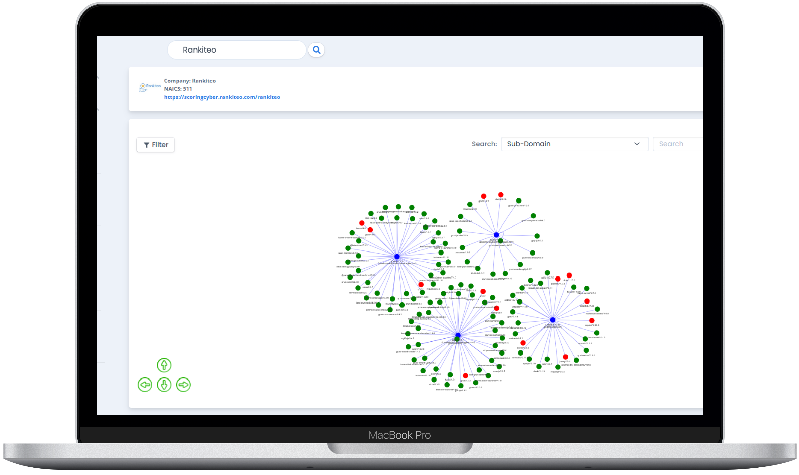
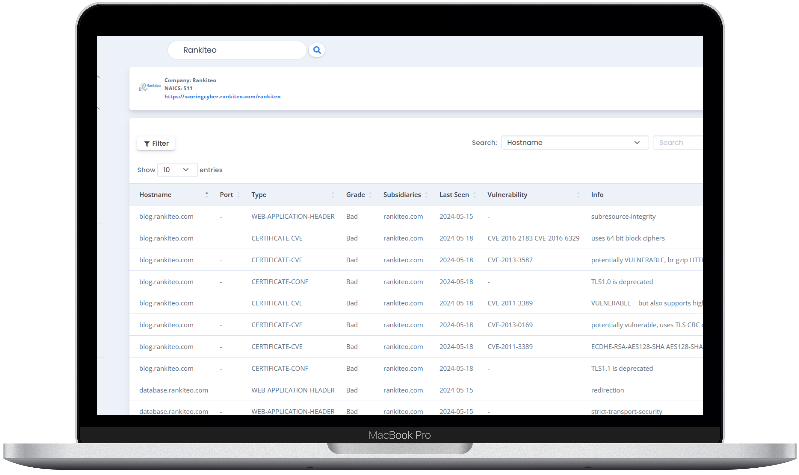
Identify exposed access points, detect misconfigured SSL certificates, and uncover vulnerabilities across the network infrastructure.
Gain visibility into the software components used within an organization to detect vulnerabilities, manage risk, and ensure supply chain security.
Monitor and manage all IT assets and their configurations to ensure accurate, real-time visibility across the company's technology environment.
Leverage real-time insights on active threats, malware campaigns, and emerging vulnerabilities to proactively defend against evolving cyberattacks.





 Rapid
Rapid