




Stellantis
Company Details
Linkedin ID:
stellantis
Website:
Employees number:
96,409
Number of followers:
2,412,133
NAICS:
3361
Industry Type:
Homepage:
stellantis.com
IP Addresses:
1416
Company ID:
STE_1971368
Scan Status:
Completed

Stellantis Company CyberSecurity Posture
stellantis.com



Our storied and iconic brands embody the passion of their visionary founders and today’s customers in their innovative products and services: they include Abarth, Alfa Romeo, Chrysler, Citroën, Dodge, DS Automobiles, Fiat, Jeep®, Lancia, Maserati, Opel, Peugeot, Ram, Vauxhall and mobility brands Free2move and Leasys. Powered by our diversity, we lead the way the world moves – aspiring to become the greatest sustainable mobility tech company, not the biggest, while creating added value for all stakeholders as well as the communities in which we operate.
Company Details
stellantis
96,409
2,412,133
3361
stellantis.com
1416
STE_1971368
Completed
 Stellantis Risk Score (AI oriented)
Between 600 and 649
 Stellantis Global Score (TPRM)
XXXX
Description: Stellantis, the automaker behind brands like Jeep, Citroën, and FIAT, suffered a data breach via a compromised third-party vendor (Salesforce/Salesloft integration). Attackers, allegedly the **ShinyHunters** group, accessed **18+ million customer records**, including **names, addresses, phone numbers, and email addresses**—though no financial or highly sensitive data (e.g., SSNs, payment details) was exposed. The breach exploited stolen **OAuth tokens** from Salesloft’s Drift AI chat tool, allowing unauthorized Salesforce data exfiltration. Stellantis activated incident response protocols, notified authorities, and warned customers of potential phishing risks. While operational disruption was minimal, the incident underscores **third-party vulnerabilities** in automotive supply chains and the escalating tactics of persistent threat actors targeting cloud ecosystems. The FBI issued an alert urging Salesforce users to revoke suspicious tokens, highlighting the breach’s broader implications for industries reliant on SaaS platforms.
Description: Automotive giant **Stellantis** suffered a **data breach** after attackers infiltrated a **third-party Salesforce platform** used for North American customer services. The breach exposed **customer contact details** (names, emails, phone numbers), which were later used for **phishing campaigns and extortion attempts**. The attack was linked to the **ShinyHunters extortion group**, which exploited **OAuth token vulnerabilities** in Salesforce integrations (e.g., Salesloft’s Drift AI chat tool) to harvest metadata, credentials, and AWS keys. Stellantis confirmed **no financial, health, or deeply sensitive data (e.g., SSNs, payment details)** was compromised. The company activated incident response protocols, contained the breach, notified authorities, and warned customers about phishing risks. While the exact number of affected customers was undisclosed, ShinyHunters claimed to have stolen **18 million records** from Stellantis’ Salesforce instance. The breach aligns with a broader wave of attacks targeting Salesforce clients, including Google, Allianz, and Dior.
Description: Stellantis, the parent company of Jeep, Chrysler, and Dodge, experienced a data breach in May, which was disclosed later. The breach exposed the names and contact details of approximately **18 million customers**, though sensitive data such as **Social Security numbers and payment information remained uncompromised**. Experts warn that scammers could exploit the stolen data—such as vehicle ownership records (e.g., Jeep Grand Cherokee)—to craft convincing phishing attacks. Victims may receive fraudulent emails, texts, or calls impersonating Stellantis or its brands, tricking them into clicking malicious links, sharing further personal information, or making fake payments. While no direct financial theft occurred, the breach heightens risks of **identity fraud, targeted scams, and reputational harm** due to the scale of exposed customer data. Security professionals recommend freezing credit reports to mitigate potential misuse of the leaked information.


Stellantis has 400.0% more incidents than the average of same-industry companies with at least one recorded incident.
Stellantis has 289.61% more incidents than the average of all companies with at least one recorded incident.
Stellantis reported 3 incidents this year: 0 cyber attacks, 0 ransomware, 0 vulnerabilities, 3 data breaches, compared to industry peers with at least 1 incident.
Stellantis cyber incidents detection timeline including parent company and subsidiaries

Our storied and iconic brands embody the passion of their visionary founders and today’s customers in their innovative products and services: they include Abarth, Alfa Romeo, Chrysler, Citroën, Dodge, DS Automobiles, Fiat, Jeep®, Lancia, Maserati, Opel, Peugeot, Ram, Vauxhall and mobility brands Free2move and Leasys. Powered by our diversity, we lead the way the world moves – aspiring to become the greatest sustainable mobility tech company, not the biggest, while creating added value for all stakeholders as well as the communities in which we operate.


Lear, a global automotive technology leader in Seating and E-Systems, enables superior in-vehicle experiences for consumers around the world. Our diverse team of talented employees in 37 countries is driven by a commitment to innovation, operational excellence, and sustainability. Lear is Making eve

Hero MotoCorp Ltd. (Formerly Hero Honda Motors Ltd.) is the world's largest manufacturer of two - wheelers, based in India. In 2001, the company achieved the coveted position of being the largest two-wheeler manufacturing company in India and also, the 'World No.1' two-wheeler company in terms of un

Continental develops pioneering technologies and services for sustainable and connected mobility of people and their goods. Founded in 1871, the technology company offers safe, efficient, intelligent and affordable solutions for vehicles, machines, traffic and transportation. In 2023, Continental ge

Honda Cars India Ltd. (HCIL), a leading manufacturer of premium cars in India, was established in December 1995 with a commitment to provide Honda’s passenger car models and technologies, to the Indian customers. HCIL’s corporate office is based in Greater Noida, UP and its state-of-the-art manufact

“In the beginning I looked around and could not find quite the car I dreamed of. So I decided to build it myself.“ This quote by Ferry Porsche sums up everything that makes Porsche what it is. It has been our guiding star for more than 75 years. Every day, we search for the best solution with commi

A gente sabe que o nome “Volkswagen” com certeza deve fazer parte da sua história. Porque a gente também sabe que não é à toa que estamos na vida, no coração e na garagem dos brasileiros. O segredo? Construímos os carros mais inovadores, tornamos as tecnologias acessíveis e dizemos sempre que estamo

Li Auto Inc. is a leader in China's new energy vehicle market. The Company designs, develops, manufactures, and sells premium smart electric vehicles. Its mission is: Create a Mobile Home, Create Happiness (创造移动的家,创造幸福的家). Through innovations in product, technology, and business model, the Company p
Nissan Motor Corporation is a global car manufacturer that sells a full line of vehicles under the Nissan and INFINITI brands. Nissan’s global headquarters in Yokohama, Japan, manages operations in four regions: Japan-ASEAN, China, Americas, and AMIEO (Africa, Middle East, India, Europe & Oceania).

Every vehicle. Every innovation. Every bit of momentum in over 170 markets worldwide. None of it would be possible without the expertise, drive and continued ambition of our people. We’re proud of our heritage, but it’s our vision for the future that excites us most. Right across our business, ever
.png)
At a recent cybersecurity conference, hackers express disbelief and amusement at how accessible many vehicles are today.
A few weeks ago, Stellantis, one of the world's largest automobile manufacturers, fell victim to a ShinyHunters data breach scheme.
Attacks on JLR and Stellantis show a significant threat on aging back-end systems that connect to modern platforms.
The move builds on Stellantis' recently disclosed agreement with Pony.ai to pilot autonomous vehicles in Europe.
The EV world has always had a flair for drama. Tesla (TSLA) was able to build its empire on it, becoming part of Silicon Valley's spectacle,...
Cybersecurity has become an unexpected speed bump on the road to digitalizing the automotive industry. Recent cyber attacks on Jaguar Land...
Berkshire agreed to buy OxyChem for $9.7 billion while EA goes private for $55 billion. Also, Middleby seeks a $800 million deal.
Stellantis revealed on Sunday that a third-party service provider supporting its North American customer service operation had been breached...
Stellantis Suffers Cybersecurity Breach ... Stellantis has confirmed it was the target of a cybersecurity incident that compromised part of its...

Explore insights on cybersecurity incidents, risk posture, and Rankiteo's assessments.
The official website of Stellantis is https://www.stellantis.com.
According to Rankiteo, Stellantis’s AI-generated cybersecurity score is 622, reflecting their Poor security posture.
According to Rankiteo, Stellantis currently holds 0 security badges, indicating that no recognized compliance certifications are currently verified for the organization.
According to Rankiteo, Stellantis is not certified under SOC 2 Type 1.
According to Rankiteo, Stellantis does not hold a SOC 2 Type 2 certification.
According to Rankiteo, Stellantis is not listed as GDPR compliant.
According to Rankiteo, Stellantis does not currently maintain PCI DSS compliance.
According to Rankiteo, Stellantis is not compliant with HIPAA regulations.
According to Rankiteo,Stellantis is not certified under ISO 27001, indicating the absence of a formally recognized information security management framework.
Stellantis operates primarily in the Motor Vehicle Manufacturing industry.
Stellantis employs approximately 96,409 people worldwide.
Stellantis presently has no subsidiaries across any sectors.
Stellantis’s official LinkedIn profile has approximately 2,412,133 followers.
Stellantis is classified under the NAICS code 3361, which corresponds to Motor Vehicle Manufacturing.
No, Stellantis does not have a profile on Crunchbase.
Yes, Stellantis maintains an official LinkedIn profile, which is actively utilized for branding and talent engagement, which can be accessed here: https://www.linkedin.com/company/stellantis.
As of December 11, 2025, Rankiteo reports that Stellantis has experienced 3 cybersecurity incidents.
Stellantis has an estimated 12,645 peer or competitor companies worldwide.
Incident Types: The types of cybersecurity incidents that have occurred include Breach.
Detection and Response: The company detects and responds to cybersecurity incidents through an containment measures with immediate activation of incident response protocols, containment measures with comprehensive investigation, containment measures with revoking suspicious oauth tokens (per fbi recommendation), and remediation measures with direct notification to affected customers, remediation measures with advisories on phishing risks, and communication strategy with public disclosure, communication strategy with customer notifications, communication strategy with fbi flash alert collaboration, and enhanced monitoring with review of access logs (salesforce/oauth tokens), and incident response plan activated with yes, and law enforcement notified with yes, and containment measures with breach isolation, containment measures with salesforce environment securing, and remediation measures with investigation launch, remediation measures with oauth token review, remediation measures with integration hardening, and recovery measures with customer notifications, recovery measures with phishing awareness campaigns, and communication strategy with public statement, communication strategy with direct customer alerts, communication strategy with media outreach, and enhanced monitoring with likely (implied by fbi flash alert compliance), and communication strategy with public disclosure (delayed; breach occurred in may 2023, announced later)..
Title: Stellantis Data Breach Affecting North American Customers
Description: Stellantis, the multinational automaker behind brands such as Jeep, Citroën, FIAT, Chrysler, and Peugeot, confirmed a data breach where attackers accessed customer contact details through a compromised third-party service provider. The breach is linked to the ShinyHunters group, which exploited stolen OAuth tokens from Salesloft’s Drift AI chat integration with Salesforce to exfiltrate over 18 million records, primarily customer contact data. No financial or highly sensitive information was exposed, but customers were warned about potential phishing risks.
Type: Data Breach
Attack Vector: Compromised Third-Party Service ProviderStolen OAuth TokensSalesforce Integration Exploitation
Vulnerability Exploited: Weak OAuth Token ManagementThird-Party Vendor Security Gaps
Threat Actor: ShinyHunters
Motivation: Data TheftExtortionPhishing Enablement
Title: Stellantis Data Breach via Third-Party Salesforce Platform
Description: Automotive giant Stellantis suffered a data breach exposing customer contact details after attackers infiltrated a third-party Salesforce platform used for North American customer services. The breach is linked to the ShinyHunters extortion campaign, which has targeted multiple Salesforce clients. Stellantis confirmed only contact information (e.g., names, emails, phone numbers) was compromised, with no financial or highly sensitive data (e.g., SSNs, payment details) accessed. The company activated incident response protocols, contained the breach, notified authorities, and warned customers about phishing risks. ShinyHunters claims to have stolen 18 million records from Stellantis' Salesforce instance as part of a broader campaign affecting 760+ companies and 1.5 billion records.
Type: Data Breach
Attack Vector: OAuth Token ExploitationThird-Party Integration (Salesloft's Drift AI chat tool)Salesforce Environment Pivoting
Vulnerability Exploited: Improper OAuth Token SecurityWeak SaaS Integration ControlsMetadata Harvesting in Salesforce
Threat Actor: ShinyHunters (alleged, in collaboration with Scattered Spider)
Motivation: Data Theft for ExtortionPhishing Campaign EnablementDark Web Data Monetization
Title: Stellantis Data Breach Affecting Jeep, Chrysler, and Dodge Customers
Description: Stellantis, the parent company of Jeep, Chrysler, and Dodge, announced a data breach where customer information was stolen. The breach occurred in May 2023, but was disclosed later. While names and contact details of 18 million customers were compromised, sensitive data like Social Security numbers and payment information were not exposed. Experts warn that scammers may exploit the stolen data for phishing attacks, leveraging vehicle ownership details to appear legitimate.
Type: Data Breach
Motivation: Likely financial gain (data exploitation for scams/phishing)
Common Attack Types: The most common types of attacks the company has faced is Breach.
Identification of Attack Vectors: The company identifies the attack vectors used in incidents through Compromised Salesloft Drift AI Chat Integration with Salesforce and Salesloft Drift AI Chat Tool (OAuth Token Exploitation).

Data Compromised: Customer names, Addresses, Phone numbers, Email addresses
Systems Affected: Salesforce (via Third-Party Integration)Customer Service Operations
Operational Impact: Potential Phishing Risks for CustomersReputation Damage
Brand Reputation Impact: Moderate (Due to Customer Data Exposure and Phishing Risks)
Identity Theft Risk: ['Low (No Financial/Sensitive Data Exposed)']
Payment Information Risk: ['None']
Data Compromised: Customer contact details (names, emails, phone numbers, possibly addresses)
Systems Affected: Third-Party Salesforce PlatformSalesloft Drift AI Chat Integration
Operational Impact: Incident Response ActivationCustomer NotificationsPhishing Warning Campaigns
Brand Reputation Impact: Potential Erosion of TrustAssociated with Broader Salesforce Breach Wave
Identity Theft Risk: ['Low (limited to contact details)', 'Phishing/Scam Risk Elevated']
Payment Information Risk: None (confirmed not exposed)
Data Compromised: Customer names, Contact information (e.g., email, phone), Vehicle ownership details (e.g., jeep grand cherokee)
Brand Reputation Impact: Potential erosion of trust due to delayed disclosure and risk of scams targeting customers
Identity Theft Risk: Moderate (phishing/social engineering risk due to personalized data)
Payment Information Risk: None (explicitly stated as not exposed)
Commonly Compromised Data Types: The types of data most commonly compromised in incidents are Customer Contact Information, , Contact Information (Names, Emails, Phone Numbers), Possibly Addresses, , Personal Identifiable Information (Pii), Vehicle Ownership Records and .
Entity Name: Stellantis
Entity Type: Multinational Automaker
Industry: Automotive
Location: North America (Primary Impact)
Size: Large (Global Corporation)
Customers Affected: Undisclosed (Claimed 18+ million records by ShinyHunters)
Entity Name: Stellantis N.V.
Entity Type: Automotive Manufacturer
Industry: Automotive
Location: Global (HQ in Amsterdam, Netherlands)
Size: Large (5th largest automaker by volume, 14 brands including Jeep, Dodge, Peugeot, Maserati)
Customers Affected: Undisclosed (ShinyHunters claims 18 million records)
Entity Name: Stellantis
Entity Type: Automotive Manufacturer
Industry: Automotive
Location: Global (HQ in Amsterdam, Netherlands)
Size: Large (18 million customers affected)
Customers Affected: 18,000,000
Incident Response Plan Activated: True
Containment Measures: Immediate Activation of Incident Response ProtocolsComprehensive InvestigationRevoking Suspicious OAuth Tokens (Per FBI Recommendation)
Remediation Measures: Direct Notification to Affected CustomersAdvisories on Phishing Risks
Communication Strategy: Public DisclosureCustomer NotificationsFBI Flash Alert Collaboration
Enhanced Monitoring: Review of Access Logs (Salesforce/OAuth Tokens)
Incident Response Plan Activated: Yes
Law Enforcement Notified: Yes
Containment Measures: Breach IsolationSalesforce Environment Securing
Remediation Measures: Investigation LaunchOAuth Token ReviewIntegration Hardening
Recovery Measures: Customer NotificationsPhishing Awareness Campaigns
Communication Strategy: Public StatementDirect Customer AlertsMedia Outreach
Enhanced Monitoring: Likely (implied by FBI Flash alert compliance)
Communication Strategy: Public disclosure (delayed; breach occurred in May 2023, announced later)
Incident Response Plan: The company's incident response plan is described as Yes.
Type of Data Compromised: Customer contact information
Number of Records Exposed: 18,000,000+ (Claimed by ShinyHunters)
Sensitivity of Data: Low (No Financial or Highly Sensitive Data)
Personally Identifiable Information: NamesAddressesPhone NumbersEmail Addresses
Type of Data Compromised: Contact information (names, emails, phone numbers), Possibly addresses
Number of Records Exposed: 18 million (claimed by ShinyHunters)
Sensitivity of Data: Low (no financial/health data)
Data Exfiltration: Yes
Personally Identifiable Information: NamesEmail AddressesPhone Numbers
Type of Data Compromised: Personal identifiable information (pii), Vehicle ownership records
Number of Records Exposed: 18,000,000
Sensitivity of Data: Moderate (no SSNs or payment info, but enough for targeted phishing)
Data Exfiltration: Yes
Personally Identifiable Information: NamesContact detailsVehicle model ownership
Prevention of Data Exfiltration: The company takes the following measures to prevent data exfiltration: Direct Notification to Affected Customers, Advisories on Phishing Risks, , Investigation Launch, OAuth Token Review, Integration Hardening, .
Handling of PII Incidents: The company handles incidents involving personally identifiable information (PII) through by immediate activation of incident response protocols, comprehensive investigation, revoking suspicious oauth tokens (per fbi recommendation), , breach isolation, salesforce environment securing and .
Data Exfiltration: True
Data Exfiltration: Yes (but not ransomware-related)
Data Recovery from Ransomware: The company recovers data encrypted by ransomware through Customer Notifications, Phishing Awareness Campaigns, .
Regulatory Notifications: Federal Authorities (U.S.)
Regulatory Notifications: Authorities Notified (unspecified)
Lessons Learned: Third-party vendors can introduce significant security risks, even in well-defended systems., OAuth token management and SaaS integrations require rigorous monitoring and access controls., Proactive customer communication is critical to mitigate phishing risks post-breach., Collaboration with law enforcement (e.g., FBI Flash alerts) enhances threat intelligence sharing.
Lessons Learned: Third-party SaaS integrations (e.g., Salesforce, Salesloft) introduce significant attack surfaces., OAuth token security requires rigorous oversight to prevent pivoting into core systems., Contact details alone enable high-impact phishing/scam campaigns, necessitating proactive customer warnings., Cross-sector breach patterns (e.g., Salesforce-targeted campaigns) demand collaborative threat intelligence sharing.
Lessons Learned: Delayed breach disclosure can amplify risks (e.g., prolonged exposure to scams). Customers should freeze credit and scrutinize unsolicited communications referencing personal/vehicle details.
Recommendations: Audit and limit third-party integrations with access to sensitive systems., Enforce multi-factor authentication (MFA) across all SaaS platforms., Monitor OAuth tokens and API keys for anomalous activity., Share threat intelligence to preempt evolving attack campaigns., Educate customers on phishing risks and verification of communications., Conduct regular security assessments of vendor ecosystems.Audit and limit third-party integrations with access to sensitive systems., Enforce multi-factor authentication (MFA) across all SaaS platforms., Monitor OAuth tokens and API keys for anomalous activity., Share threat intelligence to preempt evolving attack campaigns., Educate customers on phishing risks and verification of communications., Conduct regular security assessments of vendor ecosystems.Audit and limit third-party integrations with access to sensitive systems., Enforce multi-factor authentication (MFA) across all SaaS platforms., Monitor OAuth tokens and API keys for anomalous activity., Share threat intelligence to preempt evolving attack campaigns., Educate customers on phishing risks and verification of communications., Conduct regular security assessments of vendor ecosystems.Audit and limit third-party integrations with access to sensitive systems., Enforce multi-factor authentication (MFA) across all SaaS platforms., Monitor OAuth tokens and API keys for anomalous activity., Share threat intelligence to preempt evolving attack campaigns., Educate customers on phishing risks and verification of communications., Conduct regular security assessments of vendor ecosystems.Audit and limit third-party integrations with access to sensitive systems., Enforce multi-factor authentication (MFA) across all SaaS platforms., Monitor OAuth tokens and API keys for anomalous activity., Share threat intelligence to preempt evolving attack campaigns., Educate customers on phishing risks and verification of communications., Conduct regular security assessments of vendor ecosystems.Audit and limit third-party integrations with access to sensitive systems., Enforce multi-factor authentication (MFA) across all SaaS platforms., Monitor OAuth tokens and API keys for anomalous activity., Share threat intelligence to preempt evolving attack campaigns., Educate customers on phishing risks and verification of communications., Conduct regular security assessments of vendor ecosystems.
Recommendations: Hardening OAuth token policies and monitoring for anomalous usage., Implementing zero-trust principles for third-party SaaS integrations., Regular audits of cloud CRM environments for misconfigurations or exposed metadata., Customer education on phishing risks post-breach, with clear reporting channels., Adoption of data removal services to mitigate long-term exposure from leaked contact details., Enhanced identity theft protection for affected customers, despite low sensitivity of exposed data.Hardening OAuth token policies and monitoring for anomalous usage., Implementing zero-trust principles for third-party SaaS integrations., Regular audits of cloud CRM environments for misconfigurations or exposed metadata., Customer education on phishing risks post-breach, with clear reporting channels., Adoption of data removal services to mitigate long-term exposure from leaked contact details., Enhanced identity theft protection for affected customers, despite low sensitivity of exposed data.Hardening OAuth token policies and monitoring for anomalous usage., Implementing zero-trust principles for third-party SaaS integrations., Regular audits of cloud CRM environments for misconfigurations or exposed metadata., Customer education on phishing risks post-breach, with clear reporting channels., Adoption of data removal services to mitigate long-term exposure from leaked contact details., Enhanced identity theft protection for affected customers, despite low sensitivity of exposed data.Hardening OAuth token policies and monitoring for anomalous usage., Implementing zero-trust principles for third-party SaaS integrations., Regular audits of cloud CRM environments for misconfigurations or exposed metadata., Customer education on phishing risks post-breach, with clear reporting channels., Adoption of data removal services to mitigate long-term exposure from leaked contact details., Enhanced identity theft protection for affected customers, despite low sensitivity of exposed data.Hardening OAuth token policies and monitoring for anomalous usage., Implementing zero-trust principles for third-party SaaS integrations., Regular audits of cloud CRM environments for misconfigurations or exposed metadata., Customer education on phishing risks post-breach, with clear reporting channels., Adoption of data removal services to mitigate long-term exposure from leaked contact details., Enhanced identity theft protection for affected customers, despite low sensitivity of exposed data.Hardening OAuth token policies and monitoring for anomalous usage., Implementing zero-trust principles for third-party SaaS integrations., Regular audits of cloud CRM environments for misconfigurations or exposed metadata., Customer education on phishing risks post-breach, with clear reporting channels., Adoption of data removal services to mitigate long-term exposure from leaked contact details., Enhanced identity theft protection for affected customers, despite low sensitivity of exposed data.
Recommendations: Customers: Freeze credit reports to prevent loan fraud, verify sender authenticity before clicking links/sharing data, monitor for phishing attempts referencing vehicle ownership., Stellantis: Improve breach detection/response timelines, enhance customer communication strategies, and implement proactive fraud monitoring for affected individuals.Customers: Freeze credit reports to prevent loan fraud, verify sender authenticity before clicking links/sharing data, monitor for phishing attempts referencing vehicle ownership., Stellantis: Improve breach detection/response timelines, enhance customer communication strategies, and implement proactive fraud monitoring for affected individuals.
Key Lessons Learned: The key lessons learned from past incidents are Third-party vendors can introduce significant security risks, even in well-defended systems.,OAuth token management and SaaS integrations require rigorous monitoring and access controls.,Proactive customer communication is critical to mitigate phishing risks post-breach.,Collaboration with law enforcement (e.g., FBI Flash alerts) enhances threat intelligence sharing.Third-party SaaS integrations (e.g., Salesforce, Salesloft) introduce significant attack surfaces.,OAuth token security requires rigorous oversight to prevent pivoting into core systems.,Contact details alone enable high-impact phishing/scam campaigns, necessitating proactive customer warnings.,Cross-sector breach patterns (e.g., Salesforce-targeted campaigns) demand collaborative threat intelligence sharing.Delayed breach disclosure can amplify risks (e.g., prolonged exposure to scams). Customers should freeze credit and scrutinize unsolicited communications referencing personal/vehicle details.
Implemented Recommendations: The company has implemented the following recommendations to improve cybersecurity: Regular audits of cloud CRM environments for misconfigurations or exposed metadata., Adoption of data removal services to mitigate long-term exposure from leaked contact details., Implementing zero-trust principles for third-party SaaS integrations., Customer education on phishing risks post-breach, with clear reporting channels., Hardening OAuth token policies and monitoring for anomalous usage., Enhanced identity theft protection for affected customers and despite low sensitivity of exposed data..
Source: eSecurity Planet
Source: FBI Flash Alert (Salesforce OAuth Token Exploitation)
Source: Fox News / CyberGuy Report
URL: https://www.foxnews.com/tech/stellantis-data-breach-exposes-customer-contact-details
Source: Bleeping Computer
Source: FBI Flash Alert (Salesforce Attacks)
Source: WJAR (NBC 10 News)
Source: scamicide.com (Steve Weisman, Bentley University)
Additional Resources: Stakeholders can find additional resources on cybersecurity best practices at and Source: eSecurity Planet, and Source: FBI Flash Alert (Salesforce OAuth Token Exploitation), and Source: Fox News / CyberGuy ReportUrl: https://www.foxnews.com/tech/stellantis-data-breach-exposes-customer-contact-details, and Source: Bleeping ComputerUrl: https://www.bleepingcomputer.com/news/security/shinyhunters-claims-theft-of-18-million-stellantis-customer-records/, and Source: FBI Flash Alert (Salesforce Attacks), and Source: WJAR (NBC 10 News), and Source: scamicide.com (Steve Weisman, Bentley University).
Investigation Status: Ongoing (Comprehensive Investigation Initiated)
Investigation Status: Ongoing (full investigation launched by Stellantis)
Communication of Investigation Status: The company communicates the status of incident investigations to stakeholders through Public Disclosure, Customer Notifications, Fbi Flash Alert Collaboration, Public Statement, Direct Customer Alerts, Media Outreach, Public disclosure (delayed; breach occurred in May 2023 and announced later).
Stakeholder Advisories: Federal Authorities Notified, Affected Customers Informed Directly.
Customer Advisories: Remain alert for phishing attempts using stolen contact details.Avoid clicking suspicious links or providing personal details in unsolicited messages.Verify authenticity of all communications from Stellantis.
Stakeholder Advisories: Phishing Risk Warnings, Suspicious Link Avoidance Guidance.
Customer Advisories: Direct Notifications to Affected CustomersPublic Statement on Breach Scope
Customer Advisories: Warnings issued about phishing risks leveraging vehicle ownership data.
Advisories Provided: The company provides the following advisories to stakeholders and customers following an incident: were Federal Authorities Notified, Affected Customers Informed Directly, Remain Alert For Phishing Attempts Using Stolen Contact Details., Avoid Clicking Suspicious Links Or Providing Personal Details In Unsolicited Messages., Verify Authenticity Of All Communications From Stellantis., , Phishing Risk Warnings, Suspicious Link Avoidance Guidance, Direct Notifications To Affected Customers, Public Statement On Breach Scope, and Warnings issued about phishing risks leveraging vehicle ownership data..
Entry Point: Compromised Salesloft Drift Ai Chat Integration With Salesforce,
High Value Targets: Customer Contact Data,
Data Sold on Dark Web: Customer Contact Data,
Entry Point: Salesloft Drift AI Chat Tool (OAuth Token Exploitation)
High Value Targets: Salesforce Metadata, Aws Keys, Snowflake Tokens,
Data Sold on Dark Web: Salesforce Metadata, Aws Keys, Snowflake Tokens,
Root Causes: Exploitation Of Stolen Oauth Tokens In Third-Party Salesforce Integration., Inadequate Monitoring Of Vendor Access To Customer Data., Scalable Attack Method By Shinyhunters Targeting Multiple High-Profile Organizations.,
Corrective Actions: Revoke And Rotate Oauth Tokens Linked To Third-Party Integrations., Implement Stricter Access Controls For Saas Platforms., Enhance Threat Detection For Anomalous Api/Oauth Activity., Expand Customer Education On Phishing Prevention.,
Root Causes: Insecure Oauth Token Management In Third-Party Integrations., Lack Of Segmentation Between Salesforce And Connected Saas Tools., Delayed Detection Of Metadata Harvesting Activities.,
Corrective Actions: Token Rotation And Least-Privilege Enforcement For Integrations., Salesforce Environment Hardening (Per Fbi Recommendations)., Enhanced Logging For Third-Party Access Patterns.,
Post-Incident Analysis Process: The company's process for conducting post-incident analysis is described as Review Of Access Logs (Salesforce/Oauth Tokens), , Likely (implied by FBI Flash alert compliance).
Corrective Actions Taken: The company has taken the following corrective actions based on post-incident analysis: Revoke And Rotate Oauth Tokens Linked To Third-Party Integrations., Implement Stricter Access Controls For Saas Platforms., Enhance Threat Detection For Anomalous Api/Oauth Activity., Expand Customer Education On Phishing Prevention., , Token Rotation And Least-Privilege Enforcement For Integrations., Salesforce Environment Hardening (Per Fbi Recommendations)., Enhanced Logging For Third-Party Access Patterns., .
Last Attacking Group: The attacking group in the last incident were an ShinyHunters, ShinyHunters (alleged and in collaboration with Scattered Spider).
Most Significant Data Compromised: The most significant data compromised in an incident were Customer Names, Addresses, Phone Numbers, Email Addresses, , Customer Contact Details (names, emails, phone numbers, possibly addresses), , Customer names, Contact information (e.g., email, phone), Vehicle ownership details (e.g., Jeep Grand Cherokee) and .
Most Significant System Affected: The most significant system affected in an incident was Salesforce (via Third-Party Integration)Customer Service Operations and Third-Party Salesforce PlatformSalesloft Drift AI Chat Integration.
Containment Measures in Most Recent Incident: The containment measures taken in the most recent incident were Immediate Activation of Incident Response ProtocolsComprehensive InvestigationRevoking Suspicious OAuth Tokens (Per FBI Recommendation) and Breach IsolationSalesforce Environment Securing.
Most Sensitive Data Compromised: The most sensitive data compromised in a breach were Contact information (e.g., email, phone), Phone Numbers, Customer Names, Email Addresses, Vehicle ownership details (e.g., Jeep Grand Cherokee), Addresses, Customer names, Customer Contact Details (names, emails, phone numbers and possibly addresses).
Number of Records Exposed in Most Significant Breach: The number of records exposed in the most significant breach was 54.0M.
Most Significant Lesson Learned: The most significant lesson learned from past incidents was Cross-sector breach patterns (e.g., Salesforce-targeted campaigns) demand collaborative threat intelligence sharing., Delayed breach disclosure can amplify risks (e.g., prolonged exposure to scams). Customers should freeze credit and scrutinize unsolicited communications referencing personal/vehicle details.
Most Significant Recommendation Implemented: The most significant recommendation implemented to improve cybersecurity was Regular audits of cloud CRM environments for misconfigurations or exposed metadata., Monitor OAuth tokens and API keys for anomalous activity., Adoption of data removal services to mitigate long-term exposure from leaked contact details., Stellantis: Improve breach detection/response timelines, enhance customer communication strategies, and implement proactive fraud monitoring for affected individuals., Educate customers on phishing risks and verification of communications., Implementing zero-trust principles for third-party SaaS integrations., Conduct regular security assessments of vendor ecosystems., Customer education on phishing risks post-breach, with clear reporting channels., Audit and limit third-party integrations with access to sensitive systems., Enforce multi-factor authentication (MFA) across all SaaS platforms., Hardening OAuth token policies and monitoring for anomalous usage., Enhanced identity theft protection for affected customers, despite low sensitivity of exposed data., Customers: Freeze credit reports to prevent loan fraud, verify sender authenticity before clicking links/sharing data, monitor for phishing attempts referencing vehicle ownership. and Share threat intelligence to preempt evolving attack campaigns..
Most Recent Source: The most recent source of information about an incident are WJAR (NBC 10 News), FBI Flash Alert (Salesforce OAuth Token Exploitation), Bleeping Computer, FBI Flash Alert (Salesforce Attacks), scamicide.com (Steve Weisman, Bentley University), Fox News / CyberGuy Report and eSecurity Planet.
Most Recent URL for Additional Resources: The most recent URL for additional resources on cybersecurity best practices is https://www.foxnews.com/tech/stellantis-data-breach-exposes-customer-contact-details, https://www.bleepingcomputer.com/news/security/shinyhunters-claims-theft-of-18-million-stellantis-customer-records/ .
Current Status of Most Recent Investigation: The current status of the most recent investigation is Ongoing (Comprehensive Investigation Initiated).
Most Recent Stakeholder Advisory: The most recent stakeholder advisory issued was Federal Authorities Notified, Affected Customers Informed Directly, Phishing Risk Warnings, Suspicious Link Avoidance Guidance, .
Most Recent Customer Advisory: The most recent customer advisory issued were an Remain alert for phishing attempts using stolen contact details.Avoid clicking suspicious links or providing personal details in unsolicited messages.Verify authenticity of all communications from Stellantis., Direct Notifications to Affected CustomersPublic Statement on Breach Scope and Warnings issued about phishing risks leveraging vehicle ownership data.
Most Recent Entry Point: The most recent entry point used by an initial access broker was an Salesloft Drift AI Chat Tool (OAuth Token Exploitation).
Most Significant Root Cause: The most significant root cause identified in post-incident analysis was Exploitation of stolen OAuth tokens in third-party Salesforce integration.Inadequate monitoring of vendor access to customer data.Scalable attack method by ShinyHunters targeting multiple high-profile organizations., Insecure OAuth token management in third-party integrations.Lack of segmentation between Salesforce and connected SaaS tools.Delayed detection of metadata harvesting activities..
Most Significant Corrective Action: The most significant corrective action taken based on post-incident analysis was Revoke and rotate OAuth tokens linked to third-party integrations.Implement stricter access controls for SaaS platforms.Enhance threat detection for anomalous API/OAuth activity.Expand customer education on phishing prevention., Token rotation and least-privilege enforcement for integrations.Salesforce environment hardening (per FBI recommendations).Enhanced logging for third-party access patterns..
.png)
FreePBX Endpoint Manager is a module for managing telephony endpoints in FreePBX systems. Versions prior to 16.0.96 and 17.0.1 through 17.0.9 have a weak default password. By default, this is a 6 digit numeric value which can be brute forced. (This is the app_password parameter). Depending on local configuration, this password could be the extension, voicemail, user manager, DPMA or EPM phone admin password. This issue is fixed in versions 16.0.96 and 17.0.10.
Neuron is a PHP framework for creating and orchestrating AI Agents. In versions 2.8.11 and below, the MySQLWriteTool executes arbitrary SQL provided by the caller using PDO::prepare() + execute() without semantic restrictions. This is consistent with the name (“write tool”), but in an LLM/agent context it becomes a high-risk capability: prompt injection or indirect prompt manipulation can cause execution of destructive queries such as DROP TABLE, TRUNCATE, DELETE, ALTER, or privilege-related statements (subject to DB permissions). Deployments that expose an agent with MySQLWriteTool enabled to untrusted input and/or run the tool with a DB user that has broad privileges are impacted. This issue is fixed in version 2.8.12.
Neuron is a PHP framework for creating and orchestrating AI Agents. Versions 2.8.11 and below use MySQLSelectTool, which is vulnerable to Read-Only Bypass. MySQLSelectTool is intended to be a read-only SQL tool (e.g., for LLM agent querying, however, validation based on the first keyword (e.g., SELECT) and a forbidden-keyword list does not block file-writing constructs such as INTO OUTFILE / INTO DUMPFILE. As a result, an attacker who can influence the tool input (e.g., via prompt injection through a public agent endpoint) may write arbitrary files to the DB server if the MySQL/MariaDB account has the FILE privilege and server configuration permits writes to a useful location (e.g., a web-accessible directory). This issue is fixed in version 2.8.12.
Okta Java Management SDK facilitates interactions with the Okta management API. In versions 11.0.0 through 20.0.0, race conditions may arise from concurrent requests using the ApiClient class. This could cause a status code or response header from one request’s response to influence another request’s response. This issue is fixed in version 20.0.1.
The Auth0 Next.js SDK is a library for implementing user authentication in Next.js applications. When using versions 4.11.0 through 4.11.2 and 4.12.0, simultaneous requests on the same client may result in improper lookups in the TokenRequestCache for the request results. This issue is fixed in versions 4.11.2 and 4.12.1.

Get company history

Every week, Rankiteo analyzes billions of signals to give organizations a sharper, faster view of emerging risks. With deeper, more actionable intelligence at their fingertips, security teams can outpace threat actors, respond instantly to Zero-Day attacks, and dramatically shrink their risk exposure window.
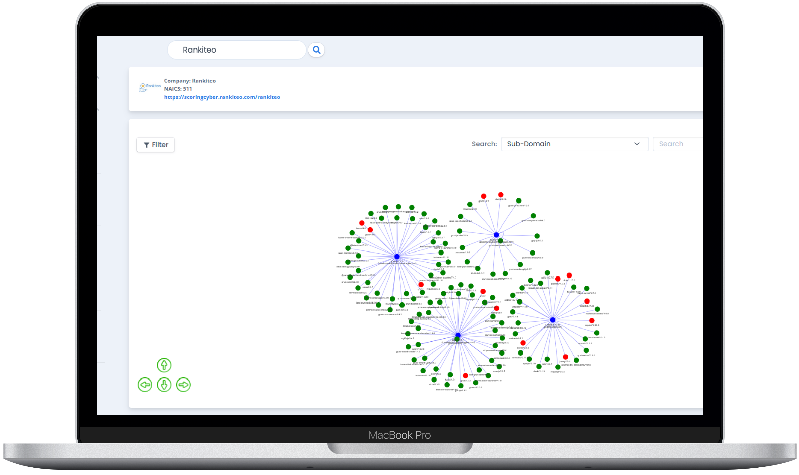
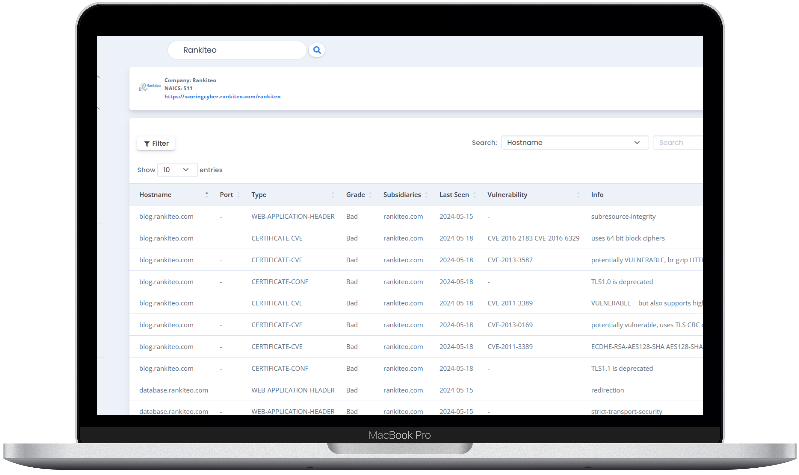
Identify exposed access points, detect misconfigured SSL certificates, and uncover vulnerabilities across the network infrastructure.
Gain visibility into the software components used within an organization to detect vulnerabilities, manage risk, and ensure supply chain security.
Monitor and manage all IT assets and their configurations to ensure accurate, real-time visibility across the company's technology environment.
Leverage real-time insights on active threats, malware campaigns, and emerging vulnerabilities to proactively defend against evolving cyberattacks.






 Rapid
Rapid