





PayPal
Company Details
Linkedin ID:
paypal
Website:
Employees number:
34,558
Number of followers:
1,582,034
NAICS:
5112
Industry Type:
Homepage:
paypal.com
IP Addresses:
282
Company ID:
PAY_2135090
Scan Status:
Completed

PayPal Company CyberSecurity Posture
paypal.com


We're championing possibilities for all by making money fast, easy, and more enjoyable. Our hope is unlock opportunities for people in their everyday lives and empower the millions of people and businesses around the world who trust, rely, and use PayPal every day. For support, visit the PayPal Help Center. https://payp.al/help For employment opportunities, check out our job openings in the 'Jobs' tab. We're an equal opportunity employer that welcomes diversity, and offer generous benefits to help you thrive at work and in your free time.
Company Details
paypal
34,558
1,582,034
5112
paypal.com
282
PAY_2135090
Completed
 PayPal Risk Score (AI oriented)
Between 700 and 749
 PayPal Global Score (TPRM)
XXXX
Description: Hackers claimed to be selling a dataset of **15.8 million PayPal credentials**, including login emails, plaintext passwords, and associated URLs, allegedly stolen in May 2025. The leaked data was advertised for automated credential stuffing and identity theft attacks. However, experts questioned its authenticity due to the **small sample size provided for verification**, the **suspiciously low pricing** (unusual for high-value stolen data), and its resemblance to **infostealer malware logs** from past incidents rather than a direct breach of PayPal’s systems.PayPal denied any new breach, attributing the claims to a **2022 security incident** involving credential stuffing that exposed only **35,000 accounts**—far fewer than the current claim. The incident highlights risks from **reused credentials**, as compromised logins from infected user devices (not PayPal’s servers) could still enable fraud. While the legitimacy of the 2025 dataset remains unconfirmed, the scenario underscores persistent threats from **stolen credentials circulating on dark web marketplaces**, enabling long-term identity theft and financial fraud risks for users who reuse passwords across platforms.
Description: The California Office of the Attorney General disclosed a data breach affecting PayPal between **December 6–8, 2022**, where unauthorized actors gained access to customer accounts using compromised login credentials. The incident exposed sensitive personal information, including **names, addresses, Social Security numbers, and dates of birth**. While no evidence of misuse has been reported, the breach posed a significant risk due to the nature of the exposed data—particularly financial and identity-related details. The attack targeted customer accounts directly, raising concerns over potential fraud, identity theft, or phishing exploits leveraging the stolen data. PayPal likely faced reputational damage and regulatory scrutiny, though the absence of confirmed misuse slightly mitigated immediate financial harm. The breach underscored vulnerabilities in credential security and the broader risks of unauthorized access in digital payment platforms.
Description: A 15-year-old boy was arrested for hacking PayPal accounts after specialist cyber-crime officers raided a house by Section 1 of the Computer Misuse Act 1990. During a search of a home on Astley Road, Knowsley, high-value technology goods were seized. These included the latest iPhones, an Apple Watch, Samsung and Sony mobile phones, and an iPad and Apple Airpods. A mini motorbike was also seized during the raid.
Description: PayPal suffered from a massive data breach incident that exposed 1.6 million customers. The exposed information includes locations that stored personal information of some of TIO’s customers and customers of TIO billers. Moreover, TIO has started working with the businesses it provides services to notify possibly impacted individuals, and PayPal is collaborating with a consumer credit reporting bureau to offer free credit monitoring subscriptions. Direct contact with the impacted people will occur, and they will be given advice on how to sign up for monitoring.
Description: PayPal is notifying 1000 users of data breaches because their accounts were compromised as a result of credential stuffing assaults. Threat actors gained access to user names, addresses, Social Security numbers, personal tax identification numbers, dates of birth, and, of course, transaction histories. The corporation is sending breach notification letters to the impacted clients. When users log in to their accounts for the next time, PayPal will force them to create new passwords as it has reset the passwords of the affected accounts. In addition to fraud warnings and up to $1 million in identity theft insurance coverage for a specific list of out-of-pocket expenses brought on by identity theft, the financial technology business is providing two years of Equifax identity monitoring services to the affected clients.
Description: US Senator J.D. Vance's public Venmo account exposed his extensive network to potential stalking, trolling, and impersonation threats. The account's friend list, including government officials, legal experts, media personalities, and tech executives, was publicly accessible, revealing surprising associations and creating security concerns. The Venmo contacts were likely auto-populated from Vance's phone contacts upon account setup, disclosing his connections to entities like the Heritage Foundation and Yale Law graduates. The revelation of these connections could potentially be exploited for malicious intents, creating reputation and privacy risks for Vance and his associates.
Description: A series of top officials from the Trump administration, including Dan Katz, Joe Kent, Mike Needham, and Brian McCormack, had their Venmo transactions and contacts inadvertently made public. The leaked data included personal transactions and social connections, potentially revealing sensitive information and associations to the broader public and foreign intelligence entities. The exposure of such data could compromise personal privacy, create counterintelligence risks, and uncover the social networks of these individuals, creating opportunities for coercion or exploitation by adversarial parties. This incident underscores the importance of personal data security for individuals in sensitive government positions.


No incidents recorded for PayPal in 2025.
No incidents recorded for PayPal in 2025.
No incidents recorded for PayPal in 2025.
PayPal cyber incidents detection timeline including parent company and subsidiaries
We're championing possibilities for all by making money fast, easy, and more enjoyable. Our hope is unlock opportunities for people in their everyday lives and empower the millions of people and businesses around the world who trust, rely, and use PayPal every day. For support, visit the PayPal Help Center. https://payp.al/help For employment opportunities, check out our job openings in the 'Jobs' tab. We're an equal opportunity employer that welcomes diversity, and offer generous benefits to help you thrive at work and in your free time.


Zoho offers beautifully smart software to help you grow your business. With over 100 million users worldwide, Zoho's 55+ products aid your sales and marketing, support and collaboration, finance, and recruitment needs—letting you focus only on your business. Zoho respects user privacy and does not h

Just Eat Takeaway.com is a leading global online delivery marketplace, connecting consumers and restaurants through our platform in 17 countries. Like a dinner table, working at JET brings our office employees and couriers together. From coding to customer service to couriers, JET is a

Every company has a mission. What's ours? To empower every person and every organization to achieve more. We believe technology can and should be a force for good and that meaningful innovation contributes to a brighter world in the future and today. Our culture doesn’t just encourage curiosity; it

Dassault Systèmes is a catalyst for human progress. Since 1981, the company has pioneered virtual worlds to improve real life for consumers, patients and citizens. With Dassault Systèmes’ 3DEXPERIENCE platform, 370,000 customers of all sizes, in all industries, can collaborate, imagine and create

Airbnb was born in 2007 when two hosts welcomed three guests to their San Francisco home, and has since grown to over 5 million hosts who have welcomed over 2 billion guest arrivals in almost every country across the globe. Every day, hosts offer unique stays, experiences and services that make it p
Instacart, the leading grocery technology company in North America, works with grocers and retailers to transform how people shop. The company partners with more than 1,500 national, regional, and local retail banners to facilitate online shopping, delivery and pickup services from more than 85,000

About KPIT KPIT is reimagining the future of mobility, forging ahead with group companies and partners to shape a world that is cleaner, smarter, and safer. With over 25 years of specialized expertise in Mobility, KPIT is accelerating the transformation towards Software and AI-Defined Vehicles thr

Broadcom Software modernizes, optimizes, and protects the world’s most complex hybrid environments. We are a global software leader delivering a comprehensive portfolio of industry-leading business-critical software enabling scalability, agility and security for the largest global companies in the w

Adobe is the global leader in digital media and digital marketing solutions. Our creative, marketing and document solutions empower everyone – from emerging artists to global brands – to bring digital creations to life and deliver immersive, compelling experiences to the right person at the right mo
.png)
Netflix and PayPal users have been warned to stay alert, as Matrix Push hackers are targeting them via compromised browser notifications.
The 'do not pay, do not phone' warning for PayPal users has been confirmed once more, as hackers launch another PayPal invoice-based attack.
Stay informed this Cybersecurity Month as PayPal issues a warning about the surge in phishing scams targeting consumers.
Security experts have raised the red flag over attacks on users as PayPal warns: Do not pay, do not phone. Here's what you need to know and...
As trusted leaders in customer protection, PayPal is spreading awareness to help people spot and avoid socially engineered phishing scams.
PayPal highlights phishing warning signs and safety steps during National Cybersecurity Awareness Month (Oct. 15, 2025), with reporting...
In an embarrassing error, PayPal blockchain partner Paxos accidentally minted 300 trillion of the PYUSD token today.
Beware: Like other email scams, the link in the email directs you to a fake PayPal website.
A new warning for PayPal users follows recent alerts for Amazon and Facebook users, as new attacks target account holders with messages...

Explore insights on cybersecurity incidents, risk posture, and Rankiteo's assessments.
The official website of PayPal is https://www.paypal.com/us/home.
According to Rankiteo, PayPal’s AI-generated cybersecurity score is 739, reflecting their Moderate security posture.
According to Rankiteo, PayPal currently holds 0 security badges, indicating that no recognized compliance certifications are currently verified for the organization.
According to Rankiteo, PayPal is not certified under SOC 2 Type 1.
According to Rankiteo, PayPal does not hold a SOC 2 Type 2 certification.
According to Rankiteo, PayPal is not listed as GDPR compliant.
According to Rankiteo, PayPal does not currently maintain PCI DSS compliance.
According to Rankiteo, PayPal is not compliant with HIPAA regulations.
According to Rankiteo,PayPal is not certified under ISO 27001, indicating the absence of a formally recognized information security management framework.
PayPal operates primarily in the Software Development industry.
PayPal employs approximately 34,558 people worldwide.
PayPal presently has no subsidiaries across any sectors.
PayPal’s official LinkedIn profile has approximately 1,582,034 followers.
PayPal is classified under the NAICS code 5112, which corresponds to Software Publishers.
No, PayPal does not have a profile on Crunchbase.
Yes, PayPal maintains an official LinkedIn profile, which is actively utilized for branding and talent engagement, which can be accessed here: https://www.linkedin.com/company/paypal.
As of December 11, 2025, Rankiteo reports that PayPal has experienced 7 cybersecurity incidents.
PayPal has an estimated 27,535 peer or competitor companies worldwide.
Incident Types: The types of cybersecurity incidents that have occurred include Breach, Cyber Attack and Data Leak.
Detection and Response: The company detects and responds to cybersecurity incidents through an third party assistance with consumer credit reporting bureau, and recovery measures with free credit monitoring subscriptions, and communication strategy with direct contact with impacted individuals, communication strategy with advice on signing up for monitoring, and third party assistance with equifax identity monitoring services, and containment measures with password reset, and remediation measures with fraud warnings, identity theft insurance, and communication strategy with breach notification letters, and remediation measures with public denial of new breach, remediation measures with reference to 2022 incident, and communication strategy with media statements, communication strategy with user advisories (via third-party reports), and communication strategy with public disclosure via california ag (january 18, 2023)..
Title: Arrest of 15-Year-Old for Hacking PayPal Accounts
Description: A 15-year-old boy was arrested for hacking PayPal accounts after specialist cyber-crime officers raided a house by Section 1 of the Computer Misuse Act 1990. During a search of a home on Astley Road, Knowsley, high-value technology goods were seized, including the latest iPhones, an Apple Watch, Samsung and Sony mobile phones, and an iPad and Apple Airpods. A mini motorbike was also seized during the raid.
Type: Hacking
Threat Actor: 15-year-old boy
Title: PayPal Data Breach
Description: PayPal suffered from a massive data breach incident that exposed 1.6 million customers. The exposed information includes locations that stored personal information of some of TIO’s customers and customers of TIO billers. TIO has started working with the businesses it provides services to notify possibly impacted individuals, and PayPal is collaborating with a consumer credit reporting bureau to offer free credit monitoring subscriptions. Direct contact with the impacted people will occur, and they will be given advice on how to sign up for monitoring.
Type: Data Breach
Title: PayPal Data Breach Due to Credential Stuffing Attacks
Description: PayPal is notifying 1000 users of data breaches because their accounts were compromised as a result of credential stuffing assaults.
Type: Data Breach
Attack Vector: Credential Stuffing
Vulnerability Exploited: Weak or Reused Passwords
Motivation: Financial Gain, Data Theft
Title: US Senator J.D. Vance's Public Venmo Account Exposes Network
Description: US Senator J.D. Vance's public Venmo account exposed his extensive network to potential stalking, trolling, and impersonation threats. The account's friend list, including government officials, legal experts, media personalities, and tech executives, was publicly accessible, revealing surprising associations and creating security concerns. The Venmo contacts were likely auto-populated from Vance's phone contacts upon account setup, disclosing his connections to entities like the Heritage Foundation and Yale Law graduates. The revelation of these connections could potentially be exploited for malicious intents, creating reputation and privacy risks for Vance and his associates.
Type: Data Exposure
Attack Vector: Publicly Accessible Information
Vulnerability Exploited: Public Venmo Account
Motivation: StalkingTrollingImpersonation
Title: Venmo Data Leak of Trump Administration Officials
Description: A series of top officials from the Trump administration, including Dan Katz, Joe Kent, Mike Needham, and Brian McCormack, had their Venmo transactions and contacts inadvertently made public. The leaked data included personal transactions and social connections, potentially revealing sensitive information and associations to the broader public and foreign intelligence entities. The exposure of such data could compromise personal privacy, create counterintelligence risks, and uncover the social networks of these individuals, creating opportunities for coercion or exploitation by adversarial parties. This incident underscores the importance of personal data security for individuals in sensitive government positions.
Type: Data Leak
Attack Vector: Inadvertent Public Disclosure
Vulnerability Exploited: Public Visibility of Venmo Transactions and Contacts
Title: Alleged Sale of 15.8 Million PayPal Credentials on Dark Web Forums
Description: Hackers claimed to be selling a dataset of 15.8 million stolen PayPal credentials, including login emails, plaintext passwords, and associated URLs, allegedly stolen in May 2025. The dataset was advertised on a dark web forum, with doubts raised about its authenticity due to a small leaked sample, low pricing, and resemblance to older infostealer malware logs. PayPal denied a new breach, attributing the claims to a 2022 credential stuffing incident affecting 35,000 accounts. Experts warned of potential identity theft and financial fraud risks from reused credentials.
Date Detected: 2025-05-01
Type: data breach (unverified)
Attack Vector: infostealer malware (suspected)credential stuffingdark web data sale
Vulnerability Exploited: reused passwordscompromised user devices (suspected)
Motivation: financial gainfraud enablement
Title: PayPal Data Breach (December 2022)
Description: The California Office of the Attorney General reported a data breach involving PayPal, Inc. on January 18, 2023. The breach occurred between December 6, 2022, and December 8, 2022, with unauthorized access to customer accounts using login credentials, potentially exposing personal information such as names, addresses, Social Security numbers, and dates of birth; however, no misuse of the information has been reported.
Date Detected: 2022-12-08
Date Publicly Disclosed: 2023-01-18
Type: Data Breach (Unauthorized Access)
Attack Vector: Credential Stuffing / Account Takeover
Common Attack Types: The most common types of attacks the company has faced is Breach.
Identification of Attack Vectors: The company identifies the attack vectors used in incidents through Credential Stuffing, compromised user devices (suspected infostealer infections) and Compromised login credentials.

Systems Affected: PayPal accounts

Data Compromised: Personal information
Data Compromised: User names, Addresses, Social security numbers, Personal tax identification numbers, Dates of birth, Transaction histories
Identity Theft Risk: High

Data Compromised: Personal transactions, Social connections
Systems Affected: Venmo
Data Compromised: Emails, Plaintext passwords, Associated urls
Brand Reputation Impact: potential reputational harm due to media coverage and user distrust
Identity Theft Risk: high (due to reused credentials across platforms)
Payment Information Risk: high (if credentials reused on financial platforms)
Data Compromised: Names, Addresses, Social security numbers, Dates of birth
Brand Reputation Impact: Potential (no misuse reported)
Identity Theft Risk: High (PII exposed)
Commonly Compromised Data Types: The types of data most commonly compromised in incidents are Personal Information, , Personally Identifiable Information, Transaction Histories, , Contact Information, Personal Transactions, Social Connections, , Emails, Plaintext Passwords, Urls, , Personally Identifiable Information (Pii) and .
Entity Name: PayPal
Entity Type: Company
Industry: Financial Services
Customers Affected: 1.6 million
Entity Name: PayPal
Entity Type: Financial Technology Company
Industry: Financial Services
Customers Affected: 1000
Entity Name: J.D. Vance
Entity Type: Individual
Industry: Government
Entity Name: Mike Needham
Entity Type: Individual
Industry: Government
Entity Name: Brian McCormack
Entity Type: Individual
Industry: Government
Entity Name: PayPal
Entity Type: financial services
Industry: digital payments
Location: global
Size: large enterprise
Customers Affected: 35,000 (2022 incident); 15.8 million (unverified claim)
Entity Name: PayPal, Inc.
Entity Type: Financial Services
Industry: Fintech / Digital Payments
Location: California, USA
Third Party Assistance: Consumer credit reporting bureau
Recovery Measures: Free credit monitoring subscriptions
Communication Strategy: Direct contact with impacted individualsAdvice on signing up for monitoring
Third Party Assistance: Equifax Identity Monitoring Services
Containment Measures: Password Reset
Remediation Measures: Fraud Warnings, Identity Theft Insurance
Communication Strategy: Breach Notification Letters
Remediation Measures: public denial of new breachreference to 2022 incident
Communication Strategy: media statementsuser advisories (via third-party reports)
Communication Strategy: Public disclosure via California AG (January 18, 2023)
Third-Party Assistance: The company involves third-party assistance in incident response through Consumer credit reporting bureau, Equifax Identity Monitoring Services.
Type of Data Compromised: Personal information
Number of Records Exposed: 1.6 million
Type of Data Compromised: Personally identifiable information, Transaction histories
Number of Records Exposed: 1000
Sensitivity of Data: High
Personally Identifiable Information: User NamesAddressesSocial Security NumbersPersonal Tax Identification NumbersDates of Birth
Type of Data Compromised: Contact Information
Sensitivity of Data: High
Type of Data Compromised: Personal transactions, Social connections
Sensitivity of Data: High
Type of Data Compromised: Emails, Plaintext passwords, Urls
Number of Records Exposed: 15.8 million (unverified); 35,000 (2022 confirmed)
Sensitivity of Data: high (financial account credentials)
Data Exfiltration: claimed (unverified)
Data Encryption: no (plaintext passwords alleged)
Personally Identifiable Information: emailspotential linked PII via reused credentials
Type of Data Compromised: Personally identifiable information (pii)
Sensitivity of Data: High
Data Exfiltration: Potential (unauthorized access confirmed)
Personally Identifiable Information: namesaddressesSocial Security numbersdates of birth
Prevention of Data Exfiltration: The company takes the following measures to prevent data exfiltration: Fraud Warnings, Identity Theft Insurance, public denial of new breach, reference to 2022 incident, .
Handling of PII Incidents: The company handles incidents involving personally identifiable information (PII) through by password reset.
Data Recovery from Ransomware: The company recovers data encrypted by ransomware through Free credit monitoring subscriptions, .
Fines Imposed: ['unspecified fines related to 2022 incident']
Regulations Violated: California Consumer Privacy Act (CCPA),
Regulatory Notifications: California Office of the Attorney General
Lessons Learned: The importance of personal data security for individuals in sensitive government positions.
Lessons Learned: Reused credentials amplify risks across platforms even after initial breaches., Infostealer malware logs can be repackaged to falsely imply direct corporate breaches., Low pricing of stolen data may indicate lack of authenticity or prior exploitation., Proactive user education on password hygiene and MFA remains critical.
Recommendations: Users: Change PayPal passwords immediately and avoid reuse across services., Enable multi-factor authentication (MFA) on all financial accounts., Monitor accounts for unusual activity or identity theft signs., Use security suites with firewall and anti-malware protection., Avoid clicking suspicious links/attachments (infostealer vectors)., Consider identity theft monitoring services., Organizations: Implement credential stuffing protections (e.g., CAPTCHA, rate limiting)., Educate users on recognizing phishing and malware risks., Dark web monitoring for leaked corporate credentials.Users: Change PayPal passwords immediately and avoid reuse across services., Enable multi-factor authentication (MFA) on all financial accounts., Monitor accounts for unusual activity or identity theft signs., Use security suites with firewall and anti-malware protection., Avoid clicking suspicious links/attachments (infostealer vectors)., Consider identity theft monitoring services., Organizations: Implement credential stuffing protections (e.g., CAPTCHA, rate limiting)., Educate users on recognizing phishing and malware risks., Dark web monitoring for leaked corporate credentials.Users: Change PayPal passwords immediately and avoid reuse across services., Enable multi-factor authentication (MFA) on all financial accounts., Monitor accounts for unusual activity or identity theft signs., Use security suites with firewall and anti-malware protection., Avoid clicking suspicious links/attachments (infostealer vectors)., Consider identity theft monitoring services., Organizations: Implement credential stuffing protections (e.g., CAPTCHA, rate limiting)., Educate users on recognizing phishing and malware risks., Dark web monitoring for leaked corporate credentials.Users: Change PayPal passwords immediately and avoid reuse across services., Enable multi-factor authentication (MFA) on all financial accounts., Monitor accounts for unusual activity or identity theft signs., Use security suites with firewall and anti-malware protection., Avoid clicking suspicious links/attachments (infostealer vectors)., Consider identity theft monitoring services., Organizations: Implement credential stuffing protections (e.g., CAPTCHA, rate limiting)., Educate users on recognizing phishing and malware risks., Dark web monitoring for leaked corporate credentials.Users: Change PayPal passwords immediately and avoid reuse across services., Enable multi-factor authentication (MFA) on all financial accounts., Monitor accounts for unusual activity or identity theft signs., Use security suites with firewall and anti-malware protection., Avoid clicking suspicious links/attachments (infostealer vectors)., Consider identity theft monitoring services., Organizations: Implement credential stuffing protections (e.g., CAPTCHA, rate limiting)., Educate users on recognizing phishing and malware risks., Dark web monitoring for leaked corporate credentials.Users: Change PayPal passwords immediately and avoid reuse across services., Enable multi-factor authentication (MFA) on all financial accounts., Monitor accounts for unusual activity or identity theft signs., Use security suites with firewall and anti-malware protection., Avoid clicking suspicious links/attachments (infostealer vectors)., Consider identity theft monitoring services., Organizations: Implement credential stuffing protections (e.g., CAPTCHA, rate limiting)., Educate users on recognizing phishing and malware risks., Dark web monitoring for leaked corporate credentials.Users: Change PayPal passwords immediately and avoid reuse across services., Enable multi-factor authentication (MFA) on all financial accounts., Monitor accounts for unusual activity or identity theft signs., Use security suites with firewall and anti-malware protection., Avoid clicking suspicious links/attachments (infostealer vectors)., Consider identity theft monitoring services., Organizations: Implement credential stuffing protections (e.g., CAPTCHA, rate limiting)., Educate users on recognizing phishing and malware risks., Dark web monitoring for leaked corporate credentials.Users: Change PayPal passwords immediately and avoid reuse across services., Enable multi-factor authentication (MFA) on all financial accounts., Monitor accounts for unusual activity or identity theft signs., Use security suites with firewall and anti-malware protection., Avoid clicking suspicious links/attachments (infostealer vectors)., Consider identity theft monitoring services., Organizations: Implement credential stuffing protections (e.g., CAPTCHA, rate limiting)., Educate users on recognizing phishing and malware risks., Dark web monitoring for leaked corporate credentials.Users: Change PayPal passwords immediately and avoid reuse across services., Enable multi-factor authentication (MFA) on all financial accounts., Monitor accounts for unusual activity or identity theft signs., Use security suites with firewall and anti-malware protection., Avoid clicking suspicious links/attachments (infostealer vectors)., Consider identity theft monitoring services., Organizations: Implement credential stuffing protections (e.g., CAPTCHA, rate limiting)., Educate users on recognizing phishing and malware risks., Dark web monitoring for leaked corporate credentials.
Key Lessons Learned: The key lessons learned from past incidents are The importance of personal data security for individuals in sensitive government positions.Reused credentials amplify risks across platforms even after initial breaches.,Infostealer malware logs can be repackaged to falsely imply direct corporate breaches.,Low pricing of stolen data may indicate lack of authenticity or prior exploitation.,Proactive user education on password hygiene and MFA remains critical.
Source: Cybernews
Source: California Office of the Attorney General
Date Accessed: 2023-01-18
Additional Resources: Stakeholders can find additional resources on cybersecurity best practices at and Source: Cybernews, and Source: California Office of the Attorney GeneralDate Accessed: 2023-01-18.
Investigation Status: unverified; PayPal denies new breach, attributes claims to 2022 incident
Investigation Status: Disclosed (no further updates)
Communication of Investigation Status: The company communicates the status of incident investigations to stakeholders through Direct Contact With Impacted Individuals, Advice On Signing Up For Monitoring, Breach Notification Letters, Media Statements, User Advisories (Via Third-Party Reports), Public disclosure via California AG (January 18 and 2023).
Customer Advisories: Breach Notification Letters
Customer Advisories: Change passwords and enable MFA (via third-party reports).Avoid password reuse across platforms.
Advisories Provided: The company provides the following advisories to stakeholders and customers following an incident: were Breach Notification Letters, Change Passwords And Enable Mfa (Via Third-Party Reports)., Avoid Password Reuse Across Platforms. and .
Entry Point: Credential Stuffing
Entry Point: Compromised User Devices (Suspected Infostealer Infections),
High Value Targets: Paypal Credentials (For Financial Fraud),
Data Sold on Dark Web: Paypal Credentials (For Financial Fraud),
Entry Point: Compromised login credentials
Root Causes: Weak or Reused Passwords
Corrective Actions: Password Reset, Fraud Warnings, Identity Theft Insurance
Root Causes: Likely Repackaged Infostealer Logs From Prior Compromises (Not A Direct Paypal Breach)., User Password Reuse Across Platforms., Lack Of Mfa Adoption By Some Users.,
Corrective Actions: Paypal: Clarified No New Breach Occurred (2025 Claim)., Users Advised To Update Security Practices.,
Root Causes: Credential Reuse / Weak Authentication,
Post-Incident Analysis Process: The company's process for conducting post-incident analysis is described as Consumer credit reporting bureau, Equifax Identity Monitoring Services.
Corrective Actions Taken: The company has taken the following corrective actions based on post-incident analysis: Password Reset, Fraud Warnings, Identity Theft Insurance, Paypal: Clarified No New Breach Occurred (2025 Claim)., Users Advised To Update Security Practices., .
Last Attacking Group: The attacking group in the last incident was an 15-year-old boy.
Most Recent Incident Detected: The most recent incident detected was on 2025-05-01.
Most Recent Incident Publicly Disclosed: The most recent incident publicly disclosed was on 2023-01-18.
Most Significant Data Compromised: The most significant data compromised in an incident were personal information, , User Names, Addresses, Social Security Numbers, Personal Tax Identification Numbers, Dates of Birth, Transaction Histories, , Friend List, Personal Transactions, Social Connections, , emails, plaintext passwords, associated URLs, , names, addresses, Social Security numbers, dates of birth and .
Third-Party Assistance in Most Recent Incident: The third-party assistance involved in the most recent incident was Consumer credit reporting bureau, Equifax Identity Monitoring Services.
Containment Measures in Most Recent Incident: The containment measures taken in the most recent incident was Password Reset.
Most Sensitive Data Compromised: The most sensitive data compromised in a breach were Social Security numbers, Social Connections, Personal Tax Identification Numbers, Personal Transactions, addresses, Social Security Numbers, plaintext passwords, personal information, names, associated URLs, emails, User Names, Addresses, Transaction Histories, Friend List, Dates of Birth and dates of birth.
Number of Records Exposed in Most Significant Breach: The number of records exposed in the most significant breach was 17.4M.
Highest Fine Imposed: The highest fine imposed for a regulatory violation was unspecified fines related to 2022 incident, .
Most Significant Lesson Learned: The most significant lesson learned from past incidents was Proactive user education on password hygiene and MFA remains critical.
Most Significant Recommendation Implemented: The most significant recommendation implemented to improve cybersecurity was Dark web monitoring for leaked corporate credentials., Avoid clicking suspicious links/attachments (infostealer vectors)., Consider identity theft monitoring services., Users: Change PayPal passwords immediately and avoid reuse across services., Educate users on recognizing phishing and malware risks., Monitor accounts for unusual activity or identity theft signs., Enable multi-factor authentication (MFA) on all financial accounts., Use security suites with firewall and anti-malware protection., Organizations: Implement credential stuffing protections (e.g., CAPTCHA and rate limiting)..
Most Recent Source: The most recent source of information about an incident are Cybernews and California Office of the Attorney General.
Current Status of Most Recent Investigation: The current status of the most recent investigation is unverified; PayPal denies new breach, attributes claims to 2022 incident.
Most Recent Customer Advisory: The most recent customer advisory issued were an Breach Notification Letters and Change passwords and enable MFA (via third-party reports).Avoid password reuse across platforms.
Most Recent Entry Point: The most recent entry point used by an initial access broker were an Compromised login credentials and Credential Stuffing.
Most Significant Root Cause: The most significant root cause identified in post-incident analysis was Weak or Reused Passwords, Likely repackaged infostealer logs from prior compromises (not a direct PayPal breach).User password reuse across platforms.Lack of MFA adoption by some users., Credential reuse / weak authentication.
Most Significant Corrective Action: The most significant corrective action taken based on post-incident analysis was Password Reset, Fraud Warnings, Identity Theft Insurance, PayPal: Clarified no new breach occurred (2025 claim).Users advised to update security practices..
.png)
FreePBX Endpoint Manager is a module for managing telephony endpoints in FreePBX systems. Versions prior to 16.0.96 and 17.0.1 through 17.0.9 have a weak default password. By default, this is a 6 digit numeric value which can be brute forced. (This is the app_password parameter). Depending on local configuration, this password could be the extension, voicemail, user manager, DPMA or EPM phone admin password. This issue is fixed in versions 16.0.96 and 17.0.10.
Neuron is a PHP framework for creating and orchestrating AI Agents. In versions 2.8.11 and below, the MySQLWriteTool executes arbitrary SQL provided by the caller using PDO::prepare() + execute() without semantic restrictions. This is consistent with the name (“write tool”), but in an LLM/agent context it becomes a high-risk capability: prompt injection or indirect prompt manipulation can cause execution of destructive queries such as DROP TABLE, TRUNCATE, DELETE, ALTER, or privilege-related statements (subject to DB permissions). Deployments that expose an agent with MySQLWriteTool enabled to untrusted input and/or run the tool with a DB user that has broad privileges are impacted. This issue is fixed in version 2.8.12.
Neuron is a PHP framework for creating and orchestrating AI Agents. Versions 2.8.11 and below use MySQLSelectTool, which is vulnerable to Read-Only Bypass. MySQLSelectTool is intended to be a read-only SQL tool (e.g., for LLM agent querying, however, validation based on the first keyword (e.g., SELECT) and a forbidden-keyword list does not block file-writing constructs such as INTO OUTFILE / INTO DUMPFILE. As a result, an attacker who can influence the tool input (e.g., via prompt injection through a public agent endpoint) may write arbitrary files to the DB server if the MySQL/MariaDB account has the FILE privilege and server configuration permits writes to a useful location (e.g., a web-accessible directory). This issue is fixed in version 2.8.12.
Okta Java Management SDK facilitates interactions with the Okta management API. In versions 11.0.0 through 20.0.0, race conditions may arise from concurrent requests using the ApiClient class. This could cause a status code or response header from one request’s response to influence another request’s response. This issue is fixed in version 20.0.1.
The Auth0 Next.js SDK is a library for implementing user authentication in Next.js applications. When using versions 4.11.0 through 4.11.2 and 4.12.0, simultaneous requests on the same client may result in improper lookups in the TokenRequestCache for the request results. This issue is fixed in versions 4.11.2 and 4.12.1.

Get company history

Every week, Rankiteo analyzes billions of signals to give organizations a sharper, faster view of emerging risks. With deeper, more actionable intelligence at their fingertips, security teams can outpace threat actors, respond instantly to Zero-Day attacks, and dramatically shrink their risk exposure window.
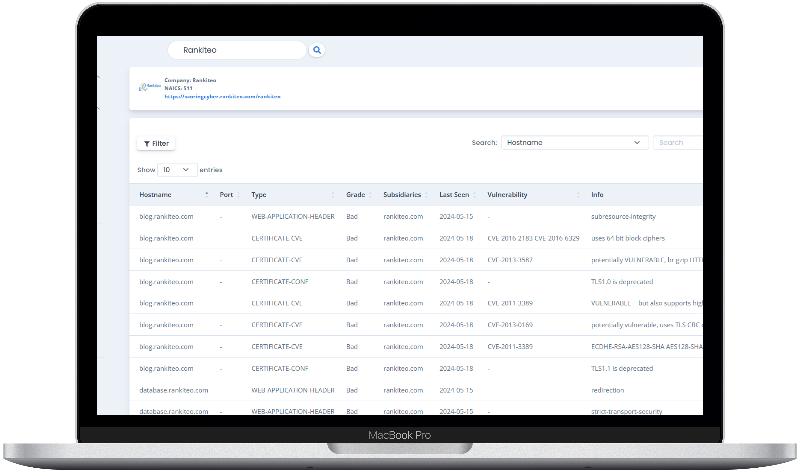
Identify exposed access points, detect misconfigured SSL certificates, and uncover vulnerabilities across the network infrastructure.
Gain visibility into the software components used within an organization to detect vulnerabilities, manage risk, and ensure supply chain security.
Monitor and manage all IT assets and their configurations to ensure accurate, real-time visibility across the company's technology environment.
Leverage real-time insights on active threats, malware campaigns, and emerging vulnerabilities to proactively defend against evolving cyberattacks.





 Rapid
Rapid