






OpenText
Company Details
Linkedin ID:
opentext
Website:
Employees number:
22,020
Number of followers:
513,471
NAICS:
5112
Industry Type:
Homepage:
opentext.com
IP Addresses:
0
Company ID:
OPE_6052516
Scan Status:
In-progress

OpenText Company CyberSecurity Posture
opentext.com


OpenText is a leading Cloud and AI company that provides organizations around the world with a comprehensive suite of Business AI, Business Clouds, and Business Technology. We help organizations grow, innovate, become more efficient and effective, and do so in a trusted and secure way—through Information Management. OpenText (NASDAQ/TSX: OTEX), founded in 1991 in Waterloo, has a rich history of helping customers manage their most important asset—information. Originating from a collaboration to digitize the Oxford English Dictionary, OpenText has grown into a global leader in information management. With over 120,000 enterprise customers across 180 countries, OpenText supports 98 of the top 100 global companies. A wide breadth of offerings uniquely positions OpenText to help customers unlock the value of that information using Al, cloud, and security innovations. At OpenText, our culture is at the heart of everything we do—and today, that includes being proudly AI-first. We’re creating a workplace where everyone can thrive, with artificial intelligence integrated into how we work, solve problems, and innovate together. By fostering a collaborative and inclusive environment, we empower digital knowledge workers and drive forward-thinking solutions that shape the future of information management. We believe our success comes from the strength of our team—talent that AI can’t replace—and we’re committed to attracting and supporting those who bring unique insight, adaptability, and creativity. Because at OpenText, people aren’t just our greatest asset—they’re the reason we shine in an AI-powered world. Join us at OpenText and become part of a team where your talents and ideas are truly valued.
Company Details
opentext
22,020
513,471
5112
opentext.com
0
OPE_6052516
In-progress
 OpenText Risk Score (AI oriented)
Between 650 and 699
 OpenText Global Score (TPRM)
XXXX
Description: Carbonite, a provider of online computer and server backup services suffered a password reuse attack in which some users’ credentials, obtained elsewhere, were used to obtain user data. The company notified its more than 1.5 million individual and small business customers and forced them to password reset. The attack was a result of a third-party attacker using compromised email addresses and passwords obtained from other companies that were previously attacked.
Description: Over half of Indian enterprises surveyed by OpenText faced **ransomware attacks** in the past year, with **71% reporting AI-driven phishing or deepfake attempts**, marking India as a highly targeted region. **70% of affected organizations paid ransoms** to regain data access—one of the highest global rates—yet only **12% fully recovered encrypted/stolen data**, exposing a critical gap between perceived resilience and actual recovery capabilities. Attacks increasingly exploited **third-party vendors or supply chains**, with **63% of organizations impacted by breaches via managed service providers**. Despite proactive measures like **cloud security (68%), network protection (60%), and backup technologies (58%)**, heavy reliance on external ecosystems amplified cascading risks. The financial and operational strain was compounded by **AI-enabled threats (deepfakes, voice/video spoofing)**, with **95% of firms allowing generative AI tools** but only **50% having formal AI governance policies**. Ransomware is now a **board-level priority (84% of execs rank it a top-3 risk)**, yet recovery tests (76% conduct multi-annual drills) and employee training (80% participation) have not prevented persistent data loss and operational disruption.


OpenText has 72.41% more incidents than the average of same-industry companies with at least one recorded incident.
OpenText has 29.87% more incidents than the average of all companies with at least one recorded incident.
OpenText reported 1 incidents this year: 0 cyber attacks, 1 ransomware, 0 vulnerabilities, 0 data breaches, compared to industry peers with at least 1 incident.
OpenText cyber incidents detection timeline including parent company and subsidiaries
OpenText is a leading Cloud and AI company that provides organizations around the world with a comprehensive suite of Business AI, Business Clouds, and Business Technology. We help organizations grow, innovate, become more efficient and effective, and do so in a trusted and secure way—through Information Management. OpenText (NASDAQ/TSX: OTEX), founded in 1991 in Waterloo, has a rich history of helping customers manage their most important asset—information. Originating from a collaboration to digitize the Oxford English Dictionary, OpenText has grown into a global leader in information management. With over 120,000 enterprise customers across 180 countries, OpenText supports 98 of the top 100 global companies. A wide breadth of offerings uniquely positions OpenText to help customers unlock the value of that information using Al, cloud, and security innovations. At OpenText, our culture is at the heart of everything we do—and today, that includes being proudly AI-first. We’re creating a workplace where everyone can thrive, with artificial intelligence integrated into how we work, solve problems, and innovate together. By fostering a collaborative and inclusive environment, we empower digital knowledge workers and drive forward-thinking solutions that shape the future of information management. We believe our success comes from the strength of our team—talent that AI can’t replace—and we’re committed to attracting and supporting those who bring unique insight, adaptability, and creativity. Because at OpenText, people aren’t just our greatest asset—they’re the reason we shine in an AI-powered world. Join us at OpenText and become part of a team where your talents and ideas are truly valued.


Olá, somos a TOTVS! A maior empresa de tecnologia do Brasil. 🤓 Líder absoluta em sistemas e plataformas para empresas, a TOTVS possui mais de 70 mil clientes. Indo muito além do ERP, oferece tecnologia completa para digitalização dos negócios por meio de 3 unidades de negócio: - Gestão: ERPs, sol
We help those who build the future to make it amazing. In an era where new technologies are born every minute, and the demand for meaningful digital experiences has never been so intense, we unlock our customers’ innovative potential, empowering them to transform their boldest ideas into reality, an

The first business of Alibaba Group, Alibaba.com (www.alibaba.com) is the leading platform for global wholesale trade serving millions of buyers and suppliers around the world. Through Alibaba.com, small businesses can sell their products to companies in other countries. Sellers on Alibaba.com are t
PhonePe Group is India’s leading fintech company, proudly recognized as India’s #1 Trusted Digital Payments* Brand for three consecutive years. Our flagship product, the PhonePe app was launched in August 2016, has rapidly become the preferred consumer payments app in India. In just eight years, Pho

The Bosch Group’s strategic objective is to create solutions for a connected life. Bosch improves quality of life worldwide with innovative products and services that are "Invented for life" and spark enthusiasm. Podcast: http://bit.ly/beyondbosch Imprint: https://www.bosch.us/corporate-informatio
Shopify is a leading global commerce company, providing trusted tools to start, grow, market, and manage a retail business of any size. Shopify makes commerce better for everyone with a platform and services that are engineered for reliability, while delivering a better shopping experience for consu
SAP is the leading enterprise application and business AI company. We stand at the intersection of business and technology, where our innovations are designed to directly address real business challenges and produce real-world impacts. Our solutions are the backbone for the world’s most complex and
The Facebook company is now Meta. Meta builds technologies that help people connect, find communities, and grow businesses. When Facebook launched in 2004, it changed the way people connect. Apps like Messenger, Instagram and WhatsApp further empowered billions around the world. Now, Meta is moving

Wolt is a Helsinki-based technology company with a mission to bring joy, simplicity and earnings to the neighborhoods of the world. Wolt develops a local commerce platform that connects people looking to order food, groceries, and other goods with people interested in selling and delivering them. Wo
.png)
Security must evolve from a perimeter conversation to an information conversation, says OpenText.
Together, EDR and DFIR give SOCs both the speed to contain threats and the clarity to understand them. This blog explains how.
Guest blog courtesy of OpenText Cybersecurity. For the past three years, we've been tracking the evolution of managed security services...
OpenText unveils next-generation AI data platform to empower Middle East Enterprises to securely scale AI adoption.
OpenText is redefining the future of application security by connecting innovation in AI, emerging technologies, and secure DevOps practices...
At OpenText World this week, we look ahead to the next chapter of innovation for all our business units. From content to cybersecurity,...
In theory, with every security breach that is publicized in the news media—and the many more that go unreported—the value of investment into...
Australian businesses are contending with a marked increase in ransomware attacks, with artificial intelligence now playing a more prominent...
South Africa's public sector is facing an escalating cyber security challenge. Increasing incidents of malware, phishing and ransomware...

Explore insights on cybersecurity incidents, risk posture, and Rankiteo's assessments.
The official website of OpenText is https://www.opentext.com.
According to Rankiteo, OpenText’s AI-generated cybersecurity score is 683, reflecting their Weak security posture.
According to Rankiteo, OpenText currently holds 0 security badges, indicating that no recognized compliance certifications are currently verified for the organization.
According to Rankiteo, OpenText is not certified under SOC 2 Type 1.
According to Rankiteo, OpenText does not hold a SOC 2 Type 2 certification.
According to Rankiteo, OpenText is not listed as GDPR compliant.
According to Rankiteo, OpenText does not currently maintain PCI DSS compliance.
According to Rankiteo, OpenText is not compliant with HIPAA regulations.
According to Rankiteo,OpenText is not certified under ISO 27001, indicating the absence of a formally recognized information security management framework.
OpenText operates primarily in the Software Development industry.
OpenText employs approximately 22,020 people worldwide.
OpenText presently has no subsidiaries across any sectors.
OpenText’s official LinkedIn profile has approximately 513,471 followers.
OpenText is classified under the NAICS code 5112, which corresponds to Software Publishers.
No, OpenText does not have a profile on Crunchbase.
Yes, OpenText maintains an official LinkedIn profile, which is actively utilized for branding and talent engagement, which can be accessed here: https://www.linkedin.com/company/opentext.
As of December 11, 2025, Rankiteo reports that OpenText has experienced 2 cybersecurity incidents.
OpenText has an estimated 27,532 peer or competitor companies worldwide.
Incident Types: The types of cybersecurity incidents that have occurred include Ransomware and Breach.
Detection and Response: The company detects and responds to cybersecurity incidents through an containment measures with forced password reset, and communication strategy with customer notification, and and third party assistance with managed service providers (83% of organizations), third party assistance with cybersecurity assessments of software suppliers (91%), and remediation measures with cloud security enhancements (68% priority), remediation measures with network protection (60% priority), remediation measures with backup technologies (58% priority), and recovery measures with ransomware recovery plan testing (76% test multiple times/year), recovery measures with security awareness training (80% conduct regularly)..
Title: Password Reuse Attack on Carbonite
Description: Carbonite, a provider of online computer and server backup services, suffered a password reuse attack in which some users’ credentials, obtained elsewhere, were used to obtain user data. The company notified its more than 1.5 million individual and small business customers and forced them to password reset. The attack was a result of a third-party attacker using compromised email addresses and passwords obtained from other companies that were previously attacked.
Type: Password Reuse Attack
Attack Vector: Compromised Credentials
Vulnerability Exploited: Password Reuse
Threat Actor: Third-party attacker
Motivation: Data Theft
Title: Ransomware and AI-Driven Cyber Threats Targeting Indian Enterprises (2023-2024)
Description: OpenText's fourth annual Global Ransomware Survey reveals that over 50% of Indian enterprises faced ransomware attacks in the past year, with 71% reporting a surge in AI-driven phishing or deepfake attempts. Nearly 70% of affected organizations paid ransoms, yet only 12% fully recovered encrypted or stolen data. The report highlights gaps in AI governance, third-party risks, and the escalating complexity of attacks, including supply chain breaches. Indian organizations are prioritizing cloud security, network protection, and backup technologies for 2026, with 84% of executive teams now treating ransomware as a top-three business risk.
Type: ransomware
Attack Vector: AI-driven phishingdeepfake (voice/video spoofing)third-party service providerssoftware supply chain
Vulnerability Exploited: insufficient AI governancethird-party ecosystem dependencieslack of formal AI-use/data privacy policies
Motivation: financial gain (ransom payments)data theftdisruption of operations
Common Attack Types: The most common types of attacks the company has faced is Breach.
Identification of Attack Vectors: The company identifies the attack vectors used in incidents through third-party service providerssoftware supply chainAI-driven phishing/deepfake attacks.

Data Compromised: User Data
Commonly Compromised Data Types: The types of data most commonly compromised in incidents are User Credentials, Personally Identifiable Information (Likely), Corporate Data, Financial Data (Possible) and .
Entity Name: Carbonite
Entity Type: Service Provider
Industry: Technology
Size: More than 1.5 million customers
Customers Affected: 1.5 million

Entity Name: Indian Enterprises (Survey Respondents)
Entity Type: private sector, public sector (if applicable)
Industry: technology, financial services, manufacturing, others (unspecified)
Location: India
Containment Measures: Forced password reset
Communication Strategy: Customer notification
Incident Response Plan Activated: True
Third Party Assistance: Managed Service Providers (83% Of Organizations), Cybersecurity Assessments Of Software Suppliers (91%).
Remediation Measures: cloud security enhancements (68% priority)network protection (60% priority)backup technologies (58% priority)
Recovery Measures: ransomware recovery plan testing (76% test multiple times/year)security awareness training (80% conduct regularly)
Third-Party Assistance: The company involves third-party assistance in incident response through managed service providers (83% of organizations), cybersecurity assessments of software suppliers (91%), .
Type of Data Compromised: User Credentials
Type of Data Compromised: Personally identifiable information (likely), Corporate data, Financial data (possible)
Sensitivity of Data: high (includes potential PII and corporate secrets)
Data Encryption: True
Prevention of Data Exfiltration: The company takes the following measures to prevent data exfiltration: cloud security enhancements (68% priority), network protection (60% priority), backup technologies (58% priority), .
Handling of PII Incidents: The company handles incidents involving personally identifiable information (PII) through by forced password reset.
Ransom Paid: 70% of affected organizations
Data Encryption: True
Data Exfiltration: True
Data Recovery from Ransomware: The company recovers data encrypted by ransomware through ransomware recovery plan testing (76% test multiple times/year), security awareness training (80% conduct regularly), .
Lessons Learned: AI adoption outpaces governance: 95% allow generative AI tools, but only ~50% have formal AI-use/data privacy policies., Third-party risks are critical: 66% of organizations impacted by vendor/managed services breaches in the past year., Recovery confidence is misplaced: 98.6% express confidence in recovery, but only 12% fully recover data post-attack., Board-level engagement is rising: 84% of Indian executives now rank ransomware as a top-three business risk (vs. 71% globally)., Collaboration is key: Effectiveness depends on shared responsibility across organizations, partners, and technology providers.
Recommendations: Implement formal AI governance frameworks to align productivity gains with security/privacy risks., Strengthen third-party risk management, including rigorous cybersecurity assessments of suppliers and managed service providers., Enhance ransomware recovery testing frequency and realism to close the gap between perceived and actual resilience., Expand security awareness training to include AI-specific threats (e.g., deepfakes, generative AI misuse)., Prioritize investments in cloud security, network protection, and immutable backup solutions., Foster cross-ecosystem collaboration to address cascading risks in supply chains and shared infrastructure.Implement formal AI governance frameworks to align productivity gains with security/privacy risks., Strengthen third-party risk management, including rigorous cybersecurity assessments of suppliers and managed service providers., Enhance ransomware recovery testing frequency and realism to close the gap between perceived and actual resilience., Expand security awareness training to include AI-specific threats (e.g., deepfakes, generative AI misuse)., Prioritize investments in cloud security, network protection, and immutable backup solutions., Foster cross-ecosystem collaboration to address cascading risks in supply chains and shared infrastructure.Implement formal AI governance frameworks to align productivity gains with security/privacy risks., Strengthen third-party risk management, including rigorous cybersecurity assessments of suppliers and managed service providers., Enhance ransomware recovery testing frequency and realism to close the gap between perceived and actual resilience., Expand security awareness training to include AI-specific threats (e.g., deepfakes, generative AI misuse)., Prioritize investments in cloud security, network protection, and immutable backup solutions., Foster cross-ecosystem collaboration to address cascading risks in supply chains and shared infrastructure.Implement formal AI governance frameworks to align productivity gains with security/privacy risks., Strengthen third-party risk management, including rigorous cybersecurity assessments of suppliers and managed service providers., Enhance ransomware recovery testing frequency and realism to close the gap between perceived and actual resilience., Expand security awareness training to include AI-specific threats (e.g., deepfakes, generative AI misuse)., Prioritize investments in cloud security, network protection, and immutable backup solutions., Foster cross-ecosystem collaboration to address cascading risks in supply chains and shared infrastructure.Implement formal AI governance frameworks to align productivity gains with security/privacy risks., Strengthen third-party risk management, including rigorous cybersecurity assessments of suppliers and managed service providers., Enhance ransomware recovery testing frequency and realism to close the gap between perceived and actual resilience., Expand security awareness training to include AI-specific threats (e.g., deepfakes, generative AI misuse)., Prioritize investments in cloud security, network protection, and immutable backup solutions., Foster cross-ecosystem collaboration to address cascading risks in supply chains and shared infrastructure.Implement formal AI governance frameworks to align productivity gains with security/privacy risks., Strengthen third-party risk management, including rigorous cybersecurity assessments of suppliers and managed service providers., Enhance ransomware recovery testing frequency and realism to close the gap between perceived and actual resilience., Expand security awareness training to include AI-specific threats (e.g., deepfakes, generative AI misuse)., Prioritize investments in cloud security, network protection, and immutable backup solutions., Foster cross-ecosystem collaboration to address cascading risks in supply chains and shared infrastructure.
Key Lessons Learned: The key lessons learned from past incidents are AI adoption outpaces governance: 95% allow generative AI tools, but only ~50% have formal AI-use/data privacy policies.,Third-party risks are critical: 66% of organizations impacted by vendor/managed services breaches in the past year.,Recovery confidence is misplaced: 98.6% express confidence in recovery, but only 12% fully recover data post-attack.,Board-level engagement is rising: 84% of Indian executives now rank ransomware as a top-three business risk (vs. 71% globally).,Collaboration is key: Effectiveness depends on shared responsibility across organizations, partners, and technology providers.
Source: OpenText Global Ransomware Survey (4th Annual)
Source: ETCISO Article on OpenText Survey Findings
Additional Resources: Stakeholders can find additional resources on cybersecurity best practices at and Source: OpenText Global Ransomware Survey (4th Annual), and Source: ETCISO Article on OpenText Survey Findings.
Investigation Status: Survey-based findings (no specific incident investigation detailed)
Communication of Investigation Status: The company communicates the status of incident investigations to stakeholders through Customer notification.
Stakeholder Advisories: Board-Level Engagement: 84% Of Indian Executives Treat Ransomware As A Top-Three Business Risk., Third-Party Advisories: 91% Conduct Formal Cybersecurity Assessments Of Software Suppliers..
Advisories Provided: The company provides the following advisories to stakeholders and customers following an incident: were Board-Level Engagement: 84% Of Indian Executives Treat Ransomware As A Top-Three Business Risk. and Third-Party Advisories: 91% Conduct Formal Cybersecurity Assessments Of Software Suppliers..
Entry Point: Third-Party Service Providers, Software Supply Chain, Ai-Driven Phishing/Deepfake Attacks,
High Value Targets: Corporate Data, Financial Systems, Customer Pii,
Data Sold on Dark Web: Corporate Data, Financial Systems, Customer Pii,
Root Causes: Password Reuse
Corrective Actions: Forced password reset
Root Causes: Rapid Ai Adoption Without Commensurate Governance (E.G., Lack Of Formal Ai-Use Policies)., Over-Reliance On Third-Party Ecosystems With Inadequate Security Oversight., Insufficient Testing Of Ransomware Recovery Plans (Gap Between Confidence And Actual Recovery Rates)., Expanding Attack Surface Due To Hybrid/Ai-Powered Environments.,
Corrective Actions: Accelerate Implementation Of Ai Governance Frameworks And Data Privacy Policies., Enhance Third-Party Risk Management Programs, Including Continuous Monitoring Of Suppliers., Increase Frequency And Rigor Of Ransomware Recovery Simulations., Invest In Advanced Threat Detection For Ai-Driven Attacks (E.G., Deepfake Identification Tools)., Promote Cross-Industry Collaboration To Address Systemic Vulnerabilities In Supply Chains.,
Post-Incident Analysis Process: The company's process for conducting post-incident analysis is described as Managed Service Providers (83% Of Organizations), Cybersecurity Assessments Of Software Suppliers (91%), .
Corrective Actions Taken: The company has taken the following corrective actions based on post-incident analysis: Forced password reset, Accelerate Implementation Of Ai Governance Frameworks And Data Privacy Policies., Enhance Third-Party Risk Management Programs, Including Continuous Monitoring Of Suppliers., Increase Frequency And Rigor Of Ransomware Recovery Simulations., Invest In Advanced Threat Detection For Ai-Driven Attacks (E.G., Deepfake Identification Tools)., Promote Cross-Industry Collaboration To Address Systemic Vulnerabilities In Supply Chains., .
Ransom Payment History: The company has Paid ransoms in the past.
Last Attacking Group: The attacking group in the last incident was an Third-party attacker.
Most Significant Data Compromised: The most significant data compromised in an incident were User Data and .
Third-Party Assistance in Most Recent Incident: The third-party assistance involved in the most recent incident was managed service providers (83% of organizations), cybersecurity assessments of software suppliers (91%), .
Containment Measures in Most Recent Incident: The containment measures taken in the most recent incident was Forced password reset.
Most Sensitive Data Compromised: The most sensitive data compromised in a breach was User Data.
Highest Ransom Paid: The highest ransom paid in a ransomware incident was 70% of affected organizations.
Most Significant Lesson Learned: The most significant lesson learned from past incidents was Collaboration is key: Effectiveness depends on shared responsibility across organizations, partners, and technology providers.
Most Significant Recommendation Implemented: The most significant recommendation implemented to improve cybersecurity was Strengthen third-party risk management, including rigorous cybersecurity assessments of suppliers and managed service providers., Foster cross-ecosystem collaboration to address cascading risks in supply chains and shared infrastructure., Enhance ransomware recovery testing frequency and realism to close the gap between perceived and actual resilience., Implement formal AI governance frameworks to align productivity gains with security/privacy risks., Expand security awareness training to include AI-specific threats (e.g., deepfakes, generative AI misuse)., Prioritize investments in cloud security, network protection and and immutable backup solutions..
Most Recent Source: The most recent source of information about an incident are ETCISO Article on OpenText Survey Findings and OpenText Global Ransomware Survey (4th Annual).
Current Status of Most Recent Investigation: The current status of the most recent investigation is Survey-based findings (no specific incident investigation detailed).
Most Recent Stakeholder Advisory: The most recent stakeholder advisory issued was Board-level engagement: 84% of Indian executives treat ransomware as a top-three business risk., Third-party advisories: 91% conduct formal cybersecurity assessments of software suppliers., .
Most Significant Root Cause: The most significant root cause identified in post-incident analysis was Password Reuse, Rapid AI adoption without commensurate governance (e.g., lack of formal AI-use policies).Over-reliance on third-party ecosystems with inadequate security oversight.Insufficient testing of ransomware recovery plans (gap between confidence and actual recovery rates).Expanding attack surface due to hybrid/AI-powered environments..
Most Significant Corrective Action: The most significant corrective action taken based on post-incident analysis was Forced password reset, Accelerate implementation of AI governance frameworks and data privacy policies.Enhance third-party risk management programs, including continuous monitoring of suppliers.Increase frequency and rigor of ransomware recovery simulations.Invest in advanced threat detection for AI-driven attacks (e.g., deepfake identification tools).Promote cross-industry collaboration to address systemic vulnerabilities in supply chains..
.png)
FreePBX Endpoint Manager is a module for managing telephony endpoints in FreePBX systems. Versions prior to 16.0.96 and 17.0.1 through 17.0.9 have a weak default password. By default, this is a 6 digit numeric value which can be brute forced. (This is the app_password parameter). Depending on local configuration, this password could be the extension, voicemail, user manager, DPMA or EPM phone admin password. This issue is fixed in versions 16.0.96 and 17.0.10.
Neuron is a PHP framework for creating and orchestrating AI Agents. In versions 2.8.11 and below, the MySQLWriteTool executes arbitrary SQL provided by the caller using PDO::prepare() + execute() without semantic restrictions. This is consistent with the name (“write tool”), but in an LLM/agent context it becomes a high-risk capability: prompt injection or indirect prompt manipulation can cause execution of destructive queries such as DROP TABLE, TRUNCATE, DELETE, ALTER, or privilege-related statements (subject to DB permissions). Deployments that expose an agent with MySQLWriteTool enabled to untrusted input and/or run the tool with a DB user that has broad privileges are impacted. This issue is fixed in version 2.8.12.
Neuron is a PHP framework for creating and orchestrating AI Agents. Versions 2.8.11 and below use MySQLSelectTool, which is vulnerable to Read-Only Bypass. MySQLSelectTool is intended to be a read-only SQL tool (e.g., for LLM agent querying, however, validation based on the first keyword (e.g., SELECT) and a forbidden-keyword list does not block file-writing constructs such as INTO OUTFILE / INTO DUMPFILE. As a result, an attacker who can influence the tool input (e.g., via prompt injection through a public agent endpoint) may write arbitrary files to the DB server if the MySQL/MariaDB account has the FILE privilege and server configuration permits writes to a useful location (e.g., a web-accessible directory). This issue is fixed in version 2.8.12.
Okta Java Management SDK facilitates interactions with the Okta management API. In versions 11.0.0 through 20.0.0, race conditions may arise from concurrent requests using the ApiClient class. This could cause a status code or response header from one request’s response to influence another request’s response. This issue is fixed in version 20.0.1.
The Auth0 Next.js SDK is a library for implementing user authentication in Next.js applications. When using versions 4.11.0 through 4.11.2 and 4.12.0, simultaneous requests on the same client may result in improper lookups in the TokenRequestCache for the request results. This issue is fixed in versions 4.11.2 and 4.12.1.
Get company history

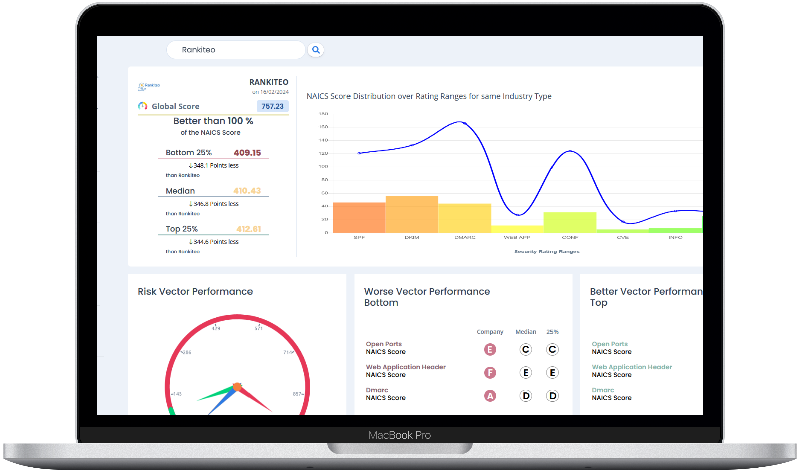
Every week, Rankiteo analyzes billions of signals to give organizations a sharper, faster view of emerging risks. With deeper, more actionable intelligence at their fingertips, security teams can outpace threat actors, respond instantly to Zero-Day attacks, and dramatically shrink their risk exposure window.
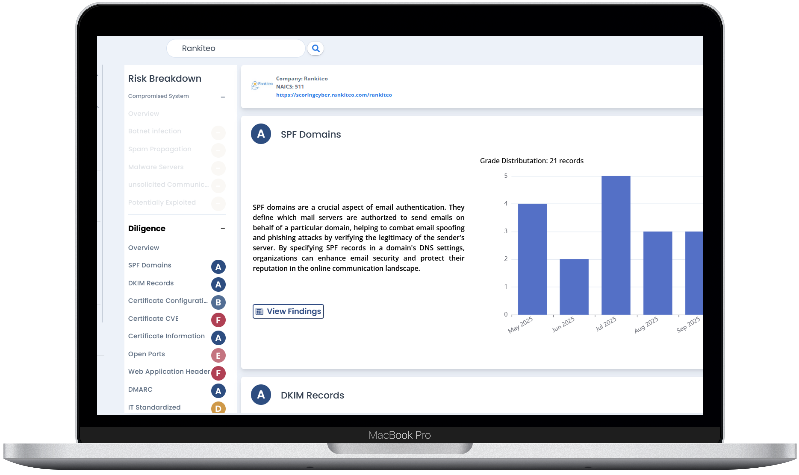
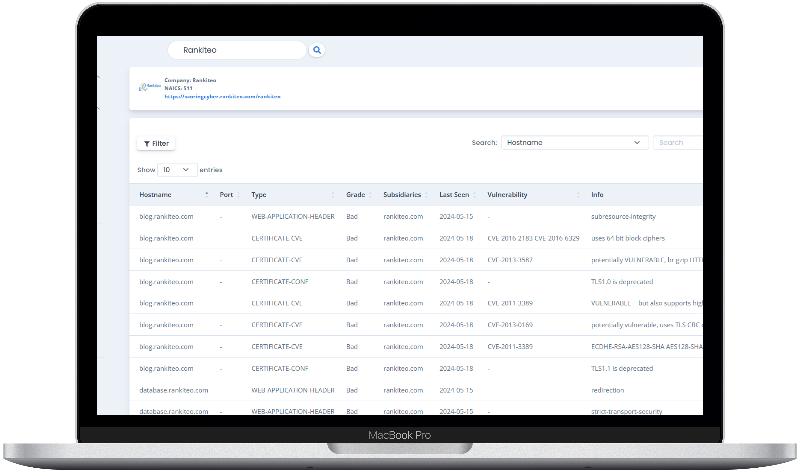
Identify exposed access points, detect misconfigured SSL certificates, and uncover vulnerabilities across the network infrastructure.
Gain visibility into the software components used within an organization to detect vulnerabilities, manage risk, and ensure supply chain security.
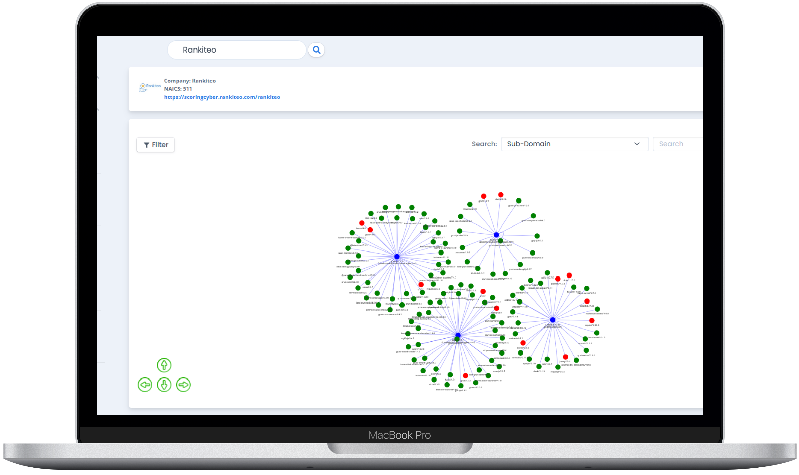
Monitor and manage all IT assets and their configurations to ensure accurate, real-time visibility across the company's technology environment.
Leverage real-time insights on active threats, malware campaigns, and emerging vulnerabilities to proactively defend against evolving cyberattacks.










 Rapid
Rapid