





McDonald's
Company Details
Linkedin ID:
mcdonald's-corporation
Website:
Employees number:
355,175
Number of followers:
2,159,242
NAICS:
7225
Industry Type:
Homepage:
mcdonalds.com
IP Addresses:
0
Company ID:
MCD_3273732
Scan Status:
In-progress

McDonald's Company CyberSecurity Posture
mcdonalds.com


McDonald’s is the world’s leading global foodservice retailer with over 37,000 locations in over 100 countries. More than 90% of McDonald’s restaurants worldwide are owned and operated by independent local business men and women. McDonald's & our franchisees employ 1.9 million people worldwide. We serve the world some of its favorite foods - World Famous Fries, Big Mac, Quarter Pounder, Chicken McNuggets and Egg McMuffin. To learn more about the company, please visit www.aboutmcdonalds.com.
Company Details
mcdonald's-corporation
355,175
2,159,242
7225
mcdonalds.com
0
MCD_3273732
In-progress
 McDonald's Risk Score (AI oriented)
Between 750 and 799
 McDonald's Global Score (TPRM)
XXXX
Description: The burger chain McDonald's was targeted by a cyber attack in September 2016. An employee of McDonald's who worked at the drive-thru took 100 credit card numbers. McDonald’s has informed the local legal authorities and started the investigation.
Description: The burger chain McDonald was targeted by hackers in a cyber attack. The hackers infiltrated its systems and stole personal data of employees in South Korea and Taiwan. The breach even compromised business contact information for U.S. employees and franchisees and restaurant information.
Description: One of the service providers McDonald hired in its Costa Rica branch left its client data exposed which resulted in a data breach incident. The hackers accessed client names, marital status, address, email, document identification numbers, and phone numbers from an unprotected database. McDonald’s has informed the local legal authorities and started the investigation.
Description: McDonald's shares dropped by as much as 1.7% after equity analysis firm Redburn Atlantic downgraded its stock rating from buy to sell. The downgrade was due to the potential impact of GLP-1 drugs on eating habits, which could result in a loss of up to 28 million customer visits and a revenue loss of $482 million per year. The drugs, which suppress appetite and regulate blood sugar, are expected to significantly affect lower-income consumers, a key demographic for McDonald's. This change in consumer behavior, combined with inflationary pressures and pricing fatigue, poses a significant threat to the company's earnings.
Description: McDonald's Canada has acknowledged that hackers have taken approximately 95,000 job seekers' personal information from its hiring website. The names, addresses, emails, phone numbers, employment histories, and other personal information of job hopefuls were exposed in a data breach; the corporation has opened an inquiry into this incident. Approximately 95,000 restaurant job applicants' personal information has been leaked as a result. Those who applied online for a job at a McDonald's Canada restaurant are the ones who are affected. Thankfully, McDonald's Canada does not request sensitive data like social security numbers, health information, or financial information, so the recruitment website has been shut down.
Description: The burger chain McDonald's Canada suffered from a data breach incident that leaked 95,000 job seekers information. The information includes the names, addresses, email addresses, phone numbers, and employment backgrounds of candidates who applied online for a job at McDonald’s Canada between March 2014 and March 2017. After learning of the attack, McDonald's pulled down the website, and the corporation affirmed that it will be shut until the investigation is over.
Description: A vulnerability in McHire, the AI-powered recruitment platform used by a vast majority of McDonald’s franchisees, exposed the personal information of over 64 million job applicants. The vulnerability allowed unauthorised access to sensitive data, including names, email addresses, phone numbers, and home addresses. The issue was due to an Insecure Direct Object Reference (IDOR) on an internal API and weak default credentials. The incident was swiftly addressed by Paradox.ai and McDonald's, but it highlighted the risks associated with rushing AI deployments without proper security measures.
Description: A series of critical vulnerabilities in McDonald’s digital infrastructure exposed severe security lapses across multiple systems. The flaws began with a client-side validation bug in the mobile app, allowing free food exploits, but escalated to far graver issues. The **Design Hub**, used by teams in 120 countries, relied on a client-side password and had an open registration endpoint, enabling unauthorized access to confidential brand assets. Plaintext password emails, exposed **Magicbell API keys**, and listable **Algolia search indexes** leaked employee and user data, including names, emails, and access requests.Employee portals were equally compromised: low-level staff could access the **TRT corporate tool** to search global employee details (including executives’ emails) and exploit an **impersonation feature**. The **Global Restaurant Standards (GRS) panel** lacked authentication, allowing API-based HTML injection, while misconfigured **Stravito access** exposed internal documents. A separate vulnerability in McDonald’s **AI-powered hiring system** exposed **64 million job applicants’ personal data** due to weak security (password: '123456'). Though most issues were patched post-disclosure, some endpoints remained accessible, and a collaborator was terminated over 'security concerns.' The incident highlights systemic failures in authentication, access control, and secure coding practices, with no bug bounty program or reliable reporting mechanism in place.


McDonald's has 322.54% more incidents than the average of same-industry companies with at least one recorded incident.
McDonald's has 284.62% more incidents than the average of all companies with at least one recorded incident.
McDonald's reported 3 incidents this year: 0 cyber attacks, 0 ransomware, 2 vulnerabilities, 1 data breaches, compared to industry peers with at least 1 incident.
McDonald's cyber incidents detection timeline including parent company and subsidiaries
McDonald’s is the world’s leading global foodservice retailer with over 37,000 locations in over 100 countries. More than 90% of McDonald’s restaurants worldwide are owned and operated by independent local business men and women. McDonald's & our franchisees employ 1.9 million people worldwide. We serve the world some of its favorite foods - World Famous Fries, Big Mac, Quarter Pounder, Chicken McNuggets and Egg McMuffin. To learn more about the company, please visit www.aboutmcdonalds.com.


With over 500+ restaurants across the United States, LongHorn Steakhouse has a passion for steak done the right way. Our legendary food sets us apart, but it’s our people who bring LongHorn to life. We strive to create a place where team members feel valued, listened to and appreciated. We offer of

Since the first Outback Steakhouse opened, our family of brands has expanded to include Carrabba's Italian Grill, Bonefish Grill, and Fleming's Prime Steakhouse & Wine Bar. Together, these unique, Founder-inspired restaurants make up Bloomin' Brands, Inc. Today, we are one of the world's largest cas
We're known for our huge restaurants and generous portions but we're so much more than that! Here, you'll have big opportunities to learn and grow your career, you can take pride in the work you do, be able to balance your life with the hours and schedule you need, and be part of a team committed to

Subway is one of the world's largest quick service restaurant brands, serving freshly made-to-order sandwiches, wraps, salads and bowls to millions of guests, across over 100 countries in more than 37,000 restaurants every day. Subway restaurants are owned and operated by Subway franchisees – a ne

With strong, Midwestern family values and genuine hometown hospitality, Culver’s® has proudly served its signature ButterBurgers® and Fresh Frozen Custard since we opened our first restaurant in 1984. There are now over 1,000 Culver’s restaurants in 26 states, with more than 50,000 team members offe

Panda Restaurant Group, the world leader in Asian dining experiences and parent company of Panda Express, Panda Inn, and Hibachi-San, is dedicated to becoming a world leader in people development. We are family-owned and operated with over 2,500 locations worldwide and more than 48,000 associates.

Founded in 1982, Olive Garden is owned by Darden Restaurants, Inc. (NYSE:DRI), the world's largest company-owned and operated full-service restaurant company. With more than 800 restaurants, more than 92,000 employees and more than $3.5 billion in annual sales, Olive Garden is the leading restaurant

In-N-Out Burger was founded in 1948 by Harry and Esther Snyder in Baldwin Park, California, and remains privately owned and operated. Under the direction of the Snyder family, the company has opened restaurants throughout California, Nevada, Arizona, Utah, Texas, Oregon, Colorado, and Idaho. In-N-
Taco Bell was born and raised in California and has been around since 1962. We went from selling everyone’s favorite Crunchy Tacos on the West Coast to a global brand with 8,200+ restaurants, 350 franchise organizations, that serve 42+ million fans each week around the globe. We’re not only the larg
.png)
India Business News: McDonald's has launched a millet bun burger in India, a move hailed by the government as a \"vindication\" of Prime...
In a significant cybersecurity breach that has shaken the travel and business sectors, Qantas Airways has confirmed that sensitive data from...
Cryptojacker sentenced to prison, ECC.fail Rowhammer attack, and Microsoft limits China's access to MAPP, McDonald's hack.
A researcher hacked McDonalds over free nuggets, uncovering critical security flaws, exposed data, and a flawed response to vulnerabilities.
A cybersecurity researcher has disclosed multiple high-severity vulnerabilities across McDonald's digital ecosystem, ranging from...
An ethical hacker who was just trying to get free Chicken McNuggets from McDonald's inadvertently uncovered numerous flaws within the...
A free chicken nugget hack helped uncover multiple McDonald's cybersecurity fails: 'All I had to do was change login to register in the URL' to...
A white-hat hacker has discovered a series of critical flaws in McDonald's staff and partner portals that allowed anyone to order free food...
A security researcher gained access to McDonald's global marketing portal by changing a single word in its URL, uncovering a slew of...

Explore insights on cybersecurity incidents, risk posture, and Rankiteo's assessments.
The official website of McDonald's is https://corporate.mcdonalds.com/.
According to Rankiteo, McDonald's’s AI-generated cybersecurity score is 764, reflecting their Fair security posture.
According to Rankiteo, McDonald's currently holds 0 security badges, indicating that no recognized compliance certifications are currently verified for the organization.
According to Rankiteo, McDonald's is not certified under SOC 2 Type 1.
According to Rankiteo, McDonald's does not hold a SOC 2 Type 2 certification.
According to Rankiteo, McDonald's is not listed as GDPR compliant.
According to Rankiteo, McDonald's does not currently maintain PCI DSS compliance.
According to Rankiteo, McDonald's is not compliant with HIPAA regulations.
According to Rankiteo,McDonald's is not certified under ISO 27001, indicating the absence of a formally recognized information security management framework.
McDonald's operates primarily in the Restaurants industry.
McDonald's employs approximately 355,175 people worldwide.
McDonald's presently has no subsidiaries across any sectors.
McDonald's’s official LinkedIn profile has approximately 2,159,242 followers.
McDonald's is classified under the NAICS code 7225, which corresponds to Restaurants and Other Eating Places.
No, McDonald's does not have a profile on Crunchbase.
Yes, McDonald's maintains an official LinkedIn profile, which is actively utilized for branding and talent engagement, which can be accessed here: https://www.linkedin.com/company/mcdonald's-corporation.
As of December 11, 2025, Rankiteo reports that McDonald's has experienced 8 cybersecurity incidents.
McDonald's has an estimated 4,851 peer or competitor companies worldwide.
Incident Types: The types of cybersecurity incidents that have occurred include Vulnerability and Breach.
Total Financial Loss: The total financial loss from these incidents is estimated to be $482 million.
Detection and Response: The company detects and responds to cybersecurity incidents through an law enforcement notified with yes, and law enforcement notified with yes, and containment measures with pulled down the website, and containment measures with shutdown of recruitment website, and containment measures with changed default administrative credentials, containment measures with resolved idor vulnerability, and remediation measures with removed default credentials, remediation measures with fixed idor vulnerability, and incident response plan activated with partial (delayed and reactive), and containment measures with patching mobile app reward validation (client-side), containment measures with three-month overhaul of design hub logins, containment measures with rotation of exposed magicbell api keys, containment measures with fixing algolia index exposure, containment measures with addressing ai hiring system authentication, containment measures with removing impersonation feature in trt tool (assumed), and remediation measures with implemented proper employee/partner logins (design hub), remediation measures with disabled open registration endpoint (partially), remediation measures with stopped plaintext password transmission (design hub), remediation measures with secured grs panel admin functions, remediation measures with restricted stravito access for low-level staff, and communication strategy with cold-calling headquarters (researcher’s effort), communication strategy with direct contact with security employees via linkedin, communication strategy with public disclosure (post-incident)..
Title: Cyber Attack on McDonald's
Description: The burger chain McDonald's was targeted by hackers in a cyber attack. The hackers infiltrated its systems and stole personal data of employees in South Korea and Taiwan. The breach also compromised business contact information for U.S. employees and franchisees and restaurant information.
Type: Data Breach
Threat Actor: Hackers
Motivation: Data Theft
Title: Data Breach at McDonald's Costa Rica Branch
Description: A service provider hired by McDonald's Costa Rica branch left client data exposed, resulting in a data breach incident. Hackers accessed client names, marital status, address, email, document identification numbers, and phone numbers from an unprotected database.
Type: Data Breach
Attack Vector: Unprotected Database
Vulnerability Exploited: Unprotected Database
Title: Credit Card Theft at McDonald's Drive-Thru
Description: An employee of McDonald's who worked at the drive-thru took 100 credit card numbers.
Date Detected: September 2016
Type: Data Breach
Attack Vector: Internal Theft
Vulnerability Exploited: Insider Threat
Threat Actor: Employee
Motivation: Theft
Title: McDonald's Canada Data Breach
Description: The burger chain McDonald's Canada suffered from a data breach incident that leaked 95,000 job seekers information. The information includes the names, addresses, email addresses, phone numbers, and employment backgrounds of candidates who applied online for a job at McDonald’s Canada between March 2014 and March 2017.
Type: Data Breach
Title: McDonald's Canada Data Breach
Description: McDonald's Canada has acknowledged that hackers have taken approximately 95,000 job seekers' personal information from its hiring website. The names, addresses, emails, phone numbers, employment histories, and other personal information of job hopefuls were exposed in a data breach; the corporation has opened an inquiry into this incident. Approximately 95,000 restaurant job applicants' personal information has been leaked as a result. Those who applied online for a job at a McDonald's Canada restaurant are the ones who are affected. Thankfully, McDonald's Canada does not request sensitive data like social security numbers, health information, or financial information, so the recruitment website has been shut down.
Type: Data Breach
Title: McDonald's Shares Drop Amid Weight-Loss Drug Threat
Description: McDonald's shares dropped as weight-loss drugs threaten to significantly impact the fast food chain's earnings. Analysts downgraded the stock due to potential loss of customer visits and revenue. The appetite-suppressing drugs pose a risk to lower-income consumer brands like McDonald's.
Type: Breach
Title: Major Security Flaw in McDonald’s AI Hiring Tool McHire Exposed 64M Job Applications
Description: An IDOR vulnerability and weak default credentials in McHire, the AI-powered recruitment platform used by McDonald’s franchisees, led to a massive leak of personal data.
Date Detected: 2025-06-30
Date Resolved: 2025-07-01
Type: Data Breach
Attack Vector: Weak Default CredentialsInsecure Direct Object Reference (IDOR)
Vulnerability Exploited: Default CredentialsIDOR
Title: McDonald’s Digital Infrastructure Vulnerabilities and Data Exposure
Description: A series of vulnerabilities in McDonald’s digital infrastructure were discovered by security researcher BobDaHacker, ranging from client-side reward point exploits in the mobile app to exposed executive data, weak authentication in internal tools, and misconfigured APIs. The issues included plaintext password transmission, unauthorized access to confidential materials, exposed API keys, and a severe breach in the AI-powered hiring system affecting 64 million job applicants. Many vulnerabilities were eventually patched, but some may persist, and the company lacks a formal bug bounty program or reliable reporting mechanism.
Type: Data Exposure
Attack Vector: Client-Side Manipulation (Mobile App Reward Points)Unauthenticated API Endpoints (Design Hub, GRS Panel)URL Manipulation (Login to Register Bypass)Weak Authentication (Password '123456' in Hiring System)Exposed API Keys (Magicbell, Algolia)Impersonation Feature in Employee PortalsHTML Injection via Unauthenticated Admin APIsMisconfigured Access Controls (Stravito, TRT Tool)
Vulnerability Exploited: Client-Side Reward Points Validation (Mobile App)Open Registration Endpoint (Design Hub)Plaintext Password Transmission (Design Hub)Exposed Magicbell API Keys and SecretsListable Algolia Search Indexes (PII Exposure)Unauthenticated Access to TRT Tool (Employee Data)Impersonation Feature in Employee PortalsUnauthenticated Admin Functions (GRS Panel, HTML Injection)Misconfigured Stravito Access (Internal Documents)Weak Authentication in AI Hiring System (Password '123456')Arbitrary Order Data Injection (CosMc’s App)Unlimited Coupon Redemptions (CosMc’s App)
Threat Actor: BobDaHacker (Ethical Security Researcher)
Motivation: Ethical DisclosureSecurity AwarenessResponsible Vulnerability Reporting
Common Attack Types: The most common types of attacks the company has faced is Breach.
Identification of Attack Vectors: The company identifies the attack vectors used in incidents through Unprotected Database and Weak Default Credentials.

Data Compromised: Employee personal data, Business contact information, Restaurant information
Data Compromised: Client names, Marital status, Address, Email, Document identification numbers, Phone numbers
Identity Theft Risk: High
Data Compromised: 100 credit card numbers
Payment Information Risk: High
Data Compromised: Names, Addresses, Email addresses, Phone numbers, Employment backgrounds
Data Compromised: Names, Addresses, Emails, Phone numbers, Employment histories
Systems Affected: hiring website
Financial Loss: Revenue loss of $482 million per yearApproximately 0.9% of the company's sales
Revenue Loss: ['Revenue loss of $482 million per year', "Approximately 0.9% of the company's sales"]
Data Compromised: Names, Email addresses, Phone numbers, Home addresses, Authentication tokens, Raw chat messages
Systems Affected: McHire PlatformOlivia Chatbot

Data Compromised: Employee emails (including executives), Job applicant pii (64 million records), Internal brand assets (design hub), Access requests (algolia indexes), Internal documents (stravito), Order data (cosmc’s app)
Systems Affected: McDonald’s Mobile App (Reward Points)Design Hub (Brand Assets Platform)Employee Portals (TRT Tool)Global Restaurant Standards (GRS) PanelStravito (Internal Document Access)CosMc’s Experimental Restaurant AppAI-Powered Hiring System
Operational Impact: Temporary Disruption in Design Hub (Unauthorized Access)GRS Panel Defacement ('You’ve been Shreked')Potential Abuse of Impersonation FeatureExposure of Internal Communications and Documents
Brand Reputation Impact: Negative Publicity Due to Lax Security PracticesLack of Bug Bounty Program CriticizedDismissal of Collaborator Over Security Concerns
Identity Theft Risk: ['High (64 Million Job Applicants’ PII Exposed)', 'Employee Data (Emails, Access Requests)']
Average Financial Loss: The average financial loss per incident is $60.25 million.
Commonly Compromised Data Types: The types of data most commonly compromised in incidents are Personal Data, Business Contact Information, Restaurant Information, , Personal Information, Contact Information, , Credit Card Numbers, Names, Addresses, Email Addresses, Phone Numbers, Employment Backgrounds, , Names, Addresses, Emails, Phone Numbers, Employment Histories, , Personal Information, Contact Information, Authentication Tokens, Chat Messages, , Personally Identifiable Information (Pii), Employee Data (Emails, Access Requests), Internal Brand Assets, Job Applicant Data (64 Million Records), Order Data (Cosmc’S App) and .
Entity Name: McDonald's
Entity Type: Corporation
Industry: Fast Food
Location: South KoreaTaiwanUnited States
Entity Name: McDonald's
Entity Type: Corporation
Industry: Fast Food
Location: Costa Rica
Entity Name: McDonald's
Entity Type: Restaurant Chain
Industry: Fast Food
Entity Name: McDonald's Canada
Entity Type: Company
Industry: Fast Food
Location: Canada
Entity Name: McDonald's Canada
Entity Type: Corporation
Industry: Fast Food
Location: Canada
Customers Affected: 95000
Entity Name: McDonald's
Entity Type: Fast Food Chain
Industry: Food and Beverage
Customers Affected: Up to 28 million customer visits
Entity Name: McDonald’s
Entity Type: Corporation
Industry: Fast Food
Location: Global
Size: Large
Customers Affected: 64 million job applicants
Entity Name: McDonald’s Corporation
Entity Type: Multinational Fast Food Chain
Industry: Restaurant / Hospitality
Location: Global (120+ Countries)
Size: Large (Franchises and Corporate)
Customers Affected: Mobile App Users (Reward Points Exploit), Job Applicants (64 Million Records in Hiring System), Employees (Internal Data Exposure), CosMc’s App Users (Coupon Abuse)
Law Enforcement Notified: Yes
Law Enforcement Notified: Yes
Containment Measures: Pulled down the website
Containment Measures: shutdown of recruitment website
Containment Measures: Changed default administrative credentialsResolved IDOR vulnerability
Remediation Measures: Removed default credentialsFixed IDOR vulnerability
Incident Response Plan Activated: Partial (Delayed and Reactive)
Containment Measures: Patching Mobile App Reward Validation (Client-Side)Three-Month Overhaul of Design Hub LoginsRotation of Exposed Magicbell API KeysFixing Algolia Index ExposureAddressing AI Hiring System AuthenticationRemoving Impersonation Feature in TRT Tool (Assumed)
Remediation Measures: Implemented Proper Employee/Partner Logins (Design Hub)Disabled Open Registration Endpoint (Partially)Stopped Plaintext Password Transmission (Design Hub)Secured GRS Panel Admin FunctionsRestricted Stravito Access for Low-Level Staff
Communication Strategy: Cold-Calling Headquarters (Researcher’s Effort)Direct Contact with Security Employees via LinkedInPublic Disclosure (Post-Incident)
Incident Response Plan: The company's incident response plan is described as Partial (Delayed and Reactive).
Type of Data Compromised: Personal data, Business contact information, Restaurant information
Type of Data Compromised: Personal information, Contact information
Sensitivity of Data: High
Personally Identifiable Information: Yes
Type of Data Compromised: Credit Card Numbers
Number of Records Exposed: 100
Sensitivity of Data: High
Data Exfiltration: Yes
Type of Data Compromised: Names, Addresses, Email addresses, Phone numbers, Employment backgrounds
Number of Records Exposed: 95,000
Personally Identifiable Information: namesaddressesemail addressesphone numbers
Type of Data Compromised: Names, Addresses, Emails, Phone numbers, Employment histories
Number of Records Exposed: 95000
Personally Identifiable Information: namesaddressesemailsphone numbers
Type of Data Compromised: Personal information, Contact information, Authentication tokens, Chat messages
Number of Records Exposed: 64 million
Sensitivity of Data: High
Personally Identifiable Information: NamesEmail AddressesPhone NumbersHome Addresses
Type of Data Compromised: Personally identifiable information (pii), Employee data (emails, access requests), Internal brand assets, Job applicant data (64 million records), Order data (cosmc’s app)
Number of Records Exposed: 64,000,000 (Job Applicants) + Undisclosed (Employees/Internal Data)
Sensitivity of Data: High (PII, Internal Communications, Executive Emails)
Data Exfiltration: Unconfirmed (Potential via Exposed APIs and Misconfigurations)
Data Encryption: None (Plaintext Passwords, Weak Authentication)
File Types Exposed: Internal Documents (Stravito)Brand Assets (Design Hub)Employee Records (TRT Tool)Job Application Data (AI Hiring System)
Personally Identifiable Information: NamesEmailsAccess RequestsJob Application Details (64 Million Records)
Prevention of Data Exfiltration: The company takes the following measures to prevent data exfiltration: Removed default credentials, Fixed IDOR vulnerability, , Implemented Proper Employee/Partner Logins (Design Hub), Disabled Open Registration Endpoint (Partially), Stopped Plaintext Password Transmission (Design Hub), Secured GRS Panel Admin Functions, Restricted Stravito Access for Low-Level Staff, .
Handling of PII Incidents: The company handles incidents involving personally identifiable information (PII) through by pulled down the website, shutdown of recruitment website, , changed default administrative credentials, resolved idor vulnerability, , patching mobile app reward validation (client-side), three-month overhaul of design hub logins, rotation of exposed magicbell api keys, fixing algolia index exposure, addressing ai hiring system authentication, removing impersonation feature in trt tool (assumed) and .
Lessons Learned: The incident highlights the importance of basic security hygiene and governance around AI systems that collect or process personal data.
Lessons Learned: Lack of a Bug Bounty Program Hinders Ethical Disclosures, Delayed or Dismissive Responses to Researchers Worsen Risks, Client-Side Validation is Insufficient for Security-Critical Functions, Plaintext Password Transmission is Unacceptable in 2025, Unauthenticated API Endpoints Pose Severe Risks, Misconfigured Access Controls Can Lead to Large-Scale Data Exposure, Internal Tools Require Strict Authentication and Authorization, Public-Facing Systems Must Undergo Regular Security Audits
Recommendations: Implement proper authentication, auditability, and integration into broader risk workflows, Treat AI as a regulated asset and implement frameworks that ensure accountabilityImplement proper authentication, auditability, and integration into broader risk workflows, Treat AI as a regulated asset and implement frameworks that ensure accountability
Recommendations: Establish a Formal Bug Bounty Program, Create a Dedicated Security Contact (security.txt), Implement Multi-Factor Authentication (MFA) for Internal Systems, Conduct Regular Third-Party Security Audits, Enforce Least-Privilege Access Controls, Encrypt Sensitive Data in Transit and at Rest, Monitor and Rotate API Keys Regularly, Train Employees on Secure Coding and Incident Reporting, Adopt a Proactive Vulnerability Disclosure PolicyEstablish a Formal Bug Bounty Program, Create a Dedicated Security Contact (security.txt), Implement Multi-Factor Authentication (MFA) for Internal Systems, Conduct Regular Third-Party Security Audits, Enforce Least-Privilege Access Controls, Encrypt Sensitive Data in Transit and at Rest, Monitor and Rotate API Keys Regularly, Train Employees on Secure Coding and Incident Reporting, Adopt a Proactive Vulnerability Disclosure PolicyEstablish a Formal Bug Bounty Program, Create a Dedicated Security Contact (security.txt), Implement Multi-Factor Authentication (MFA) for Internal Systems, Conduct Regular Third-Party Security Audits, Enforce Least-Privilege Access Controls, Encrypt Sensitive Data in Transit and at Rest, Monitor and Rotate API Keys Regularly, Train Employees on Secure Coding and Incident Reporting, Adopt a Proactive Vulnerability Disclosure PolicyEstablish a Formal Bug Bounty Program, Create a Dedicated Security Contact (security.txt), Implement Multi-Factor Authentication (MFA) for Internal Systems, Conduct Regular Third-Party Security Audits, Enforce Least-Privilege Access Controls, Encrypt Sensitive Data in Transit and at Rest, Monitor and Rotate API Keys Regularly, Train Employees on Secure Coding and Incident Reporting, Adopt a Proactive Vulnerability Disclosure PolicyEstablish a Formal Bug Bounty Program, Create a Dedicated Security Contact (security.txt), Implement Multi-Factor Authentication (MFA) for Internal Systems, Conduct Regular Third-Party Security Audits, Enforce Least-Privilege Access Controls, Encrypt Sensitive Data in Transit and at Rest, Monitor and Rotate API Keys Regularly, Train Employees on Secure Coding and Incident Reporting, Adopt a Proactive Vulnerability Disclosure PolicyEstablish a Formal Bug Bounty Program, Create a Dedicated Security Contact (security.txt), Implement Multi-Factor Authentication (MFA) for Internal Systems, Conduct Regular Third-Party Security Audits, Enforce Least-Privilege Access Controls, Encrypt Sensitive Data in Transit and at Rest, Monitor and Rotate API Keys Regularly, Train Employees on Secure Coding and Incident Reporting, Adopt a Proactive Vulnerability Disclosure PolicyEstablish a Formal Bug Bounty Program, Create a Dedicated Security Contact (security.txt), Implement Multi-Factor Authentication (MFA) for Internal Systems, Conduct Regular Third-Party Security Audits, Enforce Least-Privilege Access Controls, Encrypt Sensitive Data in Transit and at Rest, Monitor and Rotate API Keys Regularly, Train Employees on Secure Coding and Incident Reporting, Adopt a Proactive Vulnerability Disclosure PolicyEstablish a Formal Bug Bounty Program, Create a Dedicated Security Contact (security.txt), Implement Multi-Factor Authentication (MFA) for Internal Systems, Conduct Regular Third-Party Security Audits, Enforce Least-Privilege Access Controls, Encrypt Sensitive Data in Transit and at Rest, Monitor and Rotate API Keys Regularly, Train Employees on Secure Coding and Incident Reporting, Adopt a Proactive Vulnerability Disclosure PolicyEstablish a Formal Bug Bounty Program, Create a Dedicated Security Contact (security.txt), Implement Multi-Factor Authentication (MFA) for Internal Systems, Conduct Regular Third-Party Security Audits, Enforce Least-Privilege Access Controls, Encrypt Sensitive Data in Transit and at Rest, Monitor and Rotate API Keys Regularly, Train Employees on Secure Coding and Incident Reporting, Adopt a Proactive Vulnerability Disclosure Policy
Key Lessons Learned: The key lessons learned from past incidents are The incident highlights the importance of basic security hygiene and governance around AI systems that collect or process personal data.Lack of a Bug Bounty Program Hinders Ethical Disclosures,Delayed or Dismissive Responses to Researchers Worsen Risks,Client-Side Validation is Insufficient for Security-Critical Functions,Plaintext Password Transmission is Unacceptable in 2025,Unauthenticated API Endpoints Pose Severe Risks,Misconfigured Access Controls Can Lead to Large-Scale Data Exposure,Internal Tools Require Strict Authentication and Authorization,Public-Facing Systems Must Undergo Regular Security Audits.
Source: Redburn Atlantic
Source: Reddit
Source: Ian Carroll
Source: Original Incident Report (Hypothetical, Based on Description)
Additional Resources: Stakeholders can find additional resources on cybersecurity best practices at and Source: Redburn Atlantic, and Source: Reddit, and Source: Ian Carroll, and Source: Original Incident Report (Hypothetical, Based on Description).
Investigation Status: Ongoing
Investigation Status: Ongoing
Investigation Status: Ongoing
Investigation Status: Partially Resolved (Some Vulnerabilities May Persist)
Communication of Investigation Status: The company communicates the status of incident investigations to stakeholders through Cold-Calling Headquarters (Researcher’S Effort), Direct Contact With Security Employees Via Linkedin and Public Disclosure (Post-Incident).
Entry Point: Unprotected Database
Entry Point: Weak Default Credentials
Root Causes: Unprotected Database
Root Causes: Weak Default Credentials, Idor Vulnerability,
Corrective Actions: Changed Default Administrative Credentials, Resolved Idor Vulnerability,
Root Causes: Lack Of Secure Coding Practices (Client-Side Validation), Inadequate Authentication Mechanisms (Design Hub, Grs Panel), Poor Incident Response Coordination, Absence Of A Structured Vulnerability Disclosure Process, Over-Permissive Access Controls (Stravito, Trt Tool), Use Of Default/Weak Credentials (Ai Hiring System), Delayed Patching And Remediation,
Corrective Actions: Implemented Proper Authentication For Design Hub, Rotated Exposed Api Keys (Magicbell, Algolia), Secured Grs Panel Admin Functions, Fixed Ai Hiring System Authentication, Restricted Stravito Access, Patched Mobile App Reward Validation, Removed Or Secured Impersonation Feature (Assumed),
Corrective Actions Taken: The company has taken the following corrective actions based on post-incident analysis: Changed Default Administrative Credentials, Resolved Idor Vulnerability, , Implemented Proper Authentication For Design Hub, Rotated Exposed Api Keys (Magicbell, Algolia), Secured Grs Panel Admin Functions, Fixed Ai Hiring System Authentication, Restricted Stravito Access, Patched Mobile App Reward Validation, Removed Or Secured Impersonation Feature (Assumed), .
Last Attacking Group: The attacking group in the last incident were an Hackers, Employee and BobDaHacker (Ethical Security Researcher).
Most Recent Incident Detected: The most recent incident detected was on September 2016.
Most Recent Incident Resolved: The most recent incident resolved was on 2025-07-01.
Highest Financial Loss: The highest financial loss from an incident was ['Revenue loss of $482 million per year', "Approximately 0.9% of the company's sales"].
Most Significant Data Compromised: The most significant data compromised in an incident were Employee personal data, Business contact information, Restaurant information, , Client names, Marital status, Address, Email, Document identification numbers, Phone numbers, , 100 credit card numbers, names, addresses, email addresses, phone numbers, employment backgrounds, , names, addresses, emails, phone numbers, employment histories, , Names, Email Addresses, Phone Numbers, Home Addresses, Authentication Tokens, Raw Chat Messages, , Employee Emails (Including Executives), Job Applicant PII (64 Million Records), Internal Brand Assets (Design Hub), Access Requests (Algolia Indexes), Internal Documents (Stravito), Order Data (CosMc’s App) and .
Most Significant System Affected: The most significant system affected in an incident was hiring website and McHire PlatformOlivia Chatbot and McDonald’s Mobile App (Reward Points)Design Hub (Brand Assets Platform)Employee Portals (TRT Tool)Global Restaurant Standards (GRS) PanelStravito (Internal Document Access)CosMc’s Experimental Restaurant AppAI-Powered Hiring System.
Containment Measures in Most Recent Incident: The containment measures taken in the most recent incident were Pulled down the website, shutdown of recruitment website, Changed default administrative credentialsResolved IDOR vulnerability and Patching Mobile App Reward Validation (Client-Side)Three-Month Overhaul of Design Hub LoginsRotation of Exposed Magicbell API KeysFixing Algolia Index ExposureAddressing AI Hiring System AuthenticationRemoving Impersonation Feature in TRT Tool (Assumed).
Most Sensitive Data Compromised: The most sensitive data compromised in a breach were names, Employee Emails (Including Executives), Address, Internal Documents (Stravito), Marital status, Business contact information, Client names, addresses, phone numbers, Email Addresses, Email, Home Addresses, Restaurant information, emails, Phone numbers, email addresses, employment histories, Raw Chat Messages, Names, Authentication Tokens, Job Applicant PII (64 Million Records), 100 credit card numbers, Internal Brand Assets (Design Hub), Phone Numbers, Order Data (CosMc’s App), Employee personal data, Access Requests (Algolia Indexes), Document identification numbers and employment backgrounds.
Number of Records Exposed in Most Significant Breach: The number of records exposed in the most significant breach was 128.1M.
Most Significant Lesson Learned: The most significant lesson learned from past incidents was Public-Facing Systems Must Undergo Regular Security Audits.
Most Significant Recommendation Implemented: The most significant recommendation implemented to improve cybersecurity was Enforce Least-Privilege Access Controls, Create a Dedicated Security Contact (security.txt), Conduct Regular Third-Party Security Audits, Adopt a Proactive Vulnerability Disclosure Policy, Treat AI as a regulated asset and implement frameworks that ensure accountability, Train Employees on Secure Coding and Incident Reporting, Establish a Formal Bug Bounty Program, Encrypt Sensitive Data in Transit and at Rest, Implement proper authentication, auditability, and integration into broader risk workflows, Monitor and Rotate API Keys Regularly and Implement Multi-Factor Authentication (MFA) for Internal Systems.
Most Recent Source: The most recent source of information about an incident are Reddit, Ian Carroll, Redburn Atlantic, Original Incident Report (Hypothetical and Based on Description).
Current Status of Most Recent Investigation: The current status of the most recent investigation is Ongoing.
Most Recent Entry Point: The most recent entry point used by an initial access broker were an Weak Default Credentials and Unprotected Database.
Most Significant Root Cause: The most significant root cause identified in post-incident analysis was Unprotected Database, Weak Default CredentialsIDOR Vulnerability, Lack of Secure Coding Practices (Client-Side Validation)Inadequate Authentication Mechanisms (Design Hub, GRS Panel)Poor Incident Response CoordinationAbsence of a Structured Vulnerability Disclosure ProcessOver-Permissive Access Controls (Stravito, TRT Tool)Use of Default/Weak Credentials (AI Hiring System)Delayed Patching and Remediation.
Most Significant Corrective Action: The most significant corrective action taken based on post-incident analysis was Changed default administrative credentialsResolved IDOR vulnerability, Implemented Proper Authentication for Design HubRotated Exposed API Keys (Magicbell, Algolia)Secured GRS Panel Admin FunctionsFixed AI Hiring System AuthenticationRestricted Stravito AccessPatched Mobile App Reward ValidationRemoved or Secured Impersonation Feature (Assumed).
.png)
FreePBX Endpoint Manager is a module for managing telephony endpoints in FreePBX systems. Versions prior to 16.0.96 and 17.0.1 through 17.0.9 have a weak default password. By default, this is a 6 digit numeric value which can be brute forced. (This is the app_password parameter). Depending on local configuration, this password could be the extension, voicemail, user manager, DPMA or EPM phone admin password. This issue is fixed in versions 16.0.96 and 17.0.10.
Neuron is a PHP framework for creating and orchestrating AI Agents. In versions 2.8.11 and below, the MySQLWriteTool executes arbitrary SQL provided by the caller using PDO::prepare() + execute() without semantic restrictions. This is consistent with the name (“write tool”), but in an LLM/agent context it becomes a high-risk capability: prompt injection or indirect prompt manipulation can cause execution of destructive queries such as DROP TABLE, TRUNCATE, DELETE, ALTER, or privilege-related statements (subject to DB permissions). Deployments that expose an agent with MySQLWriteTool enabled to untrusted input and/or run the tool with a DB user that has broad privileges are impacted. This issue is fixed in version 2.8.12.
Neuron is a PHP framework for creating and orchestrating AI Agents. Versions 2.8.11 and below use MySQLSelectTool, which is vulnerable to Read-Only Bypass. MySQLSelectTool is intended to be a read-only SQL tool (e.g., for LLM agent querying, however, validation based on the first keyword (e.g., SELECT) and a forbidden-keyword list does not block file-writing constructs such as INTO OUTFILE / INTO DUMPFILE. As a result, an attacker who can influence the tool input (e.g., via prompt injection through a public agent endpoint) may write arbitrary files to the DB server if the MySQL/MariaDB account has the FILE privilege and server configuration permits writes to a useful location (e.g., a web-accessible directory). This issue is fixed in version 2.8.12.
Okta Java Management SDK facilitates interactions with the Okta management API. In versions 11.0.0 through 20.0.0, race conditions may arise from concurrent requests using the ApiClient class. This could cause a status code or response header from one request’s response to influence another request’s response. This issue is fixed in version 20.0.1.
The Auth0 Next.js SDK is a library for implementing user authentication in Next.js applications. When using versions 4.11.0 through 4.11.2 and 4.12.0, simultaneous requests on the same client may result in improper lookups in the TokenRequestCache for the request results. This issue is fixed in versions 4.11.2 and 4.12.1.

Get company history

Every week, Rankiteo analyzes billions of signals to give organizations a sharper, faster view of emerging risks. With deeper, more actionable intelligence at their fingertips, security teams can outpace threat actors, respond instantly to Zero-Day attacks, and dramatically shrink their risk exposure window.
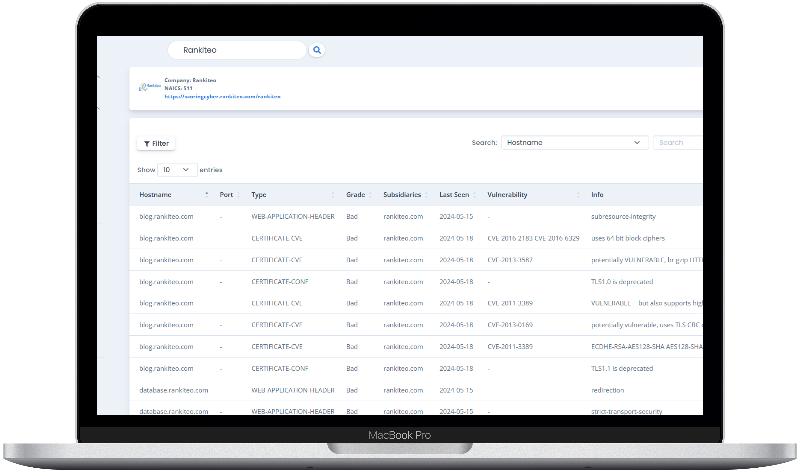
Identify exposed access points, detect misconfigured SSL certificates, and uncover vulnerabilities across the network infrastructure.
Gain visibility into the software components used within an organization to detect vulnerabilities, manage risk, and ensure supply chain security.
Monitor and manage all IT assets and their configurations to ensure accurate, real-time visibility across the company's technology environment.
Leverage real-time insights on active threats, malware campaigns, and emerging vulnerabilities to proactively defend against evolving cyberattacks.







 Rapid
Rapid