





LNE
Company Details
Linkedin ID:
live-nation
Employees number:
23,586
Number of followers:
805,347
NAICS:
71
Industry Type:
Homepage:
livenationentertainment.com
IP Addresses:
0
Company ID:
LIV_8520756
Scan Status:
In-progress

Live Nation Entertainment Company CyberSecurity Posture
livenationentertainment.com


Recognized three years in a row by Great Place to Work® and named one of People Magazine’s Top 50 Companies that Care, Live Nation Entertainment is the global leader in live events and ticketing. With business operations and corporate functions across major divisions including Ticketmaster, Concerts, Media & Sponsorship and Artist Nation, we offer exciting opportunities across every discipline. Generous vacation, healthcare, and retirement benefits are just some of the perks we offer our full-time, global workforce. For any stage in your career, our benefits are designed to help you live life to the fullest. We offer student loan repayment, 6 months paid caregiver leave, Roadie Babies (bring your little ones & a caretaker on your work trips), Music@Home (cultivate your little ones music interest), and tuition reimbursement for ongoing career development. Plus, you'll have access to free concerts, festivals, and more through our exclusive employee ticket concierge.
Company Details
live-nation
23,586
805,347
71
livenationentertainment.com
0
LIV_8520756
In-progress
 LNE Risk Score (AI oriented)
Between 800 and 849
 LNE Global Score (TPRM)
XXXX
Description: The Vermont Office of the Attorney General reported a data breach incident involving Ticketmaster on July 5, 2024. The unauthorized access occurred between April 2, 2024, and May 18, 2024, potentially affecting personal information such as names and basic contact information, though the exact number of individuals affected is unknown.
Description: Ticketmaster, a major customer of Snowflake, suffered a severe data breach in early 2024 after attackers exploited weak credentials and excessive permissions in Snowflake’s cloud environment. The breach led to unauthorized access to Ticketmaster’s database, resulting in the exfiltration of **1.3 terabytes of data** belonging to **560 million individuals**, including personal and potentially sensitive information. The incident triggered multiple customer lawsuits, reputational damage, and regulatory scrutiny. The attack highlighted critical vulnerabilities in third-party cloud platforms, where identity-based compromises enabled lateral movement and large-scale data theft. The cascading impact underscored how interconnected cloud ecosystems amplify risks, turning third-party breaches into direct threats to customer trust and operational stability.
Description: Ticketmaster, a company that sells tickets for events, revealed that there was a data breach that resulted in the exposure of payment and personal customer information. Hackers gained access to consumers' names, addresses, email addresses, phone numbers, payment information, and Ticketmaster login credentials. The company claims that malicious code was put by attackers on a customer assistance product hosted by an outside third party, Inbenta Technologies. Hackers gained access to a third-party customer support chat application that was installed on the UK website to obtain payment and personal information from ticket buyers.
Description: Ticketmaster was hit by a cyberattack in November that led to the problems with ticket sales for Taylor Swift’s upcoming U.S. tour. A massive influx of traffic on the Ticketmaster website caused the slowdown in ticket sales as a part of that was due to a cyberattack.
Description: Ticketmaster experienced a significant security breach where criminal hackers claimed to have stolen data from 560 million people. The attackers exploited vulnerabilities in cloud storage services and lacked multi-factor authentication. They threatened to leak 170,000 ticket barcodes and demanded a $2 million ransom. Although the claims may be dubious, the breach exposes emails, phone numbers, encrypted credit card data, and other personal information, leading to a loss of trust and potential financial and reputational damage for affected customers and the company itself.
Description: Arkana Security Group claims to have accessed Ticketmaster’s database infrastructure, exfiltrating sensitive customer data including PII, financial transaction records, and behavioral analytics data. The breach affects millions of users globally, raising concerns about the entertainment industry’s cybersecurity. The data exposure includes proprietary business intelligence and internal fraud detection algorithms, facilitating potential social engineering attacks and phishing operations.


No incidents recorded for Live Nation Entertainment in 2025.
No incidents recorded for Live Nation Entertainment in 2025.
No incidents recorded for Live Nation Entertainment in 2025.
LNE cyber incidents detection timeline including parent company and subsidiaries
Recognized three years in a row by Great Place to Work® and named one of People Magazine’s Top 50 Companies that Care, Live Nation Entertainment is the global leader in live events and ticketing. With business operations and corporate functions across major divisions including Ticketmaster, Concerts, Media & Sponsorship and Artist Nation, we offer exciting opportunities across every discipline. Generous vacation, healthcare, and retirement benefits are just some of the perks we offer our full-time, global workforce. For any stage in your career, our benefits are designed to help you live life to the fullest. We offer student loan repayment, 6 months paid caregiver leave, Roadie Babies (bring your little ones & a caretaker on your work trips), Music@Home (cultivate your little ones music interest), and tuition reimbursement for ongoing career development. Plus, you'll have access to free concerts, festivals, and more through our exclusive employee ticket concierge.


Warner Bros. Discovery, a premier global media and entertainment company, offers audiences the world’s most differentiated and complete portfolio of content, brands and franchises across television, film, streaming and gaming. The new company combines WarnerMedia’s premium entertainment, sports and
Headquartered in Plano, TX, Cinemark Holdings, Inc. provides premium out-of-home entertainment experiences as one of the largest and most influential theatrical exhibition companies in the world with 497 theatres and 5,653 screens in the U.S. and Latin America as of December 31, 2024. • Our circuit

Technicolor Group is a creative technology company providing world-class production expertise driven by one purpose: The realization of ambitious and extraordinary ideas. Home to a network of award-winning studios, MPC, The Mill, Mikros Animation and Technicolor Games, we inspire creative companies

NBCUniversal is one of the world's leading media and entertainment companies. We create world-class content, which we distribute across our portfolio of film, television, and streaming, and bring to life through our theme parks and consumer experiences. We own and operate leading entertainment and n
Welcome to Entain. Our journey as Entain began when we evolved from GVC Holdings on 9th December 2020, but our brands have been paving the way and making history since the 1880s. Today, we’re one of the world’s largest sports betting and gaming entertainment groups – a FTSE 100 company that is h
Topgolf is the ultimate instigator of play. Thanks to our 100+ venues around the globe, which are powered by industry-leading Toptracer technology, we're leading the charge of modern golf. We offer a variety of tech-driven games, a top-tier food and drink menu, space to host large events, and a vibe

With national offices in Los Angeles and New York, and local offices nationwide, SAG-AFTRA is the iconic American labor union that represents approximately 160,000 media professionals. Our members are the talented faces and voices that entertain and inform America and the world. They are actors, a
Universal Music Group (UMG) is the world leader in music-based entertainment, with a broad array of businesses engaged in recorded music, music publishing, merchandising and audiovisual content in more than 60 countries. Featuring the most comprehensive catalog of recordings and songs across every m
Sony’s purpose is simple. We aim to fill the world with emotion, through the power of creativity and technology. We want to be responsible for getting hearts racing, stirring ambition, and putting a smile on the faces of our customers. That challenge, combined with our spirit of innovation, motivate
.png)
Live Nation Entertainment Inc (LYV) reports robust financial performance with significant international growth, despite challenges in the...
Live Nation Entertainment will release its third-quarter earnings next month, and analysts anticipate a double-digit profit dip.
Live Nation Entertainment, Inc. (NYSE: LYV), the world's leading live entertainment company, has announced a time change for their upcoming...
Live Nation Entertainment, Inc. (NYSE: LYV), the world's leading live entertainment company, has scheduled two investor events:
LOS ANGELES , Oct. 8, 2025 /PRNewswire/ -- Live Nation Entertainment , Inc. (NYSE: LYV) (the "company") today announced that it priced its...
Live Nation Entertainment, Inc. (NYSE: LYV) (the "company") today announced that it intends to offer, subject to market and other conditions...
Sen. Marsha Blackburn (R-Tenn.) demanded Ticketmaster explain whether it misled Congress in 2023 about its handling of bot scalpers – days...
The complaint argues that resellers often use fake accounts to buy thousands of tickets, shutting out everyday fans.
Live Nation Entertainment, Inc. (LYV), headquartered in Beverly Hills, California, has become a dominant player in the global live music...

Explore insights on cybersecurity incidents, risk posture, and Rankiteo's assessments.
The official website of Live Nation Entertainment is http://livenationentertainment.com.
According to Rankiteo, Live Nation Entertainment’s AI-generated cybersecurity score is 814, reflecting their Good security posture.
According to Rankiteo, Live Nation Entertainment currently holds 0 security badges, indicating that no recognized compliance certifications are currently verified for the organization.
According to Rankiteo, Live Nation Entertainment is not certified under SOC 2 Type 1.
According to Rankiteo, Live Nation Entertainment does not hold a SOC 2 Type 2 certification.
According to Rankiteo, Live Nation Entertainment is not listed as GDPR compliant.
According to Rankiteo, Live Nation Entertainment does not currently maintain PCI DSS compliance.
According to Rankiteo, Live Nation Entertainment is not compliant with HIPAA regulations.
According to Rankiteo,Live Nation Entertainment is not certified under ISO 27001, indicating the absence of a formally recognized information security management framework.
Live Nation Entertainment operates primarily in the Entertainment Providers industry.
Live Nation Entertainment employs approximately 23,586 people worldwide.
Live Nation Entertainment presently has no subsidiaries across any sectors.
Live Nation Entertainment’s official LinkedIn profile has approximately 805,347 followers.
Live Nation Entertainment is classified under the NAICS code 71, which corresponds to Arts, Entertainment, and Recreation.
Yes, Live Nation Entertainment has an official profile on Crunchbase, which can be accessed here: https://www.crunchbase.com/organization/live-nation-entertainment.
Yes, Live Nation Entertainment maintains an official LinkedIn profile, which is actively utilized for branding and talent engagement, which can be accessed here: https://www.linkedin.com/company/live-nation.
As of December 11, 2025, Rankiteo reports that Live Nation Entertainment has experienced 6 cybersecurity incidents.
Live Nation Entertainment has an estimated 7,282 peer or competitor companies worldwide.
Incident Types: The types of cybersecurity incidents that have occurred include Cyber Attack and Breach.
Detection and Response: The company detects and responds to cybersecurity incidents through an remediation measures with implement database activity monitoring, remediation measures with implement privileged access management (pam) solutions, remediation measures with implement zero-trust architecture principles, and enhanced monitoring with real-time threat monitoring capabilities..
Title: Cyberattack on Ticketmaster during Taylor Swift Tour Ticket Sales
Description: Ticketmaster was hit by a cyberattack in November that led to the problems with ticket sales for Taylor Swift’s upcoming U.S. tour. A massive influx of traffic on the Ticketmaster website caused the slowdown in ticket sales as a part of that was due to a cyberattack.
Date Detected: November
Type: Cyberattack
Attack Vector: DDoS
Title: Ticketmaster Data Breach
Description: Ticketmaster, a company that sells tickets for events, revealed that there was a data breach that resulted in the exposure of payment and personal customer information. Hackers gained access to consumers' names, addresses, email addresses, phone numbers, payment information, and Ticketmaster login credentials. The company claims that malicious code was put by attackers on a customer assistance product hosted by an outside third party, Inbenta Technologies. Hackers gained access to a third-party customer support chat application that was installed on the UK website to obtain payment and personal information from ticket buyers.
Type: Data Breach
Attack Vector: Third-party customer support chat application
Vulnerability Exploited: Malicious code injection
Motivation: Data theft
Title: Ticketmaster Data Breach
Description: Ticketmaster experienced a significant security breach where criminal hackers claimed to have stolen data from 560 million people. The attackers exploited vulnerabilities in cloud storage services and lacked multi-factor authentication. They threatened to leak 170,000 ticket barcodes and demanded a $2 million ransom. Although the claims may be dubious, the breach exposes emails, phone numbers, encrypted credit card data, and other personal information, leading to a loss of trust and potential financial and reputational damage for affected customers and the company itself.
Type: Data Breach
Attack Vector: Exploitation of vulnerabilities in cloud storage services
Vulnerability Exploited: Lack of multi-factor authentication
Threat Actor: Criminal Hackers
Motivation: Financial Gain
Title: Ticketmaster Data Breach by Arkana Security Group
Description: Arkana Security Group claims to have successfully gained access to Ticketmaster’s database infrastructure and exfiltrated massive volumes of sensitive customer data, affecting millions of users worldwide.
Type: Data Breach
Attack Vector: SQL injection vulnerabilitiesInsider access mechanismsZero-day vulnerabilities
Vulnerability Exploited: REST API endpointsGraphQL interfacesWeb application stack
Threat Actor: Arkana Security Group
Motivation: Financial gain through selling data on dark web marketplaces
Title: Ticketmaster Data Breach
Description: The Vermont Office of the Attorney General reported a data breach incident involving Ticketmaster on July 5, 2024. The unauthorized access occurred between April 2, 2024, and May 18, 2024, potentially affecting personal information such as names and basic contact information, though the exact number of individuals affected is unknown.
Date Detected: 2024-05-18
Date Publicly Disclosed: 2024-07-05
Type: Data Breach
Title: Snowflake Data Breach (2024) and Cascading Impact on Ticketmaster
Description: In early 2024, attackers exploited weak credentials and excessive permissions in Snowflake, Inc.'s cloud environment to bypass perimeter defenses. They pivoted laterally into multiple customer environments (e.g., AT&T, Santander Bank, Ticketmaster) and exfiltrated large volumes of sensitive data. Ticketmaster, a Snowflake customer, suffered a breach of 1.3 TB of data affecting 560 million individuals, exposing personally identifiable information (PII) and triggering lawsuits. The incident highlighted systemic risks in cloud security, including misconfigurations, over-privileged identities, and exposed APIs, underscoring the need for integrated defenses like Cloud Native Application Protection Platforms (CNAPP), Zero Trust, and continuous compliance.
Date Detected: early 2024
Type: Data Breach
Attack Vector: Credential StuffingExcessive PermissionsIdentity-Based AttackLateral Movement via Cloud Environment
Vulnerability Exploited: Weak/Stolen CredentialsOver-Privileged AccountsLack of Multi-Factor Authentication (MFA)Misconfigured Cloud Identity and Access Management (IAM)
Motivation: Data TheftFinancial Gain (Potential Dark Web Sale)Disruption
Common Attack Types: The most common types of attacks the company has faced is Breach.
Identification of Attack Vectors: The company identifies the attack vectors used in incidents through Third-party customer support chat application, SQL injection vulnerabilitiesInsider access mechanisms and Compromised Snowflake credentials (weak/stolen).

Systems Affected: Ticketmaster website
Operational Impact: Slowdown in ticket sales

Data Compromised: Names, Addresses, Email addresses, Phone numbers, Payment information, Ticketmaster login credentials
Data Compromised: Emails, Phone numbers, Encrypted credit card data, Other personal information
Systems Affected: Cloud Storage Services
Brand Reputation Impact: Loss of trust and potential reputational damage
Payment Information Risk: Encrypted Credit Card Data
Data Compromised: Ticket sales records, Payment methodologies, Customer demographic profiles, Internal fraud resolution documentation, Pii, Financial transaction records, Behavioral analytics data, Customer account credentials, Encrypted payment card information, Transaction histories, Geolocation data, Purchase patterns, Customer support interactions, Business intelligence, Venue partnerships, Artist contractual information, Internal fraud detection algorithms
Systems Affected: SQL databasesProduction databasesNetwork infrastructure
Data Compromised: Names, Basic contact information
Data Compromised: Personally identifiable information (pii), Customer records, Marketing/analytics data
Systems Affected: Snowflake Cloud EnvironmentTicketmaster DatabasesAT&T Systems (implied)Santander Bank Systems (implied)
Operational Impact: Legal LawsuitsRegulatory ScrutinyCustomer DistrustReputation Damage
Customer Complaints: Numerous lawsuits filed by affected customers
Brand Reputation Impact: Severe (high-profile breach affecting 560M individuals)
Legal Liabilities: Class-Action LawsuitsPotential Regulatory Fines
Identity Theft Risk: High (560M records exposed)
Commonly Compromised Data Types: The types of data most commonly compromised in incidents are Personal Information, Payment Information, , Emails, Phone Numbers, Encrypted Credit Card Data, Other Personal Information, , Pii, Financial Transaction Records, Behavioral Analytics Data, Customer Account Credentials, Encrypted Payment Card Information, Transaction Histories, Geolocation Data, Purchase Patterns, Customer Support Interactions, Business Intelligence, Venue Partnerships, Artist Contractual Information, Internal Fraud Detection Algorithms, , Names, Basic Contact Information, , Pii, Customer Names, Contact Details, Transaction Histories (Implied), Marketing Analytics and .
Entity Name: Ticketmaster
Entity Type: Company
Industry: Entertainment
Entity Name: Ticketmaster
Entity Type: Company
Industry: Ticketing and Event Management
Location: UK
Entity Name: Ticketmaster
Entity Type: Company
Industry: Entertainment
Customers Affected: 560000000
Entity Name: Ticketmaster
Entity Type: Entertainment
Industry: Entertainment
Location: Worldwide
Size: Millions of users
Customers Affected: Millions
Entity Name: Ticketmaster
Entity Type: Company
Industry: Entertainment
Entity Name: Snowflake, Inc.
Entity Type: Cloud Data Platform Provider
Industry: Technology/Cloud Computing
Location: Global (HQ: Bozeman, Montana, USA)
Size: Enterprise
Customers Affected: Multiple (including AT&T, Santander Bank, Ticketmaster)
Entity Name: Ticketmaster
Entity Type: Subsidiary of Live Nation Entertainment
Industry: Entertainment/Ticketing
Location: Global (HQ: Beverly Hills, California, USA)
Size: Enterprise
Customers Affected: 560 million individuals
Entity Name: AT&T
Entity Type: Telecommunications
Industry: Telecom
Location: Global (HQ: Dallas, Texas, USA)
Size: Enterprise
Entity Name: Santander Bank
Entity Type: Financial Institution
Industry: Banking/Finance
Location: Global (HQ: Madrid, Spain)
Size: Enterprise
Remediation Measures: Implement database activity monitoringImplement privileged access management (PAM) solutionsImplement zero-trust architecture principles
Enhanced Monitoring: Real-time threat monitoring capabilities
Type of Data Compromised: Personal information, Payment information
Type of Data Compromised: Emails, Phone numbers, Encrypted credit card data, Other personal information
Number of Records Exposed: 560000000
Sensitivity of Data: High
Data Encryption: ['Encrypted Credit Card Data']
Personally Identifiable Information: EmailsPhone Numbers
Type of Data Compromised: Pii, Financial transaction records, Behavioral analytics data, Customer account credentials, Encrypted payment card information, Transaction histories, Geolocation data, Purchase patterns, Customer support interactions, Business intelligence, Venue partnerships, Artist contractual information, Internal fraud detection algorithms
Sensitivity of Data: High
Data Exfiltration: DNS tunnelingHTTPS-based covert channels
Data Encryption: ['Encrypted payment card information']
File Types Exposed: SQL databasesCustomer account credentialsTransaction histories
Personally Identifiable Information: Yes
Type of Data Compromised: Names, Basic contact information
Personally Identifiable Information: namesbasic contact information
Type of Data Compromised: Pii, Customer names, Contact details, Transaction histories (implied), Marketing analytics
Number of Records Exposed: 560 million (Ticketmaster alone)
Sensitivity of Data: High
Data Exfiltration: 1.3 terabytes (Ticketmaster)
Personally Identifiable Information: Yes (names, emails, addresses, phone numbers, etc.)
Prevention of Data Exfiltration: The company takes the following measures to prevent data exfiltration: Implement database activity monitoring, Implement privileged access management (PAM) solutions, Implement zero-trust architecture principles, .
Data Exfiltration: Yes (1.3 TB from Ticketmaster)
Legal Actions: Class-Action Lawsuits (Ticketmaster),
Ensuring Regulatory Compliance: The company ensures compliance with regulatory requirements through Class-Action Lawsuits (Ticketmaster), .
Lessons Learned: Need for enhanced database encryption, Implementation of multi-factor authentication (MFA), Regular penetration testing, Vulnerability assessments, Incident response planning
Lessons Learned: Identity is the new infrastructure in cloud environments; compromised credentials can bypass traditional defenses., Third-party cloud platforms extend the attack surface; their security gaps become your risk., Lateral movement in cloud ecosystems can escalate a single breach into a multi-tenant disaster., Misconfigurations, over-privileged identities, and exposed APIs are root causes of most cloud breaches., Traditional 'deploy-then-secure' models fail in dynamic cloud environments; security must be integrated by design., Visibility and enforcement must match the speed of cloud adoption to prevent attack paths from becoming actionable., Zero Trust is no longer optional—it is essential to limit lateral movement post-compromise., Regulatory and insurance expectations are shifting from compliance checks to continuous proof of security posture.
Recommendations: Implement database activity monitoring, Implement privileged access management (PAM) solutions, Implement zero-trust architecture principles, Regular penetration testing, Vulnerability assessments, Incident response planningImplement database activity monitoring, Implement privileged access management (PAM) solutions, Implement zero-trust architecture principles, Regular penetration testing, Vulnerability assessments, Incident response planningImplement database activity monitoring, Implement privileged access management (PAM) solutions, Implement zero-trust architecture principles, Regular penetration testing, Vulnerability assessments, Incident response planningImplement database activity monitoring, Implement privileged access management (PAM) solutions, Implement zero-trust architecture principles, Regular penetration testing, Vulnerability assessments, Incident response planningImplement database activity monitoring, Implement privileged access management (PAM) solutions, Implement zero-trust architecture principles, Regular penetration testing, Vulnerability assessments, Incident response planningImplement database activity monitoring, Implement privileged access management (PAM) solutions, Implement zero-trust architecture principles, Regular penetration testing, Vulnerability assessments, Incident response planning
Recommendations: Adopt a **Cloud Native Application Protection Platform (CNAPP)** to unify posture, workload, and identity analytics., Implement **Zero Trust Architecture** with strict least-privilege access and continuous authentication., Enforce **Multi-Factor Authentication (MFA)** for all cloud accounts, especially high-privilege roles., Conduct **continuous posture evaluations** to anticipate attack paths before they are exploited., Treat **API security as a frontline defense**, not an afterthought (e.g., API gateways, runtime protection)., Apply **microsegmentation** to limit lateral movement within cloud environments., Partner with **managed security providers** to address scale and signal-to-noise challenges., Shift from **point solutions** to **integrated security architectures** that correlate risks across posture, identity, and runtime., Prioritize **security-by-design** in cloud deployments, embedding controls from the outset., Prepare for **regulatory scrutiny** by maintaining continuous compliance evidence (e.g., automated audits, logging).Adopt a **Cloud Native Application Protection Platform (CNAPP)** to unify posture, workload, and identity analytics., Implement **Zero Trust Architecture** with strict least-privilege access and continuous authentication., Enforce **Multi-Factor Authentication (MFA)** for all cloud accounts, especially high-privilege roles., Conduct **continuous posture evaluations** to anticipate attack paths before they are exploited., Treat **API security as a frontline defense**, not an afterthought (e.g., API gateways, runtime protection)., Apply **microsegmentation** to limit lateral movement within cloud environments., Partner with **managed security providers** to address scale and signal-to-noise challenges., Shift from **point solutions** to **integrated security architectures** that correlate risks across posture, identity, and runtime., Prioritize **security-by-design** in cloud deployments, embedding controls from the outset., Prepare for **regulatory scrutiny** by maintaining continuous compliance evidence (e.g., automated audits, logging).Adopt a **Cloud Native Application Protection Platform (CNAPP)** to unify posture, workload, and identity analytics., Implement **Zero Trust Architecture** with strict least-privilege access and continuous authentication., Enforce **Multi-Factor Authentication (MFA)** for all cloud accounts, especially high-privilege roles., Conduct **continuous posture evaluations** to anticipate attack paths before they are exploited., Treat **API security as a frontline defense**, not an afterthought (e.g., API gateways, runtime protection)., Apply **microsegmentation** to limit lateral movement within cloud environments., Partner with **managed security providers** to address scale and signal-to-noise challenges., Shift from **point solutions** to **integrated security architectures** that correlate risks across posture, identity, and runtime., Prioritize **security-by-design** in cloud deployments, embedding controls from the outset., Prepare for **regulatory scrutiny** by maintaining continuous compliance evidence (e.g., automated audits, logging).Adopt a **Cloud Native Application Protection Platform (CNAPP)** to unify posture, workload, and identity analytics., Implement **Zero Trust Architecture** with strict least-privilege access and continuous authentication., Enforce **Multi-Factor Authentication (MFA)** for all cloud accounts, especially high-privilege roles., Conduct **continuous posture evaluations** to anticipate attack paths before they are exploited., Treat **API security as a frontline defense**, not an afterthought (e.g., API gateways, runtime protection)., Apply **microsegmentation** to limit lateral movement within cloud environments., Partner with **managed security providers** to address scale and signal-to-noise challenges., Shift from **point solutions** to **integrated security architectures** that correlate risks across posture, identity, and runtime., Prioritize **security-by-design** in cloud deployments, embedding controls from the outset., Prepare for **regulatory scrutiny** by maintaining continuous compliance evidence (e.g., automated audits, logging).Adopt a **Cloud Native Application Protection Platform (CNAPP)** to unify posture, workload, and identity analytics., Implement **Zero Trust Architecture** with strict least-privilege access and continuous authentication., Enforce **Multi-Factor Authentication (MFA)** for all cloud accounts, especially high-privilege roles., Conduct **continuous posture evaluations** to anticipate attack paths before they are exploited., Treat **API security as a frontline defense**, not an afterthought (e.g., API gateways, runtime protection)., Apply **microsegmentation** to limit lateral movement within cloud environments., Partner with **managed security providers** to address scale and signal-to-noise challenges., Shift from **point solutions** to **integrated security architectures** that correlate risks across posture, identity, and runtime., Prioritize **security-by-design** in cloud deployments, embedding controls from the outset., Prepare for **regulatory scrutiny** by maintaining continuous compliance evidence (e.g., automated audits, logging).Adopt a **Cloud Native Application Protection Platform (CNAPP)** to unify posture, workload, and identity analytics., Implement **Zero Trust Architecture** with strict least-privilege access and continuous authentication., Enforce **Multi-Factor Authentication (MFA)** for all cloud accounts, especially high-privilege roles., Conduct **continuous posture evaluations** to anticipate attack paths before they are exploited., Treat **API security as a frontline defense**, not an afterthought (e.g., API gateways, runtime protection)., Apply **microsegmentation** to limit lateral movement within cloud environments., Partner with **managed security providers** to address scale and signal-to-noise challenges., Shift from **point solutions** to **integrated security architectures** that correlate risks across posture, identity, and runtime., Prioritize **security-by-design** in cloud deployments, embedding controls from the outset., Prepare for **regulatory scrutiny** by maintaining continuous compliance evidence (e.g., automated audits, logging).Adopt a **Cloud Native Application Protection Platform (CNAPP)** to unify posture, workload, and identity analytics., Implement **Zero Trust Architecture** with strict least-privilege access and continuous authentication., Enforce **Multi-Factor Authentication (MFA)** for all cloud accounts, especially high-privilege roles., Conduct **continuous posture evaluations** to anticipate attack paths before they are exploited., Treat **API security as a frontline defense**, not an afterthought (e.g., API gateways, runtime protection)., Apply **microsegmentation** to limit lateral movement within cloud environments., Partner with **managed security providers** to address scale and signal-to-noise challenges., Shift from **point solutions** to **integrated security architectures** that correlate risks across posture, identity, and runtime., Prioritize **security-by-design** in cloud deployments, embedding controls from the outset., Prepare for **regulatory scrutiny** by maintaining continuous compliance evidence (e.g., automated audits, logging).Adopt a **Cloud Native Application Protection Platform (CNAPP)** to unify posture, workload, and identity analytics., Implement **Zero Trust Architecture** with strict least-privilege access and continuous authentication., Enforce **Multi-Factor Authentication (MFA)** for all cloud accounts, especially high-privilege roles., Conduct **continuous posture evaluations** to anticipate attack paths before they are exploited., Treat **API security as a frontline defense**, not an afterthought (e.g., API gateways, runtime protection)., Apply **microsegmentation** to limit lateral movement within cloud environments., Partner with **managed security providers** to address scale and signal-to-noise challenges., Shift from **point solutions** to **integrated security architectures** that correlate risks across posture, identity, and runtime., Prioritize **security-by-design** in cloud deployments, embedding controls from the outset., Prepare for **regulatory scrutiny** by maintaining continuous compliance evidence (e.g., automated audits, logging).Adopt a **Cloud Native Application Protection Platform (CNAPP)** to unify posture, workload, and identity analytics., Implement **Zero Trust Architecture** with strict least-privilege access and continuous authentication., Enforce **Multi-Factor Authentication (MFA)** for all cloud accounts, especially high-privilege roles., Conduct **continuous posture evaluations** to anticipate attack paths before they are exploited., Treat **API security as a frontline defense**, not an afterthought (e.g., API gateways, runtime protection)., Apply **microsegmentation** to limit lateral movement within cloud environments., Partner with **managed security providers** to address scale and signal-to-noise challenges., Shift from **point solutions** to **integrated security architectures** that correlate risks across posture, identity, and runtime., Prioritize **security-by-design** in cloud deployments, embedding controls from the outset., Prepare for **regulatory scrutiny** by maintaining continuous compliance evidence (e.g., automated audits, logging).Adopt a **Cloud Native Application Protection Platform (CNAPP)** to unify posture, workload, and identity analytics., Implement **Zero Trust Architecture** with strict least-privilege access and continuous authentication., Enforce **Multi-Factor Authentication (MFA)** for all cloud accounts, especially high-privilege roles., Conduct **continuous posture evaluations** to anticipate attack paths before they are exploited., Treat **API security as a frontline defense**, not an afterthought (e.g., API gateways, runtime protection)., Apply **microsegmentation** to limit lateral movement within cloud environments., Partner with **managed security providers** to address scale and signal-to-noise challenges., Shift from **point solutions** to **integrated security architectures** that correlate risks across posture, identity, and runtime., Prioritize **security-by-design** in cloud deployments, embedding controls from the outset., Prepare for **regulatory scrutiny** by maintaining continuous compliance evidence (e.g., automated audits, logging).
Key Lessons Learned: The key lessons learned from past incidents are Need for enhanced database encryption,Implementation of multi-factor authentication (MFA),Regular penetration testing,Vulnerability assessments,Incident response planningIdentity is the new infrastructure in cloud environments; compromised credentials can bypass traditional defenses.,Third-party cloud platforms extend the attack surface; their security gaps become your risk.,Lateral movement in cloud ecosystems can escalate a single breach into a multi-tenant disaster.,Misconfigurations, over-privileged identities, and exposed APIs are root causes of most cloud breaches.,Traditional 'deploy-then-secure' models fail in dynamic cloud environments; security must be integrated by design.,Visibility and enforcement must match the speed of cloud adoption to prevent attack paths from becoming actionable.,Zero Trust is no longer optional—it is essential to limit lateral movement post-compromise.,Regulatory and insurance expectations are shifting from compliance checks to continuous proof of security posture.
Source: HackManac post shared on X Report
Source: Vermont Office of the Attorney General
Date Accessed: 2024-07-05
Source: T-Systems (Article)
Source: Shutterstock (Image Credit: Kjetil Kolbjornsrud)
Additional Resources: Stakeholders can find additional resources on cybersecurity best practices at and Source: HackManac post shared on X Report, and Source: Vermont Office of the Attorney GeneralDate Accessed: 2024-07-05, and Source: T-Systems (Article), and Source: Shutterstock (Image Credit: Kjetil Kolbjornsrud).
Investigation Status: Ongoing (lawsuits pending; no public resolution announced)
Customer Advisories: Ticketmaster notified affected customers; lawsuits filed
Advisories Provided: The company provides the following advisories to stakeholders and customers following an incident: were Ticketmaster Notified Affected Customers; Lawsuits Filed and .
Entry Point: Third-party customer support chat application
Entry Point: Sql Injection Vulnerabilities, Insider Access Mechanisms,
Reconnaissance Period: Extended
Backdoors Established: Yes
High Value Targets: Customer Data, Business Intelligence, Internal Fraud Detection Algorithms,
Data Sold on Dark Web: Customer Data, Business Intelligence, Internal Fraud Detection Algorithms,
Entry Point: Compromised Snowflake credentials (weak/stolen)
High Value Targets: Customer Databases (E.G., Ticketmaster), Marketing/Analytics Data,
Data Sold on Dark Web: Customer Databases (E.G., Ticketmaster), Marketing/Analytics Data,
Root Causes: Lack Of Multi-Factor Authentication, Vulnerabilities In Cloud Storage Services,
Root Causes: Sql Injection Vulnerabilities, Insider Access Mechanisms, Zero-Day Vulnerabilities, Lack Of Sufficient Security Measures,
Corrective Actions: Implement Database Activity Monitoring, Implement Privileged Access Management (Pam) Solutions, Implement Zero-Trust Architecture Principles,
Root Causes: Weak Or Stolen Credentials In Snowflake Accounts., Excessive Permissions Granted To User Accounts (Lack Of Least-Privilege Principle)., Lack Of Mfa Or Robust Identity Protection Mechanisms., Misconfigured Cloud Iam Policies Enabling Lateral Movement., Over-Reliance On Perimeter Defenses In A Cloud Environment Where Identity Is The Perimeter., Third-Party Risk Management Gaps (Snowflake’S Security Posture Impacted Customers)., Dynamic Cloud Environments Outpacing Governance And Visibility Tools.,
Corrective Actions: Snowflake: Enforced Mfa For All Accounts, Audited Customer Permissions, And Enhanced Monitoring (Implied)., Ticketmaster: Likely Implemented Stricter Access Controls And Data Encryption (Not Detailed)., Industry-Wide Push Toward Cnapp Adoption And Zero Trust Frameworks., Increased Regulatory And Board-Level Demand For Continuous Cloud Security Assurance.,
Post-Incident Analysis Process: The company's process for conducting post-incident analysis is described as Real-Time Threat Monitoring Capabilities, .
Corrective Actions Taken: The company has taken the following corrective actions based on post-incident analysis: Implement Database Activity Monitoring, Implement Privileged Access Management (Pam) Solutions, Implement Zero-Trust Architecture Principles, , Snowflake: Enforced Mfa For All Accounts, Audited Customer Permissions, And Enhanced Monitoring (Implied)., Ticketmaster: Likely Implemented Stricter Access Controls And Data Encryption (Not Detailed)., Industry-Wide Push Toward Cnapp Adoption And Zero Trust Frameworks., Increased Regulatory And Board-Level Demand For Continuous Cloud Security Assurance., .
Last Ransom Demanded: The amount of the last ransom demanded was 2000000.
Last Attacking Group: The attacking group in the last incident were an Criminal Hackers and Arkana Security Group.
Most Recent Incident Detected: The most recent incident detected was on November.
Most Recent Incident Publicly Disclosed: The most recent incident publicly disclosed was on 2024-07-05.
Most Significant Data Compromised: The most significant data compromised in an incident were names, addresses, email addresses, phone numbers, payment information, Ticketmaster login credentials, , Emails, Phone Numbers, Encrypted Credit Card Data, Other Personal Information, , Ticket sales records, Payment methodologies, Customer demographic profiles, Internal fraud resolution documentation, PII, Financial transaction records, Behavioral analytics data, Customer account credentials, Encrypted payment card information, Transaction histories, Geolocation data, Purchase patterns, Customer support interactions, Business intelligence, Venue partnerships, Artist contractual information, Internal fraud detection algorithms, , names, basic contact information, , Personally Identifiable Information (PII), Customer Records, Marketing/Analytics Data and .
Most Significant System Affected: The most significant system affected in an incident was Ticketmaster website and Cloud Storage Services and SQL databasesProduction databasesNetwork infrastructure and Snowflake Cloud EnvironmentTicketmaster DatabasesAT&T Systems (implied)Santander Bank Systems (implied).
Most Sensitive Data Compromised: The most sensitive data compromised in a breach were payment information, Marketing/Analytics Data, Ticketmaster login credentials, basic contact information, Business intelligence, Phone Numbers, PII, Behavioral analytics data, Transaction histories, addresses, Customer demographic profiles, Other Personal Information, Internal fraud resolution documentation, Personally Identifiable Information (PII), Encrypted payment card information, phone numbers, Artist contractual information, Venue partnerships, Purchase patterns, Customer account credentials, Encrypted Credit Card Data, Ticket sales records, Customer Records, Customer support interactions, Financial transaction records, names, Geolocation data, Payment methodologies, Emails, email addresses and Internal fraud detection algorithms.
Number of Records Exposed in Most Significant Breach: The number of records exposed in the most significant breach was 560.0M.
Highest Ransom Demanded: The highest ransom demanded in a ransomware incident was 2000000.
Most Significant Legal Action: The most significant legal action taken for a regulatory violation was Class-Action Lawsuits (Ticketmaster), .
Most Significant Lesson Learned: The most significant lesson learned from past incidents was Regulatory and insurance expectations are shifting from compliance checks to continuous proof of security posture.
Most Significant Recommendation Implemented: The most significant recommendation implemented to improve cybersecurity was Shift from **point solutions** to **integrated security architectures** that correlate risks across posture, identity, and runtime., Prepare for **regulatory scrutiny** by maintaining continuous compliance evidence (e.g., automated audits, logging)., Apply **microsegmentation** to limit lateral movement within cloud environments., Partner with **managed security providers** to address scale and signal-to-noise challenges., Adopt a **Cloud Native Application Protection Platform (CNAPP)** to unify posture, workload, and identity analytics., Vulnerability assessments, Prioritize **security-by-design** in cloud deployments, embedding controls from the outset., Regular penetration testing, Implement **Zero Trust Architecture** with strict least-privilege access and continuous authentication., Enforce **Multi-Factor Authentication (MFA)** for all cloud accounts, especially high-privilege roles., Implement zero-trust architecture principles, Implement database activity monitoring, Conduct **continuous posture evaluations** to anticipate attack paths before they are exploited., Incident response planning, Implement privileged access management (PAM) solutions, Treat **API security as a frontline defense**, not an afterthought (e.g., API gateways and runtime protection)..
Most Recent Source: The most recent source of information about an incident are T-Systems (Article), HackManac post shared on X Report, Vermont Office of the Attorney General and Shutterstock (Image Credit: Kjetil Kolbjornsrud).
Current Status of Most Recent Investigation: The current status of the most recent investigation is Ongoing (lawsuits pending; no public resolution announced).
Most Recent Customer Advisory: The most recent customer advisory issued was an Ticketmaster notified affected customers; lawsuits filed.
Most Recent Entry Point: The most recent entry point used by an initial access broker were an Third-party customer support chat application and Compromised Snowflake credentials (weak/stolen).
Most Recent Reconnaissance Period: The most recent reconnaissance period for an incident was Extended.
Most Significant Root Cause: The most significant root cause identified in post-incident analysis was Lack of multi-factor authenticationVulnerabilities in cloud storage services, SQL injection vulnerabilitiesInsider access mechanismsZero-day vulnerabilitiesLack of sufficient security measures, Weak or stolen credentials in Snowflake accounts.Excessive permissions granted to user accounts (lack of least-privilege principle).Lack of MFA or robust identity protection mechanisms.Misconfigured cloud IAM policies enabling lateral movement.Over-reliance on perimeter defenses in a cloud environment where identity is the perimeter.Third-party risk management gaps (Snowflake’s security posture impacted customers).Dynamic cloud environments outpacing governance and visibility tools..
Most Significant Corrective Action: The most significant corrective action taken based on post-incident analysis was Implement database activity monitoringImplement privileged access management (PAM) solutionsImplement zero-trust architecture principles, Snowflake: Enforced MFA for all accounts, audited customer permissions, and enhanced monitoring (implied).Ticketmaster: Likely implemented stricter access controls and data encryption (not detailed).Industry-wide push toward CNAPP adoption and Zero Trust frameworks.Increased regulatory and board-level demand for continuous cloud security assurance..
.png)
FreePBX Endpoint Manager is a module for managing telephony endpoints in FreePBX systems. Versions prior to 16.0.96 and 17.0.1 through 17.0.9 have a weak default password. By default, this is a 6 digit numeric value which can be brute forced. (This is the app_password parameter). Depending on local configuration, this password could be the extension, voicemail, user manager, DPMA or EPM phone admin password. This issue is fixed in versions 16.0.96 and 17.0.10.
Neuron is a PHP framework for creating and orchestrating AI Agents. In versions 2.8.11 and below, the MySQLWriteTool executes arbitrary SQL provided by the caller using PDO::prepare() + execute() without semantic restrictions. This is consistent with the name (“write tool”), but in an LLM/agent context it becomes a high-risk capability: prompt injection or indirect prompt manipulation can cause execution of destructive queries such as DROP TABLE, TRUNCATE, DELETE, ALTER, or privilege-related statements (subject to DB permissions). Deployments that expose an agent with MySQLWriteTool enabled to untrusted input and/or run the tool with a DB user that has broad privileges are impacted. This issue is fixed in version 2.8.12.
Neuron is a PHP framework for creating and orchestrating AI Agents. Versions 2.8.11 and below use MySQLSelectTool, which is vulnerable to Read-Only Bypass. MySQLSelectTool is intended to be a read-only SQL tool (e.g., for LLM agent querying, however, validation based on the first keyword (e.g., SELECT) and a forbidden-keyword list does not block file-writing constructs such as INTO OUTFILE / INTO DUMPFILE. As a result, an attacker who can influence the tool input (e.g., via prompt injection through a public agent endpoint) may write arbitrary files to the DB server if the MySQL/MariaDB account has the FILE privilege and server configuration permits writes to a useful location (e.g., a web-accessible directory). This issue is fixed in version 2.8.12.
Okta Java Management SDK facilitates interactions with the Okta management API. In versions 11.0.0 through 20.0.0, race conditions may arise from concurrent requests using the ApiClient class. This could cause a status code or response header from one request’s response to influence another request’s response. This issue is fixed in version 20.0.1.
The Auth0 Next.js SDK is a library for implementing user authentication in Next.js applications. When using versions 4.11.0 through 4.11.2 and 4.12.0, simultaneous requests on the same client may result in improper lookups in the TokenRequestCache for the request results. This issue is fixed in versions 4.11.2 and 4.12.1.

Get company history

Every week, Rankiteo analyzes billions of signals to give organizations a sharper, faster view of emerging risks. With deeper, more actionable intelligence at their fingertips, security teams can outpace threat actors, respond instantly to Zero-Day attacks, and dramatically shrink their risk exposure window.
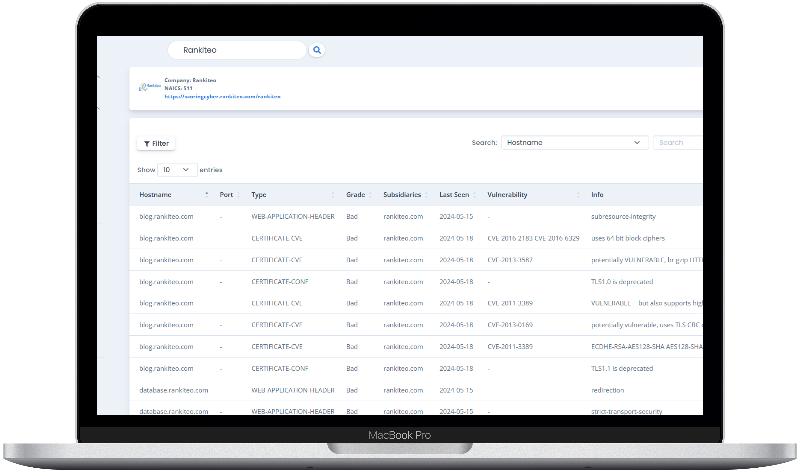
Identify exposed access points, detect misconfigured SSL certificates, and uncover vulnerabilities across the network infrastructure.
Gain visibility into the software components used within an organization to detect vulnerabilities, manage risk, and ensure supply chain security.
Monitor and manage all IT assets and their configurations to ensure accurate, real-time visibility across the company's technology environment.
Leverage real-time insights on active threats, malware campaigns, and emerging vulnerabilities to proactively defend against evolving cyberattacks.








 Rapid
Rapid