




JPMorganChase
Company Details
Linkedin ID:
jpmorganchase
Website:
Employees number:
215,187
Number of followers:
6,572,111
NAICS:
52
Industry Type:
Homepage:
jpmorganchase.com
IP Addresses:
1363
Company ID:
JPM_3083915
Scan Status:
Completed

JPMorganChase Company CyberSecurity Posture
jpmorganchase.com




With a history tracing its roots to 1799 in New York City, JPMorganChase is one of the world's oldest, largest, and best-known financial institutions—carrying forth the innovative spirit of our heritage firms in global operations across 100 markets. We serve millions of customers and many of the world’s most prominent corporate, institutional, and government clients daily, managing assets and investments, offering business advice and strategies, and providing innovative banking solutions and services. Social Media Terms and Conditions: https://bit.ly/JPMCSocialTerms © 2024 JPMorgan Chase & Co. All rights reserved. JPMorganChase is an Equal Opportunity Employer, including Disability/Veterans.
Company Details
jpmorganchase
215,187
6,572,111
52
jpmorganchase.com
1363
JPM_3083915
Completed
 JPMorganChase Risk Score (AI oriented)
Between 750 and 799
 JPMorganChase Global Score (TPRM)
XXXX
Description: Multiple Chase.com customers have reported logging in to their bank accounts, only to be presented with another customer’s bank account details. Chase has acknowledged the incident and stated that it was a glitch and not any hacking attempt. It was caused by an internal “glitch” Wednesday evening that did not involve any kind of hacking attempt or cyber attack.
Description: The California Office of the Attorney General reported a data breach involving First Republic Bank on May 29, 2012. The breach occurred between January 21, 2012, and February 25, 2012, and compromised customer names, debit card numbers, and encrypted personal identification numbers (PINs).
Description: The California Office of the Attorney General reported a data breach involving First Republic Bank on August 14, 2012. The breach occurred on August 2, 2012, due to improper data disposal of client names, account types and numbers, and taxpayer identification/social security numbers. The number of affected individuals is unknown.
Description: On April 18, 2024, the Vermont Office of the Attorney General disclosed a data breach at J.P. Morgan, stemming from a software vulnerability discovered on February 26, 2024. The incident exposed sensitive personal and financial information of an unspecified number of individuals, including names, addresses, Social Security numbers, and bank account details. The breach posed a severe risk of identity theft, financial fraud, and unauthorized access to customer accounts, given the highly confidential nature of the compromised data. While the exact scale of the breach remains undisclosed, the exposure of such critical information—particularly Social Security numbers and banking details—heightens the potential for long-term reputational damage, regulatory scrutiny, and legal repercussions for the financial institution. The incident underscores vulnerabilities in J.P. Morgan’s digital infrastructure, raising concerns about the adequacy of its cybersecurity measures in safeguarding customer data against exploitation by malicious actors.
Description: The California Office of the Attorney General reported a data breach involving JPMorgan Chase Bank, N.A. on December 5, 2013. The specific date of the breach is unknown, but the incident was detected between mid-July and mid-September 2013, potentially compromising personal information such as names, addresses, Social Security numbers, and bank account details.
Description: On November 7, 2025, Chase Affiliated Companies disclosed a data breach to the Texas Attorney General’s office, impacting **979 Texas residents**. The exposed information included **names and Social Security numbers (SSNs)**, both classified as **personally identifiable information (PII)**. The breach significantly elevates the risk of **identity theft** for affected individuals, given the sensitivity of SSNs, which are prime targets for fraudulent activities such as loan applications, tax fraud, or unauthorized account openings.The company responded by issuing **notifications via U.S. Mail** to impacted individuals, detailing the compromised data and offering guidance on protective measures. However, no public information was provided regarding additional support, such as credit monitoring or identity theft protection services. The incident underscores the critical need for robust data security measures, particularly when handling high-value PII, as the exposure of such data can lead to long-term financial and reputational harm for victims.The breach’s scale—affecting nearly a thousand individuals—highlights systemic vulnerabilities in data protection, reinforcing concerns over how financial institutions safeguard sensitive customer information against evolving cyber threats.
Description: The California Office of the Attorney General reported that JPMorgan Chase Bank, N.A. experienced a data breach on May 24, 2021, affecting customer account information. The report was made on August 13, 2021, and notification letters detailed that personal and financial information may have been accidentally seen by another customer, although no indication of misuse of information was reported.
Description: On August 10, 2018, the California Office of the Attorney General reported that JPMorgan Chase Bank, N.A. experienced a data breach on June 28, 2018. An employee improperly downloaded customer information, including names, addresses, mortgage loan numbers, and Social Security numbers, to a personal computer and online data storage sites, potentially exposing this data to third parties for about three weeks.
Description: The California Office of the Attorney General reported a data breach involving J.P. Morgan Chase Bank, N.A. on April 29, 2024. The breach occurred due to a software issue that allowed unauthorized access to plan participant information between August 26, 2021, and February 23, 2024, potentially affecting personal and financial information such as names, addresses, Social Security numbers, and bank account details.
Description: In May 2025, an unnamed financial institution in Asia was targeted by Fog ransomware hackers. The attackers utilized legitimate employee monitoring software Syteca (formerly Ekran) and several open-source pen-testing tools, including GC2, Adaptix, and Stowaway. This tactic, described as 'living off the land,' allowed the attackers to operate more stealthily, reducing the likelihood of detection. The use of legitimate software in the attack chain was deemed highly unusual and reflects a shift in the tactics employed by Fog hackers.


JPMorganChase has 143.9% more incidents than the average of same-industry companies with at least one recorded incident.
JPMorganChase has 159.74% more incidents than the average of all companies with at least one recorded incident.
JPMorganChase reported 2 incidents this year: 0 cyber attacks, 1 ransomware, 0 vulnerabilities, 1 data breaches, compared to industry peers with at least 1 incident.
JPMorganChase cyber incidents detection timeline including parent company and subsidiaries

With a history tracing its roots to 1799 in New York City, JPMorganChase is one of the world's oldest, largest, and best-known financial institutions—carrying forth the innovative spirit of our heritage firms in global operations across 100 markets. We serve millions of customers and many of the world’s most prominent corporate, institutional, and government clients daily, managing assets and investments, offering business advice and strategies, and providing innovative banking solutions and services. Social Media Terms and Conditions: https://bit.ly/JPMCSocialTerms © 2024 JPMorgan Chase & Co. All rights reserved. JPMorganChase is an Equal Opportunity Employer, including Disability/Veterans.


Shriram Finance is the country’s biggest retail NBFC offering credit solutions for commercial vehicles, two-wheeler loans, car loans, home loans, gold loans, personal and small business loans. We are part of the 50-year-old Shriram Group, a financial conglomerate that has emerged as a trusted partne

We’d love to stay connected with you! Please follow our Truist company page and unfollow this page which is no longer active. BB&T and SunTrust formed Truist with a shared purpose—to inspire and build better lives and communities. With our combined resources, collective passion, and commitment to i

SM Investments Corporation is a leading Philippine company that is invested in market-leading businesses in retail, banking, and property. It also invests in ventures that capture high growth opportunities in the emerging Philippine economy. SM’s retail operations are the country’s largest and most

At Capital One, we're making things better for our customers and associates through innovation and collaboration. We were founded on the belief that everyone deserves financial freedom—and are dedicated to a world where all have equal opportunity to prosper. Banking is in our DNA, but we are so mu

Fannie Mae creates opportunities for people to buy, refinance, or rent a home. We are a leading source of mortgage financing in all markets and at all times. We ensure the availability of affordable mortgage loans. The financing solutions we develop make homeownership and workforce rental housing a

Living mutual has always been at the core of our human existence, and it's the principle that's guided us since our founding in 1851. It's not a concept we invented, but one we champion for the simple reason that people take it for granted today. While the world would have us strive for independenc

Sun Life is a leading financial services organization dedicated to helping people achieve lifetime financial security and live healthier lives. We provide a wide range of insurance and investment products and services in key markets around the world including Canada, the United States, the United K
From gaining new experiences in different roles to acquiring fresh knowledge and skills – at UBS we believe that you should never stop growing and learning because life never stops teaching. We know that it's our people – with their unique backgrounds, skills, experience levels and interests – who d

Lincoln Financial (NYSE: LNC) helps people to confidently plan for their version of a successful future. We focus on identifying a clear path to financial security, with products including annuities, investments, life insurance, group protection, and retirement plan services. With our 120-year trac
.png)
One of the banking industry's biggest vendors is responding to a cyberattack that has compromised some of its clients' sensitive data.
A cyberattack on vendor SitusAMC has potentially exposed client data from JPMorgan Chase, Citi, and Morgan Stanley, prompting an FBI...
JPMorganChase's $1.5T initiative backs U.S. security, resilience, and AI-era industrial renewal.
In a bold escalation of private-sector engagement with national security, JPMorgan Chase has announced a $1.5 trillion “Security and...
JPMorganChase launched the Security and Resiliency Initiative, a $1.5 trillion plan to finance and invest in industries vital to the U.S..
JPMorgan Chase announced plans on Monday to hire bankers and invest up to $10 billion in U.S. companies critical to national security and...
JPMorgan Chase unveiled a 10-year, $1.5 trillion push to finance, facilitate and invest in industries it says are central to U.S. economic...
Generative AI is making headlines as it creates new risks and exacerbates existing ones – affecting areas from data privacy and security to...
October is National Cybersecurity Awareness Month. With work-from-home still in place for many of us, our reliance on digital tools has...

Explore insights on cybersecurity incidents, risk posture, and Rankiteo's assessments.
The official website of JPMorganChase is http://www.jpmorganchase.com.
According to Rankiteo, JPMorganChase’s AI-generated cybersecurity score is 769, reflecting their Fair security posture.
According to Rankiteo, JPMorganChase currently holds 0 security badges, indicating that no recognized compliance certifications are currently verified for the organization.
According to Rankiteo, JPMorganChase is not certified under SOC 2 Type 1.
According to Rankiteo, JPMorganChase does not hold a SOC 2 Type 2 certification.
According to Rankiteo, JPMorganChase is not listed as GDPR compliant.
According to Rankiteo, JPMorganChase does not currently maintain PCI DSS compliance.
According to Rankiteo, JPMorganChase is not compliant with HIPAA regulations.
According to Rankiteo,JPMorganChase is not certified under ISO 27001, indicating the absence of a formally recognized information security management framework.
JPMorganChase operates primarily in the Financial Services industry.
JPMorganChase employs approximately 215,187 people worldwide.
JPMorganChase presently has no subsidiaries across any sectors.
JPMorganChase’s official LinkedIn profile has approximately 6,572,111 followers.
JPMorganChase is classified under the NAICS code 52, which corresponds to Finance and Insurance.
No, JPMorganChase does not have a profile on Crunchbase.
Yes, JPMorganChase maintains an official LinkedIn profile, which is actively utilized for branding and talent engagement, which can be accessed here: https://www.linkedin.com/company/jpmorganchase.
As of December 11, 2025, Rankiteo reports that JPMorganChase has experienced 10 cybersecurity incidents.
JPMorganChase has an estimated 30,346 peer or competitor companies worldwide.
Incident Types: The types of cybersecurity incidents that have occurred include Breach and Ransomware.
Detection and Response: The company detects and responds to cybersecurity incidents through an third party assistance with symantec researchers, and incident response plan activated with likely (notifications sent to affected individuals), and communication strategy with notifications sent via u.s. mail to affected individuals with breach details and protective guidance..
Title: Chase.com Account Information Mix-Up
Description: Multiple Chase.com customers reported logging in to their bank accounts and seeing another customer’s bank account details. Chase acknowledged the incident and stated that it was caused by an internal glitch and not any hacking attempt.
Type: Data Exposure
Vulnerability Exploited: Internal Glitch
Title: Fog Ransomware Attack on Financial Institution
Description: Fog ransomware hackers used legitimate employee monitoring software Syteca and several open-source pen-testing tools alongside usual encryption to attack an unnamed financial institution in Asia.
Date Detected: May 2025
Type: Ransomware
Attack Vector: Legitimate software and open-source pen-testing tools
Threat Actor: Fog Ransomware Hackers
Motivation: Financial Gain
Title: JPMorgan Chase Data Breach
Description: An employee improperly downloaded customer information, including names, addresses, mortgage loan numbers, and Social Security numbers, to a personal computer and online data storage sites, potentially exposing this data to third parties for about three weeks.
Date Detected: 2018-08-10
Date Publicly Disclosed: 2018-08-10
Type: Data Breach
Attack Vector: Insider Threat
Vulnerability Exploited: Human Error
Threat Actor: Employee
Title: First Republic Bank Data Breach
Description: The California Office of the Attorney General reported a data breach involving First Republic Bank on August 14, 2012. The breach occurred on August 2, 2012, due to improper data disposal of client names, account types and numbers, and taxpayer identification/social security numbers. The number of affected individuals is unknown.
Date Detected: 2012-08-02
Date Publicly Disclosed: 2012-08-14
Type: Data Breach
Attack Vector: Improper Data Disposal
Vulnerability Exploited: Improper Data Disposal
Title: JPMorgan Chase Bank Data Breach
Description: The California Office of the Attorney General reported that JPMorgan Chase Bank, N.A. experienced a data breach on May 24, 2021, affecting customer account information. The report was made on August 13, 2021, and notification letters detailed that personal and financial information may have been accidentally seen by another customer, although no indication of misuse of information was reported.
Date Detected: 2021-05-24
Date Publicly Disclosed: 2021-08-13
Type: Data Breach
Title: Data Breach at J.P. Morgan Chase Bank, N.A.
Description: A data breach occurred due to a software issue that allowed unauthorized access to plan participant information, potentially affecting personal and financial information such as names, addresses, Social Security numbers, and bank account details.
Date Detected: 2024-04-29
Date Publicly Disclosed: 2024-04-29
Type: Data Breach
Attack Vector: Software Issue
Vulnerability Exploited: Unauthorized Access
Title: JPMorgan Chase Bank Data Breach
Description: The California Office of the Attorney General reported a data breach involving JPMorgan Chase Bank, N.A. on December 5, 2013. The specific date of the breach is unknown, but the incident was detected between mid-July and mid-September 2013, potentially compromising personal information such as names, addresses, Social Security numbers, and bank account details.
Date Detected: mid-July to mid-September 2013
Date Publicly Disclosed: December 5, 2013
Type: Data Breach
Title: First Republic Bank Data Breach
Description: The California Office of the Attorney General reported a data breach involving First Republic Bank on May 29, 2012. The breach occurred between January 21, 2012, and February 25, 2012, and compromised customer names, debit card numbers, and encrypted personal identification numbers (PINs).
Date Detected: 2012-05-29
Date Publicly Disclosed: 2012-05-29
Type: Data Breach
Title: J.P. Morgan Data Breach Due to Software Issue (2024)
Description: The Vermont Office of the Attorney General reported a data breach involving J.P. Morgan that occurred due to a software issue on February 26, 2024, potentially affecting personal and financial information, including names, addresses, Social Security numbers, and bank account details of an unknown number of individuals.
Date Detected: 2024-02-26
Date Publicly Disclosed: 2024-04-18
Type: Data Breach
Vulnerability Exploited: Software Issue
Title: Data Breach at Chase Affiliated Companies Affecting Texas Residents
Description: On Nov. 7, 2025, a data breach involving Chase Affiliated Companies was disclosed to the Texas Attorney General’s office. The breach impacted 979 residents of Texas, exposing names and Social Security numbers (PII). The exposure of such sensitive data increases the risk of identity theft for those affected. Chase Affiliated Companies notified impacted individuals via U.S. Mail, providing details about the breach and guidance on protective measures.
Date Publicly Disclosed: 2025-11-07
Type: Data Breach
Common Attack Types: The most common types of attacks the company has faced is Breach.

Data Compromised: Customer bank account details
Systems Affected: Chase.com

Data Compromised: Names, Addresses, Mortgage loan numbers, Social security numbers
Data Compromised: Client names, Account types and numbers, Taxpayer identification/social security numbers
Data Compromised: Personal information, Financial information
Data Compromised: Names, Addresses, Social security numbers, Bank account details
Data Compromised: Names, Addresses, Social security numbers, Bank account details
Data Compromised: Customer names, Debit card numbers, Encrypted personal identification numbers (pins)
Data Compromised: Names, Addresses, Social security numbers, Bank account details
Identity Theft Risk: Potential
Payment Information Risk: Potential
Data Compromised: Names, Social security numbers
Brand Reputation Impact: Potential reputational damage due to exposure of sensitive PII
Identity Theft Risk: High (due to exposure of Social Security numbers)
Commonly Compromised Data Types: The types of data most commonly compromised in incidents are Customer Bank Account Details, Names, Addresses, Mortgage Loan Numbers, Social Security Numbers, , Client Names, Account Types And Numbers, Taxpayer Identification/Social Security Numbers, , Personal Information, Financial Information, , Personal Information, Financial Information, , Names, Addresses, Social Security Numbers, Bank Account Details, , Customer Names, Debit Card Numbers, Encrypted Personal Identification Numbers (Pins), , Personal Information, Financial Information, , Personally Identifiable Information (Pii) and .
Entity Name: Chase
Entity Type: Financial Institution
Industry: Banking
Entity Name: JPMorgan Chase Bank, N.A.
Entity Type: Financial Institution
Industry: Banking
Location: California
Entity Name: First Republic Bank
Entity Type: Bank
Industry: Financial Services
Location: California
Entity Name: JPMorgan Chase Bank, N.A.
Entity Type: Financial Institution
Industry: Banking
Entity Name: J.P. Morgan Chase Bank, N.A.
Entity Type: Financial Institution
Industry: Banking
Entity Name: JPMorgan Chase Bank, N.A.
Entity Type: Financial Institution
Industry: Banking
Location: California
Entity Name: First Republic Bank
Entity Type: Financial Institution
Industry: Banking
Location: California
Entity Name: J.P. Morgan
Entity Type: Financial Institution
Industry: Banking/Financial Services
Location: United States
Customers Affected: Unknown
Entity Name: Chase Affiliated Companies
Entity Type: Financial Services
Industry: Banking/Financial
Location: Texas, USA (impacted residents)
Customers Affected: 979

Third Party Assistance: Symantec researchers
Incident Response Plan Activated: Likely (notifications sent to affected individuals)
Communication Strategy: Notifications sent via U.S. Mail to affected individuals with breach details and protective guidance
Incident Response Plan: The company's incident response plan is described as Likely (notifications sent to affected individuals).
Third-Party Assistance: The company involves third-party assistance in incident response through Symantec researchers.
Type of Data Compromised: Customer Bank Account Details
Type of Data Compromised: Names, Addresses, Mortgage loan numbers, Social security numbers
Sensitivity of Data: High
Type of Data Compromised: Client names, Account types and numbers, Taxpayer identification/social security numbers
Sensitivity of Data: High
Type of Data Compromised: Personal information, Financial information
Type of Data Compromised: Personal information, Financial information
Sensitivity of Data: High
Personally Identifiable Information: namesaddressesSocial Security numbers
Type of Data Compromised: Names, Addresses, Social security numbers, Bank account details
Sensitivity of Data: High
Type of Data Compromised: Customer names, Debit card numbers, Encrypted personal identification numbers (pins)
Data Encryption: encrypted personal identification numbers (PINs)
Personally Identifiable Information: customer names
Type of Data Compromised: Personal information, Financial information
Number of Records Exposed: Unknown
Sensitivity of Data: High
Personally Identifiable Information: namesaddressesSocial Security numbers
Type of Data Compromised: Personally identifiable information (pii)
Number of Records Exposed: 979
Sensitivity of Data: High (includes Social Security numbers)
Personally Identifiable Information: NamesSocial Security numbers
Regulatory Notifications: Vermont Office of the Attorney General
Regulatory Notifications: Disclosed to the Texas Attorney General’s office
Lessons Learned: Expect the use of ordinary and legitimate corporate software as the norm in ransomware attacks.
Recommendations: Affected individuals should monitor their credit reports and financial accounts for suspicious activity., Consider placing a fraud alert or credit freeze on credit files., Be cautious of phishing attempts or scams targeting exposed PII.Affected individuals should monitor their credit reports and financial accounts for suspicious activity., Consider placing a fraud alert or credit freeze on credit files., Be cautious of phishing attempts or scams targeting exposed PII.Affected individuals should monitor their credit reports and financial accounts for suspicious activity., Consider placing a fraud alert or credit freeze on credit files., Be cautious of phishing attempts or scams targeting exposed PII.
Key Lessons Learned: The key lessons learned from past incidents are Expect the use of ordinary and legitimate corporate software as the norm in ransomware attacks.
Source: Symantec researchers
Source: California Office of the Attorney General
Date Accessed: 2018-08-10
Source: California Office of the Attorney General
Date Accessed: 2012-08-14
Source: California Office of the Attorney General
Date Accessed: 2021-08-13
Source: California Office of the Attorney General
Date Accessed: 2024-04-29
Source: California Office of the Attorney General
Date Accessed: December 5, 2013
Source: California Office of the Attorney General
Date Accessed: 2012-05-29
Source: Vermont Office of the Attorney General
Date Accessed: 2024-04-18
Source: Texas Attorney General’s data breach portal
Additional Resources: Stakeholders can find additional resources on cybersecurity best practices at and Source: Symantec researchers, and Source: California Office of the Attorney GeneralDate Accessed: 2018-08-10, and Source: California Office of the Attorney GeneralDate Accessed: 2012-08-14, and Source: California Office of the Attorney GeneralDate Accessed: 2021-08-13, and Source: California Office of the Attorney GeneralDate Accessed: 2024-04-29, and Source: California Office of the Attorney GeneralDate Accessed: December 5, 2013, and Source: California Office of the Attorney GeneralDate Accessed: 2012-05-29, and Source: Vermont Office of the Attorney GeneralDate Accessed: 2024-04-18, and Source: Texas Attorney General’s data breach portal.
Investigation Status: Investigation ongoing
Communication of Investigation Status: The company communicates the status of incident investigations to stakeholders through Notifications sent via U.S. Mail to affected individuals with breach details and protective guidance.
Customer Advisories: Notifications sent via U.S. Mail with breach details and protective guidance
Advisories Provided: The company provides the following advisories to stakeholders and customers following an incident: was Notifications sent via U.S. Mail with breach details and protective guidance.
Root Causes: Internal Glitch
Root Causes: Human Error
Root Causes: Improper Data Disposal
Root Causes: Software Issue
Post-Incident Analysis Process: The company's process for conducting post-incident analysis is described as Symantec researchers.
Last Attacking Group: The attacking group in the last incident were an Fog Ransomware Hackers and Employee.
Most Recent Incident Detected: The most recent incident detected was on May 2025.
Most Recent Incident Publicly Disclosed: The most recent incident publicly disclosed was on 2025-11-07.
Most Significant Data Compromised: The most significant data compromised in an incident were Customer Bank Account Details, , Names, Addresses, Mortgage Loan Numbers, Social Security Numbers, , Client names, Account types and numbers, Taxpayer identification/social security numbers, , personal information, financial information, , names, addresses, Social Security numbers, bank account details, , names, addresses, Social Security numbers, bank account details, , customer names, debit card numbers, encrypted personal identification numbers (PINs), , names, addresses, Social Security numbers, bank account details, , Names, Social Security numbers and .
Most Significant System Affected: The most significant system affected in an incident was Chase.com.
Third-Party Assistance in Most Recent Incident: The third-party assistance involved in the most recent incident was Symantec researchers.
Most Sensitive Data Compromised: The most sensitive data compromised in a breach were Account types and numbers, Social Security numbers, personal information, Addresses, addresses, bank account details, names, customer names, Customer Bank Account Details, debit card numbers, Taxpayer identification/social security numbers, Social Security Numbers, encrypted personal identification numbers (PINs), Names, Client names, financial information and Mortgage Loan Numbers.
Number of Records Exposed in Most Significant Breach: The number of records exposed in the most significant breach was 979.0.
Most Significant Lesson Learned: The most significant lesson learned from past incidents was Expect the use of ordinary and legitimate corporate software as the norm in ransomware attacks.
Most Significant Recommendation Implemented: The most significant recommendation implemented to improve cybersecurity was Consider placing a fraud alert or credit freeze on credit files., Affected individuals should monitor their credit reports and financial accounts for suspicious activity. and Be cautious of phishing attempts or scams targeting exposed PII..
Most Recent Source: The most recent source of information about an incident are California Office of the Attorney General, Texas Attorney General’s data breach portal, Vermont Office of the Attorney General and Symantec researchers.
Current Status of Most Recent Investigation: The current status of the most recent investigation is Investigation ongoing.
Most Recent Customer Advisory: The most recent customer advisory issued was an Notifications sent via U.S. Mail with breach details and protective guidance.
Most Significant Root Cause: The most significant root cause identified in post-incident analysis was Internal Glitch, Human Error, Improper Data Disposal, Software Issue.
.png)
FreePBX Endpoint Manager is a module for managing telephony endpoints in FreePBX systems. Versions prior to 16.0.96 and 17.0.1 through 17.0.9 have a weak default password. By default, this is a 6 digit numeric value which can be brute forced. (This is the app_password parameter). Depending on local configuration, this password could be the extension, voicemail, user manager, DPMA or EPM phone admin password. This issue is fixed in versions 16.0.96 and 17.0.10.
Neuron is a PHP framework for creating and orchestrating AI Agents. In versions 2.8.11 and below, the MySQLWriteTool executes arbitrary SQL provided by the caller using PDO::prepare() + execute() without semantic restrictions. This is consistent with the name (“write tool”), but in an LLM/agent context it becomes a high-risk capability: prompt injection or indirect prompt manipulation can cause execution of destructive queries such as DROP TABLE, TRUNCATE, DELETE, ALTER, or privilege-related statements (subject to DB permissions). Deployments that expose an agent with MySQLWriteTool enabled to untrusted input and/or run the tool with a DB user that has broad privileges are impacted. This issue is fixed in version 2.8.12.
Neuron is a PHP framework for creating and orchestrating AI Agents. Versions 2.8.11 and below use MySQLSelectTool, which is vulnerable to Read-Only Bypass. MySQLSelectTool is intended to be a read-only SQL tool (e.g., for LLM agent querying, however, validation based on the first keyword (e.g., SELECT) and a forbidden-keyword list does not block file-writing constructs such as INTO OUTFILE / INTO DUMPFILE. As a result, an attacker who can influence the tool input (e.g., via prompt injection through a public agent endpoint) may write arbitrary files to the DB server if the MySQL/MariaDB account has the FILE privilege and server configuration permits writes to a useful location (e.g., a web-accessible directory). This issue is fixed in version 2.8.12.
Okta Java Management SDK facilitates interactions with the Okta management API. In versions 11.0.0 through 20.0.0, race conditions may arise from concurrent requests using the ApiClient class. This could cause a status code or response header from one request’s response to influence another request’s response. This issue is fixed in version 20.0.1.
The Auth0 Next.js SDK is a library for implementing user authentication in Next.js applications. When using versions 4.11.0 through 4.11.2 and 4.12.0, simultaneous requests on the same client may result in improper lookups in the TokenRequestCache for the request results. This issue is fixed in versions 4.11.2 and 4.12.1.

Get company history

Every week, Rankiteo analyzes billions of signals to give organizations a sharper, faster view of emerging risks. With deeper, more actionable intelligence at their fingertips, security teams can outpace threat actors, respond instantly to Zero-Day attacks, and dramatically shrink their risk exposure window.
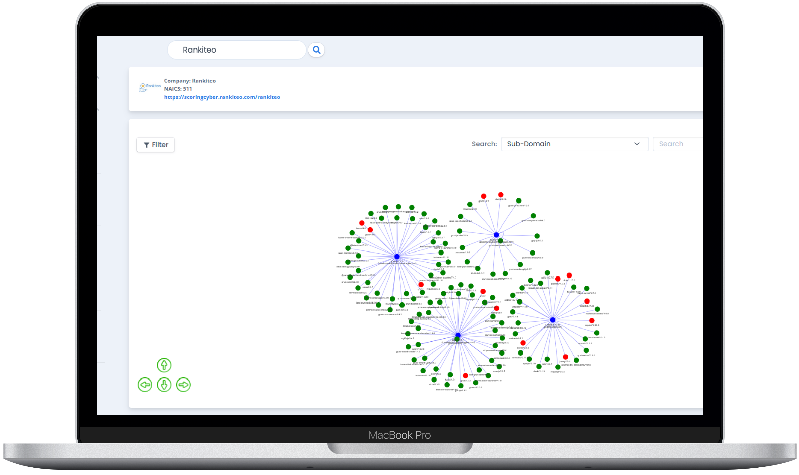
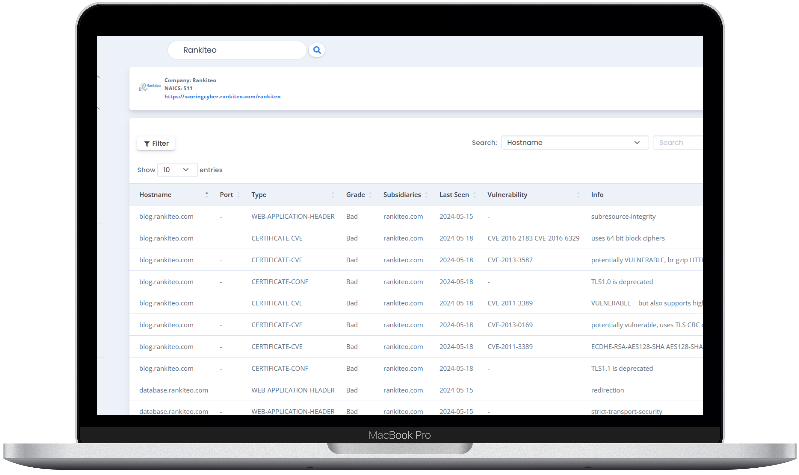
Identify exposed access points, detect misconfigured SSL certificates, and uncover vulnerabilities across the network infrastructure.
Gain visibility into the software components used within an organization to detect vulnerabilities, manage risk, and ensure supply chain security.
Monitor and manage all IT assets and their configurations to ensure accurate, real-time visibility across the company's technology environment.
Leverage real-time insights on active threats, malware campaigns, and emerging vulnerabilities to proactively defend against evolving cyberattacks.






 Rapid
Rapid