





Huawei
Company Details
Linkedin ID:
huawei
Website:
Employees number:
131,845
Number of followers:
5,321,733
NAICS:
517
Industry Type:
Homepage:
huawei.com
IP Addresses:
0
Company ID:
HUA_2574288
Scan Status:
In-progress
Huawei Company CyberSecurity Posture
huawei.com


Huawei is a leading global provider of information and communications technology (ICT) infrastructure and smart devices. With integrated solutions across four key domains – telecom networks, IT, smart devices, and cloud services – we are committed to bringing digital to every person, home and organization for a fully connected, intelligent world. Huawei's end-to-end portfolio of products, solutions and services are both competitive and secure. Through open collaboration with ecosystem partners, we create lasting value for our customers, working to empower people, enrich home life, and inspire innovation in organizations of all shapes and sizes. At Huawei, innovation focuses on customer needs. We invest heavily in basic research, concentrating on technological breakthroughs that drive the world forward. We have more than 207,000 employees, and we operate in more than 170 countries and regions. Founded in 1987, Huawei is a private company fully owned by its employees. House Rules This page is for ICT professionals with an interest in Huawei and our industry to engage in open discussions. To facilitate dialogue, please follow these rules: - Huawei holds the right to delete comments that are offensive, misleading, false, unlawful, off-topic and in violation of any regulations. - Repeated violations of any of the above will be removed and users may be blocked. - Huawei does not necessarily endorse the information shared by members. - Please be familiar with and follow LinkedIn's User Agreement. - By publicly uploading a photograph or comment, you give Huawei permission to feature your content. This will always be credited. Please visit the below portals for career or customer service queries. Career page: http://bit.ly/2rdljD7 Customer service: http://bit.ly/2a4mXNY Thank you for visiting us & we hope you enjoy your time on our page.
Company Details
huawei
131,845
5,321,733
517
huawei.com
0
HUA_2574288
In-progress
 Huawei Risk Score (AI oriented)
Between 800 and 849
 Huawei Global Score (TPRM)
XXXX
Description: Threat actors have alleged a breach of Huawei’s internal code repositories, claiming to have exfiltrated proprietary **source code** (including network management software, base station firmware, and security libraries) and **development tools**. The leaked materials, if verified, expose Huawei’s **software architecture, encryption routines, authentication workflows, and potential vulnerabilities**, enabling tailored exploits against its global telecommunications infrastructure. The incident heightens **geopolitical and national security concerns**, particularly for 5G deployments and government networks, as competitors or APT groups could reverse-engineer the code for latent vulnerabilities or sophisticated attacks. While Huawei has not confirmed the breach, the disclosure alone risks **eroding trust** in its products, potentially leading to delayed approvals, contract revocations, or increased scrutiny from intelligence agencies. Customers are advised to enhance monitoring, patch management, and access controls to mitigate risks from potential zero-day exploits derived from the leak.


Huawei has 29.87% more incidents than the average of same-industry companies with at least one recorded incident.
Huawei has 29.87% more incidents than the average of all companies with at least one recorded incident.
Huawei reported 1 incidents this year: 0 cyber attacks, 0 ransomware, 0 vulnerabilities, 1 data breaches, compared to industry peers with at least 1 incident.
Huawei cyber incidents detection timeline including parent company and subsidiaries
Huawei is a leading global provider of information and communications technology (ICT) infrastructure and smart devices. With integrated solutions across four key domains – telecom networks, IT, smart devices, and cloud services – we are committed to bringing digital to every person, home and organization for a fully connected, intelligent world. Huawei's end-to-end portfolio of products, solutions and services are both competitive and secure. Through open collaboration with ecosystem partners, we create lasting value for our customers, working to empower people, enrich home life, and inspire innovation in organizations of all shapes and sizes. At Huawei, innovation focuses on customer needs. We invest heavily in basic research, concentrating on technological breakthroughs that drive the world forward. We have more than 207,000 employees, and we operate in more than 170 countries and regions. Founded in 1987, Huawei is a private company fully owned by its employees. House Rules This page is for ICT professionals with an interest in Huawei and our industry to engage in open discussions. To facilitate dialogue, please follow these rules: - Huawei holds the right to delete comments that are offensive, misleading, false, unlawful, off-topic and in violation of any regulations. - Repeated violations of any of the above will be removed and users may be blocked. - Huawei does not necessarily endorse the information shared by members. - Please be familiar with and follow LinkedIn's User Agreement. - By publicly uploading a photograph or comment, you give Huawei permission to feature your content. This will always be credited. Please visit the below portals for career or customer service queries. Career page: http://bit.ly/2rdljD7 Customer service: http://bit.ly/2a4mXNY Thank you for visiting us & we hope you enjoy your time on our page.


Mobile TeleSystems OJSC ("MTS") is the leading telecommunications group in Russia, Eastern Europe and Central Asia, offering mobile and fixed voice, broadband, pay TV as well as content and entertainment services in one of the world's fastest growing regions. Including its subsidiaries, as of Decemb

Since its establishment in 1854, Telecom Egypt has played a pivotal role in driving growth within the local ICT market capitalizing on its vast infrastructure, which is one of the largest in the region. Its vast domestic and international infrastructure has helped it serve various customer groups in
At Nokia, we create technology that helps the world act together. As a B2B technology innovation leader, we are pioneering the future where networks meet cloud to realize the full potential of digital in every industry. Through networks that sense, think and act, we work with our customers and pa
Globe is a leading full-service telecommunications company in the Philippines and publicly listed in the PSE with the stock symbol GLO. The company serves the telecommunications and technology needs of consumers and businesses across an entire suite of products and services including mobile, fixed,

(Formerly etisalat UAE) For more than four decades, we have connected people and now we’ve evolved to become the digital telco of the future. Our mission is to grow, transform and excel as the region’s technology leader while enhancing digital customer experience and operation agility. e& UAE offe
Orange is one of the world’s leading telecommunications operators with revenues of 40.3 billion euros in 2024 and 127,000 employees worldwide at 31 December 2024, including 71,000 employees in France. The Group has a total customer base of 291 million customers worldwide at 31 December 2024, inclu

At TELUS, our purpose-driven team works together every day to innovate and do good. From providing technology solutions that make our lives safer and easier, to supporting those who need it most, our inclusive, spirited and giving people are passionate about empowering our customers, communities and

We’re the people that make the net work. As the nation’s largest wholesale broadband network, we’re rolling out Ultrafast Full Fibre broadband across the UK. It’s our fastest and most reliable broadband yet, and we’re well on our way to making it available to 25m homes and businesses – building the

At Vodafone, we believe that connectivity is a force for good. If we use it for the things that really matter, it can improve people's lives and the world around us. Through our technology we empower people, connecting everyone regardless of who they are or where they live, we protect the planet a
.png)
Huawei Technologies Hungary Kft. has become the first company in Hungary to receive an IoT cybersecurity certificate for its residential...
The German government is set to get new powers to bar risky Chinese technology suppliers from its critical infrastructure.
The European Commission proposes turning the 2020 5G cybersecurity toolbox into binding law, aiming to limit Huawei and ZTE across EU...
Huawei launches Xinghe AI Network Security to defend against AI-driven attacks ... Huawei has unveiled its Xinghe AI Network Security solution, a...
Huawei is a more innovative company today than it was before the U.S. government sought to choke its supply chain. This case should serve as...
Huawei threatens Poland over cybersecurity law ... China's Huawei has reportedly threatened Poland with an Energy Charter Treaty claim over a new...
BRUSSELS — First it was telecom snooping. Now Europe is growing worried that Huawei could turn the lights off. The Chinese tech giant is at...
Polish govt approves draft law on cybersecurity, Huawei protests. The Polish government has approved draft legislation implementing the EU...
Huawei showcases its AI-powered infrastructure and intelligent digital ecosystems, with a focus on data security and its new GovTech 1.0...

Explore insights on cybersecurity incidents, risk posture, and Rankiteo's assessments.
The official website of Huawei is http://www.huawei.com/en/.
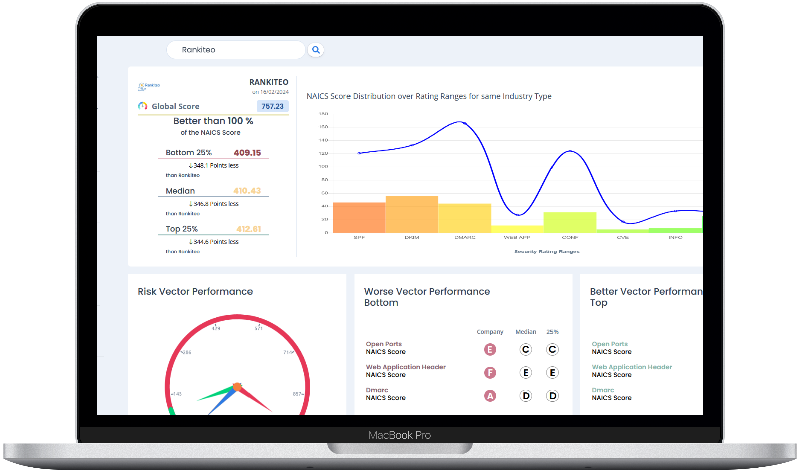
According to Rankiteo, Huawei’s AI-generated cybersecurity score is 803, reflecting their Good security posture.
According to Rankiteo, Huawei currently holds 0 security badges, indicating that no recognized compliance certifications are currently verified for the organization.
According to Rankiteo, Huawei is not certified under SOC 2 Type 1.
According to Rankiteo, Huawei does not hold a SOC 2 Type 2 certification.
According to Rankiteo, Huawei is not listed as GDPR compliant.
According to Rankiteo, Huawei does not currently maintain PCI DSS compliance.
According to Rankiteo, Huawei is not compliant with HIPAA regulations.
According to Rankiteo,Huawei is not certified under ISO 27001, indicating the absence of a formally recognized information security management framework.
Huawei operates primarily in the Telecommunications industry.
Huawei employs approximately 131,845 people worldwide.
Huawei presently has no subsidiaries across any sectors.
Huawei’s official LinkedIn profile has approximately 5,321,733 followers.
Huawei is classified under the NAICS code 517, which corresponds to Telecommunications.
Yes, Huawei has an official profile on Crunchbase, which can be accessed here: https://www.crunchbase.com/organization/huawei.
Yes, Huawei maintains an official LinkedIn profile, which is actively utilized for branding and talent engagement, which can be accessed here: https://www.linkedin.com/company/huawei.
As of December 11, 2025, Rankiteo reports that Huawei has experienced 1 cybersecurity incidents.
Huawei has an estimated 9,686 peer or competitor companies worldwide.
Incident Types: The types of cybersecurity incidents that have occurred include Breach.
Detection and Response: The company detects and responds to cybersecurity incidents through an third party assistance with cybersecurity researchers (investigating veracity of claims), and enhanced monitoring with recommended for customers (intensify monitoring around huawei devices)..
Title: Alleged Breach of Huawei’s Internal Repositories and Source Code Leak
Description: Threat actors have alleged a breach of Huawei’s internal repositories, claiming to have exfiltrated proprietary source code and development tools. While the authenticity remains unverified, the potential exposure of Huawei’s software architecture and security mechanisms poses significant risks for the company and its global customer base. Reports appeared on social media and underground forums, where hackers asserted they accessed Huawei’s internal code repositories and leaked sensitive technical documentation and development utilities. The materials are said to include portions of source code from multiple Huawei projects, spanning network management software, base station firmware, and security libraries. Should verification confirm the breach, the leaked source code could enable tailored exploits against Huawei’s telecommunications equipment and software stacks, undermining the security of networks worldwide.
Date Detected: 2025-10-03
Date Publicly Disclosed: 2025-10-03
Type: Data Breach
Motivation: Financial Gain (sale of source code)Reputation (underground forum credibility)Potential Espionage or Competitive Advantage
Common Attack Types: The most common types of attacks the company has faced is Breach.

Data Compromised: Proprietary source code, Development tools, Technical documentation, Network management software, Base station firmware, Security libraries
Systems Affected: Huawei internal repositoriesCode development environmentsPotential downstream telecommunications equipment
Operational Impact: Potential erosion of trust in Huawei productsReassessment of risk posture by intelligence agencies and corporate security teamsPossible delays or revocations of Huawei product approvals
Brand Reputation Impact: High (geopolitical and national security concerns amplified)Potential loss of customer confidenceCompetitors may exploit leaked code for reverse-engineering
Commonly Compromised Data Types: The types of data most commonly compromised in incidents are Proprietary Source Code, Technical Documentation, Development Tools, Security Libraries and .
Entity Name: Huawei Technologies Co., Ltd.
Entity Type: Corporation
Industry: Telecommunications, Technology, Network Equipment
Location: Shenzhen, China (HQ), Global Operations
Size: Large (Multinational)
Customers Affected: Potentially global (telecom providers, governments, enterprises using Huawei infrastructure)
Third Party Assistance: Cybersecurity Researchers (Investigating Veracity Of Claims).
Enhanced Monitoring: Recommended for customers (intensify monitoring around Huawei devices)
Third-Party Assistance: The company involves third-party assistance in incident response through Cybersecurity researchers (investigating veracity of claims), .
Type of Data Compromised: Proprietary source code, Technical documentation, Development tools, Security libraries
Sensitivity of Data: High (includes encryption routines, authentication workflows, potential vulnerabilities)
Data Exfiltration: Alleged (unverified)
File Types Exposed: Source code filesFirmwareDocumentation
Regulatory Notifications: Potential reassessment by governments (e.g., 5G deployments, critical infrastructure approvals)
Recommendations: Continuous Monitoring: Intensify network monitoring for anomalies, especially around Huawei devices and management consoles., Threat Intelligence Sharing: Collaborate via information-sharing platforms to identify possible indicators of compromise related to Huawei code., Patch Management: Ensure all Huawei products run the latest firmware and software updates to mitigate potential vulnerabilities., Access Controls: Review and strengthen internal access policies to limit lateral movement in the event of similar breaches.Continuous Monitoring: Intensify network monitoring for anomalies, especially around Huawei devices and management consoles., Threat Intelligence Sharing: Collaborate via information-sharing platforms to identify possible indicators of compromise related to Huawei code., Patch Management: Ensure all Huawei products run the latest firmware and software updates to mitigate potential vulnerabilities., Access Controls: Review and strengthen internal access policies to limit lateral movement in the event of similar breaches.Continuous Monitoring: Intensify network monitoring for anomalies, especially around Huawei devices and management consoles., Threat Intelligence Sharing: Collaborate via information-sharing platforms to identify possible indicators of compromise related to Huawei code., Patch Management: Ensure all Huawei products run the latest firmware and software updates to mitigate potential vulnerabilities., Access Controls: Review and strengthen internal access policies to limit lateral movement in the event of similar breaches.Continuous Monitoring: Intensify network monitoring for anomalies, especially around Huawei devices and management consoles., Threat Intelligence Sharing: Collaborate via information-sharing platforms to identify possible indicators of compromise related to Huawei code., Patch Management: Ensure all Huawei products run the latest firmware and software updates to mitigate potential vulnerabilities., Access Controls: Review and strengthen internal access policies to limit lateral movement in the event of similar breaches.
Source: INFOSEC F0X (Twitter/X)
URL: https://twitter.com/infosec_fox/status/[placeholder]
Date Accessed: 2025-10-03
Additional Resources: Stakeholders can find additional resources on cybersecurity best practices at and Source: INFOSEC F0X (Twitter/X)Url: https://twitter.com/infosec_fox/status/[placeholder]Date Accessed: 2025-10-03.
Investigation Status: Ongoing (authenticity of breach unverified; cybersecurity researchers investigating leaked artifacts)
Customer Advisories: Monitor for anomalies, apply latest patches, review access controls
Advisories Provided: The company provides the following advisories to stakeholders and customers following an incident: were Monitor For Anomalies, Apply Latest Patches, Review Access Controls and .
High Value Targets: Internal Code Repositories, Development Tools, Security Libraries,
Data Sold on Dark Web: Internal Code Repositories, Development Tools, Security Libraries,
Post-Incident Analysis Process: The company's process for conducting post-incident analysis is described as Cybersecurity Researchers (Investigating Veracity Of Claims), , Recommended For Customers (Intensify Monitoring Around Huawei Devices), .
Most Recent Incident Detected: The most recent incident detected was on 2025-10-03.
Most Recent Incident Publicly Disclosed: The most recent incident publicly disclosed was on 2025-10-03.
Most Significant Data Compromised: The most significant data compromised in an incident were Proprietary source code, Development tools, Technical documentation, Network management software, Base station firmware, Security libraries and .
Most Significant System Affected: The most significant system affected in an incident was Huawei internal repositoriesCode development environmentsPotential downstream telecommunications equipment.
Third-Party Assistance in Most Recent Incident: The third-party assistance involved in the most recent incident was cybersecurity researchers (investigating veracity of claims), .
Most Sensitive Data Compromised: The most sensitive data compromised in a breach were Proprietary source code, Technical documentation, Network management software, Security libraries, Base station firmware and Development tools.
Most Significant Recommendation Implemented: The most significant recommendation implemented to improve cybersecurity was Continuous Monitoring: Intensify network monitoring for anomalies, especially around Huawei devices and management consoles., Patch Management: Ensure all Huawei products run the latest firmware and software updates to mitigate potential vulnerabilities., Access Controls: Review and strengthen internal access policies to limit lateral movement in the event of similar breaches. and Threat Intelligence Sharing: Collaborate via information-sharing platforms to identify possible indicators of compromise related to Huawei code..
Most Recent Source: The most recent source of information about an incident is INFOSEC F0X (Twitter/X).
Most Recent URL for Additional Resources: The most recent URL for additional resources on cybersecurity best practices is https://twitter.com/infosec_fox/status/[placeholder] .
Current Status of Most Recent Investigation: The current status of the most recent investigation is Ongoing (authenticity of breach unverified; cybersecurity researchers investigating leaked artifacts).
Most Recent Customer Advisory: The most recent customer advisory issued were an Monitor for anomalies, apply latest patches and review access controls.
.png)
FreePBX Endpoint Manager is a module for managing telephony endpoints in FreePBX systems. Versions prior to 16.0.96 and 17.0.1 through 17.0.9 have a weak default password. By default, this is a 6 digit numeric value which can be brute forced. (This is the app_password parameter). Depending on local configuration, this password could be the extension, voicemail, user manager, DPMA or EPM phone admin password. This issue is fixed in versions 16.0.96 and 17.0.10.
Neuron is a PHP framework for creating and orchestrating AI Agents. In versions 2.8.11 and below, the MySQLWriteTool executes arbitrary SQL provided by the caller using PDO::prepare() + execute() without semantic restrictions. This is consistent with the name (“write tool”), but in an LLM/agent context it becomes a high-risk capability: prompt injection or indirect prompt manipulation can cause execution of destructive queries such as DROP TABLE, TRUNCATE, DELETE, ALTER, or privilege-related statements (subject to DB permissions). Deployments that expose an agent with MySQLWriteTool enabled to untrusted input and/or run the tool with a DB user that has broad privileges are impacted. This issue is fixed in version 2.8.12.
Neuron is a PHP framework for creating and orchestrating AI Agents. Versions 2.8.11 and below use MySQLSelectTool, which is vulnerable to Read-Only Bypass. MySQLSelectTool is intended to be a read-only SQL tool (e.g., for LLM agent querying, however, validation based on the first keyword (e.g., SELECT) and a forbidden-keyword list does not block file-writing constructs such as INTO OUTFILE / INTO DUMPFILE. As a result, an attacker who can influence the tool input (e.g., via prompt injection through a public agent endpoint) may write arbitrary files to the DB server if the MySQL/MariaDB account has the FILE privilege and server configuration permits writes to a useful location (e.g., a web-accessible directory). This issue is fixed in version 2.8.12.
Okta Java Management SDK facilitates interactions with the Okta management API. In versions 11.0.0 through 20.0.0, race conditions may arise from concurrent requests using the ApiClient class. This could cause a status code or response header from one request’s response to influence another request’s response. This issue is fixed in version 20.0.1.
The Auth0 Next.js SDK is a library for implementing user authentication in Next.js applications. When using versions 4.11.0 through 4.11.2 and 4.12.0, simultaneous requests on the same client may result in improper lookups in the TokenRequestCache for the request results. This issue is fixed in versions 4.11.2 and 4.12.1.

Get company history

Every week, Rankiteo analyzes billions of signals to give organizations a sharper, faster view of emerging risks. With deeper, more actionable intelligence at their fingertips, security teams can outpace threat actors, respond instantly to Zero-Day attacks, and dramatically shrink their risk exposure window.
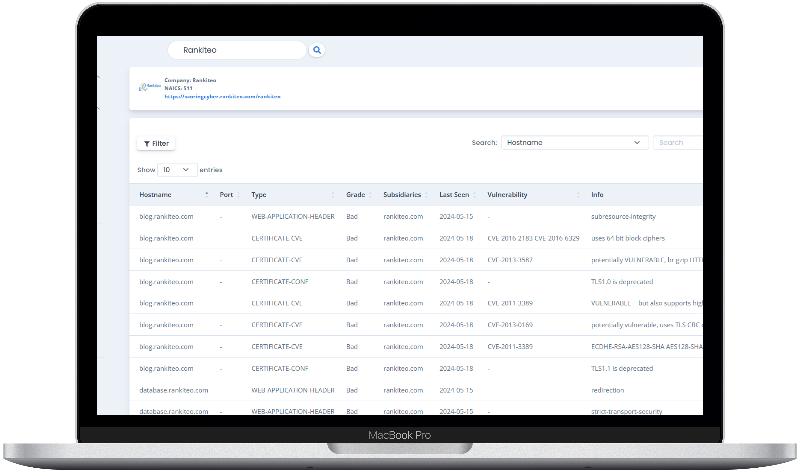
Identify exposed access points, detect misconfigured SSL certificates, and uncover vulnerabilities across the network infrastructure.
Gain visibility into the software components used within an organization to detect vulnerabilities, manage risk, and ensure supply chain security.
Monitor and manage all IT assets and their configurations to ensure accurate, real-time visibility across the company's technology environment.
Leverage real-time insights on active threats, malware campaigns, and emerging vulnerabilities to proactively defend against evolving cyberattacks.








 Rapid
Rapid