





Cloudflare
Company Details
Linkedin ID:
cloudflare
Website:
Employees number:
6,146
Number of followers:
1,097,651
NAICS:
541514
Industry Type:
Homepage:
cloudflare.com
IP Addresses:
0
Company ID:
CLO_2342578
Scan Status:
In-progress

Cloudflare Company CyberSecurity Posture
cloudflare.com


Cloudflare, Inc. (NYSE: NET) is the leading connectivity cloud company. It empowers organizations to make their employees, applications and networks faster and more secure everywhere, while reducing complexity and cost. Cloudflare’s connectivity cloud delivers the most full-featured, unified platform of cloud-native products and developer tools, so any organization can gain the control they need to work, develop, and accelerate their business. Powered by one of the world’s largest and most interconnected networks, Cloudflare blocks billions of threats online for its customers every day. It is trusted by millions of organizations – from the largest brands to entrepreneurs and small businesses to nonprofits, humanitarian groups, and governments across the globe.
Company Details
cloudflare
6,146
1,097,651
541514
cloudflare.com
0
CLO_2342578
In-progress
 Cloudflare Risk Score (AI oriented)
Between 650 and 699
 Cloudflare Global Score (TPRM)
XXXX
Description: Cloudflare confirmed it was impacted by a sophisticated **supply chain attack** targeting the **Salesloft Drift-Salesforce integration**, part of a broader campaign (UNC6395) that compromised over **700 organizations**. Hackers exploited stolen credentials to exfiltrate data from Cloudflare’s **Salesforce support cases** between **August 12–17, 2024**, following reconnaissance on **August 9**. The breach exposed: - **Customer contact details** (emails, phone numbers, company domains). - **Support case contents**, including **freeform text** (potentially containing **API tokens, logs, or passwords** shared by customers). - **104 Cloudflare API tokens**, though no malicious use was detected (all tokens were rotated). While **no Cloudflare infrastructure was compromised**, the attack risked **credential theft for downstream systems** (e.g., AWS keys, Snowflake tokens). Cloudflare disabled Drift, purged Salesloft integrations, and notified affected customers, urging **credential rotation** and forensic reviews. The incident underscores risks from **third-party SaaS integrations** in enterprise environments.
Description: Cloudflare was disclosing a lot of private data, including login passwords and authentication cookies. Uber, Fitbit, 1Password, and OKCupid are just a few of the big names affected by the Cloudbleed security flaw in Cloudflare servers. Because mobile apps are created with the same backends as browsers for HTTPS (SSL/TLS) termination and content delivery, they are likewise impacted by Cloudbleed. The fact that Cloudflare directed Ormandy to the company's bug bounty programme and offered the expert a t-shirt as payment in lieu of cash is highly unusual.
Description: Internet infrastructure company Cloudflare suffered one of the largest volumetric distributed denials of service (DDoS) attacks. The attack lasted less than 15 seconds and was launched from a botnet of approximately 6,000 unique bots and originated from 112 countries around the world. The company immediately detected and mitigated a 15.3 million request-per-second (rps) DDoS attack. The attack was aimed at a “crypto launchpad” which is “used to surface Decentralized Finance projects to potential investors.”
Description: A newly disclosed **Aisuru IoT botnet** attack unleashed a record-breaking **29.6 Tbps DDoS assault**, overwhelming major online gaming platforms, including **Minecraft**, on **October 8, 2025**. The attack, lasting mere seconds, exploited **compromised IoT devices** (home routers, IP cameras, DVRs) hosted under **US ISPs (AT&T, Comcast, Verizon, T-Mobile, Charter)**, flooding servers with malicious traffic far exceeding typical mitigation thresholds. While the primary target was gaming services, the sheer scale caused **widespread internet disruptions**, crippling connectivity for users beyond the gaming community. Cybersecurity journalist **Brian Krebs** highlighted that such attacks now surpass the defensive capabilities of most organizations, posing systemic risks. Though no data breach or ransomware was involved, the **outage disrupted payment processes, user access, and service availability**, inflicting **reputational damage** and **financial losses** from downtime. The incident underscores the escalating threat of **IoT-driven DDoS campaigns** targeting high-traffic digital platforms.
Description: In 2024 Cloudflare mitigated a staggering 21.3 million DDoS attacks—a 358% year-over-year jump—and in Q1 2025 alone it already repelled 20.5 million assaults, including 6.6 million aimed directly at its own infrastructure during an 18-day multi-vector campaign. The surge was driven by a 509% increase in network-layer attacks, while hyper-volumetric floods exploded: over 700 events surpassed 1 Tbps or 1 billion packets per second, averaging eight daily in Q1. Emerging threats like CLDAP reflection attacks rose 3,488% quarter-over-quarter and ESP amplification attacks grew 2,301%. Even specialized gaming servers faced hyper-volumetric onslaughts up to 1.5 billion packets per second. Most alarmingly, Cloudflare disclosed it withstood a record-breaking 5.8 Tbps DDoS blast lasting 45 seconds, eclipsing its previous 5.6 Tbps record. Although fully mitigated, these figures underscore unprecedented scale and sophistication that threaten service availability and corporate stability across industries.
Description: On October 7, 2023, amid a real-world conflict, Israeli websites providing critical information and alerts to civilians on rocket attacks were hit by a series of DDoS attacks. Cloudflare systems detected and mitigated these attacks, which were as intense as 1M requests per second. Pro-Palestinian hacktivist groups also targeted various Israeli websites and apps, including compromising an app alerting civilians about incoming rockets by sending fake alerts. Cloudflare's Threat Operations team discovered malicious mobile applications impersonating legitimate alert apps, which could access sensitive user data. These cyberattacks occurred alongside physical threats, creating a complex situation for Cloudflare and the affected organizations to manage, emphasizing the intersection of physical and cybersecurity domains during times of conflict.
Description: La firme de sécurité réseau signale une attaque DDoS d’une vitesse de 7,3 térabits par seconde. Il s’agirait de la plus importante attaque jamais enregistrée sur la plateforme Cloudflare. L’attaque a eu lieu en mai et visait un hébergeur utilisant Magic Transit de Cloudflare pour protéger son réseau IP. Elle a dépassé le précédent record de 5,6 Tbit/s. L’attaque DDoS a transféré quelque 37,4 téraoctets de données en 45 secondes. Ces données provenaient de 122.145 adresses IP disséminées dans 161 pays. Les hébergeurs et les infrastructures internet clés sont souvent la cible d’attaques DDoS. Cloudflare même publie régulièrement des analyses à ce sujet. Elle a notifié que plus de 13,5 millions d’attaques DDoS ont été lancées en janvier et février 2025 contre son infrastructure et ses hébergeurs protégés par Cloudflare. Le précédent pic mesuré par Cloudflare était une attaque DDoS remontant à octobre dernier.
Description: Cybersecurity researchers have identified a growing trend among ransomware affiliates and advanced persistent threat actors who are leveraging Cloudflare’s legitimate tunneling service, Cloudflared, to establish covert access channels into compromised networks. This sophisticated technique allows attackers to maintain persistent access while evading traditional network security controls that typically flag suspicious outbound connections. The exploitation of Cloudflared tunnels has emerged as a preferred persistence mechanism due to the service’s inherent design, which encapsulates data in additional protocols that only the tunnel endpoints can decrypt. This creates a secure communication channel that appears as legitimate traffic to security monitoring systems, effectively providing attackers with what amounts to local network access from remote locations.


Cloudflare has 361.54% more incidents than the average of same-industry companies with at least one recorded incident.
Cloudflare has 289.61% more incidents than the average of all companies with at least one recorded incident.
Cloudflare reported 3 incidents this year: 2 cyber attacks, 1 ransomware, 0 vulnerabilities, 0 data breaches, compared to industry peers with at least 1 incident.
Cloudflare cyber incidents detection timeline including parent company and subsidiaries
Cloudflare, Inc. (NYSE: NET) is the leading connectivity cloud company. It empowers organizations to make their employees, applications and networks faster and more secure everywhere, while reducing complexity and cost. Cloudflare’s connectivity cloud delivers the most full-featured, unified platform of cloud-native products and developer tools, so any organization can gain the control they need to work, develop, and accelerate their business. Powered by one of the world’s largest and most interconnected networks, Cloudflare blocks billions of threats online for its customers every day. It is trusted by millions of organizations – from the largest brands to entrepreneurs and small businesses to nonprofits, humanitarian groups, and governments across the globe.


## Our core business We manage linux / unix server infrastructures and build the efficient and secure networking environments using hardware cutting edge technologies suited to the needs of the project and the client. We believe in quality, opposed to quantity. Our company consists of highly

CrowdStrike (Nasdaq: CRWD), a global cybersecurity leader, has redefined modern security with the world’s most advanced cloud-native platform for protecting critical areas of enterprise risk — endpoints and cloud workloads, identity and data. Powered by the CrowdStrike Security Cloud and world-clas
Palo Alto Networks, the global cybersecurity leader, is shaping the cloud-centric future with technology that is transforming the way people and organizations operate. Our mission is to be the cybersecurity partner of choice, protecting our digital way of life. We help address the world's greatest s
.png)
Cloudflare's global network suffered a brief but widespread disruption this morning, lasting approximately 25 minutes, due to an internal...
Internet infrastructure company Cloudflare on Friday said it had restored services following an outage that took place in the morning and...
News Summary. A significant global outage at Cloudflare on December 5, 2025, impacted numerous major websites including LinkedIn, Zoom,...
Cloudflare outage: Cloudflare, which calls its platform an 'immune system for the internet', is a global cloud services and cybersecurity...
Cloudflare faces another outage, exposing risks of web centralization. Discover the impact on global traffic and cybersecurity.
Is there another outage affecting Cloudflare? Here's what you need to know. about the latest internet outage impacting multiple websites...
A major disruption swept across the internet today as Cloudflare, a critical backbone for millions of websites, reported widespread issues...
2025 saw plenty of cyberattacks and outages on a global scale, leading to more questions over enterprise security and the world's digital...
Cloudflare (NET) just caught fresh attention after Barclays kicked off coverage with a bullish stance, sending the stock up about 4% as...

Explore insights on cybersecurity incidents, risk posture, and Rankiteo's assessments.
The official website of Cloudflare is https://www.cloudflare.com.
According to Rankiteo, Cloudflare’s AI-generated cybersecurity score is 686, reflecting their Weak security posture.
According to Rankiteo, Cloudflare currently holds 0 security badges, indicating that no recognized compliance certifications are currently verified for the organization.
According to Rankiteo, Cloudflare is not certified under SOC 2 Type 1.
According to Rankiteo, Cloudflare does not hold a SOC 2 Type 2 certification.
According to Rankiteo, Cloudflare is not listed as GDPR compliant.
According to Rankiteo, Cloudflare does not currently maintain PCI DSS compliance.
According to Rankiteo, Cloudflare is not compliant with HIPAA regulations.
According to Rankiteo,Cloudflare is not certified under ISO 27001, indicating the absence of a formally recognized information security management framework.
Cloudflare operates primarily in the Computer and Network Security industry.
Cloudflare employs approximately 6,146 people worldwide.
Cloudflare presently has no subsidiaries across any sectors.
Cloudflare’s official LinkedIn profile has approximately 1,097,651 followers.
Cloudflare is classified under the NAICS code 541514, which corresponds to Others.
No, Cloudflare does not have a profile on Crunchbase.
Yes, Cloudflare maintains an official LinkedIn profile, which is actively utilized for branding and talent engagement, which can be accessed here: https://www.linkedin.com/company/cloudflare.
As of December 11, 2025, Rankiteo reports that Cloudflare has experienced 8 cybersecurity incidents.
Cloudflare has an estimated 3,057 peer or competitor companies worldwide.
Incident Types: The types of cybersecurity incidents that have occurred include Ransomware, Cyber Attack and Breach.
Detection and Response: The company detects and responds to cybersecurity incidents through an incident response plan activated with cloudflare (august 23), incident response plan activated with zscaler, incident response plan activated with palo alto networks, incident response plan activated with salesloft, incident response plan activated with google, and third party assistance with mandiant (for salesloft investigation), third party assistance with google threat intelligence, and containment measures with salesloft revoked all drift-to-salesforce connections (pre-notification), containment measures with cloudflare disabled drift user accounts and purged salesloft software, containment measures with google revoked compromised workspace tokens and disabled drift integration, containment measures with salesloft took drift platform offline and paused salesforce integrations, and remediation measures with credential rotation (cloudflare rotated 104 api tokens), remediation measures with customer notifications via email/dashboard banners (cloudflare, palo alto networks), remediation measures with forensic investigations across affected organizations, remediation measures with salesforce instance audits for unauthorized access, and recovery measures with re-establishing secure integrations (timeline unclear), recovery measures with enhanced monitoring of salesforce/salesloft environments, and communication strategy with public blog posts by cloudflare, zscaler, palo alto networks, communication strategy with customer advisories with actionable steps (e.g., disconnect salesloft, rotate credentials), communication strategy with google’s updated threat advisory (august 2024), and enhanced monitoring with likely implemented by affected companies (not detailed)..
Title: Cloudflare Suffers Massive DDoS Attack
Description: Internet infrastructure company Cloudflare suffered one of the largest volumetric distributed denials of service (DDoS) attacks.
Type: DDoS Attack
Attack Vector: Distributed Denial of Service (DDoS)
Title: Cloudbleed Security Flaw in Cloudflare Servers
Description: Cloudflare was disclosing a lot of private data, including login passwords and authentication cookies. Uber, Fitbit, 1Password, and OKCupid are just a few of the big names affected by the Cloudbleed security flaw in Cloudflare servers. Because mobile apps are created with the same backends as browsers for HTTPS (SSL/TLS) termination and content delivery, they are likewise impacted by Cloudbleed. The fact that Cloudflare directed Ormandy to the company's bug bounty programme and offered the expert a t-shirt as payment in lieu of cash is highly unusual.
Type: Data Breach
Attack Vector: Cloudbleed Security Flaw
Vulnerability Exploited: Cloudbleed
Title: DDoS and Hacktivist Attacks on Israeli Websites and Apps
Description: On October 7, 2023, Israeli websites providing critical information and alerts to civilians on rocket attacks were hit by a series of DDoS attacks. Cloudflare systems detected and mitigated these attacks, which were as intense as 1M requests per second. Pro-Palestinian hacktivist groups also targeted various Israeli websites and apps, including compromising an app alerting civilians about incoming rockets by sending fake alerts. Cloudflare's Threat Operations team discovered malicious mobile applications impersonating legitimate alert apps, which could access sensitive user data. These cyberattacks occurred alongside physical threats, creating a complex situation for Cloudflare and the affected organizations to manage, emphasizing the intersection of physical and cybersecurity domains during times of conflict.
Date Detected: 2023-10-07
Type: DDoS, Hacktivism, Malware
Attack Vector: DDoSMalicious mobile applications
Threat Actor: Pro-Palestinian hacktivist groups
Motivation: Political, Disruption
Title: Cloudflare DDoS Attacks 2024-2025
Description: In 2024 Cloudflare mitigated a staggering 21.3 million DDoS attacks—a 358% year-over-year jump—and in Q1 2025 alone it already repelled 20.5 million assaults, including 6.6 million aimed directly at its own infrastructure during an 18-day multi-vector campaign. The surge was driven by a 509% increase in network-layer attacks, while hyper-volumetric floods exploded: over 700 events surpassed 1 Tbps or 1 billion packets per second, averaging eight daily in Q1. Emerging threats like CLDAP reflection attacks rose 3,488% quarter-over-quarter and ESP amplification attacks grew 2,301%. Even specialized gaming servers faced hyper-volumetric onslaughts up to 1.5 billion packets per second. Most alarmingly, Cloudflare disclosed it withstood a record-breaking 5.8 Tbps DDoS blast lasting 45 seconds, eclipsing its previous 5.6 Tbps record. Although fully mitigated, these figures underscore unprecedented scale and sophistication that threaten service availability and corporate stability across industries.
Type: DDoS
Attack Vector: network-layer attacksCLDAP reflection attacksESP amplification attacks
Title: Abuse of Cloudflare’s Tunneling Service by Ransomware Groups
Description: Cybersecurity researchers have identified a growing trend among ransomware affiliates and advanced persistent threat actors leveraging Cloudflare’s legitimate tunneling service, Cloudflared, to establish covert access channels into compromised networks. This sophisticated technique allows attackers to maintain persistent access while evading traditional network security controls.
Type: Ransomware
Attack Vector: VPN exploitationRemote desktop protocol attacksCloudflared tunnels
Threat Actor: BlackSuitRoyalAkiraScattered SpiderMedusaHunter International
Motivation: Maintain persistent access and establish command and control channels
Title: Record-Breaking DDoS Attack on Cloudflare Platform
Description: A network security firm reported a DDoS attack with a speed of 7.3 terabits per second, the largest ever recorded on the Cloudflare platform.
Date Detected: May 2023
Type: DDoS Attack
Attack Vector: Distributed Denial of Service (DDoS)
Title: Widespread Data Theft Campaign Targeting Salesforce via Salesloft Drift Integration
Description: A sophisticated supply chain attack targeted hundreds of organizations globally by exploiting the Salesloft Drift integration with Salesforce. Threat actors (tracked as UNC6395 by Mandiant) exfiltrated sensitive customer data, including AWS access keys, Snowflake tokens, and business contact details, between August 8–18, 2024. Affected companies include Cloudflare, Zscaler, Palo Alto Networks, and potentially over 700 others. The attack leveraged stolen credentials and compromised authentication tokens within the Drift AI chatbot platform, which Salesloft acquired in 2023. Salesloft has since taken Drift offline and paused Salesforce integrations as a precautionary measure.
Date Detected: 2024-08-13 (initial warnings by Mandiant)
Date Publicly Disclosed: 2024-08-27 (confirmations by Cloudflare, Zscaler, Palo Alto Networks)
Type: Data Breach
Attack Vector: Compromised Third-Party Integration (Salesloft Drift)Stolen Authentication TokensAPI Abuse
Vulnerability Exploited: Weak Authentication Token Management in DriftOver-Permissive Salesforce Integrations
Threat Actor: UNC6395 (tracked by Mandiant)
Motivation: Credential Harvesting for Further AttacksData Exfiltration for Resale/ExploitationPotential Espionage or Financial Gain
Title: Massive DDoS Attack by Aisuru IoT Botnet Disrupts Major Online Gaming Platforms
Description: A newly disclosed attack campaign linked to the IoT botnet Aisuru led to a massive surge in malicious traffic, temporarily disrupting major online gaming platforms with nearly 29.6 Tbps of DDoS packets. The incident lasted only a few seconds on October 8, 2025, primarily leveraging compromised devices (home routers, IP cameras, and DVRs) hosted under leading US ISPs like AT&T, Comcast, Verizon, T-Mobile, and Charter. The attacks targeted ISPs serving online gaming communities such as Minecraft, resulting in widespread Internet disruption beyond the gaming sector.
Date Detected: 2025-10-08
Type: DDoS Attack
Attack Vector: Compromised IoT DevicesDDoS Amplification
Threat Actor: Aisuru IoT Botnet
Common Attack Types: The most common types of attacks the company has faced is Cyber Attack.
Identification of Attack Vectors: The company identifies the attack vectors used in incidents through Mobile applications, Compromised Salesloft Drift authentication tokens (likely via phishing or credential stuffing), Compromised IoT Devices (home routers, IP cameras and DVRs).

Systems Affected: Crypto Launchpad

Data Compromised: Login passwords, Authentication cookies
Systems Affected: Cloudflare serversmobile apps

Data Compromised: Sensitive user data
Systems Affected: Israeli websitesMobile alert apps
Operational Impact: Fake alerts sent, User trust compromised
Brand Reputation Impact: Potential loss of trust
Identity Theft Risk: High
Operational Impact: threaten service availability and corporate stability across industries
Systems Affected: Hosting provider using Cloudflare's Magic Transit
Data Compromised: Customer business contact details (names, emails, phone numbers, locations), Salesforce case data (subject lines, body text with potential keys/secrets), Aws access keys, Snowflake access tokens, Zscaler product licensing/commercial information, Support case logs (may include tokens/passwords)
Systems Affected: Salesforce instances (via Salesloft Drift integration)Google Workspace accounts (limited to Drift-integrated emails)Cloudflare API tokens (104 identified, rotated)
Downtime: ['Salesloft Drift platform taken offline', 'Salesforce-Salesloft integrations paused']
Operational Impact: Forensic investigations across hundreds of organizationsCredential rotation campaignsDisruption of customer support workflows (Salesforce case management)Temporary loss of Drift chatbot functionality
Customer Complaints: ['Potential increase due to exposed sensitive data in support cases']
Brand Reputation Impact: High (affects trust in Salesforce ecosystem and third-party integrations)Public disclosures by major tech firms may amplify scrutiny
Legal Liabilities: Potential GDPR/CCPA violations for exposed PIIContractual breaches with customers
Identity Theft Risk: ['Moderate (business contact details exposed)', 'Low for direct financial fraud (no payment data confirmed)']
Payment Information Risk: None reported
Systems Affected: Online Gaming Platforms (e.g., Minecraft)ISPs (AT&T, Comcast, Verizon, T-Mobile, Charter)
Downtime: Few seconds (but widespread disruption)
Operational Impact: Temporary disruption of major online gaming platforms and broader Internet services
Commonly Compromised Data Types: The types of data most commonly compromised in incidents are Login Passwords, Authentication Cookies, , Sensitive user data, Business Contact Information, Salesforce Case Metadata/Content, Authentication Tokens (Aws, Snowflake, Api Keys), Support Logs (May Include Sensitive Customer-Provided Data) and .
Entity Name: Cloudflare
Entity Type: Company
Industry: Internet Infrastructure
Entity Name: Fitbit
Entity Type: Company
Industry: Health & Fitness
Entity Name: Cloudflare
Entity Type: Technology Company
Industry: Cybersecurity
Location: Global
Customers Affected: Israeli civilians
Entity Name: Cloudflare
Entity Type: Network Security Firm
Industry: Technology
Location: Global
Entity Name: Cloudflare
Entity Type: Internet Infrastructure Company
Industry: Cybersecurity/Cloud Services
Location: San Francisco, CA, USA
Size: ~3,000 employees (2024)
Customers Affected: Limited subset (those with data in Salesforce cases)
Entity Name: Zscaler
Entity Type: Cybersecurity Firm
Industry: Cloud Security
Location: San Jose, CA, USA
Size: ~5,000 employees (2024)
Customers Affected: Customers with support cases or licensing data exposed
Entity Name: Palo Alto Networks
Entity Type: Cybersecurity Firm
Industry: Network Security
Location: Santa Clara, CA, USA
Size: ~12,000 employees (2024)
Customers Affected: Limited number with sensitive data in Salesforce
Entity Name: Salesloft
Entity Type: Sales Engagement Platform
Industry: SaaS/CRM
Location: Atlanta, GA, USA
Size: ~1,000 employees (2024)
Customers Affected: Hundreds of organizations using Drift-Salesforce integration
Entity Name: Google (Workspace)
Entity Type: Tech Giant
Industry: Cloud/Enterprise Software
Location: Mountain View, CA, USA
Size: ~190,000 employees (2024)
Customers Affected: Workspace administrators with Drift-integrated accounts
Entity Name: Over 700 Unnamed Companies
Entity Type: Varied (B2B organizations)
Industry: Multiple (tech, finance, healthcare, etc.)
Location: Global
Entity Name: AT&T
Entity Type: ISP
Industry: Telecommunications
Location: United States
Entity Name: Comcast
Entity Type: ISP
Industry: Telecommunications
Location: United States
Entity Name: Verizon
Entity Type: ISP
Industry: Telecommunications
Location: United States
Entity Name: T-Mobile
Entity Type: ISP
Industry: Telecommunications
Location: United States
Entity Name: Charter
Entity Type: ISP
Industry: Telecommunications
Location: United States
Entity Name: Minecraft (and other online gaming platforms)
Entity Type: Gaming Platform
Industry: Gaming/Entertainment
Location: Global
Incident Response Plan Activated: ['Cloudflare (August 23)', 'Zscaler', 'Palo Alto Networks', 'Salesloft', 'Google']
Third Party Assistance: Mandiant (For Salesloft Investigation), Google Threat Intelligence.
Containment Measures: Salesloft revoked all Drift-to-Salesforce connections (pre-notification)Cloudflare disabled Drift user accounts and purged Salesloft softwareGoogle revoked compromised Workspace tokens and disabled Drift integrationSalesloft took Drift platform offline and paused Salesforce integrations
Remediation Measures: Credential rotation (Cloudflare rotated 104 API tokens)Customer notifications via email/dashboard banners (Cloudflare, Palo Alto Networks)Forensic investigations across affected organizationsSalesforce instance audits for unauthorized access
Recovery Measures: Re-establishing secure integrations (timeline unclear)Enhanced monitoring of Salesforce/Salesloft environments
Communication Strategy: Public blog posts by Cloudflare, Zscaler, Palo Alto NetworksCustomer advisories with actionable steps (e.g., disconnect Salesloft, rotate credentials)Google’s updated threat advisory (August 2024)
Enhanced Monitoring: Likely implemented by affected companies (not detailed)
Incident Response Plan: The company's incident response plan is described as Cloudflare (August 23), Zscaler, Palo Alto Networks, Salesloft, Google, .
Third-Party Assistance: The company involves third-party assistance in incident response through Mandiant (for Salesloft investigation), Google Threat Intelligence, .
Type of Data Compromised: Login passwords, Authentication cookies
Type of Data Compromised: Sensitive user data
Sensitivity of Data: High
Personally Identifiable Information: Yes
Type of Data Compromised: Business contact information, Salesforce case metadata/content, Authentication tokens (aws, snowflake, api keys), Support logs (may include sensitive customer-provided data)
Number of Records Exposed: Exact count unknown; hundreds of organizations affected, Cloudflare identified 104 API tokens
Sensitivity of Data: Moderate to High (credentials/secrets in support cases)Low for most business contact details
Data Exfiltration: Confirmed between August 12–17, 2024Systematic export of large data volumes
File Types Exposed: Salesforce case records (text)CSV/JSON exports (likely)Email content (Google Workspace)
Personally Identifiable Information: Business emails, phone numbers, company names (no SSNs/financial data confirmed)
Prevention of Data Exfiltration: The company takes the following measures to prevent data exfiltration: Credential rotation (Cloudflare rotated 104 API tokens), Customer notifications via email/dashboard banners (Cloudflare, Palo Alto Networks), Forensic investigations across affected organizations, Salesforce instance audits for unauthorized access, .
Handling of PII Incidents: The company handles incidents involving personally identifiable information (PII) through by salesloft revoked all drift-to-salesforce connections (pre-notification), cloudflare disabled drift user accounts and purged salesloft software, google revoked compromised workspace tokens and disabled drift integration, salesloft took drift platform offline and paused salesforce integrations and .

Ransomware Strain: BlackSuitRoyalAkiraScattered SpiderMedusa
Data Exfiltration: Yes (but not ransomware-related)
Data Recovery from Ransomware: The company recovers data encrypted by ransomware through Re-establishing secure integrations (timeline unclear), Enhanced monitoring of Salesforce/Salesloft environments, .
Regulations Violated: Potential GDPR (EU customer data), CCPA (California residents), Industry-specific compliance (e.g., SOC 2),
Regulatory Notifications: Likely ongoing (not publicly detailed)
Lessons Learned: The importance of monitoring and mitigating cyber threats during times of conflict, especially when physical and cybersecurity domains intersect.
Lessons Learned: The legitimate nature of Cloudflared traffic makes detection particularly challenging for security teams who must differentiate between authorized administrative use and malicious exploitation.
Lessons Learned: Third-party SaaS integrations introduce significant supply chain risk, especially when connected to core systems like Salesforce., Authentication tokens in chatbot/automation platforms (e.g., Drift) require stricter access controls and rotation policies., Over-permissive API integrations can enable large-scale data exfiltration with minimal detection., Proactive disconnection of integrations (as done by Salesloft) can limit blast radius, but transparency is critical to maintain trust., Credential hygiene (e.g., rotating tokens in support systems) is often overlooked but critical for limiting post-breach impact.
Recommendations: Enhance monitoring and mitigation strategies, improve communication and coordination with affected organizations, and increase public awareness about the risks of malicious mobile applications.
Recommendations: Audit all third-party integrations with Salesforce/CRM systems for least-privilege access., Isolate high-risk integrations (e.g., AI chatbots) in segmented network zones with enhanced logging., Implement automated token rotation for all API keys/secrets stored in SaaS platforms., Monitor for unusual data export patterns in Salesforce (e.g., bulk API calls)., Require multi-factor authentication (MFA) for all Salesforce integrations, including third-party tools., Conduct tabletop exercises for supply chain attack scenarios involving CRM/ERP systems., Evaluate the necessity of storing sensitive data (e.g., AWS keys) in customer support systems.Audit all third-party integrations with Salesforce/CRM systems for least-privilege access., Isolate high-risk integrations (e.g., AI chatbots) in segmented network zones with enhanced logging., Implement automated token rotation for all API keys/secrets stored in SaaS platforms., Monitor for unusual data export patterns in Salesforce (e.g., bulk API calls)., Require multi-factor authentication (MFA) for all Salesforce integrations, including third-party tools., Conduct tabletop exercises for supply chain attack scenarios involving CRM/ERP systems., Evaluate the necessity of storing sensitive data (e.g., AWS keys) in customer support systems.Audit all third-party integrations with Salesforce/CRM systems for least-privilege access., Isolate high-risk integrations (e.g., AI chatbots) in segmented network zones with enhanced logging., Implement automated token rotation for all API keys/secrets stored in SaaS platforms., Monitor for unusual data export patterns in Salesforce (e.g., bulk API calls)., Require multi-factor authentication (MFA) for all Salesforce integrations, including third-party tools., Conduct tabletop exercises for supply chain attack scenarios involving CRM/ERP systems., Evaluate the necessity of storing sensitive data (e.g., AWS keys) in customer support systems.Audit all third-party integrations with Salesforce/CRM systems for least-privilege access., Isolate high-risk integrations (e.g., AI chatbots) in segmented network zones with enhanced logging., Implement automated token rotation for all API keys/secrets stored in SaaS platforms., Monitor for unusual data export patterns in Salesforce (e.g., bulk API calls)., Require multi-factor authentication (MFA) for all Salesforce integrations, including third-party tools., Conduct tabletop exercises for supply chain attack scenarios involving CRM/ERP systems., Evaluate the necessity of storing sensitive data (e.g., AWS keys) in customer support systems.Audit all third-party integrations with Salesforce/CRM systems for least-privilege access., Isolate high-risk integrations (e.g., AI chatbots) in segmented network zones with enhanced logging., Implement automated token rotation for all API keys/secrets stored in SaaS platforms., Monitor for unusual data export patterns in Salesforce (e.g., bulk API calls)., Require multi-factor authentication (MFA) for all Salesforce integrations, including third-party tools., Conduct tabletop exercises for supply chain attack scenarios involving CRM/ERP systems., Evaluate the necessity of storing sensitive data (e.g., AWS keys) in customer support systems.Audit all third-party integrations with Salesforce/CRM systems for least-privilege access., Isolate high-risk integrations (e.g., AI chatbots) in segmented network zones with enhanced logging., Implement automated token rotation for all API keys/secrets stored in SaaS platforms., Monitor for unusual data export patterns in Salesforce (e.g., bulk API calls)., Require multi-factor authentication (MFA) for all Salesforce integrations, including third-party tools., Conduct tabletop exercises for supply chain attack scenarios involving CRM/ERP systems., Evaluate the necessity of storing sensitive data (e.g., AWS keys) in customer support systems.Audit all third-party integrations with Salesforce/CRM systems for least-privilege access., Isolate high-risk integrations (e.g., AI chatbots) in segmented network zones with enhanced logging., Implement automated token rotation for all API keys/secrets stored in SaaS platforms., Monitor for unusual data export patterns in Salesforce (e.g., bulk API calls)., Require multi-factor authentication (MFA) for all Salesforce integrations, including third-party tools., Conduct tabletop exercises for supply chain attack scenarios involving CRM/ERP systems., Evaluate the necessity of storing sensitive data (e.g., AWS keys) in customer support systems.
Key Lessons Learned: The key lessons learned from past incidents are The importance of monitoring and mitigating cyber threats during times of conflict, especially when physical and cybersecurity domains intersect.The legitimate nature of Cloudflared traffic makes detection particularly challenging for security teams who must differentiate between authorized administrative use and malicious exploitation.Third-party SaaS integrations introduce significant supply chain risk, especially when connected to core systems like Salesforce.,Authentication tokens in chatbot/automation platforms (e.g., Drift) require stricter access controls and rotation policies.,Over-permissive API integrations can enable large-scale data exfiltration with minimal detection.,Proactive disconnection of integrations (as done by Salesloft) can limit blast radius, but transparency is critical to maintain trust.,Credential hygiene (e.g., rotating tokens in support systems) is often overlooked but critical for limiting post-breach impact.
Implemented Recommendations: The company has implemented the following recommendations to improve cybersecurity: Enhance monitoring and mitigation strategies, improve communication and coordination with affected organizations and and increase public awareness about the risks of malicious mobile applications..
Source: Cloudflare
Source: Sudo Rem
Source: Dutch IT Channel
Source: CyberScoop
URL: https://www.cyberscoop.com/salesforce-salesloft-drift-hack-cloudflare-zscaler-palo-alto/
Date Accessed: 2024-08-28
Source: Cloudflare Blog (Postmortem)
URL: https://blog.cloudflare.com/salesloft-drift-incident-august-2024
Date Accessed: 2024-08-27
Source: Zscaler Advisory
URL: https://www.zscaler.com/blogs/security-advisories/salesloft-drift-incident-update
Date Accessed: 2024-08-26
Source: Palo Alto Networks Statement
URL: https://www.paloaltonetworks.com/blog/2024/08/salesloft-drift-incident-response/
Date Accessed: 2024-08-27
Source: Google Threat Intelligence Advisory
Date Accessed: 2024-08-25
Source: Mandiant (UNC6395 Tracking)
URL: https://www.mandiant.com/resources/insights/unc6395-salesforce-campaign
Date Accessed: 2024-08-20
Source: Krebs on Security (Brian Krebs)
Additional Resources: Stakeholders can find additional resources on cybersecurity best practices at and Source: Cloudflare, and Source: Sudo Rem, and Source: Dutch IT Channel, and Source: CyberScoopUrl: https://www.cyberscoop.com/salesforce-salesloft-drift-hack-cloudflare-zscaler-palo-alto/Date Accessed: 2024-08-28, and Source: Cloudflare Blog (Postmortem)Url: https://blog.cloudflare.com/salesloft-drift-incident-august-2024Date Accessed: 2024-08-27, and Source: Zscaler AdvisoryUrl: https://www.zscaler.com/blogs/security-advisories/salesloft-drift-incident-updateDate Accessed: 2024-08-26, and Source: Palo Alto Networks StatementUrl: https://www.paloaltonetworks.com/blog/2024/08/salesloft-drift-incident-response/Date Accessed: 2024-08-27, and Source: Google Threat Intelligence AdvisoryUrl: https://cloud.google.com/blog/products/identity-security/google-threat-intelligence-salesloft-drift-campaignDate Accessed: 2024-08-25, and Source: Mandiant (UNC6395 Tracking)Url: https://www.mandiant.com/resources/insights/unc6395-salesforce-campaignDate Accessed: 2024-08-20, and Source: Krebs on Security (Brian Krebs).
Investigation Status: Ongoing
Investigation Status: Ongoing (as of August 28, 2024)
Communication of Investigation Status: The company communicates the status of incident investigations to stakeholders through Public Blog Posts By Cloudflare, Zscaler, Palo Alto Networks, Customer Advisories With Actionable Steps (E.G., Disconnect Salesloft, Rotate Credentials) and Google’S Updated Threat Advisory (August 2024).
Stakeholder Advisories: Disconnect Salesloft Drift Integration Immediately., Treat All Drift-Stored Authentication Tokens As Compromised., Audit Salesforce For Unauthorized Data Exports (August 8–18, 2024)., Rotate All Credentials/Secrets Shared Via Salesforce Cases Or Drift Chats., Monitor For Follow-On Attacks Leveraging Stolen Aws/Snowflake Tokens..
Customer Advisories: Cloudflare: Notified affected customers via email/dashboard banners; urged credential rotation.Palo Alto Networks: Contacting customers with potentially exposed sensitive data.Zscaler: Published guidance for customers to review exposed support cases.Salesloft: Advises all customers to disconnect Drift-Salesforce integration.
Advisories Provided: The company provides the following advisories to stakeholders and customers following an incident: were Disconnect Salesloft Drift Integration Immediately., Treat All Drift-Stored Authentication Tokens As Compromised., Audit Salesforce For Unauthorized Data Exports (August 8–18, 2024)., Rotate All Credentials/Secrets Shared Via Salesforce Cases Or Drift Chats., Monitor For Follow-On Attacks Leveraging Stolen Aws/Snowflake Tokens., Cloudflare: Notified Affected Customers Via Email/Dashboard Banners; Urged Credential Rotation., Palo Alto Networks: Contacting Customers With Potentially Exposed Sensitive Data., Zscaler: Published Guidance For Customers To Review Exposed Support Cases., Salesloft: Advises All Customers To Disconnect Drift-Salesforce Integration. and .
Entry Point: Mobile applications
High Value Targets: Critical alert systems
Data Sold on Dark Web: Critical alert systems
Entry Point: Compromised Salesloft Drift authentication tokens (likely via phishing or credential stuffing)
Reconnaissance Period: ['August 9, 2024 (Google observed email access)', 'Likely earlier for initial Drift compromise']
High Value Targets: Aws Access Keys, Snowflake Tokens, Salesforce Case Data With Secrets,
Data Sold on Dark Web: Aws Access Keys, Snowflake Tokens, Salesforce Case Data With Secrets,
Entry Point: Compromised Iot Devices (Home Routers, Ip Cameras, Dvrs),
High Value Targets: Isps Serving Online Gaming Communities,
Data Sold on Dark Web: Isps Serving Online Gaming Communities,
Root Causes: DDoS attacks and malicious mobile applications
Corrective Actions: Enhanced monitoring and mitigation strategies
Root Causes: Insufficient Access Controls For Drift-Salesforce Integration Tokens., Lack Of Network Segmentation Between Drift And Salesforce Data Stores., Over-Reliance On Static Api Tokens Without Rotation Policies., Delayed Detection Of Bulk Data Exfiltration (August 8–18 Activity Detected Later)., Acquisition-Related Security Gaps (Drift’S Integration Post-Salesloft Acquisition).,
Corrective Actions: Salesloft: Offlined Drift, Revoked All Integration Tokens, Mandatory Customer Disconnections., Cloudflare: Purged Salesloft Software, Rotated All Exposed Api Tokens, Enhanced Salesforce Logging., Google: Disabled Drift-Workspace Integration, Revoked Compromised Tokens., Industry-Wide: Reevaluation Of Third-Party Chatbot/Automation Tool Security Postures.,
Root Causes: Exploitation Of Vulnerable Iot Devices For Botnet Recruitment, Insufficient Ddos Mitigation Capabilities In Targeted Isps,
Post-Incident Analysis Process: The company's process for conducting post-incident analysis is described as Mandiant (For Salesloft Investigation), Google Threat Intelligence, , Likely Implemented By Affected Companies (Not Detailed), .
Corrective Actions Taken: The company has taken the following corrective actions based on post-incident analysis: Enhanced monitoring and mitigation strategies, Salesloft: Offlined Drift, Revoked All Integration Tokens, Mandatory Customer Disconnections., Cloudflare: Purged Salesloft Software, Rotated All Exposed Api Tokens, Enhanced Salesforce Logging., Google: Disabled Drift-Workspace Integration, Revoked Compromised Tokens., Industry-Wide: Reevaluation Of Third-Party Chatbot/Automation Tool Security Postures., .
Last Attacking Group: The attacking group in the last incident were an Pro-Palestinian hacktivist groups, BlackSuitRoyalAkiraScattered SpiderMedusaHunter International, UNC6395 (tracked by Mandiant) and Aisuru IoT Botnet.
Most Recent Incident Detected: The most recent incident detected was on 2023-10-07.
Most Recent Incident Publicly Disclosed: The most recent incident publicly disclosed was on 2024-08-27 (confirmations by Cloudflare, Zscaler, Palo Alto Networks).
Most Significant Data Compromised: The most significant data compromised in an incident were login passwords, authentication cookies, , Sensitive user data, Customer business contact details (names, emails, phone numbers, locations), Salesforce case data (subject lines, body text with potential keys/secrets), AWS access keys, Snowflake access tokens, Zscaler product licensing/commercial information, Support case logs (may include tokens/passwords) and .
Most Significant System Affected: The most significant system affected in an incident were Crypto Launchpad and Cloudflare serversmobile apps and Israeli websitesMobile alert apps and Hosting provider using Cloudflare's Magic Transit and Salesforce instances (via Salesloft Drift integration)Google Workspace accounts (limited to Drift-integrated emails)Cloudflare API tokens (104 identified, rotated) and Online Gaming Platforms (e.g., Minecraft)ISPs (AT&T, Comcast, Verizon, T-Mobile, Charter).
Third-Party Assistance in Most Recent Incident: The third-party assistance involved in the most recent incident was mandiant (for salesloft investigation), google threat intelligence, .
Containment Measures in Most Recent Incident: The containment measures taken in the most recent incident was Salesloft revoked all Drift-to-Salesforce connections (pre-notification)Cloudflare disabled Drift user accounts and purged Salesloft softwareGoogle revoked compromised Workspace tokens and disabled Drift integrationSalesloft took Drift platform offline and paused Salesforce integrations.
Most Sensitive Data Compromised: The most sensitive data compromised in a breach were Zscaler product licensing/commercial information, Sensitive user data, authentication cookies, AWS access keys, Snowflake access tokens, Support case logs (may include tokens/passwords), Customer business contact details (names, emails, phone numbers, locations), login passwords, Salesforce case data (subject lines and body text with potential keys/secrets).
Number of Records Exposed in Most Significant Breach: The number of records exposed in the most significant breach was 104.0.
Most Significant Lesson Learned: The most significant lesson learned from past incidents was Credential hygiene (e.g., rotating tokens in support systems) is often overlooked but critical for limiting post-breach impact.
Most Significant Recommendation Implemented: The most significant recommendation implemented to improve cybersecurity was Isolate high-risk integrations (e.g., AI chatbots) in segmented network zones with enhanced logging., Evaluate the necessity of storing sensitive data (e.g., AWS keys) in customer support systems., Conduct tabletop exercises for supply chain attack scenarios involving CRM/ERP systems., Monitor for unusual data export patterns in Salesforce (e.g., bulk API calls)., Enhance monitoring and mitigation strategies, improve communication and coordination with affected organizations, and increase public awareness about the risks of malicious mobile applications., Require multi-factor authentication (MFA) for all Salesforce integrations, including third-party tools., Audit all third-party integrations with Salesforce/CRM systems for least-privilege access. and Implement automated token rotation for all API keys/secrets stored in SaaS platforms..
Most Recent Source: The most recent source of information about an incident are Zscaler Advisory, Palo Alto Networks Statement, Cloudflare, Krebs on Security (Brian Krebs), Google Threat Intelligence Advisory, Cloudflare Blog (Postmortem), Sudo Rem, CyberScoop, Mandiant (UNC6395 Tracking) and Dutch IT Channel.
Most Recent URL for Additional Resources: The most recent URL for additional resources on cybersecurity best practices is https://www.cyberscoop.com/salesforce-salesloft-drift-hack-cloudflare-zscaler-palo-alto/, https://blog.cloudflare.com/salesloft-drift-incident-august-2024, https://www.zscaler.com/blogs/security-advisories/salesloft-drift-incident-update, https://www.paloaltonetworks.com/blog/2024/08/salesloft-drift-incident-response/, https://cloud.google.com/blog/products/identity-security/google-threat-intelligence-salesloft-drift-campaign, https://www.mandiant.com/resources/insights/unc6395-salesforce-campaign .
Current Status of Most Recent Investigation: The current status of the most recent investigation is Ongoing.
Most Recent Stakeholder Advisory: The most recent stakeholder advisory issued was Disconnect Salesloft Drift integration immediately., Treat all Drift-stored authentication tokens as compromised., Audit Salesforce for unauthorized data exports (August 8–18, 2024)., Rotate all credentials/secrets shared via Salesforce cases or Drift chats., Monitor for follow-on attacks leveraging stolen AWS/Snowflake tokens., .
Most Recent Customer Advisory: The most recent customer advisory issued was an Cloudflare: Notified affected customers via email/dashboard banners; urged credential rotation.Palo Alto Networks: Contacting customers with potentially exposed sensitive data.Zscaler: Published guidance for customers to review exposed support cases.Salesloft: Advises all customers to disconnect Drift-Salesforce integration.
Most Recent Entry Point: The most recent entry point used by an initial access broker were an Compromised Salesloft Drift authentication tokens (likely via phishing or credential stuffing) and Mobile applications.
Most Recent Reconnaissance Period: The most recent reconnaissance period for an incident was August 9, 2024 (Google observed email access)Likely earlier for initial Drift compromise.
Most Significant Root Cause: The most significant root cause identified in post-incident analysis was DDoS attacks and malicious mobile applications, Insufficient access controls for Drift-Salesforce integration tokens.Lack of network segmentation between Drift and Salesforce data stores.Over-reliance on static API tokens without rotation policies.Delayed detection of bulk data exfiltration (August 8–18 activity detected later).Acquisition-related security gaps (Drift’s integration post-Salesloft acquisition)., Exploitation of vulnerable IoT devices for botnet recruitmentInsufficient DDoS mitigation capabilities in targeted ISPs.
Most Significant Corrective Action: The most significant corrective action taken based on post-incident analysis was Enhanced monitoring and mitigation strategies, Salesloft: Offlined Drift, revoked all integration tokens, mandatory customer disconnections.Cloudflare: Purged Salesloft software, rotated all exposed API tokens, enhanced Salesforce logging.Google: Disabled Drift-Workspace integration, revoked compromised tokens.Industry-wide: Reevaluation of third-party chatbot/automation tool security postures..
.png)
FreePBX Endpoint Manager is a module for managing telephony endpoints in FreePBX systems. Versions prior to 16.0.96 and 17.0.1 through 17.0.9 have a weak default password. By default, this is a 6 digit numeric value which can be brute forced. (This is the app_password parameter). Depending on local configuration, this password could be the extension, voicemail, user manager, DPMA or EPM phone admin password. This issue is fixed in versions 16.0.96 and 17.0.10.
Neuron is a PHP framework for creating and orchestrating AI Agents. In versions 2.8.11 and below, the MySQLWriteTool executes arbitrary SQL provided by the caller using PDO::prepare() + execute() without semantic restrictions. This is consistent with the name (“write tool”), but in an LLM/agent context it becomes a high-risk capability: prompt injection or indirect prompt manipulation can cause execution of destructive queries such as DROP TABLE, TRUNCATE, DELETE, ALTER, or privilege-related statements (subject to DB permissions). Deployments that expose an agent with MySQLWriteTool enabled to untrusted input and/or run the tool with a DB user that has broad privileges are impacted. This issue is fixed in version 2.8.12.
Neuron is a PHP framework for creating and orchestrating AI Agents. Versions 2.8.11 and below use MySQLSelectTool, which is vulnerable to Read-Only Bypass. MySQLSelectTool is intended to be a read-only SQL tool (e.g., for LLM agent querying, however, validation based on the first keyword (e.g., SELECT) and a forbidden-keyword list does not block file-writing constructs such as INTO OUTFILE / INTO DUMPFILE. As a result, an attacker who can influence the tool input (e.g., via prompt injection through a public agent endpoint) may write arbitrary files to the DB server if the MySQL/MariaDB account has the FILE privilege and server configuration permits writes to a useful location (e.g., a web-accessible directory). This issue is fixed in version 2.8.12.
Okta Java Management SDK facilitates interactions with the Okta management API. In versions 11.0.0 through 20.0.0, race conditions may arise from concurrent requests using the ApiClient class. This could cause a status code or response header from one request’s response to influence another request’s response. This issue is fixed in version 20.0.1.
The Auth0 Next.js SDK is a library for implementing user authentication in Next.js applications. When using versions 4.11.0 through 4.11.2 and 4.12.0, simultaneous requests on the same client may result in improper lookups in the TokenRequestCache for the request results. This issue is fixed in versions 4.11.2 and 4.12.1.

Get company history

Every week, Rankiteo analyzes billions of signals to give organizations a sharper, faster view of emerging risks. With deeper, more actionable intelligence at their fingertips, security teams can outpace threat actors, respond instantly to Zero-Day attacks, and dramatically shrink their risk exposure window.
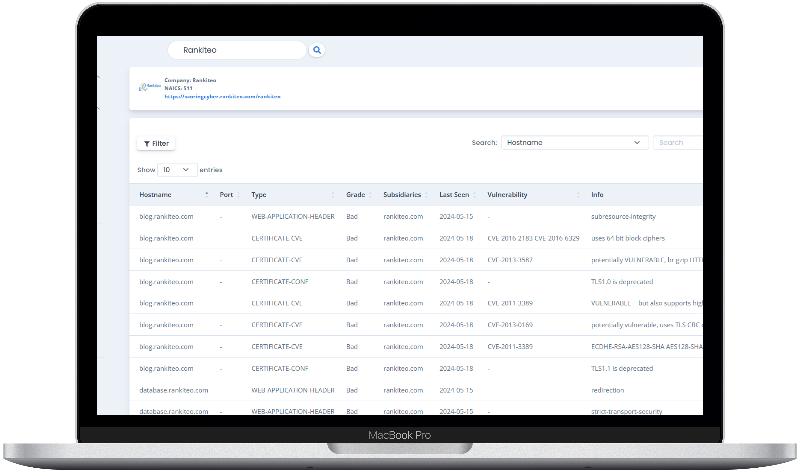
Identify exposed access points, detect misconfigured SSL certificates, and uncover vulnerabilities across the network infrastructure.
Gain visibility into the software components used within an organization to detect vulnerabilities, manage risk, and ensure supply chain security.
Monitor and manage all IT assets and their configurations to ensure accurate, real-time visibility across the company's technology environment.
Leverage real-time insights on active threats, malware campaigns, and emerging vulnerabilities to proactively defend against evolving cyberattacks.






 Rapid
Rapid