






Booking.com
Company Details
Linkedin ID:
booking.com
Website:
Employees number:
15,885
Number of followers:
1,046,751
NAICS:
5112
Industry Type:
Homepage:
booking.com
IP Addresses:
0
Company ID:
BOO_1028350
Scan Status:
In-progress

Booking.com Company CyberSecurity Posture
booking.com


A career at Booking.com is all about the journey, helping you explore new challenges in a place where you can be your best self. With plenty of exciting twists, turns and opportunities along the way. We’ve always been pioneers, on a mission to shape the future of travel through cutting edge technology, to make it easier for everyone to enjoy amazing experiences wherever they go. Under a desert sky, or in the heart of a bustling city. Discovering the perfect hideaway, or the perfect paella. When you join us, you’ll be part of a community where taking a different path and trying something new is celebrated and supported. And where making a difference counts. We’re determined to make the world of travel more sustainable, more accessible, and more inclusive, to create a positive impact on a global scale. That’s why we’re always looking for people who search for better solutions, the ones eager to stray off the beaten path to find new ways of doing things. Because at Booking.com it’s more than a job, it’s a journey we’re on together.
Company Details
booking.com
15,885
1,046,751
5112
booking.com
0
BOO_1028350
In-progress
 Booking.com Risk Score (AI oriented)
Between 750 and 799
 Booking.com Global Score (TPRM)
XXXX
Description: The rise of clandestine 'travel agencies' on darknet forums has led to significant financial losses for travel and hospitality industries. These agencies sell fraudulently booked flights, hotels, and other services at discounted rates, starting with credential theft and ending with fraudulent bookings. Airlines lose seat inventory, hotels absorb charge-backs, and travelers face drained reward balances. Trustwave reported one agency processed over 2,000 bookings in Q1 2025, netting $1.4 million in illicit revenue.
Description: The **ClickFix phishing campaign** targeted **Booking.com** and its affiliated hotels by exploiting compromised accounts to distribute **PureRAT malware** via phishing emails and WhatsApp messages. Attackers purchased stolen **Booking.com administrator credentials** from dark web forums (e.g., LolzTeam) to craft convincing scams. Victims—both hotels and guests—were lured into fake **Booking/Expedia login pages**, where their **login credentials and payment card data** were harvested. The malware (**PureRAT**) enabled remote access, keystroke logging, and surveillance via webcam/microphone, allowing attackers to map hotel customer databases for further fraud. Fraudulent wire transactions were also executed using stolen data. The campaign, active since at least **April 2025**, leveraged real reservation details to enhance credibility, amplifying financial and reputational damage. While the exact scale of compromise remains undisclosed, the attack disrupted trust in Booking.com’s platform, exposed sensitive customer financial data, and enabled downstream fraud against hotels and guests.
Description: A large-scale phishing campaign orchestrated by Russian threat actors has targeted **Booking.com** since February, involving the registration of over **4,300 fraudulent domains** mimicking legitimate booking and rental platforms like Expedia and Agoda. The attack specifically aimed to deceive hotel guests into divulging their **payment details**, including credit card information, bank account credentials, and personal identification data. By impersonating trusted booking services, the threat actors exploited user trust to harvest sensitive financial information, leading to potential **fraudulent transactions, identity theft, and financial losses** for affected customers. The scale of the operation suggests a systematic effort to compromise a high volume of users, leveraging social engineering tactics to bypass traditional security measures. While the exact number of victims remains undisclosed, the prolonged duration of the campaign (since February) indicates a sustained and evolving threat, with potential long-term reputational damage to Booking.com due to eroded customer confidence in its platform’s security.


Booking.com has 417.24% more incidents than the average of same-industry companies with at least one recorded incident.
Booking.com has 284.62% more incidents than the average of all companies with at least one recorded incident.
Booking.com reported 3 incidents this year: 3 cyber attacks, 0 ransomware, 0 vulnerabilities, 0 data breaches, compared to industry peers with at least 1 incident.
Booking.com cyber incidents detection timeline including parent company and subsidiaries
A career at Booking.com is all about the journey, helping you explore new challenges in a place where you can be your best self. With plenty of exciting twists, turns and opportunities along the way. We’ve always been pioneers, on a mission to shape the future of travel through cutting edge technology, to make it easier for everyone to enjoy amazing experiences wherever they go. Under a desert sky, or in the heart of a bustling city. Discovering the perfect hideaway, or the perfect paella. When you join us, you’ll be part of a community where taking a different path and trying something new is celebrated and supported. And where making a difference counts. We’re determined to make the world of travel more sustainable, more accessible, and more inclusive, to create a positive impact on a global scale. That’s why we’re always looking for people who search for better solutions, the ones eager to stray off the beaten path to find new ways of doing things. Because at Booking.com it’s more than a job, it’s a journey we’re on together.


Olá, somos a TOTVS! A maior empresa de tecnologia do Brasil. 🤓 Líder absoluta em sistemas e plataformas para empresas, a TOTVS possui mais de 70 mil clientes. Indo muito além do ERP, oferece tecnologia completa para digitalização dos negócios por meio de 3 unidades de negócio: - Gestão: ERPs, sol
SAP is the leading enterprise application and business AI company. We stand at the intersection of business and technology, where our innovations are designed to directly address real business challenges and produce real-world impacts. Our solutions are the backbone for the world’s most complex and
We're a global online visual communications platform on a mission to empower the world to design. Featuring a simple drag-and-drop user interface and a vast range of templates ranging from presentations, documents, websites, social media graphics, posters, apparel to videos, plus a huge library of f
Catalyzing the era of pervasive intelligence, Synopsys delivers trusted and comprehensive silicon to systems design solutions, from electronic design automation to silicon IP and system verification and validation. We partner closely with semiconductor and systems customers across a wide range of

ServiceNow (NYSE: NOW) makes the world work better for everyone. Our cloud-based platform and solutions help digitize and unify organizations so that they can find smarter, faster, better ways to make work flow. So employees and customers can be more connected, more innovative, and more agile. And w
The Facebook company is now Meta. Meta builds technologies that help people connect, find communities, and grow businesses. When Facebook launched in 2004, it changed the way people connect. Apps like Messenger, Instagram and WhatsApp further empowered billions around the world. Now, Meta is moving
HubSpot is a leading CRM platform that provides software and support to help businesses grow better. Our platform includes marketing, sales, service, and website management products that start free and scale to meet our customers’ needs at any stage of growth. Today, thousands of customers around th
At Sage, we knock down barriers with information, insights, and tools to help your business flow. We provide businesses with software and services that are simple and easy to use, as we work with you to give you that feeling of confidence. Customers trust our Payroll, HR, and Finance software to m
A problem isn't truly solved until it's solved for all. Googlers build products that help create opportunities for everyone, whether down the street or across the globe. Bring your insight, imagination and a healthy disregard for the impossible. Bring everything that makes you unique. Together, we c
.png)
The alert follows a rise in cases where hackers have used phishing techniques to impersonate emails from popular booking platforms such as...
A Russian-speaking threat behind an ongoing, mass phishing campaign has registered more than 4,300 domain names since the start of the year.
A Russian-speaking threat actor has orchestrated an extensive phishing campaign that has registered over 4300 malicious domains targeting...
Hackers use fake Booking.com pages and ClickFix tactics to infect hotels with PureRAT and steal data.
Cybercriminals use fake Booking.com emails in large-scale phishing attacks on hotels, deploying malware to steal booking credentials.
Booking.com account compromise - Cybersecurity researchers at Sekoia have uncovered a sophisticated phishing campaign targeting hospitality.
Phishing campaign targets hotels via hacked Booking.com accounts, tricking guests into double payments using fake reservation emails.
CoinGecko CEO Bobby Ong took to X to warn the cryptocurrency community about a phishing campaign that uses Booking.com.
UK tourist loses €1800 to a phishing scam via Booking.com. Learn how to avoid these travel frauds and secure your payments on booking...

Explore insights on cybersecurity incidents, risk posture, and Rankiteo's assessments.
The official website of Booking.com is http://careers.booking.com.
According to Rankiteo, Booking.com’s AI-generated cybersecurity score is 760, reflecting their Fair security posture.
According to Rankiteo, Booking.com currently holds 0 security badges, indicating that no recognized compliance certifications are currently verified for the organization.
According to Rankiteo, Booking.com is not certified under SOC 2 Type 1.
According to Rankiteo, Booking.com does not hold a SOC 2 Type 2 certification.
According to Rankiteo, Booking.com is not listed as GDPR compliant.
According to Rankiteo, Booking.com does not currently maintain PCI DSS compliance.
According to Rankiteo, Booking.com is not compliant with HIPAA regulations.
According to Rankiteo,Booking.com is not certified under ISO 27001, indicating the absence of a formally recognized information security management framework.
Booking.com operates primarily in the Software Development industry.
Booking.com employs approximately 15,885 people worldwide.
Booking.com presently has no subsidiaries across any sectors.
Booking.com’s official LinkedIn profile has approximately 1,046,751 followers.
Booking.com is classified under the NAICS code 5112, which corresponds to Software Publishers.
No, Booking.com does not have a profile on Crunchbase.
Yes, Booking.com maintains an official LinkedIn profile, which is actively utilized for branding and talent engagement, which can be accessed here: https://www.linkedin.com/company/booking.com.
As of December 11, 2025, Rankiteo reports that Booking.com has experienced 3 cybersecurity incidents.
Booking.com has an estimated 27,532 peer or competitor companies worldwide.
Incident Types: The types of cybersecurity incidents that have occurred include Cyber Attack.
Total Financial Loss: The total financial loss from these incidents is estimated to be $0.
Detection and Response: The company detects and responds to cybersecurity incidents through an containment measures with geo-fenced mfa on loyalty portals, containment measures with velocity limits tied to device-id, containment measures with dark-web telemetry that flags brand mentions, and third party assistance with sekoia (cybersecurity research)..
Title: Dark Web Travel Agency Fraud
Description: The rise of clandestine travel agencies on darknet forums has led to a full-fledged service economy that sells half-priced flights, five-star hotels, and even yacht charters using stolen credentials and fraudulent bookings.
Type: Fraud
Attack Vector: Mass-phishingInfostealer trojans
Vulnerability Exploited: Credential theft, Stolen payment tokens
Threat Actor: Dark web travel agencies
Motivation: Financial gain
Title: ClickFix phishing campaign targets hotels and guests with PureRAT malware
Description: Attackers exploit compromised Booking.com accounts and sell stolen credentials on dark web forums. Guests are tricked into fake Booking/Expedia sites, losing login and payment card data. Hotels and their guests are targeted by a sophisticated ClickFix campaign delivering PureRAT malware, stealing credentials, and enabling fraudulent wire transactions. The campaign involves phishing emails, fake reCAPTCHA challenges, and personalized WhatsApp messages with real reservation details to deceive victims. PureRAT grants remote access, keystroke logging, and data exfiltration capabilities. The campaign has been active since at least April 2025 and remains operational as of early October 2025.
Date Publicly Disclosed: 2025-10-01
Type: phishing
Attack Vector: compromised email accountsphishing linksfake reCAPTCHA challengemalware download (PureRAT)personalized WhatsApp messagesfake Booking/Expedia websites
Vulnerability Exploited: human trust (social engineering)compromised Booking.com accountslack of multi-factor authentication (MFA)
Motivation: financial gaindata theftfraudulent transactions
Title: Phishing Campaign Targeting Booking and Rental Services by Russian Threat Actors
Description: More than 4,300 domains have been registered by Russian threat actors to impersonate widely known booking and rental services, such as Booking.com, Expedia, and Agoda, as part of a phishing campaign that has sought to pilfer hotel guests' payment details since February 2025.
Date Publicly Disclosed: 2025-11-14
Type: phishing
Attack Vector: malicious domain registrationsocial engineeringphishing emails/websites
Threat Actor: Russian threat actors
Motivation: financial gaintheft of payment details
Common Attack Types: The most common types of attacks the company has faced is Cyber Attack.
Identification of Attack Vectors: The company identifies the attack vectors used in incidents through Mass-phishing, Infostealer trojans, compromised Booking.com accountspurchased administrator contact info from dark web and phishing domains impersonating booking services.

Financial Loss: Airlines lose seat inventory, hotels absorb charge-backs, travelers face drained reward balances
Systems Affected: Booking systems, payment gateways
Payment Information Risk: High
Data Compromised: Login credentials, Payment card data, Reservation details
Brand Reputation Impact: potential loss of trust in Booking.com and affected hotels
Identity Theft Risk: ['high (due to stolen credentials and payment data)']
Payment Information Risk: ['high (credit card data stolen)']
Data Compromised: Payment details
Brand Reputation Impact: potential reputational damage to Booking.com, Expedia, Agoda, and other impersonated brands
Identity Theft Risk: ['high (due to stolen payment details)']
Payment Information Risk: ['high (primary target of the campaign)']
Average Financial Loss: The average financial loss per incident is $0.00.
Commonly Compromised Data Types: The types of data most commonly compromised in incidents are Loyalty credentials, Payment tokens, Login Credentials, Payment Card Information, Reservation Details, , Payment Details and .
Entity Type: Airlines, Hotels, Travel Agencies
Industry: Travel and Hospitality
Entity Name: Booking.com
Entity Type: Online Travel Agency (OTA)
Industry: Hospitality/Travel
Location: Global
Entity Name: Expedia
Entity Type: Online Travel Agency (OTA)
Industry: Hospitality/Travel
Location: Global
Entity Name: Unspecified Hotels
Entity Type: Hospitality Business
Industry: Hospitality
Location: Global
Entity Name: Hotel Guests
Entity Type: Individual Consumers
Location: Global
Entity Name: Booking.com
Entity Type: company
Industry: travel/booking services
Location: global
Entity Name: Expedia
Entity Type: company
Industry: travel/booking services
Location: global
Entity Name: Agoda
Entity Type: company
Industry: travel/booking services
Location: global
Entity Name: Hotel guests (unspecified hotels)
Entity Type: individuals
Location: global
Containment Measures: Geo-fenced MFA on loyalty portalsVelocity limits tied to device-IDDark-web telemetry that flags brand mentions
Third Party Assistance: Sekoia (Cybersecurity Research).
Third-Party Assistance: The company involves third-party assistance in incident response through Sekoia (cybersecurity research), .
Type of Data Compromised: Loyalty credentials, Payment tokens
Sensitivity of Data: High
Type of Data Compromised: Login credentials, Payment card information, Reservation details
Sensitivity of Data: high (financial and personal data)
Data Exfiltration: credentials sold on dark web forums (e.g., LolzTeam)
Personally Identifiable Information: potentially included (names, contact details, payment info)
Type of Data Compromised: Payment details
Sensitivity of Data: high
Data Exfiltration: likely (payment details stolen)
Personally Identifiable Information: potentially (linked to payment details)
Handling of PII Incidents: The company handles incidents involving personally identifiable information (PII) through by geo-fenced mfa on loyalty portals, velocity limits tied to device-id, dark-web telemetry that flags brand mentions and .
Lessons Learned: Layered countermeasures are effective at disrupting high-speed fraud loops
Recommendations: Implement geo-fenced MFA on loyalty portals, velocity limits tied to device-ID, and dark-web telemetry that flags brand mentions
Key Lessons Learned: The key lessons learned from past incidents are Layered countermeasures are effective at disrupting high-speed fraud loops.
Implemented Recommendations: The company has implemented the following recommendations to improve cybersecurity: Implement geo-fenced MFA on loyalty portals, velocity limits tied to device-ID and and dark-web telemetry that flags brand mentions.
Source: Trustwave
Source: TechRadar Pro
Source: Sekoia Cybersecurity Research
Additional Resources: Stakeholders can find additional resources on cybersecurity best practices at and Source: Trustwave, and Source: TechRadar Pro, and Source: Sekoia Cybersecurity Research, and Source: The Hacker NewsDate Accessed: 2025-11-14.
Investigation Status: Ongoing (as of October 2025)
Investigation Status: ongoing (as of disclosure date)
Entry Point: Mass-phishing, Infostealer trojans
High Value Targets: Loyalty credentials, Payment tokens
Data Sold on Dark Web: Loyalty credentials, Payment tokens
Entry Point: Compromised Booking.Com Accounts, Purchased Administrator Contact Info From Dark Web,
Backdoors Established: ['PureRAT malware']
High Value Targets: Hotel Administrators, Booking.Com Account Holders, Hotel Guests,
Data Sold on Dark Web: Hotel Administrators, Booking.Com Account Holders, Hotel Guests,
Entry Point: Phishing Domains Impersonating Booking Services,
Reconnaissance Period: ['since at least February 2025']
High Value Targets: Hotel Guests' Payment Details,
Data Sold on Dark Web: Hotel Guests' Payment Details,
Root Causes: Credential theft, Stolen payment tokens
Corrective Actions: Implement layered countermeasures
Root Causes: Successful Phishing Attacks, Lack Of Mfa On Booking.Com Accounts, Trust In Legitimate-Looking Communications,
Post-Incident Analysis Process: The company's process for conducting post-incident analysis is described as Sekoia (Cybersecurity Research), .
Corrective Actions Taken: The company has taken the following corrective actions based on post-incident analysis: Implement layered countermeasures.
Last Attacking Group: The attacking group in the last incident were an Dark web travel agencies and Russian threat actors.
Most Recent Incident Publicly Disclosed: The most recent incident publicly disclosed was on 2025-11-14.
Highest Financial Loss: The highest financial loss from an incident was Airlines lose seat inventory, hotels absorb charge-backs, travelers face drained reward balances.
Most Significant Data Compromised: The most significant data compromised in an incident were login credentials, payment card data, reservation details, , payment details and .
Third-Party Assistance in Most Recent Incident: The third-party assistance involved in the most recent incident was sekoia (cybersecurity research), .
Containment Measures in Most Recent Incident: The containment measures taken in the most recent incident was Geo-fenced MFA on loyalty portalsVelocity limits tied to device-IDDark-web telemetry that flags brand mentions.
Most Sensitive Data Compromised: The most sensitive data compromised in a breach were reservation details, payment card data, payment details and login credentials.
Most Significant Lesson Learned: The most significant lesson learned from past incidents was Layered countermeasures are effective at disrupting high-speed fraud loops.
Most Significant Recommendation Implemented: The most significant recommendation implemented to improve cybersecurity was Implement geo-fenced MFA on loyalty portals, velocity limits tied to device-ID and and dark-web telemetry that flags brand mentions.
Most Recent Source: The most recent source of information about an incident are Sekoia Cybersecurity Research, TechRadar Pro, The Hacker News and Trustwave.
Current Status of Most Recent Investigation: The current status of the most recent investigation is Ongoing (as of October 2025).
Most Recent Entry Point: The most recent entry point used by an initial access broker were an Mass-phishing and Infostealer trojans.
Most Recent Reconnaissance Period: The most recent reconnaissance period for an incident was since at least February 2025.
Most Significant Root Cause: The most significant root cause identified in post-incident analysis was Credential theft, Stolen payment tokens, successful phishing attackslack of MFA on Booking.com accountstrust in legitimate-looking communications.
Most Significant Corrective Action: The most significant corrective action taken based on post-incident analysis was Implement layered countermeasures.
.png)
FreePBX Endpoint Manager is a module for managing telephony endpoints in FreePBX systems. Versions prior to 16.0.96 and 17.0.1 through 17.0.9 have a weak default password. By default, this is a 6 digit numeric value which can be brute forced. (This is the app_password parameter). Depending on local configuration, this password could be the extension, voicemail, user manager, DPMA or EPM phone admin password. This issue is fixed in versions 16.0.96 and 17.0.10.
Neuron is a PHP framework for creating and orchestrating AI Agents. In versions 2.8.11 and below, the MySQLWriteTool executes arbitrary SQL provided by the caller using PDO::prepare() + execute() without semantic restrictions. This is consistent with the name (“write tool”), but in an LLM/agent context it becomes a high-risk capability: prompt injection or indirect prompt manipulation can cause execution of destructive queries such as DROP TABLE, TRUNCATE, DELETE, ALTER, or privilege-related statements (subject to DB permissions). Deployments that expose an agent with MySQLWriteTool enabled to untrusted input and/or run the tool with a DB user that has broad privileges are impacted. This issue is fixed in version 2.8.12.
Neuron is a PHP framework for creating and orchestrating AI Agents. Versions 2.8.11 and below use MySQLSelectTool, which is vulnerable to Read-Only Bypass. MySQLSelectTool is intended to be a read-only SQL tool (e.g., for LLM agent querying, however, validation based on the first keyword (e.g., SELECT) and a forbidden-keyword list does not block file-writing constructs such as INTO OUTFILE / INTO DUMPFILE. As a result, an attacker who can influence the tool input (e.g., via prompt injection through a public agent endpoint) may write arbitrary files to the DB server if the MySQL/MariaDB account has the FILE privilege and server configuration permits writes to a useful location (e.g., a web-accessible directory). This issue is fixed in version 2.8.12.
Okta Java Management SDK facilitates interactions with the Okta management API. In versions 11.0.0 through 20.0.0, race conditions may arise from concurrent requests using the ApiClient class. This could cause a status code or response header from one request’s response to influence another request’s response. This issue is fixed in version 20.0.1.
The Auth0 Next.js SDK is a library for implementing user authentication in Next.js applications. When using versions 4.11.0 through 4.11.2 and 4.12.0, simultaneous requests on the same client may result in improper lookups in the TokenRequestCache for the request results. This issue is fixed in versions 4.11.2 and 4.12.1.

Get company history

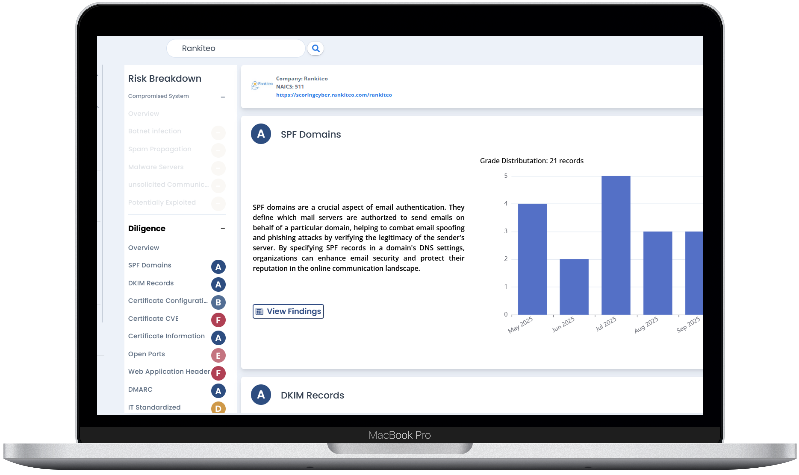
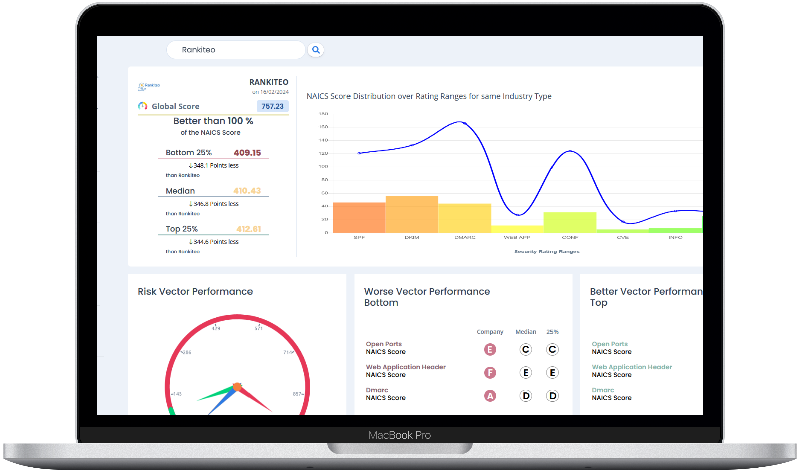
Every week, Rankiteo analyzes billions of signals to give organizations a sharper, faster view of emerging risks. With deeper, more actionable intelligence at their fingertips, security teams can outpace threat actors, respond instantly to Zero-Day attacks, and dramatically shrink their risk exposure window.
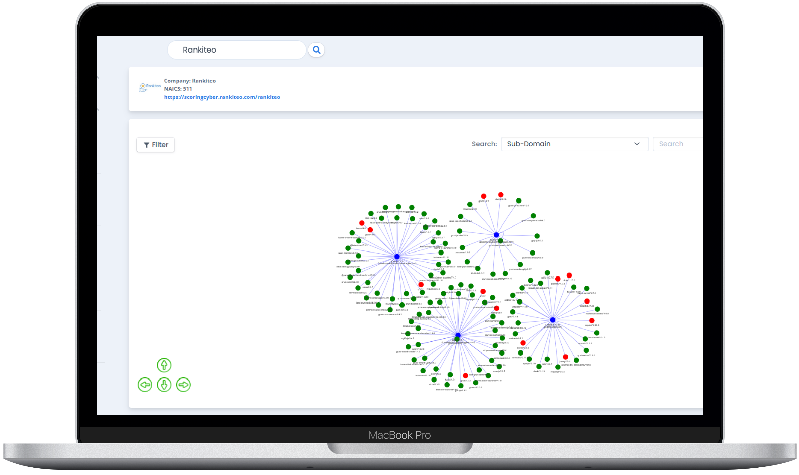
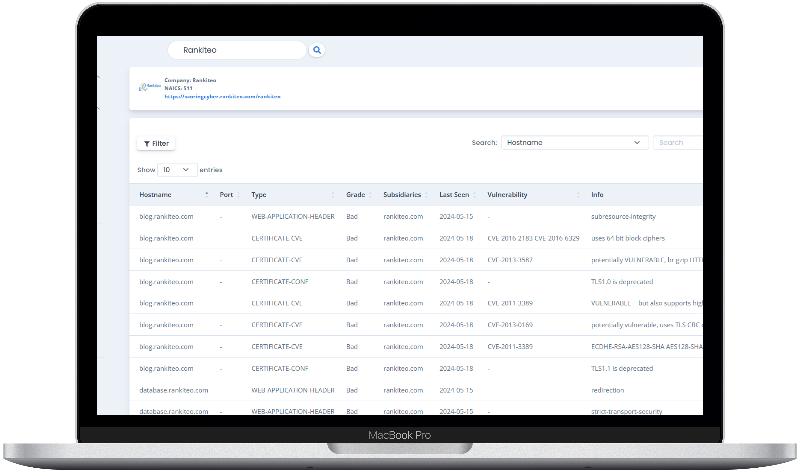
Identify exposed access points, detect misconfigured SSL certificates, and uncover vulnerabilities across the network infrastructure.
Gain visibility into the software components used within an organization to detect vulnerabilities, manage risk, and ensure supply chain security.
Monitor and manage all IT assets and their configurations to ensure accurate, real-time visibility across the company's technology environment.
Leverage real-time insights on active threats, malware campaigns, and emerging vulnerabilities to proactively defend against evolving cyberattacks.









 Rapid
Rapid