






ASUS
Company Details
Linkedin ID:
asus
Website:
Employees number:
16,061
Number of followers:
987,332
NAICS:
3341
Industry Type:
Homepage:
asus.com
IP Addresses:
0
Company ID:
ASU_1959502
Scan Status:
In-progress

ASUS Company CyberSecurity Posture
asus.com


ASUS is a global technology leader delivering incredible experiences that enhance the lives of people everywhere. World renowned for continuously reimagining today’s technologies for tomorrow, ASUS puts users first In Search of Incredible to provide the world’s most innovative and intuitive devices, components, and solutions. Today’s ASUS is more ambitious than ever, unleashing remarkable gaming, content-creation, AIoT, and cloud solutions that solve user needs and infuse delight. ASUS is home to industry-leading experts who are encouraged to pursue their passion for innovation and entrepreneurial spirit to deliver the future of technology to the world. With a team of 5,000 in-house R&D colleagues, ASUS received more than 11 awards every day in 2020 and is ranked as one of Fortune’s World’s Most Admired Companies. Working together as One Team, ASUS team members strive to transform and evolve, trust in radical truth and transparency, and embrace idea meritocracy and foster collective wisdom in the limitless pursuit of the incredible. And because tomorrow's experiences start with today’s actions, the people of ASUS are setting new industry standards and delivering on a strong commitment to environmental and community stewardship every day. At ASUS, every individual can find the opportunity to push the limits of what is yet to be imagined, and to make it real. To learn more about our aspirations and what we offer, visit asus.com/about-asus/
Company Details
asus
16,061
987,332
3341
asus.com
0
ASU_1959502
In-progress
 ASUS Risk Score (AI oriented)
Between 650 and 699
 ASUS Global Score (TPRM)
XXXX
Description: Thousands of expired ASUS routers (models like **4G-AC55U, GT-AX11000, RT-AC1300UHP**, etc.) were hijacked by **Chinese state-sponsored actors** into a botnet named **'Operation WrtHug'**, exploiting **n-day vulnerabilities (CVE-2023-41345, CVE-2024-12912, etc.)**. The attackers deployed a **self-signed 100-year TLS certificate** to mask their espionage traffic, turning compromised routers into a **globally distributed relay network** for cyber-espionage. The majority of affected devices were in **Taiwan and Southeast Asia**, aligning with geopolitical targeting interests. The botnet enabled hidden C2 infrastructure, resilient attack staging, and intrusions against high-value targets, posing risks to **national security, critical communications, and geopolitical stability**. No direct financial or customer data breaches were reported, but the campaign facilitated **large-scale covert surveillance and potential future attacks** on strategic entities.
Description: A new claim by the Everest ransomware group suggests that ASUS, one of the world’s largest hardware and electronics companies, has been compromised. According to a post on the group’s dark web leak site, they are in possession of more than 1TB of stolen data, which they say includes camera source code. In this case, “Camera Source Code” likely refers to proprietary firmware or software used in ASUS devices with built-in cameras, such as laptops or smartphones. This could include low-level control code for camera modules, internal drivers, or even entire applications tied to image processing or device integration. Everest Ransomware claiming ASUS breach (Image credit: Hackread.com) The group is demanding that ASUS contact them through Qtox, an encrypted messaging platform, and has given the company a 21-hour deadline to respond. No ransom amount has been made public, and there’s no clear indication yet of the specific contents or sensitivity of the alleged data. This claim adds to a series of recent announcements by Everest, which in the past two weeks alone have claimed responsibility for attacks on high-profile organisations, including Under Armour, Brazil’s Petrobras, and Spain’s Iberia airline. Those incidents involved user data, internal documentation, and what the group described as full network access. ASUS has not yet confirmed or denied the breach. Hackread.com has reached out to the company for comment and will update this story as more details become available.
Description: A security researcher discovered a major flaw in ASUS DriverHub, a tool that automatically downloads and installs the latest drivers for ASUS devices. The flaw allowed threat actors to execute malicious code on affected devices remotely. Although the vulnerability was limited to motherboards and did not affect laptops, desktop computers, or other endpoints, ASUS strongly recommended users to apply the patch. The vulnerability window had been open for an indeterminate period, but there were no reports of abuse in the wild.
Description: ASUS disclosed a critical security vulnerability (CVE-2025-59373, CVSS 8.5) in its **MyASUS application**, specifically within the **ASUS System Control Interface Service**. This flaw allows local attackers with low-level access to escalate privileges to **SYSTEM-level**, granting full control over affected Windows devices. Exploitation requires no user interaction and has low attack complexity, posing severe risks in corporate environments where a single compromised endpoint could enable broader network intrusion.The vulnerability affects **millions of ASUS devices globally**, including desktops, laptops, NUCs, and All-in-One PCs. Attackers gaining SYSTEM privileges could execute arbitrary code, install malware, steal sensitive data, or modify system configurations. While ASUS has released patches (versions **3.1.48.0 for x64** and **4.2.48.0 for ARM**), unpatched systems remain at high risk of privilege-escalation attacks, potentially leading to lateral movement across enterprise networks.Organizations are urged to prioritize patching and monitor for suspicious activity, as the flaw’s high severity and ease of exploitation make it a prime target for cybercriminals.
Description: ASUS disclosed a **critical authentication bypass vulnerability (CVE-2025-59367)** in multiple DSL-series routers (DSL-AC51, DSL-N16, DSL-AC750), allowing unauthenticated remote attackers to bypass credentials and gain full administrative access. The flaw, rated as low-complexity, exposes unpatched devices connected to the internet to potential compromise. While no in-the-wild exploitation has been confirmed, ASUS urged immediate firmware updates (version 1.1.2.3_1010) to mitigate risks. Users unable to patch were advised to disable internet-facing services (WAN access, port forwarding, VPN, DMZ, etc.) and enforce strong passwords to prevent unauthorized access.The vulnerability poses a significant risk of routers being hijacked for **botnet recruitment** or **DDoS campaigns**, a trend highlighted by past incidents like the *Vicious Trap* group exploiting older ASUS flaws (CVE-2023-39780, CVE-2021-32030) to backdoor thousands of devices for the *AyySSHush* botnet. ASUS also patched a similar high-risk flaw (CVE-2025-2492) earlier this year, reinforcing the persistent targeting of consumer networking hardware by threat actors. Failure to patch could lead to large-scale device compromise, enabling attackers to pivot into broader network intrusions or disrupt services.


ASUS has 368.75% more incidents than the average of same-industry companies with at least one recorded incident.
ASUS has 289.61% more incidents than the average of all companies with at least one recorded incident.
ASUS reported 3 incidents this year: 0 cyber attacks, 1 ransomware, 2 vulnerabilities, 0 data breaches, compared to industry peers with at least 1 incident.
ASUS cyber incidents detection timeline including parent company and subsidiaries

ASUS is a global technology leader delivering incredible experiences that enhance the lives of people everywhere. World renowned for continuously reimagining today’s technologies for tomorrow, ASUS puts users first In Search of Incredible to provide the world’s most innovative and intuitive devices, components, and solutions. Today’s ASUS is more ambitious than ever, unleashing remarkable gaming, content-creation, AIoT, and cloud solutions that solve user needs and infuse delight. ASUS is home to industry-leading experts who are encouraged to pursue their passion for innovation and entrepreneurial spirit to deliver the future of technology to the world. With a team of 5,000 in-house R&D colleagues, ASUS received more than 11 awards every day in 2020 and is ranked as one of Fortune’s World’s Most Admired Companies. Working together as One Team, ASUS team members strive to transform and evolve, trust in radical truth and transparency, and embrace idea meritocracy and foster collective wisdom in the limitless pursuit of the incredible. And because tomorrow's experiences start with today’s actions, the people of ASUS are setting new industry standards and delivering on a strong commitment to environmental and community stewardship every day. At ASUS, every individual can find the opportunity to push the limits of what is yet to be imagined, and to make it real. To learn more about our aspirations and what we offer, visit asus.com/about-asus/


At Western Digital, our vision is to unleash the power and value of data. For decades, we have been at the forefront of storage innovation, which fuels our mission to be the market leader in data storage, delivering solutions for now and the future. We are committed to providing scalable, sustainabl
Seagate is a leader in mass-capacity data storage. We’ve delivered more than four and a half billion terabytes of capacity over the past four decades. We make storage that scales, bringing trust and integrity to innovations that depend on data. In an era of unprecedented creation, Seagate stores inf
Since its founding in 1993, NVIDIA (NASDAQ: NVDA) has been a pioneer in accelerated computing. The company’s invention of the GPU in 1999 sparked the growth of the PC gaming market, redefined computer graphics, ignited the era of modern AI and is fueling the creation of the metaverse. NVIDIA is now
.png)
Tech giant ASUS is facing a serious security threat after recent claims from the cybercriminal group known as Everest.
Asus was recently a claimed target of a ransomware group called Everest, which said it had managed to get hold of the hardware...
DragonForce Ransomware Group, Linked to Scattered Spider, Promises 80% Profit Share for Partners. The notorious DragonForce Ransomware group...
PC hardware giant ASUS has confirmed that it is aware of a cyber security incident impacting one of its third-party suppliers,...
A new claim by the Everest ransomware group suggests that ASUS, one of the world's largest hardware and electronics companies,...
Microsoft to block unauthorized scripts in Entra ID logins, new legislation targets scammers that use AI, ASUS patches AiCloud...
With AI-powered risk scoring, automated coaching and reporting, HRM+ helps you surface your highest risk users and reduce the risk of data...
When you buy through links on our articles, Future and its syndication partners may earn a commission. Asus Zephyrus M16 gaming laptop.
Asus fixes critical-severity flaw affecting multiple firmware versions.

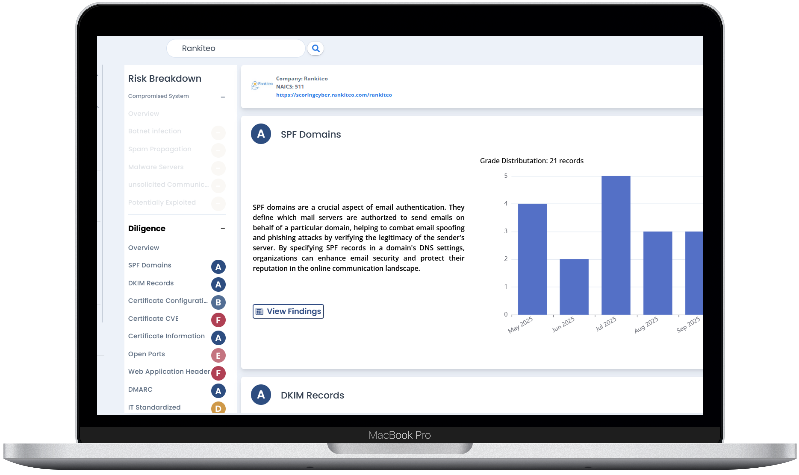
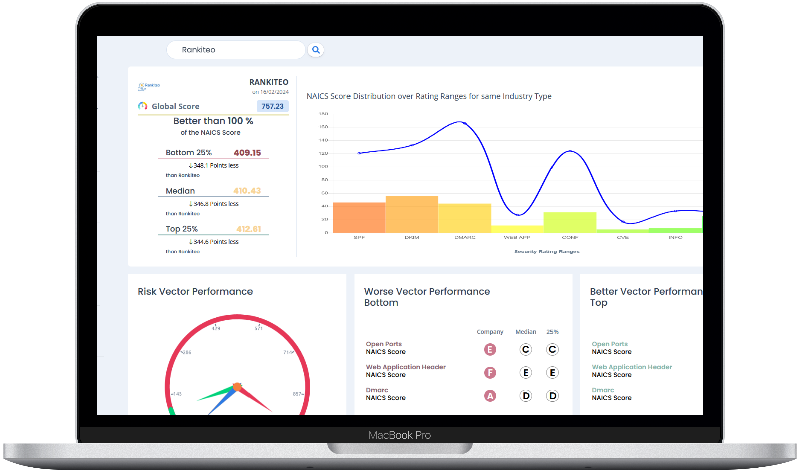
Explore insights on cybersecurity incidents, risk posture, and Rankiteo's assessments.
The official website of ASUS is http://www.asus.com.
According to Rankiteo, ASUS’s AI-generated cybersecurity score is 681, reflecting their Weak security posture.
According to Rankiteo, ASUS currently holds 0 security badges, indicating that no recognized compliance certifications are currently verified for the organization.
According to Rankiteo, ASUS is not certified under SOC 2 Type 1.
According to Rankiteo, ASUS does not hold a SOC 2 Type 2 certification.
According to Rankiteo, ASUS is not listed as GDPR compliant.
According to Rankiteo, ASUS does not currently maintain PCI DSS compliance.
According to Rankiteo, ASUS is not compliant with HIPAA regulations.
According to Rankiteo,ASUS is not certified under ISO 27001, indicating the absence of a formally recognized information security management framework.
ASUS operates primarily in the Computer Hardware Manufacturing industry.
ASUS employs approximately 16,061 people worldwide.
ASUS presently has no subsidiaries across any sectors.
ASUS’s official LinkedIn profile has approximately 987,332 followers.
ASUS is classified under the NAICS code 3341, which corresponds to Computer and Peripheral Equipment Manufacturing.
No, ASUS does not have a profile on Crunchbase.
Yes, ASUS maintains an official LinkedIn profile, which is actively utilized for branding and talent engagement, which can be accessed here: https://www.linkedin.com/company/asus.
As of December 11, 2025, Rankiteo reports that ASUS has experienced 5 cybersecurity incidents.
ASUS has an estimated 1,154 peer or competitor companies worldwide.
Incident Types: The types of cybersecurity incidents that have occurred include Vulnerability, Malware, Ransomware and Cyber Attack.
Detection and Response: The company detects and responds to cybersecurity incidents through an remediation measures with recommended users to apply the patch, and and containment measures with firmware update (version 1.1.2.3_1010) for dsl-ac51, dsl-n16, dsl-ac750, containment measures with disabling internet-accessible services (remote wan, port forwarding, ddns, vpn, dmz, port triggering, ftp) for unpatchable devices, containment measures with recommending strong passwords, avoiding credential reuse, and regular update checks, and remediation measures with firmware patch, remediation measures with security hardening guidance for end-of-life devices, and communication strategy with public advisory via asus support portal, communication strategy with networking page notifications, communication strategy with media outreach, and incident response plan activated with collaboration between securityscorecard and asus, and third party assistance with securityscorecard, and communication strategy with public disclosure via securityscorecard/asus report, communication strategy with media coverage (e.g., techradar), and containment measures with patch deployment (asus system control interface v3.1.48.0 for x64, v4.2.48.0 for arm), and remediation measures with urgent patch application via windows update, remediation measures with monitoring for suspicious activity, and communication strategy with public disclosure, communication strategy with user advisory for patch verification, and enhanced monitoring with recommended for exploitation attempts..
Title: ASUS Software Update Malware Distribution
Description: Hundreds of thousands of consumers of the Taiwan-based electronics giant ASUS received the malware through the company's dependable automatic software update programme after an attacker took over the company's server and used it to distribute it to devices.
Type: Malware Distribution
Attack Vector: Supply Chain Attack
Vulnerability Exploited: Compromised Update Server
Title: ASUS DriverHub Vulnerability
Description: A security researcher discovered a major flaw in ASUS DriverHub, a tool that automatically downloads and installs the latest drivers for ASUS devices. The flaw allowed threat actors to execute malicious code on affected devices remotely. Although the vulnerability was limited to motherboards and did not affect laptops, desktop computers, or other endpoints, ASUS strongly recommended users to apply the patch. The vulnerability window had been open for an indeterminate period, but there were no reports of abuse in the wild.
Type: Vulnerability Exploit
Attack Vector: Remote Code Execution
Vulnerability Exploited: Flaw in ASUS DriverHub
Title: Critical Authentication Bypass Flaw in ASUS DSL-Series Routers (CVE-2025-59367)
Description: ASUS has issued new firmware updates to fix a critical authentication bypass flaw (CVE-2025-59367) affecting multiple DSL-series routers (DSL-AC51, DSL-N16, DSL-AC750). The vulnerability allows unauthenticated attackers to remotely log into impacted routers without user interaction. ASUS urged users to immediately install firmware version 1.1.2.3_1010 or disable internet-facing services if patching is not possible. While no in-the-wild exploitation has been reported, router vulnerabilities are frequent targets for botnet operators (e.g., Vicious Trap's AyySSHush botnet exploiting older ASUS flaws CVE-2023-39780 and CVE-2021-32030).
Type: Vulnerability
Attack Vector: NetworkRemote
Vulnerability Exploited: CVE-2025-59367 (Authentication Bypass in DSL-series routers)
Title: Operation WrtHug: Thousands of expired ASUS routers hijacked into cyber-espionage botnet
Description: Thousands of expired ASUS routers are being hijacked and assimilated into a botnet ('Operation WrtHug') used as infrastructure for cyber-espionage operations. Chinese state-sponsored actors exploited multiple n-day vulnerabilities (CVE-2023-41345, CVE-2023-41346, CVE-2023-41347, CVE-2023-41348, CVE-2024-12912, CVE-2025-2492) to deploy a self-signed TLS certificate with a 100-year expiration date. The compromised routers form a relay network, primarily in Taiwan and Southeast Asia, enabling espionage traffic routing, origin obfuscation, and resilient C2 infrastructure for attacks against high-value geopolitical targets.
Type: botnet
Attack Vector: exploitation of n-day vulnerabilitiesend-of-life (EOL) device targetingself-signed TLS certificate abuse (100-year validity)
Vulnerability Exploited: CVE-2023-41345CVE-2023-41346CVE-2023-41347CVE-2023-41348CVE-2024-12912CVE-2025-2492
Threat Actor: Chinese state-sponsored actors
Motivation: cyber-espionagegeopolitical targetingresilient C2 infrastructure
Title: Critical Privilege Escalation Vulnerability in ASUS MyASUS Application (CVE-2025-59373)
Description: ASUS has disclosed a critical security vulnerability (CVE-2025-59373, CVSS 8.5) in its MyASUS application, enabling local attackers to escalate privileges to SYSTEM-level access on affected Windows devices. The flaw resides in the ASUS System Control Interface Service, a core component managing hardware settings. Exploitation requires local access with low privileges but grants full system control, posing high risks for confidentiality, integrity, and availability. Patches (v3.1.48.0 for x64, v4.2.48.0 for ARM) are available via Windows Update. Organizations are urged to prioritize deployment due to the high-severity rating and potential for lateral network intrusion in corporate environments.
Type: Vulnerability
Attack Vector: Local
Vulnerability Exploited: Cve Id: CVE-2025-59373, Cvss Score: 8.5 (High), Affected Component: ASUS System Control Interface Service (MyASUS), Local accessLow privilegesAttack Complexity: Low, User Interaction Required: False.
Title: Everest Ransomware Group Claims ASUS Breach
Description: A new claim by the Everest ransomware group suggests that ASUS, one of the world’s largest hardware and electronics companies, has been compromised. The group claims to possess more than 1TB of stolen data, including camera source code for ASUS devices with built-in cameras. ASUS has been given a 21-hour deadline to respond via Qtox, an encrypted messaging platform.
Type: Ransomware
Threat Actor: Everest Ransomware Group
Motivation: Extortion
Common Attack Types: The most common types of attacks the company has faced is Vulnerability.
Identification of Attack Vectors: The company identifies the attack vectors used in incidents through Compromised Update Server, Improper access request validation in router firmware and exploited n-day vulnerabilities in ASUS routers.

Systems Affected: Hundreds of thousands of devices

Systems Affected: Motherboards
Systems Affected: ASUS DSL-AC51ASUS DSL-N16ASUS DSL-AC750Potentially other DSL-series routers
Operational Impact: Unauthorized remote access to router management interfacesRisk of router hijacking for botnets/DDoS campaigns
Brand Reputation Impact: Potential erosion of trust due to unpatched vulnerabilitiesAssociation with botnet risks (e.g., AyySSHush)
Systems Affected: thousands of ASUS routers
Operational Impact: routers repurposed as relay nodes for espionage trafficobfuscation of threat actor originpotential staging for high-value attacks
Brand Reputation Impact: potential reputational damage to ASUS due to exploited EOL devices
Systems Affected: ASUS personal computers (desktops, laptops, NUC systems, All-in-One PCs) running MyASUS
Operational Impact: High (potential for arbitrary code execution, malware installation, lateral network movement)
Brand Reputation Impact: Potential risk due to high-severity vulnerability

Data Compromised: 1TB of data, including camera source code
Commonly Compromised Data Types: The types of data most commonly compromised in incidents are Proprietary firmware/software and camera source code.
Entity Name: ASUS
Entity Type: Corporation
Industry: Electronics
Location: Taiwan
Size: Large
Customers Affected: Hundreds of thousands
Entity Name: ASUS
Entity Type: Organization
Industry: Technology
Entity Name: ASUS
Entity Type: Manufacturer
Industry: Technology/Hardware
Location: Taiwan (HQ)
Customers Affected: Users of ASUS DSL-AC51, DSL-N16, DSL-AC750 routers (and potentially other DSL-series models)
Entity Name: ASUS
Entity Type: technology manufacturer
Industry: consumer electronics/networking
Location: Taiwan
Customers Affected: thousands (router owners)
Entity Name: Router owners (individuals/organizations)
Entity Type: individuals, businesses, government entities
Location: TaiwanSoutheast Asia
Entity Name: ASUS
Entity Type: Corporation
Industry: Technology (Hardware/Software)
Location: Global
Customers Affected: Millions of ASUS computer users worldwide
Entity Name: ASUS
Entity Type: Corporation
Industry: Hardware and Electronics
Size: Large
Remediation Measures: Recommended users to apply the patch
Incident Response Plan Activated: True
Containment Measures: Firmware update (version 1.1.2.3_1010) for DSL-AC51, DSL-N16, DSL-AC750Disabling internet-accessible services (remote WAN, port forwarding, DDNS, VPN, DMZ, port triggering, FTP) for unpatchable devicesRecommending strong passwords, avoiding credential reuse, and regular update checks
Remediation Measures: Firmware patchSecurity hardening guidance for end-of-life devices
Communication Strategy: Public advisory via ASUS support portalNetworking page notificationsMedia outreach
Incident Response Plan Activated: ['collaboration between SecurityScorecard and ASUS']
Third Party Assistance: Securityscorecard.
Communication Strategy: public disclosure via SecurityScorecard/ASUS reportmedia coverage (e.g., TechRadar)
Containment Measures: Patch deployment (ASUS System Control Interface v3.1.48.0 for x64, v4.2.48.0 for ARM)
Remediation Measures: Urgent patch application via Windows UpdateMonitoring for suspicious activity
Communication Strategy: Public disclosureUser advisory for patch verification
Enhanced Monitoring: Recommended for exploitation attempts
Incident Response Plan: The company's incident response plan is described as collaboration between SecurityScorecard and ASUS, .
Third-Party Assistance: The company involves third-party assistance in incident response through SecurityScorecard, .
Data Encryption: ['self-signed TLS certificate (100-year validity) deployed on routers']
Type of Data Compromised: Proprietary firmware/software, camera source code
Sensitivity of Data: High (proprietary source code)
Data Exfiltration: Yes
Prevention of Data Exfiltration: The company takes the following measures to prevent data exfiltration: Recommended users to apply the patch, Firmware patch, Security hardening guidance for end-of-life devices, , Urgent patch application via Windows Update, Monitoring for suspicious activity, .
Handling of PII Incidents: The company handles incidents involving personally identifiable information (PII) through by firmware update (version 1.1.2.3_1010) for dsl-ac51, dsl-n16, dsl-ac750, disabling internet-accessible services (remote wan, port forwarding, ddns, vpn, dmz, port triggering, ftp) for unpatchable devices, recommending strong passwords, avoiding credential reuse, and regular update checks, , patch deployment (asus system control interface v3.1.48.0 for x64, v4.2.48.0 for arm) and .
Lessons Learned: Router vulnerabilities are high-value targets for botnet operators (e.g., Vicious Trap's AyySSHush campaign)., End-of-life hardware poses persistent risks if not properly secured or decommissioned., Proactive firmware updates and service hardening are critical for mitigating authentication bypass flaws.
Lessons Learned: End-of-life (EOL) devices pose significant risks if left unpatched or in use., State-sponsored actors leverage n-day vulnerabilities in legacy systems for espionage infrastructure., Long-lived certificates (e.g., 100-year TLS) can serve as indicators of sophisticated, persistent campaigns., Geopolitical alignment of compromised assets (e.g., Taiwan/Southeast Asia) highlights strategic targeting.
Recommendations: Immediately apply firmware updates for affected ASUS DSL-series routers., Disable all internet-facing services (remote WAN, port forwarding, etc.) if patching is not feasible., Use strong, unique passwords for router administration and Wi-Fi networks., Regularly check for firmware updates and avoid credential reuse., Monitor for suspicious activity (e.g., unauthorized access, botnet C2 traffic)., Replace end-of-life routers with supported models where possible.Immediately apply firmware updates for affected ASUS DSL-series routers., Disable all internet-facing services (remote WAN, port forwarding, etc.) if patching is not feasible., Use strong, unique passwords for router administration and Wi-Fi networks., Regularly check for firmware updates and avoid credential reuse., Monitor for suspicious activity (e.g., unauthorized access, botnet C2 traffic)., Replace end-of-life routers with supported models where possible.Immediately apply firmware updates for affected ASUS DSL-series routers., Disable all internet-facing services (remote WAN, port forwarding, etc.) if patching is not feasible., Use strong, unique passwords for router administration and Wi-Fi networks., Regularly check for firmware updates and avoid credential reuse., Monitor for suspicious activity (e.g., unauthorized access, botnet C2 traffic)., Replace end-of-life routers with supported models where possible.Immediately apply firmware updates for affected ASUS DSL-series routers., Disable all internet-facing services (remote WAN, port forwarding, etc.) if patching is not feasible., Use strong, unique passwords for router administration and Wi-Fi networks., Regularly check for firmware updates and avoid credential reuse., Monitor for suspicious activity (e.g., unauthorized access, botnet C2 traffic)., Replace end-of-life routers with supported models where possible.Immediately apply firmware updates for affected ASUS DSL-series routers., Disable all internet-facing services (remote WAN, port forwarding, etc.) if patching is not feasible., Use strong, unique passwords for router administration and Wi-Fi networks., Regularly check for firmware updates and avoid credential reuse., Monitor for suspicious activity (e.g., unauthorized access, botnet C2 traffic)., Replace end-of-life routers with supported models where possible.Immediately apply firmware updates for affected ASUS DSL-series routers., Disable all internet-facing services (remote WAN, port forwarding, etc.) if patching is not feasible., Use strong, unique passwords for router administration and Wi-Fi networks., Regularly check for firmware updates and avoid credential reuse., Monitor for suspicious activity (e.g., unauthorized access, botnet C2 traffic)., Replace end-of-life routers with supported models where possible.
Recommendations: Replace or decommission EOL networking devices to eliminate attack surfaces., Monitor for unusual certificate lifetimes (e.g., 100-year TLS) as potential IoCs., Implement network segmentation to limit lateral movement via compromised routers., Enhance detection for ORB (Operational Relay Box)-like traffic patterns., Public-private collaboration for threat intelligence sharing (e.g., ASUS-SecurityScorecard model).Replace or decommission EOL networking devices to eliminate attack surfaces., Monitor for unusual certificate lifetimes (e.g., 100-year TLS) as potential IoCs., Implement network segmentation to limit lateral movement via compromised routers., Enhance detection for ORB (Operational Relay Box)-like traffic patterns., Public-private collaboration for threat intelligence sharing (e.g., ASUS-SecurityScorecard model).Replace or decommission EOL networking devices to eliminate attack surfaces., Monitor for unusual certificate lifetimes (e.g., 100-year TLS) as potential IoCs., Implement network segmentation to limit lateral movement via compromised routers., Enhance detection for ORB (Operational Relay Box)-like traffic patterns., Public-private collaboration for threat intelligence sharing (e.g., ASUS-SecurityScorecard model).Replace or decommission EOL networking devices to eliminate attack surfaces., Monitor for unusual certificate lifetimes (e.g., 100-year TLS) as potential IoCs., Implement network segmentation to limit lateral movement via compromised routers., Enhance detection for ORB (Operational Relay Box)-like traffic patterns., Public-private collaboration for threat intelligence sharing (e.g., ASUS-SecurityScorecard model).Replace or decommission EOL networking devices to eliminate attack surfaces., Monitor for unusual certificate lifetimes (e.g., 100-year TLS) as potential IoCs., Implement network segmentation to limit lateral movement via compromised routers., Enhance detection for ORB (Operational Relay Box)-like traffic patterns., Public-private collaboration for threat intelligence sharing (e.g., ASUS-SecurityScorecard model).
Recommendations: Apply security updates (v3.1.48.0 for x64, v4.2.48.0 for ARM) immediately via Windows Update, Prioritize patch deployment in corporate environments to mitigate lateral movement risks, Monitor systems for signs of exploitation (e.g., unauthorized privilege escalation), Verify installed MyASUS version via Settings > AboutApply security updates (v3.1.48.0 for x64, v4.2.48.0 for ARM) immediately via Windows Update, Prioritize patch deployment in corporate environments to mitigate lateral movement risks, Monitor systems for signs of exploitation (e.g., unauthorized privilege escalation), Verify installed MyASUS version via Settings > AboutApply security updates (v3.1.48.0 for x64, v4.2.48.0 for ARM) immediately via Windows Update, Prioritize patch deployment in corporate environments to mitigate lateral movement risks, Monitor systems for signs of exploitation (e.g., unauthorized privilege escalation), Verify installed MyASUS version via Settings > AboutApply security updates (v3.1.48.0 for x64, v4.2.48.0 for ARM) immediately via Windows Update, Prioritize patch deployment in corporate environments to mitigate lateral movement risks, Monitor systems for signs of exploitation (e.g., unauthorized privilege escalation), Verify installed MyASUS version via Settings > About
Key Lessons Learned: The key lessons learned from past incidents are Router vulnerabilities are high-value targets for botnet operators (e.g., Vicious Trap's AyySSHush campaign).,End-of-life hardware poses persistent risks if not properly secured or decommissioned.,Proactive firmware updates and service hardening are critical for mitigating authentication bypass flaws.End-of-life (EOL) devices pose significant risks if left unpatched or in use.,State-sponsored actors leverage n-day vulnerabilities in legacy systems for espionage infrastructure.,Long-lived certificates (e.g., 100-year TLS) can serve as indicators of sophisticated, persistent campaigns.,Geopolitical alignment of compromised assets (e.g., Taiwan/Southeast Asia) highlights strategic targeting.
Implemented Recommendations: The company has implemented the following recommendations to improve cybersecurity: Monitor systems for signs of exploitation (e.g., unauthorized privilege escalation), Prioritize patch deployment in corporate environments to mitigate lateral movement risks, Verify installed MyASUS version via Settings > About, Apply security updates (v3.1.48.0 for x64 and v4.2.48.0 for ARM) immediately via Windows Update.
Source: ASUS Security Advisory
Source: CISA KEV Catalog (CVE-2023-39780, CVE-2021-32030)
URL: https://www.cisa.gov/known-exploited-vulnerabilities-catalog
Source: GreyNoise/Sekoia Report on Vicious Trap (AyySSHush Botnet)
Source: TechRadar
Source: SecurityScorecard & ASUS joint report
Source: ASUS Security Advisory
Source: Hackread.com
Additional Resources: Stakeholders can find additional resources on cybersecurity best practices at and Source: ASUS Security Advisory, and Source: CISA KEV Catalog (CVE-2023-39780, CVE-2021-32030)Url: https://www.cisa.gov/known-exploited-vulnerabilities-catalog, and Source: GreyNoise/Sekoia Report on Vicious Trap (AyySSHush Botnet), and Source: TechRadar, and Source: SecurityScorecard & ASUS joint report, and Source: ASUS Security Advisory, and Source: Hackread.com.
Investigation Status: Ongoing (no confirmed in-the-wild exploitation reported)
Investigation Status: ongoing (disclosed by SecurityScorecard/ASUS)
Investigation Status: Disclosed; Patches released
Investigation Status: Ongoing
Communication of Investigation Status: The company communicates the status of incident investigations to stakeholders through Public Advisory Via Asus Support Portal, Networking Page Notifications, Media Outreach, Public Disclosure Via Securityscorecard/Asus Report, Media Coverage (E.G., Techradar), Public Disclosure and User Advisory For Patch Verification.
Stakeholder Advisories: Asus Support Portal Notifications, Public Security Bulletin.
Customer Advisories: Install firmware version 1.1.2.3_1010 immediately.Disable internet-exposed services if unable to patch.Follow security hardening guidelines for end-of-life devices.
Customer Advisories: ASUS likely issued advisories for affected router models (4G-AC55U, 4G-AC860U, DSL-AC68U, GT-AC5300, GT-AX11000, RT-AC1200HP, RT-AC1300GPLUS, RT-AC1300UHP)
Stakeholder Advisories: Users and organizations advised to update immediately
Customer Advisories: Public notification issued with patch instructions
Advisories Provided: The company provides the following advisories to stakeholders and customers following an incident: were Asus Support Portal Notifications, Public Security Bulletin, Install Firmware Version 1.1.2.3 1010 Immediately., Disable Internet-Exposed Services If Unable To Patch., Follow Security Hardening Guidelines For End-Of-Life Devices., , Asus Likely Issued Advisories For Affected Router Models (4G-Ac55U, 4G-Ac860U, Dsl-Ac68U, Gt-Ac5300, Gt-Ax11000, Rt-Ac1200Hp, Rt-Ac1300Gplus, Rt-Ac1300Uhp), , Users and organizations advised to update immediately and Public notification issued with patch instructions.
Entry Point: Compromised Update Server
Entry Point: Improper Access Request Validation In Router Firmware,
High Value Targets: Router Management Interfaces, Potential For Botnet Recruitment,
Data Sold on Dark Web: Router Management Interfaces, Potential For Botnet Recruitment,
Entry Point: Exploited N-Day Vulnerabilities In Asus Routers,
Backdoors Established: ['self-signed TLS certificate for persistent C2']
High Value Targets: Geopolitical Entities In Taiwan/Southeast Asia,
Data Sold on Dark Web: Geopolitical Entities In Taiwan/Southeast Asia,
Root Causes: Improper Validation Of Access Requests In Dsl-Series Router Firmware,
Corrective Actions: Firmware Patch To Block Authentication Bypass (Version 1.1.2.3 1010)., Security Guidance For Unpatchable/End-Of-Life Devices., Public Awareness Campaign On Router Hardening.,
Root Causes: Use Of Eol Routers With Unpatched N-Day Vulnerabilities, Lack Of Automatic Updates Or User Patching For Legacy Devices, Abuse Of Trusted Firmware (Asuswrt) For Malicious Purposes,
Root Causes: Privilege Escalation Vulnerability In Asus System Control Interface Service,
Corrective Actions: Patch Release (V3.1.48.0, V4.2.48.0), Public Disclosure And Update Advisory,
Post-Incident Analysis Process: The company's process for conducting post-incident analysis is described as Securityscorecard, , Recommended for exploitation attempts.
Corrective Actions Taken: The company has taken the following corrective actions based on post-incident analysis: Firmware Patch To Block Authentication Bypass (Version 1.1.2.3 1010)., Security Guidance For Unpatchable/End-Of-Life Devices., Public Awareness Campaign On Router Hardening., , Patch Release (V3.1.48.0, V4.2.48.0), Public Disclosure And Update Advisory, .
Last Attacking Group: The attacking group in the last incident were an Chinese state-sponsored actors and Everest Ransomware Group.
Most Significant Data Compromised: The most significant data compromised in an incident were 1TB of data and including camera source code.
Most Significant System Affected: The most significant system affected in an incident were ASUS DSL-AC51ASUS DSL-N16ASUS DSL-AC750Potentially other DSL-series routers and thousands of ASUS routers and ASUS personal computers (desktops, laptops, NUC systems, All-in-One PCs) running MyASUS.
Third-Party Assistance in Most Recent Incident: The third-party assistance involved in the most recent incident was securityscorecard, .
Containment Measures in Most Recent Incident: The containment measures taken in the most recent incident were Firmware update (version 1.1.2.3_1010) for DSL-AC51, DSL-N16, DSL-AC750Disabling internet-accessible services (remote WAN, port forwarding, DDNS, VPN, DMZ, port triggering, FTP) for unpatchable devicesRecommending strong passwords, avoiding credential reuse, and regular update checks, Patch deployment (ASUS System Control Interface v3.1.48.0 for x64 and v4.2.48.0 for ARM).
Most Sensitive Data Compromised: The most sensitive data compromised in a breach were 1TB of data and including camera source code.
Most Significant Lesson Learned: The most significant lesson learned from past incidents was Geopolitical alignment of compromised assets (e.g., Taiwan/Southeast Asia) highlights strategic targeting.
Most Significant Recommendation Implemented: The most significant recommendation implemented to improve cybersecurity was Implement network segmentation to limit lateral movement via compromised routers., Public-private collaboration for threat intelligence sharing (e.g., ASUS-SecurityScorecard model)., Verify installed MyASUS version via Settings > About, Replace or decommission EOL networking devices to eliminate attack surfaces., Apply security updates (v3.1.48.0 for x64, v4.2.48.0 for ARM) immediately via Windows Update, Monitor for suspicious activity (e.g., unauthorized access, botnet C2 traffic)., Use strong, unique passwords for router administration and Wi-Fi networks., Enhance detection for ORB (Operational Relay Box)-like traffic patterns., Monitor systems for signs of exploitation (e.g., unauthorized privilege escalation), Disable all internet-facing services (remote WAN, port forwarding, etc.) if patching is not feasible., Immediately apply firmware updates for affected ASUS DSL-series routers., Prioritize patch deployment in corporate environments to mitigate lateral movement risks, Monitor for unusual certificate lifetimes (e.g., 100-year TLS) as potential IoCs., Regularly check for firmware updates and avoid credential reuse. and Replace end-of-life routers with supported models where possible..
Most Recent Source: The most recent source of information about an incident are ASUS Security Advisory, Hackread.com, SecurityScorecard & ASUS joint report, TechRadar, GreyNoise/Sekoia Report on Vicious Trap (AyySSHush Botnet), CISA KEV Catalog (CVE-2023-39780 and CVE-2021-32030).
Most Recent URL for Additional Resources: The most recent URL for additional resources on cybersecurity best practices is https://www.cisa.gov/known-exploited-vulnerabilities-catalog .
Current Status of Most Recent Investigation: The current status of the most recent investigation is Ongoing (no confirmed in-the-wild exploitation reported).
Most Recent Stakeholder Advisory: The most recent stakeholder advisory issued was ASUS support portal notifications, Public security bulletin, Users and organizations advised to update immediately, .
Most Recent Customer Advisory: The most recent customer advisory issued were an Install firmware version 1.1.2.3_1010 immediately.Disable internet-exposed services if unable to patch.Follow security hardening guidelines for end-of-life devices., ASUS likely issued advisories for affected router models (4G-AC55U, 4G-AC860U, DSL-AC68U, GT-AC5300, GT-AX11000, RT-AC1200HP, RT-AC1300GPLUS, RT-AC1300UHP) and Public notification issued with patch instructions.
Most Recent Entry Point: The most recent entry point used by an initial access broker was an Compromised Update Server.
Most Significant Root Cause: The most significant root cause identified in post-incident analysis was Improper validation of access requests in DSL-series router firmware, Use of EOL routers with unpatched n-day vulnerabilitiesLack of automatic updates or user patching for legacy devicesAbuse of trusted firmware (AsusWRT) for malicious purposes, Privilege escalation vulnerability in ASUS System Control Interface Service.
Most Significant Corrective Action: The most significant corrective action taken based on post-incident analysis was Firmware patch to block authentication bypass (version 1.1.2.3_1010).Security guidance for unpatchable/end-of-life devices.Public awareness campaign on router hardening., Patch release (v3.1.48.0, v4.2.48.0)Public disclosure and update advisory.
.png)
FreePBX Endpoint Manager is a module for managing telephony endpoints in FreePBX systems. Versions prior to 16.0.96 and 17.0.1 through 17.0.9 have a weak default password. By default, this is a 6 digit numeric value which can be brute forced. (This is the app_password parameter). Depending on local configuration, this password could be the extension, voicemail, user manager, DPMA or EPM phone admin password. This issue is fixed in versions 16.0.96 and 17.0.10.
Neuron is a PHP framework for creating and orchestrating AI Agents. In versions 2.8.11 and below, the MySQLWriteTool executes arbitrary SQL provided by the caller using PDO::prepare() + execute() without semantic restrictions. This is consistent with the name (“write tool”), but in an LLM/agent context it becomes a high-risk capability: prompt injection or indirect prompt manipulation can cause execution of destructive queries such as DROP TABLE, TRUNCATE, DELETE, ALTER, or privilege-related statements (subject to DB permissions). Deployments that expose an agent with MySQLWriteTool enabled to untrusted input and/or run the tool with a DB user that has broad privileges are impacted. This issue is fixed in version 2.8.12.
Neuron is a PHP framework for creating and orchestrating AI Agents. Versions 2.8.11 and below use MySQLSelectTool, which is vulnerable to Read-Only Bypass. MySQLSelectTool is intended to be a read-only SQL tool (e.g., for LLM agent querying, however, validation based on the first keyword (e.g., SELECT) and a forbidden-keyword list does not block file-writing constructs such as INTO OUTFILE / INTO DUMPFILE. As a result, an attacker who can influence the tool input (e.g., via prompt injection through a public agent endpoint) may write arbitrary files to the DB server if the MySQL/MariaDB account has the FILE privilege and server configuration permits writes to a useful location (e.g., a web-accessible directory). This issue is fixed in version 2.8.12.
Okta Java Management SDK facilitates interactions with the Okta management API. In versions 11.0.0 through 20.0.0, race conditions may arise from concurrent requests using the ApiClient class. This could cause a status code or response header from one request’s response to influence another request’s response. This issue is fixed in version 20.0.1.
The Auth0 Next.js SDK is a library for implementing user authentication in Next.js applications. When using versions 4.11.0 through 4.11.2 and 4.12.0, simultaneous requests on the same client may result in improper lookups in the TokenRequestCache for the request results. This issue is fixed in versions 4.11.2 and 4.12.1.

Get company history

Every week, Rankiteo analyzes billions of signals to give organizations a sharper, faster view of emerging risks. With deeper, more actionable intelligence at their fingertips, security teams can outpace threat actors, respond instantly to Zero-Day attacks, and dramatically shrink their risk exposure window.
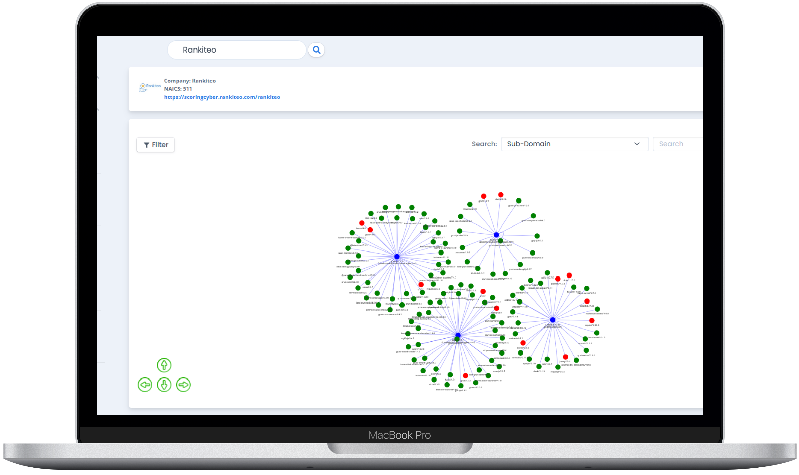
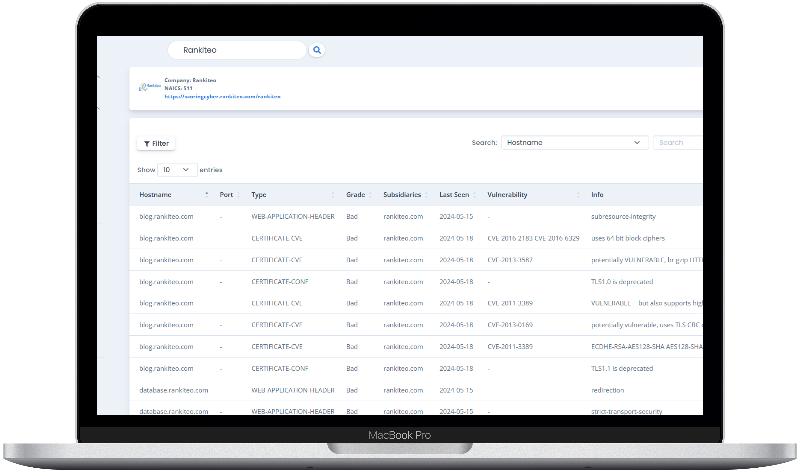
Identify exposed access points, detect misconfigured SSL certificates, and uncover vulnerabilities across the network infrastructure.
Gain visibility into the software components used within an organization to detect vulnerabilities, manage risk, and ensure supply chain security.
Monitor and manage all IT assets and their configurations to ensure accurate, real-time visibility across the company's technology environment.
Leverage real-time insights on active threats, malware campaigns, and emerging vulnerabilities to proactively defend against evolving cyberattacks.







 Rapid
Rapid