





Apple
Company Details
Linkedin ID:
apple
Website:
Employees number:
161,773
Number of followers:
17,979,824
NAICS:
334
Industry Type:
Homepage:
apple.com
IP Addresses:
9124
Company ID:
APP_4149912
Scan Status:
Completed

Apple Company CyberSecurity Posture
apple.com





We’re a diverse collective of thinkers and doers, continually reimagining what’s possible to help us all do what we love in new ways. And the same innovation that goes into our products also applies to our practices — strengthening our commitment to leave the world better than we found it. This is where your work can make a difference in people’s lives. Including your own. Apple is an equal opportunity employer that is committed to inclusion and diversity. Visit apple.com/careers to learn more.
Company Details
apple
161,773
17,979,824
334
apple.com
9124
APP_4149912
Completed
 Apple Risk Score (AI oriented)
Between 750 and 799
 Apple Global Score (TPRM)
XXXX
Description: On February 28, 2022, the Maine Office of the Attorney General reported a data breach involving Apple Inc. that occurred on November 29, 2021, due to insider wrongdoing. The breach affected a total of 12 individuals, including 1 resident, and potentially compromised financial account numbers or credit/debit card numbers in combination with security codes, access codes, passwords, or PINs.
Description: The customer data of Apple Inc. and Meta Platforms Inc. was leaked to hackers who impersonates themselves as law enforcement officials in a forged emergency data requests. The leaked information included the basic subscriber details, such as a customer’s address, phone number and IP address. The company soon blocked the known compromised accounts from making requests and worked with law enforcement to respond to incidents involving suspected fraudulent requests.
Description: Apple filed a lawsuit alleging that former employee **Ethan Lipnik** shared confidential iOS 26 development features with **Michael Ramacciotti**, who later disclosed them to leaker **Jon Prosser** via a FaceTime call. Ramacciotti accessed Lipnik’s **development iPhone** (containing unreleased trade secrets) while Lipnik was away, though he claims no prior conspiracy or payment agreement existed. Prosser later paid Ramacciotti **$650** post-call, allegedly without Ramacciotti’s expectation. The breach involved **unauthorized access to proprietary software**, including unreleased iOS features, which were subsequently leaked. Ramacciotti denies tracking Lipnik’s location or retaining further confidential data, but the incident exposed Apple’s **trade secrets**—specifically **unreleased iOS functionality**—to external parties, risking competitive disadvantage and reputational harm. Apple is pursuing legal action, with Prosser facing a **default judgment** for non-response.
Description: Apple fired Rivos, a startup firm for allegedly stealing its sensitive proprietary information of the firm through some of its employees. The former employees of Apple stole gigabytes of sensitive SoC specifications and design files at the request of Rivos as part of the recruiting process. According to the reports the startup wants to design chips that will compete with them. Apple filed the complaint to recover its trade secrets, to protect them from further disclosure.
Description: Apple's move to incorporate 'Apple Intelligence' with OpenAI's ChatGPT into iOS has raised security concerns, particularly from Elon Musk who labeled it as 'creepy spyware.' Despite the claims of a privacy breach, Apple ensures high privacy standards with their Private Cloud Compute system, designed to process core tasks on-device, and mask data origins during cloud-based AI computations. This architecture aims to prevent unauthorized data access, setting a new standard in AI privacy. However, potential threats to privacy and security cannot be overlooked, as data can be susceptible to interception or misuse when cloud processing is involved.
Description: The discovery of the new LightSpy spyware version targeting iPhones marks a significant security concern for Apple. This sophisticated and destructive malware compromises iOS devices, stealing sensitive information and hindering device functionality by blocking the boot-up process. The spyware utilizes old vulnerabilities to exfiltrate private data from widely-used apps, captures audio, and has a wide range of destructive capabilities including deleting user files and wiping browser history. The potential losses for individual users are substantial, ranging from personal privacy breaches to financial and data loss, while Apple's reputation for security may also suffer as a result.
Description: Apple has received a confidential order from the UK Home Office to create access into its Advanced Data Protection for iCloud, which may force them to compromise the end-to-end encryption feature or withdraw support in the UK. Complying with this could have implications for user privacy and data security worldwide if backdoor access is granted to government agencies.
Description: Unauthorized third parties had tampered the Apple’s Xcode software, a code library used by developers of Mac OS X and iOS applications, and published it on the net. Some developers downloaded it and used it to create their apps and uploaded the apps on Apple App Store. These apps could communicate with third parties details of your iOS devices and attempted to phish for iCloud passwords. Apple removed the tainted apps and started working with the developers to make sure they were using the proper version of Xcode to rebuild their apps.
Description: Mac owners who use the open source Transmission BitTorrent, hit by rare ransomware Attack, Spread via Transmission BitTorrent App. The attackers infected app’s official website, encrypted customers documents and data files. The attackers demanded a one bitcoin (approximately $400) ransom be paid and restore almost data’s safe.
Description: Google Project Zero researcher Jann Horn uncovered a sophisticated **vulnerability** in Apple’s **macOS and iOS** that allows attackers to bypass **Address Space Layout Randomization (ASLR)**—a critical memory protection mechanism—by exploiting **pointer leaks in the NSKeyedArchiver serialization framework**. The flaw leverages Apple’s **Core Foundation framework**, specifically manipulating **NSDictionary hash tables** and the **CFNull singleton** to extract memory addresses through deserialization and re-serialization of attacker-controlled data. While no real-world exploitation was confirmed, the technique could enable **highly reliable ASLR bypasses**, paving the way for advanced memory corruption attacks. Apple patched the issue in its **March 31, 2025, security update**, but the vulnerability underscores risks in **pointer-based hashing** and **serialization security**. The attack requires an app to process malicious serialized data, exposing memory layout details without traditional exploits like buffer overflows. Though theoretical, it highlights systemic weaknesses in framework-level security designs, particularly in **legacy serialization mechanisms** used across Apple’s ecosystem.
Description: A critical vulnerability in iOS (CVE-2025-24091) allowed any sandboxed application or widget extension to send low-level Darwin notifications that forced devices into a “Restore in Progress” state, triggering an endless reboot loop. The exploit—just a single line of code—bricked affected iPhones and iPads running versions prior to iOS/iPadOS 18.3, rendering them unusable without a full system restore. The persistent nature of the proof-of-concept attack, implemented in a widget that automatically relaunched on restart, meant devices would immediately reenter the reboot cycle upon each reboot, effectively denying service indefinitely. End users faced downtime, data loss risk if backups were outdated, increased support calls and repair costs, and potential reputational damage for enterprises relying on vulnerable devices. Apple released iOS 18.3 to address the issue with new entitlements on Darwin notifications and awarded a $17,500 bug bounty to the researcher.
Description: There is a flaw in the latest version of iOS that could fool iPhone users into visiting a malicious website rather than a safe one. With iOS 11 Apple introduced a new feature to its built-in camera app, giving users the ability to scan QR codes and access their content (such as URLs). In other words, just pointing the camera app on your iOS device at the QR code below will invite you to visit www.welivesecurity.com but it will show an unsuspicious-looking domain in the notification, but take an unwitting user to an entirely different URL in Safari.
Description: Apple disclosed a critical **zero-day vulnerability (CVE-2025-43300)** in its **Image I/O framework**, affecting iPhones, iPads, and Macs. The flaw, an **out-of-bounds write**, allows attackers to corrupt memory by exploiting maliciously crafted images, potentially executing arbitrary code with elevated privileges. While initially exploited in **highly targeted attacks against high-value individuals**, the risk escalates as threat actors typically repurpose such vulnerabilities for **mass exploitation** once patched. The flaw poses a severe risk of **unauthorized system access, data theft, or device compromise** if left unpatched. Apple released emergency updates (**iOS 18.6.2, iPadOS 18.6.2, macOS patches**) to mitigate the issue, urging all users to install them immediately. The vulnerability’s nature—enabling **memory manipulation and code execution**—makes it a prime tool for cybercriminals to escalate attacks, from espionage to large-scale malware campaigns.
Description: A critical sandbox escape vulnerability was discovered in multiple Apple operating systems, tracked as CVE-2025-31191. The flaw resides in the security-scoped bookmarks mechanism, which is intended to grant sandboxed applications persistent, user-approved access to files outside their containers. By exploiting a weak keychain protection model, a malicious process running inside any vulnerable sandboxed app can delete the legitimate signing secret for the ScopedBookmarkAgent and replace it with an attacker-controlled key. With the new key in place, the attacker can generate forged bookmarks for arbitrary files, inject them into the securebookmarks.plist, and bypass App Sandbox restrictions without additional user consent. This chain of actions enables unauthorized access to sensitive user data, including private documents and potentially system files, elevating privileges and paving the way for further exploitation. The proof-of-concept demonstrated by Microsoft showed an Office macro delivering the exploit, but any sandboxed app on macOS Ventura, Sequoia, Sonoma, iOS, iPadOS, or tvOS is at risk. Apple has released patches that improve state management to prevent key deletion and replacement, and users are urged to update immediately. Organizations leveraging Microsoft Defender for Endpoint can detect suspicious keychain manipulations related to this attack vector.
Description: In a sophisticated cyber incident, limited attacks involving a new variant of macOS malware, identified as XCSSET, have been reported. Discovered by Microsoft Threat Intelligence, this malware variant has altered Xcode projects and exhibited advanced obfuscation, persistence mechanisms, and infection methods. While initially activated in 2022, the XCSSET threat has continued to evolve, challenging cybersecurity efforts with its enhanced techniques for encoding payloads and making it difficult to trace and understand the intent of obfuscated module names. Persistent attacks have been orchestrated using methods such as 'zshrc' to execute files in new shell sessions and 'dock' to replace legitimate Launchpad apps with malicious ones. The impact of this malware predominantly threatens the security of developers' environments and the integrity of software supply chains, potentially resulting in the compromise of data and the disruption of developer operations.
Description: A zero-click attack leveraging a newly disclosed Messages vulnerability (CVE-2025-43200) has infected the iPhones of two European journalists with Paragon's Graphite mercenary spyware. The attack, which occurred in January and early February 2025, exploited a logic issue triggered when processing a maliciously crafted photo or video shared via an iCloud Link. The vulnerability was fixed in iOS 18.3.1, released on February 10. Apple acknowledged that this issue may have been exploited in a sophisticated attack against specific targeted individuals. Users who have upgraded to iOS 18.3.1 and later versions are safe from this attack. High-risk users are advised to enable Lockdown Mode and reboot their devices daily to minimize the attack surface.


Apple has 1742.11% more incidents than the average of same-industry companies with at least one recorded incident.
Apple has 797.44% more incidents than the average of all companies with at least one recorded incident.
Apple reported 7 incidents this year: 0 cyber attacks, 0 ransomware, 5 vulnerabilities, 2 data breaches, compared to industry peers with at least 1 incident.
Apple cyber incidents detection timeline including parent company and subsidiaries

We’re a diverse collective of thinkers and doers, continually reimagining what’s possible to help us all do what we love in new ways. And the same innovation that goes into our products also applies to our practices — strengthening our commitment to leave the world better than we found it. This is where your work can make a difference in people’s lives. Including your own. Apple is an equal opportunity employer that is committed to inclusion and diversity. Visit apple.com/careers to learn more.

Step into the innovative world of LG Electronics. As a global leader in technology, LG Electronics is dedicated to creating innovative solutions for a better life. Our brand promise, 'Life's Good', embodies our commitment to ensuring a happier, better life for all. With a rich history spanning ov

As part of the Lenovo family, Motorola Mobility is creating innovative smartphones and accessories designed with the consumer in mind. That’s why we’re looking for the thinkers, innovators and problem solvers who believe in working together to challenge the status quo. If you share our commitment to

Headquartered in Stamford, Connecticut, HARMAN (harman.com) designs and engineers connected products and solutions for automakers, consumers, and enterprises worldwide, including connected car systems, audio and visual products, enterprise automation solutions; and services supporting the Internet o

Samsung Electronics is a global leader in technology, opening new possibilities for people everywhere. Through relentless innovation and discovery, we are transforming the worlds of TVs, smartphones, wearable devices, tablets, digital appliances, network systems, medical devices, semiconductors and
Voltas is the No. 1* Room Air Conditioner Brand in India. Apart from ACs, Voltas offers a wide range of cooling products including Air Coolers, Commercial Refrigeration, Water Coolers and Water Dispensers. Apart from being the leaders in consumer products, Voltas is also one of the world's premier e
.png)
The growing firm has captured six companies so far this year, and has not called time on its acquisition spree by any means.
Apple warns “targeted attacks” are now being deployed to gain access to user accounts. These hackers “use sophisticated tactics to persuade...
Popular iPhone app and delivery service DoorDash, has confirmed that hackers have stolen personal information, and is informing those...
Apple users must update their devices immediately. India's cybersecurity agency, CERT‑In, has issued a high-severity security warning.
Arnold Davick, host of 2-Minute Tech Briefing, is a journalist and multimedia storyteller with more than a decade of experience reporting in the New York market...
The UK is to investigate whether hundreds of these Chinese-made Yutong buses can be controlled remotely by their manufacturer.
WhatsApp and Apple to alert users about spyware cyber attacks in the USA, enhancing security and protecting personal data from malicious threats.
By integrating Apple device management into their offerings, MSPs can capture new revenue, strengthen client relationships, and position...

Explore insights on cybersecurity incidents, risk posture, and Rankiteo's assessments.
The official website of Apple is http://www.apple.com/careers.
According to Rankiteo, Apple’s AI-generated cybersecurity score is 780, reflecting their Fair security posture.
According to Rankiteo, Apple currently holds 0 security badges, indicating that no recognized compliance certifications are currently verified for the organization.
According to Rankiteo, Apple is not certified under SOC 2 Type 1.
According to Rankiteo, Apple does not hold a SOC 2 Type 2 certification.
According to Rankiteo, Apple is not listed as GDPR compliant.
According to Rankiteo, Apple does not currently maintain PCI DSS compliance.
According to Rankiteo, Apple is not compliant with HIPAA regulations.
According to Rankiteo,Apple is not certified under ISO 27001, indicating the absence of a formally recognized information security management framework.
Apple operates primarily in the Computers and Electronics Manufacturing industry.
Apple employs approximately 161,773 people worldwide.
Apple presently has no subsidiaries across any sectors.
Apple’s official LinkedIn profile has approximately 17,979,824 followers.
Apple is classified under the NAICS code 334, which corresponds to Computer and Electronic Product Manufacturing.
No, Apple does not have a profile on Crunchbase.
Yes, Apple maintains an official LinkedIn profile, which is actively utilized for branding and talent engagement, which can be accessed here: https://www.linkedin.com/company/apple.
As of December 11, 2025, Rankiteo reports that Apple has experienced 16 cybersecurity incidents.
Apple has an estimated 1,921 peer or competitor companies worldwide.
Incident Types: The types of cybersecurity incidents that have occurred include Vulnerability, Ransomware, Cyber Attack and Breach.
Detection and Response: The company detects and responds to cybersecurity incidents through an containment measures with removed tainted apps from app store, and remediation measures with worked with developers to ensure they use the proper version of xcode, and and containment measures with blocked known compromised accounts from making requests, and remediation measures with apple released ios 18.3 to address the issue with new entitlements on darwin notifications, and remediation measures with users urged to update immediately, patches released by apple, and enhanced monitoring with organizations leveraging microsoft defender for endpoint can detect suspicious keychain manipulations, and third party assistance with citizen lab, third party assistance with amnesty international, third party assistance with access now, and remediation measures with update to ios 18.3.1, remediation measures with enable lockdown mode, remediation measures with reboot device daily, and and containment measures with release of security updates (ios 18.6.2, ipados 18.6.2, 17.7.10, and macos patches), containment measures with encouraging users to enable automatic updates, and remediation measures with patching the out-of-bounds write vulnerability in the image i/o framework, remediation measures with improved bounds checking, and recovery measures with user-guided software updates, recovery measures with system reboots to apply patches, and communication strategy with public advisory urging immediate updates, communication strategy with technical details shared about the vulnerability (cve-2025-43300), and incident response plan activated with yes (apple internal remediation), and third party assistance with google project zero (research disclosure), and containment measures with framework updates in march 2025 security release, and remediation measures with avoided object addresses as lookup keys in core foundation, remediation measures with implemented keyed hash functions to minimize pointer equality oracles, remediation measures with updated nskeyedarchiver serialization mechanisms, and communication strategy with security release notes (2025-03-31), and and containment measures with legal action (lawsuit), containment measures with pursuit of default judgment against prosser, and communication strategy with public disclosure via lawsuit filings, communication strategy with media statements (e.g., to the verge)..
Title: XcodeGhost Malware Incident
Description: Unauthorized third parties had tampered the Apple’s Xcode software, a code library used by developers of Mac OS X and iOS applications, and published it on the net. Some developers downloaded it and used it to create their apps and uploaded the apps on Apple App Store. These apps could communicate with third parties details of your iOS devices and attempted to phish for iCloud passwords. Apple removed the tainted apps and started working with the developers to make sure they were using the proper version of Xcode to rebuild their apps.
Type: Malware
Attack Vector: Supply Chain Compromise
Vulnerability Exploited: Compromised Software Development Tools
Threat Actor: Unknown
Motivation: Data Theft, Phishing
Title: Customer Data Leak via Forged Emergency Data Requests
Description: The customer data of Apple Inc. and Meta Platforms Inc. was leaked to hackers who impersonated themselves as law enforcement officials in forged emergency data requests. The leaked information included basic subscriber details, such as a customer’s address, phone number, and IP address. The companies blocked the known compromised accounts from making requests and worked with law enforcement to respond to incidents involving suspected fraudulent requests.
Type: Data Leak
Attack Vector: Social Engineering
Vulnerability Exploited: Impersonation of law enforcement officials
Threat Actor: Hackers
Motivation: Data Theft
Title: Apple vs. Rivos: Proprietary Information Theft
Description: Apple fired Rivos, a startup firm for allegedly stealing its sensitive proprietary information of the firm through some of its employees. The former employees of Apple stole gigabytes of sensitive SoC specifications and design files at the request of Rivos as part of the recruiting process. According to the reports the startup wants to design chips that will compete with them. Apple filed the complaint to recover its trade secrets, to protect them from further disclosure.
Type: Data Theft
Attack Vector: Insider Threat
Vulnerability Exploited: Human Factor
Threat Actor: Rivos (through former Apple employees)
Motivation: Competitive Advantage
Title: Ransomware Attack on Transmission BitTorrent App
Description: Mac owners who use the open source Transmission BitTorrent were hit by a rare ransomware attack. The attackers infected the app’s official website, encrypting customers' documents and data files. The attackers demanded a one bitcoin (approximately $400) ransom to restore the data.
Type: Ransomware
Attack Vector: Malicious Software Download
Vulnerability Exploited: Infection via official website
Motivation: Financial Gain
Title: iOS QR Code Vulnerability
Description: A flaw in the latest version of iOS could fool iPhone users into visiting a malicious website rather than a safe one. With iOS 11, Apple introduced a new feature to its built-in camera app, giving users the ability to scan QR codes and access their content (such as URLs). Pointing the camera app on your iOS device at a QR code will invite you to visit a URL but it will show an unsuspicious-looking domain in the notification, but take an unwitting user to an entirely different URL in Safari.
Type: Vulnerability Exploit
Attack Vector: QR Code Scanning
Vulnerability Exploited: URL Redirection
Title: Apple's Integration of 'Apple Intelligence' with OpenAI's ChatGPT Raises Security Concerns
Description: Apple's move to incorporate 'Apple Intelligence' with OpenAI's ChatGPT into iOS has raised security concerns, particularly from Elon Musk who labeled it as 'creepy spyware.' Despite the claims of a privacy breach, Apple ensures high privacy standards with their Private Cloud Compute system, designed to process core tasks on-device, and mask data origins during cloud-based AI computations. This architecture aims to prevent unauthorized data access, setting a new standard in AI privacy. However, potential threats to privacy and security cannot be overlooked, as data can be susceptible to interception or misuse when cloud processing is involved.
Type: Privacy Breach
Attack Vector: Cloud ProcessingData Interception
Vulnerability Exploited: Data susceptible to interception or misuse during cloud processing
Motivation: Unauthorized Data AccessPrivacy Breach
Title: LightSpy Spyware Targeting iPhones
Description: The discovery of the new LightSpy spyware version targeting iPhones marks a significant security concern for Apple. This sophisticated and destructive malware compromises iOS devices, stealing sensitive information and hindering device functionality by blocking the boot-up process. The spyware utilizes old vulnerabilities to exfiltrate private data from widely-used apps, captures audio, and has a wide range of destructive capabilities including deleting user files and wiping browser history. The potential losses for individual users are substantial, ranging from personal privacy breaches to financial and data loss, while Apple's reputation for security may also suffer as a result.
Type: Spyware
Attack Vector: Old vulnerabilities
Vulnerability Exploited: Old vulnerabilities
Motivation: Theft of sensitive informationData exfiltration
Title: UK Home Office Order to Compromise Apple iCloud Encryption
Description: Apple has received a confidential order from the UK Home Office to create access into its Advanced Data Protection for iCloud, which may force them to compromise the end-to-end encryption feature or withdraw support in the UK. Complying with this could have implications for user privacy and data security worldwide if backdoor access is granted to government agencies.
Type: Government Order
Vulnerability Exploited: End-to-End Encryption
Threat Actor: UK Home Office
Motivation: Government Surveillance
Title: XCSSET macOS Malware Incident
Description: Limited attacks involving a new variant of macOS malware, identified as XCSSET, have been reported. Discovered by Microsoft Threat Intelligence, this malware variant has altered Xcode projects and exhibited advanced obfuscation, persistence mechanisms, and infection methods. While initially activated in 2022, the XCSSET threat has continued to evolve, challenging cybersecurity efforts with its enhanced techniques for encoding payloads and making it difficult to trace and understand the intent of obfuscated module names. Persistent attacks have been orchestrated using methods such as 'zshrc' to execute files in new shell sessions and 'dock' to replace legitimate Launchpad apps with malicious ones. The impact of this malware predominantly threatens the security of developers' environments and the integrity of software supply chains, potentially resulting in the compromise of data and the disruption of developer operations.
Type: Malware
Attack Vector: Altered Xcode projectsObfuscationPersistence mechanismsInfection methods'zshrc' to execute files in new shell sessions'dock' to replace legitimate Launchpad apps with malicious ones
Title: iOS Vulnerability CVE-2025-24091 Leads to Endless Reboot Loop
Description: A critical vulnerability in iOS (CVE-2025-24091) allowed any sandboxed application or widget extension to send low-level Darwin notifications that forced devices into a 'Restore in Progress' state, triggering an endless reboot loop. The exploit—just a single line of code—bricked affected iPhones and iPads running versions prior to iOS/iPadOS 18.3, rendering them unusable without a full system restore. The persistent nature of the proof-of-concept attack, implemented in a widget that automatically relaunched on restart, meant devices would immediately reenter the reboot cycle upon each reboot, effectively denying service indefinitely. End users faced downtime, data loss risk if backups were outdated, increased support calls and repair costs, and potential reputational damage for enterprises relying on vulnerable devices. Apple released iOS 18.3 to address the issue with new entitlements on Darwin notifications and awarded a $17,500 bug bounty to the researcher.
Type: Denial of Service (DoS)
Attack Vector: Exploit of a vulnerability in iOS
Vulnerability Exploited: CVE-2025-24091
Title: CVE-2025-31191 Sandbox Escape Vulnerability in Apple Operating Systems
Description: A critical sandbox escape vulnerability was discovered in multiple Apple operating systems, tracked as CVE-2025-31191. The flaw resides in the security-scoped bookmarks mechanism, which is intended to grant sandboxed applications persistent, user-approved access to files outside their containers. By exploiting a weak keychain protection model, a malicious process running inside any vulnerable sandboxed app can delete the legitimate signing secret for the ScopedBookmarkAgent and replace it with an attacker-controlled key. With the new key in place, the attacker can generate forged bookmarks for arbitrary files, inject them into the securebookmarks.plist, and bypass App Sandbox restrictions without additional user consent. This chain of actions enables unauthorized access to sensitive user data, including private documents and potentially system files, elevating privileges and paving the way for further exploitation. The proof-of-concept demonstrated by Microsoft showed an Office macro delivering the exploit, but any sandboxed app on macOS Ventura, Sequoia, Sonoma, iOS, iPadOS, or tvOS is at risk. Apple has released patches that improve state management to prevent key deletion and replacement, and users are urged to update immediately. Organizations leveraging Microsoft Defender for Endpoint can detect suspicious keychain manipulations related to this attack vector.
Type: Sandbox Escape Vulnerability
Attack Vector: Office macroSandboxed app
Vulnerability Exploited: CVE-2025-31191
Motivation: Unauthorized access to sensitive user data, privilege escalation
Title: Zero-Click Attack on European Journalists with Paragon’s Graphite Spyware
Description: A zero-click attack leveraging a freshly disclosed Messages vulnerability (CVE-2025-43200) has infected the iPhones of two European journalists with Paragon’s Graphite mercenary spyware.
Date Detected: 2025-01-01
Date Publicly Disclosed: 2025-06-11
Type: Spyware
Attack Vector: Zero-click attack via maliciously crafted photo or video shared via an iCloud Link
Vulnerability Exploited: CVE-2025-43200
Threat Actor: Paragon operator
Motivation: Spying on high-value targets
Title: Apple Inc. Data Breach
Description: A data breach involving Apple Inc. occurred on November 29, 2021, due to insider wrongdoing. The breach affected a total of 12 individuals, including 1 resident, and potentially compromised financial account numbers or credit/debit card numbers in combination with security codes, access codes, passwords, or PINs.
Date Detected: 2022-02-28
Date Publicly Disclosed: 2022-02-28
Type: Data Breach
Attack Vector: Insider Wrongdoing
Threat Actor: Insider
Title: Apple Zero-Day Vulnerability (CVE-2025-43300) in Image I/O Framework
Description: Apple has released security updates for iPhones, iPads, and Macs to fix a zero-day vulnerability (CVE-2025-43300) in the Image I/O framework, which is reportedly being exploited in targeted attacks. The flaw is an out-of-bounds write vulnerability that allows attackers to manipulate device memory, potentially executing arbitrary code with elevated privileges. The vulnerability was initially used in highly sophisticated operations against high-value targets but risks broader exploitation as the patch becomes public. Users are urged to update to iOS 18.6.2, iPadOS 18.6.2 (or 17.7.10 for older models), and the latest macOS versions to mitigate the risk.
Type: Zero-day vulnerability
Attack Vector: Malicious image fileMemory manipulation
Vulnerability Exploited: CVE-2025-43300 (Image I/O framework - out-of-bounds write)
Motivation: Targeted attacks against high-value individualsPotential mass exploitation post-patch
Title: Apple macOS/iOS ASLR Bypass Vulnerability via NSKeyedArchiver Serialization
Description: Google Project Zero researcher Jann Horn disclosed a sophisticated vulnerability affecting Apple’s macOS and iOS operating systems that demonstrates how attackers could potentially bypass Address Space Layout Randomization (ASLR) protections through an innovative exploitation of pointer leaks in serialization processes. The vulnerability exploits pointer-keyed data structures within Apple’s NSKeyedArchiver serialization framework, creating a pathway for memory address disclosure via legitimate application functionality. The attack requires an application to deserialize attacker-controlled data, re-serialize the resulting objects, and return the serialized output to the attacker, revealing critical memory layout information. The technique leverages the CFNull singleton instance in Apple’s Core Foundation framework, using pointer addresses as hash codes when custom hash handlers are not implemented. While theoretical, this could be integrated with other exploitation methods to systematically defeat ASLR protections.
Date Publicly Disclosed: 2025-03-31
Date Resolved: 2025-03-31
Type: Vulnerability Disclosure
Attack Vector: Serialization ExploitPointer LeakNSKeyedArchiver ManipulationHash Table Abuse
Vulnerability Exploited: CVE-Unassigned (ASLR Bypass via NSKeyedArchiver Serialization Pointer Leak)
Motivation: ResearchTheoretical Exploitation
Title: Apple Trade Secret Theft Allegations Involving Jon Prosser and Michael Ramacciotti
Description: Apple sued leaker Jon Prosser and Michael Ramacciotti, alleging a coordinated scheme to break into an Apple development iPhone, steal trade secrets (iOS 26 features), and profit from the theft. Ramacciotti admitted accessing the device and sharing details with Prosser via FaceTime but denied pre-planning, location tracking, or knowing Prosser would record the call. He claimed the $650 payment from Prosser was unsolicited and received after the fact. Ramacciotti also stated he was unaware of the sensitivity of the iOS development version, as the original owner (former Apple employee Ethan Lipnik) had previously shown him features. Prosser has not responded to the lawsuit, and Apple is pursuing a default judgment against him.
Type: Trade Secret Theft
Attack Vector: Physical Access to DeviceInsider Threat (Former Employee)Social Engineering (Trust Exploitation)
Vulnerability Exploited: Lack of Physical Security for Development DeviceInsider Knowledge (Ethan Lipnik's Willingness to Share)No Technical Vulnerability (Human Factor)
Threat Actor: Michael RamacciottiJon Prosser
Motivation: Financial GainReputation/Influence (Leaking Exclusive Information)
Common Attack Types: The most common types of attacks the company has faced is Breach.
Identification of Attack Vectors: The company identifies the attack vectors used in incidents through Compromised Xcode software, Forged emergency data requests, Official website infection, Sandboxed app, iCloud Link, Malicious image files processed by vulnerable Image I/O framework and Physical Access to Unattended Development iPhone (Ethan Lipnik's Device).

Data Compromised: Ios device details, Icloud passwords
Systems Affected: iOS devicesApple App Store

Data Compromised: Subscriber details, Address, Phone number, Ip address
Data Compromised: Soc specifications, Design files
Legal Liabilities: Trade Secret Theft

Data Compromised: Documents, Data files
Systems Affected: Transmission BitTorrent App

Systems Affected: iOS Devices

Brand Reputation Impact: Potential negative impact due to privacy concerns
Data Compromised: Private data from widely-used apps, Audio, User files, Browser history
Systems Affected: iOS devices
Operational Impact: Blocking the boot-up process
Brand Reputation Impact: Apple's reputation for security may suffer
Data Compromised: End-to-End Encryption
Systems Affected: iCloud
Brand Reputation Impact: High
Data Compromised: Potential compromise of data
Systems Affected: Developers' environments and software supply chains
Operational Impact: Disruption of developer operations
Systems Affected: iPhones and iPads running versions prior to iOS/iPadOS 18.3
Downtime: Indefinite reboot loop
Operational Impact: Increased support calls and repair costs
Customer Complaints: Increased support calls
Brand Reputation Impact: Potential reputational damage for enterprises
Data Compromised: Sensitive user data, private documents, potentially system files
Systems Affected: macOS VenturaSequoiaSonomaiOSiPadOStvOS
Systems Affected: iPhones of two European journalists
Data Compromised: Financial account numbers, Credit/debit card numbers, Security codes, Access codes, Passwords, Pins
Payment Information Risk: True
Systems Affected: iPhonesiPadsMacs
Downtime: ['Potential system crashes due to memory corruption', 'Reboots required for patch installation']
Operational Impact: Risk of arbitrary code execution with elevated privilegesPotential for broader exploitation post-disclosure
Brand Reputation Impact: Potential erosion of trust if exploitation becomes widespread
Systems Affected: macOS (theoretical)iOS (theoretical)
Brand Reputation Impact: Minimal (theoretical vulnerability with no real-world exploitation)
Data Compromised: Ios 26 features (trade secrets), Development iphone contents
Systems Affected: Apple Development iPhone
Operational Impact: Potential Compromise of Unreleased Software FeaturesLegal and Reputational Risks
Brand Reputation Impact: Negative PublicityPerception of Weak Insider Threat Controls
Legal Liabilities: Lawsuit Against Prosser and RamacciottiPotential Default Judgment Against Prosser
Commonly Compromised Data Types: The types of data most commonly compromised in incidents are Ios Device Details, Icloud Passwords, , Subscriber Details, , Proprietary Information, Documents, Data Files, , Private Data From Widely-Used Apps, Audio, User Files, Browser History, , User Data, Sensitive user data, private documents, potentially system files, Financial Account Numbers, Credit/Debit Card Numbers, Security Codes, Access Codes, Passwords, Pins, , Trade Secrets (Ios 26 Features), Confidential Development Information and .
Entity Name: Apple
Entity Type: Organization
Industry: Technology
Location: Cupertino, California, USA
Entity Name: Apple Inc.
Entity Type: Corporation
Industry: Technology
Location: Cupertino, CA, USA
Size: Large
Entity Name: Meta Platforms Inc.
Entity Type: Corporation
Industry: Technology
Location: Menlo Park, CA, USA
Size: Large
Entity Name: Apple
Entity Type: Corporation
Industry: Technology
Location: Cupertino, California, USA
Size: Large
Entity Name: Transmission BitTorrent
Entity Type: Software Company
Industry: Technology
Customers Affected: Mac owners using Transmission BitTorrent
Entity Name: Apple
Entity Type: Corporation
Industry: Technology
Location: Cupertino, California, USA
Size: Large Enterprise
Entity Name: Apple
Entity Type: Corporation
Industry: Technology
Location: Global
Size: Large
Entity Name: Apple
Entity Type: Corporation
Industry: Technology
Location: Cupertino, California
Entity Name: Apple
Entity Type: Company
Industry: Technology
Location: Global
Size: Large
Entity Name: Apple
Entity Type: Company
Industry: Technology
Location: Global
Size: Large
Entity Name: Apple
Entity Type: Organization
Industry: Technology
Entity Name: Ciro Pellegrino
Entity Type: Journalist
Industry: Media
Location: Europe
Entity Name: Unnamed European journalist
Entity Type: Journalist
Industry: Media
Location: Europe
Entity Name: Apple Inc.
Entity Type: Corporation
Industry: Technology
Customers Affected: 12
Entity Name: Apple Inc.
Entity Type: Corporation
Industry: Technology (Consumer Electronics, Software)
Location: Global
Size: Large (Multinational)
Customers Affected: All users of iPhones, iPads, and Macs running unpatched versions of iOS, iPadOS, or macOS
Entity Name: Apple Inc.
Entity Type: Corporation
Industry: Technology
Location: Cupertino, California, USA
Size: Large (Multinational)
Entity Name: Apple Inc.
Entity Type: Corporation
Industry: Technology (Consumer Electronics, Software)
Location: Cupertino, California, USA
Size: Large (Multinational)
Containment Measures: Removed tainted apps from App Store
Remediation Measures: Worked with developers to ensure they use the proper version of Xcode
Containment Measures: Blocked known compromised accounts from making requests
Remediation Measures: Apple released iOS 18.3 to address the issue with new entitlements on Darwin notifications
Remediation Measures: Users urged to update immediately, patches released by Apple
Enhanced Monitoring: Organizations leveraging Microsoft Defender for Endpoint can detect suspicious keychain manipulations
Third Party Assistance: Citizen Lab, Amnesty International, Access Now.
Remediation Measures: Update to iOS 18.3.1Enable Lockdown ModeReboot device daily
Incident Response Plan Activated: True
Containment Measures: Release of security updates (iOS 18.6.2, iPadOS 18.6.2, 17.7.10, and macOS patches)Encouraging users to enable Automatic Updates
Remediation Measures: Patching the out-of-bounds write vulnerability in the Image I/O frameworkImproved bounds checking
Recovery Measures: User-guided software updatesSystem reboots to apply patches
Communication Strategy: Public advisory urging immediate updatesTechnical details shared about the vulnerability (CVE-2025-43300)
Incident Response Plan Activated: Yes (Apple internal remediation)
Third Party Assistance: Google Project Zero (research disclosure)
Containment Measures: Framework updates in March 2025 security release
Remediation Measures: Avoided object addresses as lookup keys in Core FoundationImplemented keyed hash functions to minimize pointer equality oraclesUpdated NSKeyedArchiver serialization mechanisms
Communication Strategy: Security release notes (2025-03-31)
Incident Response Plan Activated: True
Containment Measures: Legal Action (Lawsuit)Pursuit of Default Judgment Against Prosser
Communication Strategy: Public Disclosure via Lawsuit FilingsMedia Statements (e.g., to The Verge)
Incident Response Plan: The company's incident response plan is described as Yes (Apple internal remediation), .
Third-Party Assistance: The company involves third-party assistance in incident response through Citizen Lab, Amnesty International, Access Now, , Google Project Zero (research disclosure).
Type of Data Compromised: Ios device details, Icloud passwords
Type of Data Compromised: Subscriber details
Sensitivity of Data: Medium
Personally Identifiable Information: addressphone numberIP address
Type of Data Compromised: Proprietary Information
Sensitivity of Data: High
File Types Exposed: Design filesSpecifications
Type of Data Compromised: Private data from widely-used apps, Audio, User files, Browser history
Data Exfiltration: Private data from widely-used appsAudioUser filesBrowser history
Type of Data Compromised: User Data
Sensitivity of Data: High
Data Encryption: End-to-End Encryption
Type of Data Compromised: Sensitive user data, private documents, potentially system files
Sensitivity of Data: High
Type of Data Compromised: Financial account numbers, Credit/debit card numbers, Security codes, Access codes, Passwords, Pins
Number of Records Exposed: 12
Sensitivity of Data: High
Type of Data Compromised: Trade secrets (ios 26 features), Confidential development information
Sensitivity of Data: High (Unreleased Software Features)
Data Exfiltration: Screen Sharing via FaceTimePotential Video Recording by Prosser
Prevention of Data Exfiltration: The company takes the following measures to prevent data exfiltration: Worked with developers to ensure they use the proper version of Xcode, , Apple released iOS 18.3 to address the issue with new entitlements on Darwin notifications, Users urged to update immediately, patches released by Apple, Update to iOS 18.3.1, Enable Lockdown Mode, Reboot device daily, , Patching the out-of-bounds write vulnerability in the Image I/O framework, Improved bounds checking, , Avoided object addresses as lookup keys in Core Foundation, Implemented keyed hash functions to minimize pointer equality oracles, Updated NSKeyedArchiver serialization mechanisms, .
Handling of PII Incidents: The company handles incidents involving personally identifiable information (PII) through by removed tainted apps from app store, , blocked known compromised accounts from making requests, , release of security updates (ios 18.6.2, ipados 18.6.2, 17.7.10, and macos patches), encouraging users to enable automatic updates, , framework updates in march 2025 security release, , legal action (lawsuit), pursuit of default judgment against prosser and .
Data Recovery from Ransomware: The company recovers data encrypted by ransomware through User-guided software updates, System reboots to apply patches, .
Legal Actions: Lawsuit Filed
Regulations Violated: Trade Secret Laws (e.g., Defend Trade Secrets Act), Potential Violation of Apple's Internal Policies,
Legal Actions: Civil Lawsuit, Default Judgment Pursuit,
Ensuring Regulatory Compliance: The company ensures compliance with regulatory requirements through Lawsuit Filed, Civil Lawsuit, Default Judgment Pursuit, .
Lessons Learned: Users should update to iOS 18.3.1 and enable Lockdown Mode to minimize their attack surface.
Lessons Learned: Zero-day vulnerabilities in widely used frameworks (e.g., Image I/O) can have cascading risks beyond initial targeted attacks., Prompt patching is critical to prevent opportunistic mass exploitation post-disclosure., User education on enabling automatic updates can reduce exposure windows.
Lessons Learned: Pointer-based hashing in keyed data structures can create unexpected information disclosure channels, Serialization frameworks require rigorous security review for memory address leakage risks, ASLR bypass techniques can emerge from legitimate framework functionality, not just coding errors, Proactive vulnerability research (e.g., Project Zero) is critical for identifying theoretical attack vectors before real-world exploitation
Recommendations: Update to the latest patches released by Apple, use Microsoft Defender for Endpoint for detection
Recommendations: Users concerned about being targeted should consider enabling Lockdown Mode and rebooting their device daily.
Recommendations: Users should immediately update to iOS 18.6.2, iPadOS 18.6.2 (or 17.7.10 for older devices), and the latest macOS version., Enable Automatic Updates to ensure timely patch application., Exercise caution when opening image files from untrusted sources, as malicious images could exploit unpatched vulnerabilities., Organizations should prioritize patch management for Apple devices in their fleets., Consider deploying mobile security solutions (e.g., Malwarebytes) to mitigate post-exploitation risks.Users should immediately update to iOS 18.6.2, iPadOS 18.6.2 (or 17.7.10 for older devices), and the latest macOS version., Enable Automatic Updates to ensure timely patch application., Exercise caution when opening image files from untrusted sources, as malicious images could exploit unpatched vulnerabilities., Organizations should prioritize patch management for Apple devices in their fleets., Consider deploying mobile security solutions (e.g., Malwarebytes) to mitigate post-exploitation risks.Users should immediately update to iOS 18.6.2, iPadOS 18.6.2 (or 17.7.10 for older devices), and the latest macOS version., Enable Automatic Updates to ensure timely patch application., Exercise caution when opening image files from untrusted sources, as malicious images could exploit unpatched vulnerabilities., Organizations should prioritize patch management for Apple devices in their fleets., Consider deploying mobile security solutions (e.g., Malwarebytes) to mitigate post-exploitation risks.Users should immediately update to iOS 18.6.2, iPadOS 18.6.2 (or 17.7.10 for older devices), and the latest macOS version., Enable Automatic Updates to ensure timely patch application., Exercise caution when opening image files from untrusted sources, as malicious images could exploit unpatched vulnerabilities., Organizations should prioritize patch management for Apple devices in their fleets., Consider deploying mobile security solutions (e.g., Malwarebytes) to mitigate post-exploitation risks.Users should immediately update to iOS 18.6.2, iPadOS 18.6.2 (or 17.7.10 for older devices), and the latest macOS version., Enable Automatic Updates to ensure timely patch application., Exercise caution when opening image files from untrusted sources, as malicious images could exploit unpatched vulnerabilities., Organizations should prioritize patch management for Apple devices in their fleets., Consider deploying mobile security solutions (e.g., Malwarebytes) to mitigate post-exploitation risks.
Recommendations: Avoid using object addresses as lookup keys in system frameworks, Implement keyed hash functions to prevent pointer equality oracles, Conduct security audits of serialization/deserialization processes, Monitor for unusual patterns in serialized data payloads (e.g., crafted NSDictionary structures), Adopt memory-safe alternatives to pointer-based hashing where possibleAvoid using object addresses as lookup keys in system frameworks, Implement keyed hash functions to prevent pointer equality oracles, Conduct security audits of serialization/deserialization processes, Monitor for unusual patterns in serialized data payloads (e.g., crafted NSDictionary structures), Adopt memory-safe alternatives to pointer-based hashing where possibleAvoid using object addresses as lookup keys in system frameworks, Implement keyed hash functions to prevent pointer equality oracles, Conduct security audits of serialization/deserialization processes, Monitor for unusual patterns in serialized data payloads (e.g., crafted NSDictionary structures), Adopt memory-safe alternatives to pointer-based hashing where possibleAvoid using object addresses as lookup keys in system frameworks, Implement keyed hash functions to prevent pointer equality oracles, Conduct security audits of serialization/deserialization processes, Monitor for unusual patterns in serialized data payloads (e.g., crafted NSDictionary structures), Adopt memory-safe alternatives to pointer-based hashing where possibleAvoid using object addresses as lookup keys in system frameworks, Implement keyed hash functions to prevent pointer equality oracles, Conduct security audits of serialization/deserialization processes, Monitor for unusual patterns in serialized data payloads (e.g., crafted NSDictionary structures), Adopt memory-safe alternatives to pointer-based hashing where possible
Key Lessons Learned: The key lessons learned from past incidents are Users should update to iOS 18.3.1 and enable Lockdown Mode to minimize their attack surface.Zero-day vulnerabilities in widely used frameworks (e.g., Image I/O) can have cascading risks beyond initial targeted attacks.,Prompt patching is critical to prevent opportunistic mass exploitation post-disclosure.,User education on enabling automatic updates can reduce exposure windows.Pointer-based hashing in keyed data structures can create unexpected information disclosure channels,Serialization frameworks require rigorous security review for memory address leakage risks,ASLR bypass techniques can emerge from legitimate framework functionality, not just coding errors,Proactive vulnerability research (e.g., Project Zero) is critical for identifying theoretical attack vectors before real-world exploitation.
Implemented Recommendations: The company has implemented the following recommendations to improve cybersecurity: Users concerned about being targeted should consider enabling Lockdown Mode and rebooting their device daily., Update to the latest patches released by Apple and use Microsoft Defender for Endpoint for detection.
Source: Microsoft Threat Intelligence
Source: Citizen Lab
Source: Maine Office of the Attorney General
Date Accessed: 2022-02-28
Source: Apple Security Updates
Source: Malwarebytes Blog (Cybersecurity Advisory)
Source: Google Project Zero Blog
Source: Apple Security Release Notes (March 31, 2025)
Source: The Verge
Additional Resources: Stakeholders can find additional resources on cybersecurity best practices at and Source: Microsoft Threat Intelligence, and Source: Citizen Lab, and Source: Maine Office of the Attorney GeneralDate Accessed: 2022-02-28, and Source: Apple Security Updates, and Source: Malwarebytes Blog (Cybersecurity Advisory), and Source: Google Project Zero Blog, and Source: Apple Security Release Notes (March 31, 2025), and Source: The Verge.
Investigation Status: Ongoing
Investigation Status: Ongoing (Apple has acknowledged active exploitation but has not disclosed full details)
Investigation Status: Resolved (Vulnerability patched; no real-world exploitation identified)
Investigation Status: Ongoing (Lawsuit in Progress, Default Judgment Sought Against Prosser)
Communication of Investigation Status: The company communicates the status of incident investigations to stakeholders through Public Advisory Urging Immediate Updates, Technical Details Shared About The Vulnerability (Cve-2025-43300), Security Release Notes (2025-03-31), Public Disclosure Via Lawsuit Filings, Media Statements (E.G. and To The Verge).
Stakeholder Advisories: Public Advisory Released By Apple, Third-Party Cybersecurity Recommendations (E.G., Malwarebytes).
Customer Advisories: Urgent update notifications pushed to users via Software Update mechanismsGuidance provided on Apple’s support pages and through in-device prompts
Stakeholder Advisories: Apple Security Release Notes.
Customer Advisories: Users advised to update to latest macOS/iOS versions post-March 2025
Advisories Provided: The company provides the following advisories to stakeholders and customers following an incident: were Public Advisory Released By Apple, Third-Party Cybersecurity Recommendations (E.G., Malwarebytes), Urgent Update Notifications Pushed To Users Via Software Update Mechanisms, Guidance Provided On Apple’S Support Pages And Through In-Device Prompts, , Apple Security Release Notes, Users Advised To Update To Latest Macos/Ios Versions Post-March 2025 and .
Entry Point: Compromised Xcode software
Entry Point: Forged emergency data requests
Entry Point: Official website infection
Entry Point: Sandboxed app
Entry Point: iCloud Link
Entry Point: Malicious Image Files Processed By Vulnerable Image I/O Framework,
High Value Targets: Reportedly Used In Targeted Attacks Against High-Value Individuals Initially,
Data Sold on Dark Web: Reportedly Used In Targeted Attacks Against High-Value Individuals Initially,
Entry Point: Physical Access to Unattended Development iPhone (Ethan Lipnik's Device)
High Value Targets: Ios 26 Features, Apple Trade Secrets,
Data Sold on Dark Web: Ios 26 Features, Apple Trade Secrets,
Root Causes: Compromised software development tools
Root Causes: Government Order
Root Causes: Vulnerability in iOS allowing unauthorized Darwin notifications
Corrective Actions: Apple released iOS 18.3 with new entitlements on Darwin notifications
Root Causes: Weak keychain protection model
Corrective Actions: Patches released by Apple to improve state management
Root Causes: Vulnerability CVE-2025-43200
Corrective Actions: Update to iOS 18.3.1
Root Causes: Out-Of-Bounds Write Vulnerability In The Image I/O Framework Due To Insufficient Bounds Checking., Memory Corruption Enabling Arbitrary Code Execution With Elevated Privileges.,
Corrective Actions: Apple Implemented Improved Bounds Checking In The Image I/O Framework., Released Security Updates Across All Affected Platforms (Ios, Ipados, Macos)., Public Communication To Drive User Patching.,
Root Causes: Use Of Pointer Addresses As Hash Codes In Core Foundation When Custom Hash Handlers Absent, Predictable Memory Patterns In Cfnull Singleton Instance, Information Disclosure Via Serialization/Deserialization Cycles Of Nsdictionary Objects, Lack Of Input Validation For Attacker-Controlled Serialized Data,
Corrective Actions: Updated Core Foundation To Prevent Pointer Address Leakage In Hash Tables, Modified Nskeyedarchiver To Disrupt Serialization-Based Information Disclosure, Enhanced Security Reviews For Framework-Level Serialization Mechanisms,
Root Causes: Insufficient Physical Security For Development Devices, Lack Of Awareness/Training On Trade Secret Sensitivity, Insider Trust Exploitation,
Post-Incident Analysis Process: The company's process for conducting post-incident analysis is described as Organizations leveraging Microsoft Defender for Endpoint can detect suspicious keychain manipulations, Citizen Lab, Amnesty International, Access Now, , Google Project Zero (research disclosure).
Corrective Actions Taken: The company has taken the following corrective actions based on post-incident analysis: Apple released iOS 18.3 with new entitlements on Darwin notifications, Patches released by Apple to improve state management, Update to iOS 18.3.1, Apple Implemented Improved Bounds Checking In The Image I/O Framework., Released Security Updates Across All Affected Platforms (Ios, Ipados, Macos)., Public Communication To Drive User Patching., , Updated Core Foundation To Prevent Pointer Address Leakage In Hash Tables, Modified Nskeyedarchiver To Disrupt Serialization-Based Information Disclosure, Enhanced Security Reviews For Framework-Level Serialization Mechanisms, .
Last Ransom Demanded: The amount of the last ransom demanded was 1 Bitcoin (approximately $400).
Last Attacking Group: The attacking group in the last incident were an Unknown, Hackers, Rivos (through former Apple employees), UK Home Office, Paragon operator, Insider and Michael RamacciottiJon Prosser.
Most Recent Incident Detected: The most recent incident detected was on 2025-01-01.
Most Recent Incident Publicly Disclosed: The most recent incident publicly disclosed was on 2025-03-31.
Most Recent Incident Resolved: The most recent incident resolved was on 2025-03-31.
Most Significant Data Compromised: The most significant data compromised in an incident were iOS device details, iCloud passwords, , subscriber details, address, phone number, IP address, , SoC specifications, design files, , Documents, Data Files, , Private data from widely-used apps, Audio, User files, Browser history, , End-to-End Encryption, Potential compromise of data, Sensitive user data, private documents, potentially system files, financial account numbers, credit/debit card numbers, security codes, access codes, passwords, PINs, , iOS 26 Features (Trade Secrets), Development iPhone Contents and .
Most Significant System Affected: The most significant system affected in an incident was iOS devicesApple App Store and Transmission BitTorrent App and iOS Devices and iOS devices and and and and macOS VenturaSequoiaSonomaiOSiPadOStvOS and and iPhonesiPadsMacs and macOS (theoretical)iOS (theoretical) and Apple Development iPhone.
Third-Party Assistance in Most Recent Incident: The third-party assistance involved in the most recent incident was citizen lab, amnesty international, access now, , Google Project Zero (research disclosure).
Containment Measures in Most Recent Incident: The containment measures taken in the most recent incident were Removed tainted apps from App Store, Blocked known compromised accounts from making requests, Release of security updates (iOS 18.6.2, iPadOS 18.6.2, 17.7.10, and macOS patches)Encouraging users to enable Automatic Updates, Framework updates in March 2025 security release and Legal Action (Lawsuit)Pursuit of Default Judgment Against Prosser.
Most Sensitive Data Compromised: The most sensitive data compromised in a breach were SoC specifications, Audio, iOS device details, financial account numbers, phone number, iOS 26 Features (Trade Secrets), User files, Data Files, Documents, credit/debit card numbers, Sensitive user data, private documents, potentially system files, iCloud passwords, subscriber details, security codes, Development iPhone Contents, passwords, Potential compromise of data, PINs, design files, End-to-End Encryption, IP address, Private data from widely-used apps, Browser history, access codes and address.
Number of Records Exposed in Most Significant Breach: The number of records exposed in the most significant breach was 12.0.
Highest Ransom Demanded: The highest ransom demanded in a ransomware incident was 1 Bitcoin (approximately $400).
Most Significant Legal Action: The most significant legal action taken for a regulatory violation was Lawsuit Filed, Civil Lawsuit, Default Judgment Pursuit, .
Most Significant Lesson Learned: The most significant lesson learned from past incidents was Proactive vulnerability research (e.g., Project Zero) is critical for identifying theoretical attack vectors before real-world exploitation.
Most Significant Recommendation Implemented: The most significant recommendation implemented to improve cybersecurity was Implement keyed hash functions to prevent pointer equality oracles, Consider deploying mobile security solutions (e.g., Malwarebytes) to mitigate post-exploitation risks., Exercise caution when opening image files from untrusted sources, as malicious images could exploit unpatched vulnerabilities., Enable Automatic Updates to ensure timely patch application., Update to the latest patches released by Apple, use Microsoft Defender for Endpoint for detection, Organizations should prioritize patch management for Apple devices in their fleets., Users concerned about being targeted should consider enabling Lockdown Mode and rebooting their device daily., Monitor for unusual patterns in serialized data payloads (e.g., crafted NSDictionary structures), Avoid using object addresses as lookup keys in system frameworks, Users should immediately update to iOS 18.6.2, iPadOS 18.6.2 (or 17.7.10 for older devices), and the latest macOS version., Conduct security audits of serialization/deserialization processes and Adopt memory-safe alternatives to pointer-based hashing where possible.
Most Recent Source: The most recent source of information about an incident are Apple Security Release Notes (March 31, 2025), The Verge, Maine Office of the Attorney General, Apple Security Updates, Microsoft Threat Intelligence, Google Project Zero Blog, Malwarebytes Blog (Cybersecurity Advisory) and Citizen Lab.
Current Status of Most Recent Investigation: The current status of the most recent investigation is Ongoing.
Most Recent Stakeholder Advisory: The most recent stakeholder advisory issued was Public advisory released by Apple, Third-party cybersecurity recommendations (e.g., Malwarebytes), Apple Security Release Notes, .
Most Recent Customer Advisory: The most recent customer advisory issued were an Urgent update notifications pushed to users via Software Update mechanismsGuidance provided on Apple’s support pages and through in-device prompts and Users advised to update to latest macOS/iOS versions post-March 2025.
Most Recent Entry Point: The most recent entry point used by an initial access broker were an Sandboxed app, Forged emergency data requests, Official website infection, Compromised Xcode software, Physical Access to Unattended Development iPhone (Ethan Lipnik's Device) and iCloud Link.
Most Significant Root Cause: The most significant root cause identified in post-incident analysis was Compromised software development tools, Government Order, Vulnerability in iOS allowing unauthorized Darwin notifications, Weak keychain protection model, Vulnerability CVE-2025-43200, Out-of-bounds write vulnerability in the Image I/O framework due to insufficient bounds checking.Memory corruption enabling arbitrary code execution with elevated privileges., Use of pointer addresses as hash codes in Core Foundation when custom hash handlers absentPredictable memory patterns in CFNull singleton instanceInformation disclosure via serialization/deserialization cycles of NSDictionary objectsLack of input validation for attacker-controlled serialized data, Insufficient Physical Security for Development DevicesLack of Awareness/Training on Trade Secret SensitivityInsider Trust Exploitation.
Most Significant Corrective Action: The most significant corrective action taken based on post-incident analysis was Apple released iOS 18.3 with new entitlements on Darwin notifications, Patches released by Apple to improve state management, Update to iOS 18.3.1, Apple implemented improved bounds checking in the Image I/O framework.Released security updates across all affected platforms (iOS, iPadOS, macOS).Public communication to drive user patching., Updated Core Foundation to prevent pointer address leakage in hash tablesModified NSKeyedArchiver to disrupt serialization-based information disclosureEnhanced security reviews for framework-level serialization mechanisms.
.png)
FreePBX Endpoint Manager is a module for managing telephony endpoints in FreePBX systems. Versions prior to 16.0.96 and 17.0.1 through 17.0.9 have a weak default password. By default, this is a 6 digit numeric value which can be brute forced. (This is the app_password parameter). Depending on local configuration, this password could be the extension, voicemail, user manager, DPMA or EPM phone admin password. This issue is fixed in versions 16.0.96 and 17.0.10.
Neuron is a PHP framework for creating and orchestrating AI Agents. In versions 2.8.11 and below, the MySQLWriteTool executes arbitrary SQL provided by the caller using PDO::prepare() + execute() without semantic restrictions. This is consistent with the name (“write tool”), but in an LLM/agent context it becomes a high-risk capability: prompt injection or indirect prompt manipulation can cause execution of destructive queries such as DROP TABLE, TRUNCATE, DELETE, ALTER, or privilege-related statements (subject to DB permissions). Deployments that expose an agent with MySQLWriteTool enabled to untrusted input and/or run the tool with a DB user that has broad privileges are impacted. This issue is fixed in version 2.8.12.
Neuron is a PHP framework for creating and orchestrating AI Agents. Versions 2.8.11 and below use MySQLSelectTool, which is vulnerable to Read-Only Bypass. MySQLSelectTool is intended to be a read-only SQL tool (e.g., for LLM agent querying, however, validation based on the first keyword (e.g., SELECT) and a forbidden-keyword list does not block file-writing constructs such as INTO OUTFILE / INTO DUMPFILE. As a result, an attacker who can influence the tool input (e.g., via prompt injection through a public agent endpoint) may write arbitrary files to the DB server if the MySQL/MariaDB account has the FILE privilege and server configuration permits writes to a useful location (e.g., a web-accessible directory). This issue is fixed in version 2.8.12.
Okta Java Management SDK facilitates interactions with the Okta management API. In versions 11.0.0 through 20.0.0, race conditions may arise from concurrent requests using the ApiClient class. This could cause a status code or response header from one request’s response to influence another request’s response. This issue is fixed in version 20.0.1.
The Auth0 Next.js SDK is a library for implementing user authentication in Next.js applications. When using versions 4.11.0 through 4.11.2 and 4.12.0, simultaneous requests on the same client may result in improper lookups in the TokenRequestCache for the request results. This issue is fixed in versions 4.11.2 and 4.12.1.

Get company history

Every week, Rankiteo analyzes billions of signals to give organizations a sharper, faster view of emerging risks. With deeper, more actionable intelligence at their fingertips, security teams can outpace threat actors, respond instantly to Zero-Day attacks, and dramatically shrink their risk exposure window.
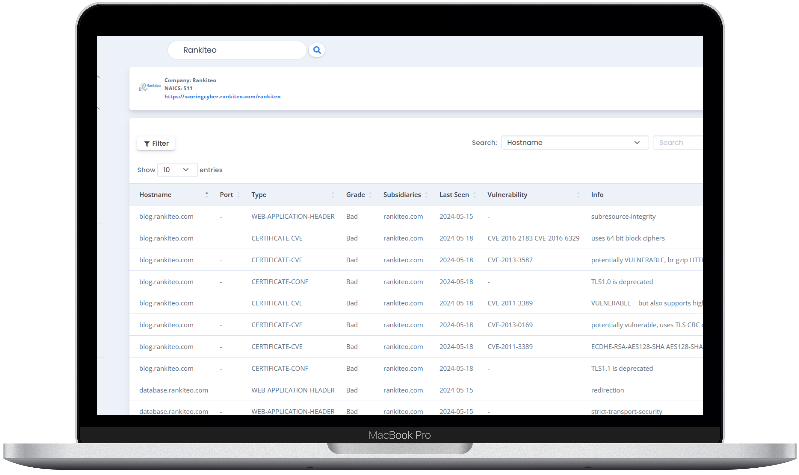
Identify exposed access points, detect misconfigured SSL certificates, and uncover vulnerabilities across the network infrastructure.
Gain visibility into the software components used within an organization to detect vulnerabilities, manage risk, and ensure supply chain security.
Monitor and manage all IT assets and their configurations to ensure accurate, real-time visibility across the company's technology environment.
Leverage real-time insights on active threats, malware campaigns, and emerging vulnerabilities to proactively defend against evolving cyberattacks.







 Rapid
Rapid